Germany, UK to sign pact on long-range weapons, sweeping defense ties德国和英国将签署远程武器协议,全面加强防务关系
The agreement amounts to a comprehensive reboot of defense ties between London and Berlin that had lacked structure since Britain left the European Union.
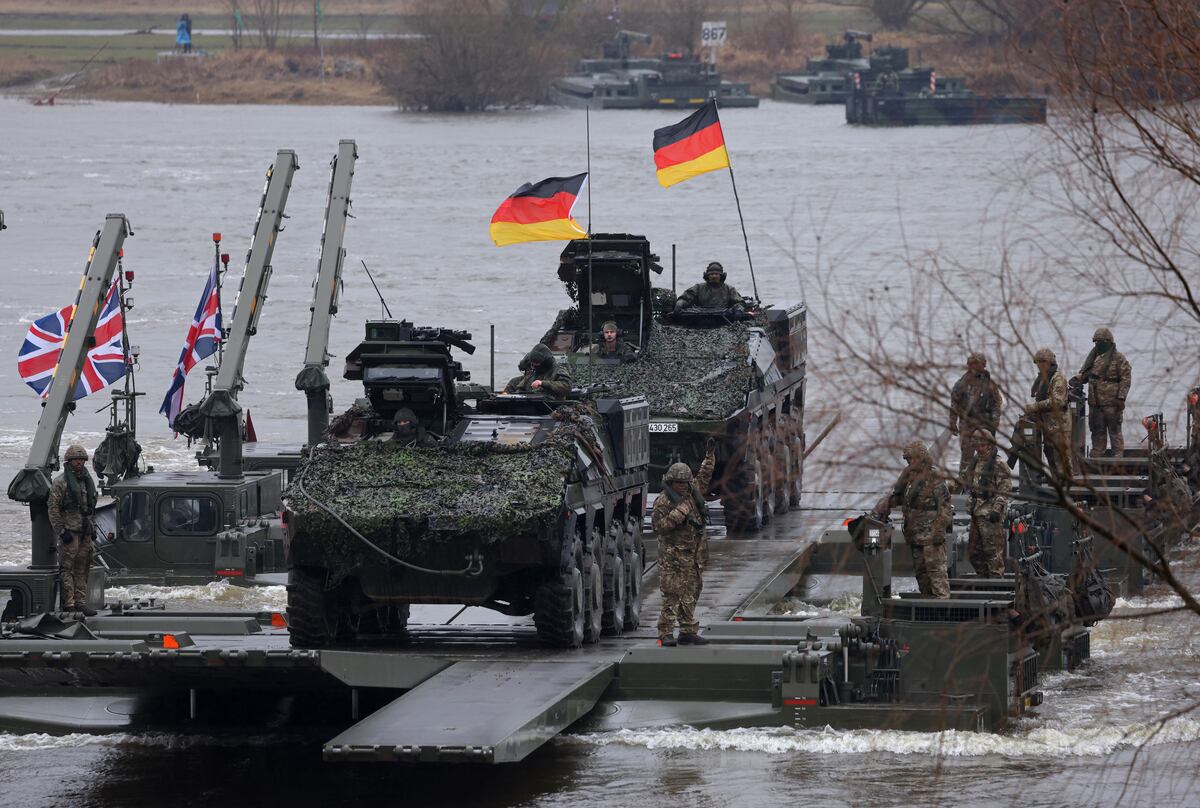
COLOGNE, Germany — The defense ministers of Germany and the U.K. plan to sign a new defense agreement on Wednesday that will see the two countries develop new long-range strike weapons, prioritize securing NATO’s eastern flank and field a new class of drones for accompanying their battle tank formations, according to separate statements from the two governments.
Called the Trinity House Agreement, the pact amounts to a comprehensive reboot of defense relations between London and Berlin that had lacked structure since Britain formally exited the European Union in early 2020.
The jam-packed agenda touches all military domains – air, land, sea, and cyber – showcasing Rheinmetall as a linchpin of industrial cooperation for land forces, and MBDA, with its Storm Shadow cruise missile, as the nucleus for a future, joint long-range strike weapon.
Stationing long-range missiles in Europe, including from the United States, has become a key pillar in NATO plans to deter Russian aggression against the continent.
Under the new plan, German defense contractor Rheinmetall and its British subsidiary will open a factory for making artillery gun barrels using locally made steel, re-establishing a capability given up by the British a decade a ago, according to the U.K. Ministry of Defence statement. The first barrels are slated to roll off the production line in 2027.
British and German troops, with their growing presence in eastern Europe aimed at securing NATO’s eastern flank, are slated to intensify their joint training, using their forward position as a “catalyst for developing new ways of fighting,” the British statement reads.
In the maritime domain, the two nations pledge to cooperate on new technology for monitoring vital undersea cables and pipelines in the North Sea, a key concern for defense planners in Europe amid Russian espionage against such targets.
“The UK and Germany are moving closer together,” German Defense Minister Boris Pistorius was quoted as saying in a statement circulated to reporters on the eve of the Trinity House Agreement’s signing.
“With projects across the air, land, sea, and cyber domains, we will jointly increase our defense capabilities, thereby strengthening the European pillar within NATO,” he added. “We can only strengthen our ability to act together. This is why our cooperation projects are open to other partners.”
The British statement characterized the new defense pact with Germany as an example of the new Labour government of Prime Minister Keir Starmer “resetting” relations with European allies.
An impending, overarching cooperation agreement with Germany beyond military matters is meant to complete a trio of separate bilateral pacts linking Britain and France, France and Germany, and Britain and Germany.
“The Trinity House Agreement is a milestone moment in our relationship with Germany and a major strengthening of Europe’s security,” British Defense Minister John Healey was quoted as saying.
As for support to Ukraine, an immediate step under the new pact will be outfitting donated German Sea King helicopters with “modern missile systems,” the British statement reads. In addition, the U.K. will play a bigger role in a Polish- and German-led armor support coalition for Kyiv, while Germany will do the same in a British-Latvian-led group devoted to drones.
Sebastian Sprenger is associate editor for Europe at Defense News, reporting on the state of the defense market in the region, and on U.S.-Europe cooperation and multi-national investments in defense and global security. Previously he served as managing editor for Defense News. He is based in Cologne, Germany.
德国科隆——据德国和英国政府分别发表的声明,两国国防部长计划于周三签署一项新的防务协议,该协议将使两国开发新的远程打击武器,优先保障北约东翼的安全,并部署一种新型无人机来伴随其坦克部队作战。
该协议被称为《三位一体协议》,它全面重启了伦敦和柏林之间的防务关系,自英国在 2020 年初正式退出欧盟以来,这种关系一直缺乏结构。
此次议程内容丰富,涵盖所有军事领域——空中、陆地、海洋和网络——重点展示了莱茵金属公司作为陆军工业合作的关键,以及MBDA公司及其“风暴阴影”巡航导弹作为未来联合远程打击武器的核心。
在欧洲部署远程导弹,包括来自美国的导弹,已成为北约遏制俄罗斯对欧洲大陆侵略计划的关键支柱。
根据英国国防部的声明,根据这项新计划,德国国防承包商莱茵金属公司及其英国子公司将开设一家工厂,使用英国本土生产的钢材制造炮管,从而恢复英国十年前放弃的这项能力。首批炮管预计将于2027年下线。
英国声明称,英国和德国军队在东欧的存在日益增强,旨在确保北约东翼的安全,两国计划加强联合训练,利用其前沿阵地作为“发展新作战方式的催化剂”。
在海洋领域,两国承诺在监测北海重要海底电缆和管道的新技术方面开展合作,这是欧洲国防规划者关注的一个重点,因为俄罗斯对这类目标进行了间谍活动。
据《三位一体协议》签署前夕向记者发布的一份声明显示,德国国防部长鲍里斯·皮斯托里乌斯表示:“英国和德国正在走得更近。”
他补充道:“通过涵盖空中、陆地、海上和网络领域的合作项目,我们将共同提升防御能力,从而加强北约的欧洲支柱。我们只有加强协同行动的能力才能真正实现协同。正因如此,我们的合作项目也向其他伙伴开放。”
英国方面发表声明,将与德国签署的新防务条约描述为基尔·斯塔默首相领导的新工党政府“重塑”与欧洲盟友关系的例证。
即将与德国达成的一项超越军事领域的全面合作协议,旨在完善英国与法国、法国与德国以及英国与德国之间的三项单独的双边条约。
英国国防大臣约翰·希利表示:“《三位一体协议》是我们与德国关系中的一个里程碑时刻,也是欧洲安全得到重大加强的一次重大举措。”
关于对乌克兰的支持,英国声明指出,根据新协议,首要举措是为捐赠的德国“海王”直升机配备“现代化导弹系统”。此外,英国将在波兰和德国领导的基辅装甲支援联盟中发挥更大作用,而德国也将在英拉领导的无人机支援联盟中扮演同样的角色。
塞巴斯蒂安·斯普伦格是《防务新闻》欧洲版副主编,负责报道该地区的防务市场状况,以及美欧在防务和全球安全领域的合作和多国投资。此前,他曾担任《防务新闻》执行主编。他现居德国科隆。