Ukraine’s New Shershen SAM Can Fire A Wild Mix Of Adapted Air-To-Air Missiles乌克兰新型“雪鹰”地空导弹系统可发射多种改装空空导弹。
The system’s open architecture could let Kyiv mix and match interceptors as its missile inventory evolves. The system’s open architecture could let Kyiv mix and match interceptors as its missile inventory evolves.
Published Sep 10, 2026 4:30 PM EDT
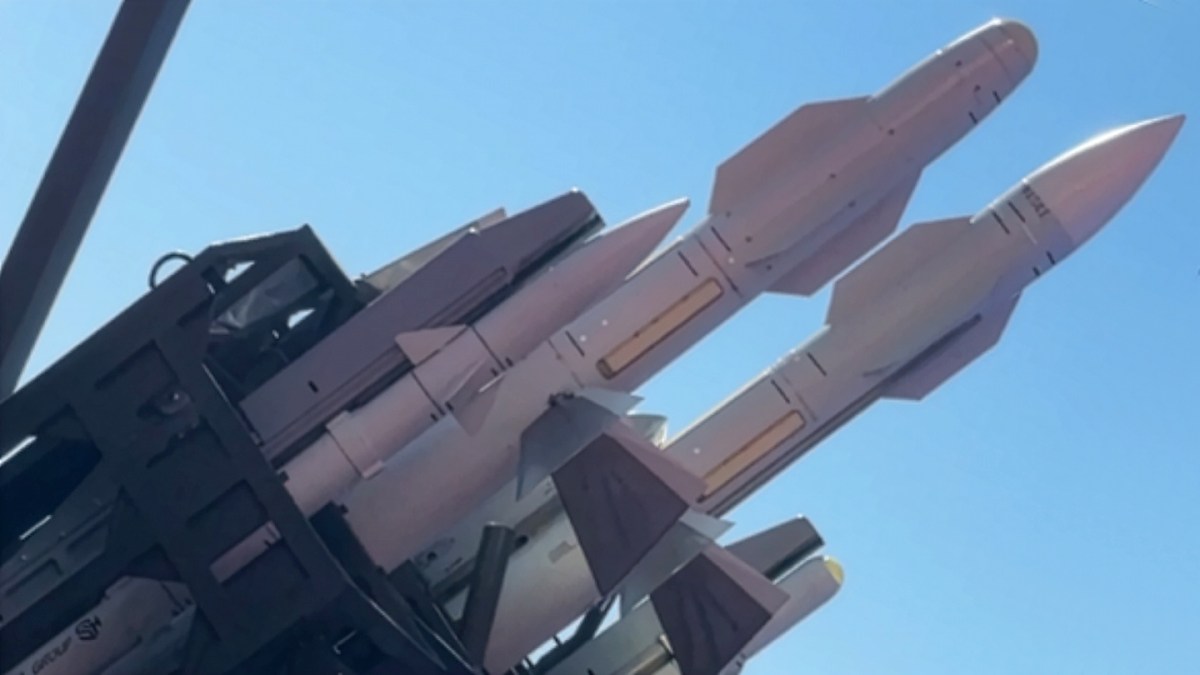
Ukraine has unveiled a new domestically developed surface-to-air missile system designed to turn a diverse collection of air-to-air missiles into a flexible ground-based air defense capability. Called Shershen, Ukrainian for hornet, the system combines a locally-developed command-and-control architecture, a dedicated surveillance radar, and multiple launchers that can employ both Ukrainian and Western missiles.
The system was displayed at the at the MSPO defense exhibition in Kielce, Poland, by the Ukrainian Defense Industry Association (NAUDI). The example shown is reportedly the second operational prototype and is described as being close to its production configuration.
At the ongoing MSPO-2026 defense and industrial exhibition in Poland, the launcher of the Ukrainian Shershen air defense system, developed by Radionix, has been presented for the first time, along with the R-120K surface-to-air guided missile specially developed for it (second… pic.twitter.com/5RfZWHWuxl — 𝔗𝔥𝔢 𝕯𝔢𝔞𝔡 𝕯𝔦𝔰𝔱𝔯𝔦𝔠𝔱 🦩🇬🇪🇺🇦🇺🇲🇬🇷 (@TheDeadDistrict) September 9, 2026
At the ongoing MSPO-2026 defense and industrial exhibition in Poland, the launcher of the Ukrainian Shershen air defense system, developed by Radionix, has been presented for the first time, along with the R-120K surface-to-air guided missile specially developed for it (second… pic.twitter.com/5RfZWHWuxl
The appearance of Shershen comes as Ukraine continues to develop an increasingly diverse family of indigenous air defense systems, while simultaneously adapting older missiles and foreign-supplied weapons to address a severe shortage of interceptors .
That effort has produced some distinctly unconventional combinations. Ukraine’s so-called FrankenSAM programs have paired existing Soviet-era launchers and radars with Western missiles , while other systems have adapted Soviet R-73 air-to-air missiles for ground launch . The United Kingdom and Denmark have also worked with Ukraine on the containerized Gravehawk system, another concept built around repurposed air-to-air missiles.
The Buk/Sea Sparrow FrankenSAM combines the Soviet-era Buk transporter-erector-launcher with U.S.-supplied RIM-7 Sea Sparrow missiles. Operational Command East
Shershen takes that philosophy a step further by making missile interchangeability a central feature of the system.
The Shershen battery consists of a Perun command-and-control vehicle, an Athena radar, and four Borei launchers.
A graphic shows a typical Shershen battery. via Oboronka
According to the developer, the system’s architecture is deliberately open. This allows it to use different missiles from different manufacturers and also permits the integration of third-party surveillance and guidance radars.
The company says Shershen can currently employ the R-27 (AA-10 Alamo), R-73 (AA-11 Archer), AIM-9 Sidewinder , and AIM-132 ASRAAM , while compatibility with the R-60 is also being explored. These weapons come with a mix of semi-active radar or infrared homing seeker heads.
One of the ASRAAM/Supacat air defense systems supplied to Ukraine. Ukrainian Armed Forces
Air-to-air missiles are already available in considerable variety across Ukraine’s arsenal and those of its foreign partners. Being able to employ several types from a common ground-based system provides much more flexibility than a conventional SAM designed around one dedicated interceptor.
It also offers a way to exploit missiles that were never originally intended to be fired from the ground. That means Shershen’s launcher and fire-control system are meant to be interceptor agnostic, at least to a certain degree.
Shershen’s Athena radar is reported to be capable of detecting targets at ranges of up to 85 kilometers (53 miles).
The Athena radar for the Shershen. NAUDI screencap
In terms of the engagement envelope, Shershen is claimed to be capable of engaging aircraft, cruise missiles, and drones at ranges of up to 25 kilometers (16 miles) and altitudes of up to 10,000 meters (32,800 feet). Clearly, these figures will vary widely depending on the type of interceptor.
When employing radar-guided missiles, the system’s engagement architecture can reportedly guide as many as six missiles simultaneously.
The advertised performance figures have not been independently verified, and it remains unclear what target types and engagement conditions were used to establish them.
🇺🇦 Україна представила складові мультикаліберного зенітного ракетного комплексу «Шершень» на міжнародній виставці MSPO 2026 у польському місті Кельце. Міжнародний консорціум компаній Shershen Group, який створює ЗРК в інтересах України представив, показав командний пункт,… pic.twitter.com/9wAS7ewxzg — Мілітарний (@mil_in_ua) September 10, 2026
🇺🇦 Україна представила складові мультикаліберного зенітного ракетного комплексу «Шершень» на міжнародній виставці MSPO 2026 у польському місті Кельце. Міжнародний консорціум компаній Shershen Group, який створює ЗРК в інтересах України представив, показав командний пункт,… pic.twitter.com/9wAS7ewxzg
The developer says the second prototype has completed initial testing, including successful interceptions at a test range.
One of the Borei launchers displayed at MSPO were armed with an R-120K, a new Ukrainian missile equipped with a radar seeker and is intended to be capable of both air-to-air and surface-to-air employment.
The R-120K remains under development, however. Work is reportedly continuing on its rocket motor, meaning that its eventual performance and production status remain uncertain. Still, having the option of including the R-120K on the Shershen system in the future is significant.
A test launcher used for the Shershen program, armed with a radar-homing (nearest camera) and an infrared-guided R-27 missile. The latest prototype features a cage-type container launcher. NAUDI screencap NAUDI screencap
Rather than relying indefinitely on stocks of Soviet and Western air-to-air missiles, Ukraine could eventually have a domestically produced interceptor specifically tailored to its growing family of ground-based air-defense systems. That will become increasingly important as stocks of legacy missiles are depleted. Earlier this year, it was reported that Ukrainian F-16s were running low on their air-to-air missiles , which include the same AIM-9s that are used in some FrankenSAM systems, as well as being compatible with Shershen. But even before that, it was clear that Western-supplied missile stocks in Ukraine across the board were diminishing, in some cases drastically, with critical interceptors like the AMRAAM and Patriot being badly affected.
A live AIM-9L/M Sidewinder launched from the wingtip rail of a Ukrainian F-16. Ukrainian Air Force screencap
Ukraine’s need for additional surface-to-air missiles has become increasingly acute during the full-scale war, especially as Russian drone and missile barrages have stepped up.
The shortage has encouraged Ukraine to pursue a combination of indigenous development and unconventional adaptations.
The FrankenSAM initiative, conducted with U.S. support, demonstrated how existing Ukrainian systems could be combined with foreign missiles to rapidly create additional air-defense capacity. Ukraine has also fielded modified Osa systems armed with R-73 air-to-air missiles rather than their original 9M33 interceptors. Other R-73-based concepts have even been demonstrated aboard Ukrainian uncrewed surface vessels .
An R-73 missile loaded on an Osa-AKM SHORADS vehicle. Come Back Alive
Shershen appears to reflect the next logical step in that evolution: rather than creating a one-off FrankenSAM combination, build an architecture from the outset that can accept multiple missiles. Additionally, with so many different ground-based air defense systems now being fielded, it comes with the significant advantage of a standardized launche and control interface that can accommodate a range of interceptors.
At the same time, Ukraine is pursuing substantially more ambitious indigenous SAM projects.
Earlier this year, a previously secretive Ukrainian missile identified as the Koral made what appeared to be its first public appearance. The program dates back to at least 2021, when Ukraine’s Luch design bureau presented a concept for a medium-range surface-to-air missile.
A missile is launched from a Koral air defense system, based on a Czech Tatra truck chassis. Ukroboronprom
Koral is intended to provide a much longer-range capability, potentially filling some of the gap left by Ukraine’s aging Soviet systems and supplementing the Western-supplied Patriot and SAMP/T .
Shershen, by contrast, is clearly focused on the short-range layer.
Together, the programs illustrate the breadth of Ukraine’s emerging domestic air-defense effort: from relatively inexpensive systems built around repurposed air-to-air missiles to new, purpose-designed interceptors intended to replace or augment Soviet-era systems.
Ukraine’s experience with FrankenSAM has demonstrated the value of getting unconventional air defense combinations into service quickly.
Once fielded, Shershen, with its architecture capable of accepting different Soviet-origin and Western-made interceptors, and eventually a Ukrainian one, gives Ukraine another way to stretch its missile inventory and enhance its air defense capabilities.
Contact the author: thomas@thewarzone.com
Comments couldn’t be loaded. Please refresh the page.
发布于美国东部时间2026年9月10日下午4:30
乌克兰推出了一款自主研发的新型地对空导弹系统,旨在将种类繁多的空对空导弹整合为灵活的地面防空能力。该系统名为“Shershen”(乌克兰语意为“大黄蜂”),结合了自主研发的指挥控制系统、专用监视雷达以及可发射乌克兰和西方导弹的多联装发射装置。
该系统由乌克兰国防工业协会(NAUDI)在波兰凯尔采举行的MSPO防务展上展出。据报道,展出的样机是第二个可运行原型机,据称已接近量产配置。
在波兰正在举行的 MSPO-2026 防务工业展览会上,乌克兰 Radionix 公司研发的“雪鹰”(Shershen)防空系统发射装置首次亮相,同时展出的还有专为该系统研制的 R-120K 地对空导弹(第二款…… pic.twitter.com/5RfZWHWuxl — 𝔗𝔥𝔢 𝕯𝔢𝔞𝔡 𝕯𝔦𝔰𝔱𝔯𝔦𝔠𝔱 🦩🇬🇪🇺🇦🇺🇲🇬🇷 (@TheDeadDistrict) September 9, 2026
在波兰正在举行的MSPO-2026防务工业展览会上,乌克兰Radionix公司研制的“雪鹰”(Shershen)防空系统的发射装置首次亮相,同时展出的还有专为该系统研制的R-120K地对空导弹(第二…… pic.twitter.com/5RfZWHWuxl)。
随着“舍尔申”导弹的出现,乌克兰继续发展日益多样化的本土防空系统,同时对旧导弹和外国提供的武器进行改造,以解决拦截器严重短缺的问题。
这项努力催生了一些非常规的组合。乌克兰所谓的“弗兰肯斯坦地空导弹”(FrankenSAM)项目将苏联时代的发射装置和雷达与西方导弹相结合,而其他一些系统则将苏联的R-73空空导弹改装为地面发射。英国和丹麦也与乌克兰合作开发了集装箱式“墓鹰”(Gravehawk)系统,该系统也是基于改装的空空导弹而设计的。
“山毛榉/海麻雀”弗兰肯地空导弹系统将苏联时代的“山毛榉”运输-起竖-发射车与美国提供的RIM-7“海麻雀”导弹结合在一起。东部作战司令部
Shershen 将这种理念更进一步,把导弹互换性作为该系统的核心特征。
舍尔申导弹连由一辆佩伦指挥控制车、一部雅典娜雷达和四辆北风之神导弹发射车组成。
图示为典型的舍尔申电池。(图片来自 Oboronka)
据开发商称,该系统的架构特意采用了开放式设计。这使其能够使用不同制造商的不同导弹,并且允许集成第三方监视和制导雷达。
该公司表示,Shershen目前可使用R-27(AA-10阿拉莫)、R-73(AA-11弓箭手)、AIM-9响尾蛇和AIM-132 ASRAAM导弹,同时也在探索与R-60导弹的兼容性。这些武器配备了半主动雷达或红外制导导引头。
这是交付给乌克兰的ASRAAM/Supacat防空系统之一。乌克兰武装部队
乌克兰及其外国伙伴的武器库中已拥有种类繁多的空空导弹。与围绕单一专用拦截弹设计的传统地空导弹系统相比,能够从通用的地面系统中部署多种类型的空空导弹,提供了更大的灵活性。
它还提供了一种利用原本并非设计用于地面发射的导弹的方法。这意味着“舍尔申”导弹的发射器和火控系统至少在一定程度上可以与拦截导弹类型无关。
据报道,舍尔申公司的雅典娜雷达能够探测到最远 85 公里(53 英里)范围内的目标。
Shershen 的雅典娜雷达。 NAUDI 屏幕截图
就作战效能而言,据称“雪鹰”导弹能够在25公里(16英里)的射程和10000米(32800英尺)的高度拦截飞机、巡航导弹和无人机。显然,这些数据会根据拦截目标的类型而有很大差异。
据报道,在使用雷达制导导弹时,该系统的交战架构可以同时制导多达六枚导弹。
所公布的业绩数据尚未经过独立核实,目前尚不清楚制定这些数据时使用了哪些目标类型和参与条件。
🇺🇦 Україна представила складові мультикаліберного зенітного ракетного комплексу «Шершень» на міжнародній参加 MSPO 2026 的活动将在 2026 年举行。 Міжнародний консорціум компаній Shershen Group, який створює ЗРК в інтересах України представив, показав командний пункт,… pic.twitter.com/9wAS7ewxzg — Мілітарний (@mil_in_ua) 2026 年 9 月 10 日
🇺🇦 Україна представила складові мультикаліберного зенітного ракетного комплексу «Шершень» на міжнародній参加 MSPO 2026 的活动将在 2026 年举行。 Міжнародний консорціум компаній Shershen Group, який створює ЗРК в інтересах України представив, показав командний пункт,… pic.twitter.com/9wAS7ewxzg
开发商表示,第二个原型机已完成初步测试,包括在测试场成功拦截。
在莫斯科国际防务展上展出的“北风之神”导弹发射车之一,配备了R-120K导弹,这是一种新型的乌克兰导弹,配备了雷达导引头,旨在能够进行空对空和地对空作战。
R-120K火箭发动机仍在研发中。据报道,其火箭发动机的研发工作仍在继续,这意味着其最终性能和生产状况仍存在不确定性。尽管如此,未来能够将R-120K火箭发动机应用于“雪鹰”导弹系统仍然意义重大。
用于“雪鹰”(Shershen)计划的测试发射器,配备雷达制导(最近邻摄像头)和红外制导的R-27导弹。最新原型采用笼式容器发射器。NAUDI截图 NAUDI截图
与其无限期地依赖苏联和西方的空空导弹库存,乌克兰最终或许能够拥有一款专为其日益壮大的地面防空系统量身定制的国产拦截弹。随着老旧导弹库存的消耗,这一点将变得愈发重要。今年早些时候有报道称,乌克兰的F-16战斗机空空导弹库存告急,其中包括一些“弗兰肯斯坦”式防空导弹系统使用的AIM-9导弹,这些导弹也与“雪鹰”导弹兼容。但即便在此之前,乌克兰从西方获得的导弹库存也明显减少,在某些情况下甚至急剧下降,关键拦截弹如AMRAAM和“爱国者”导弹都受到了严重影响。
一枚AIM-9L/M“响尾蛇”导弹从乌克兰F-16战斗机的翼尖挂架上发射。乌克兰空军截图
在全面战争期间,乌克兰对更多地对空导弹的需求变得越来越迫切,尤其是在俄罗斯无人机和导弹袭击不断升级的情况下。
短缺促使乌克兰寻求本土发展和非常规适应相结合的方式。
在美国的支持下开展的“弗兰肯防空导弹”(FrankenSAM)计划,展示了如何将现有的乌克兰系统与外国导弹相结合,从而迅速提升防空能力。乌克兰还部署了改进型的“奥萨”(Osa)系统,该系统装备了R-73空空导弹,取代了原有的9M33拦截导弹。其他基于R-73导弹的概念甚至已在乌克兰无人水面舰艇上进行了演示。
一枚装载在 Osa-AKM 短程防空导弹系统车辆上的 R-73 导弹。活着回来
谢尔申系统似乎体现了这一演进的下一个合乎逻辑的步骤:与其打造一次性的“弗兰肯斯坦式”地空导弹组合,不如从一开始就构建一个能够兼容多种导弹的架构。此外,鉴于目前已部署了如此多的地面防空系统,它还具有一个显著优势,即标准化的发射和控制接口可以兼容多种拦截导弹。
与此同时,乌克兰正在推进规模更大的本土防空导弹系统项目。
今年早些时候,一款此前一直处于保密状态的乌克兰导弹——科拉尔导弹——似乎首次公开亮相。该项目至少可以追溯到2021年,当时乌克兰卢奇设计局提出了一种中程地对空导弹的概念。
一枚导弹从一套基于捷克塔特拉卡车底盘的科拉尔防空系统中发射。乌克兰国防工业公司
Koral 旨在提供更远的射程能力,有可能填补乌克兰老旧的苏联系统留下的一些空白,并补充西方提供的 Patriot 和 SAMP/T 系统。
相比之下,Shershen 显然更关注短程层面。
这些项目共同展现了乌克兰正在兴起的国内防空努力的广度:从围绕改造后的空空导弹建造的相对廉价的系统,到旨在取代或增强苏联时代系统的新型专用拦截器。
乌克兰使用 FrankenSAM 的经验表明,快速将非常规防空组合投入使用具有重要价值。
谢尔申导弹系统一旦投入使用,其架构能够容纳不同的苏联制造和西方制造的拦截导弹,最终还能容纳乌克兰制造的拦截导弹,这将为乌克兰提供另一种扩展其导弹库存和增强其防空能力的方式。
联系作者:thomas@thewarzone.com
评论加载失败,请刷新页面。