RTX, Rafael eye Arkansas site to make air defense missilesRTX和Rafael计划在阿肯色州建厂生产防空导弹
The two companies toured a Camden, Arkansas, site where they may decide to build the Tamir and SkyHunter intercept weapons.
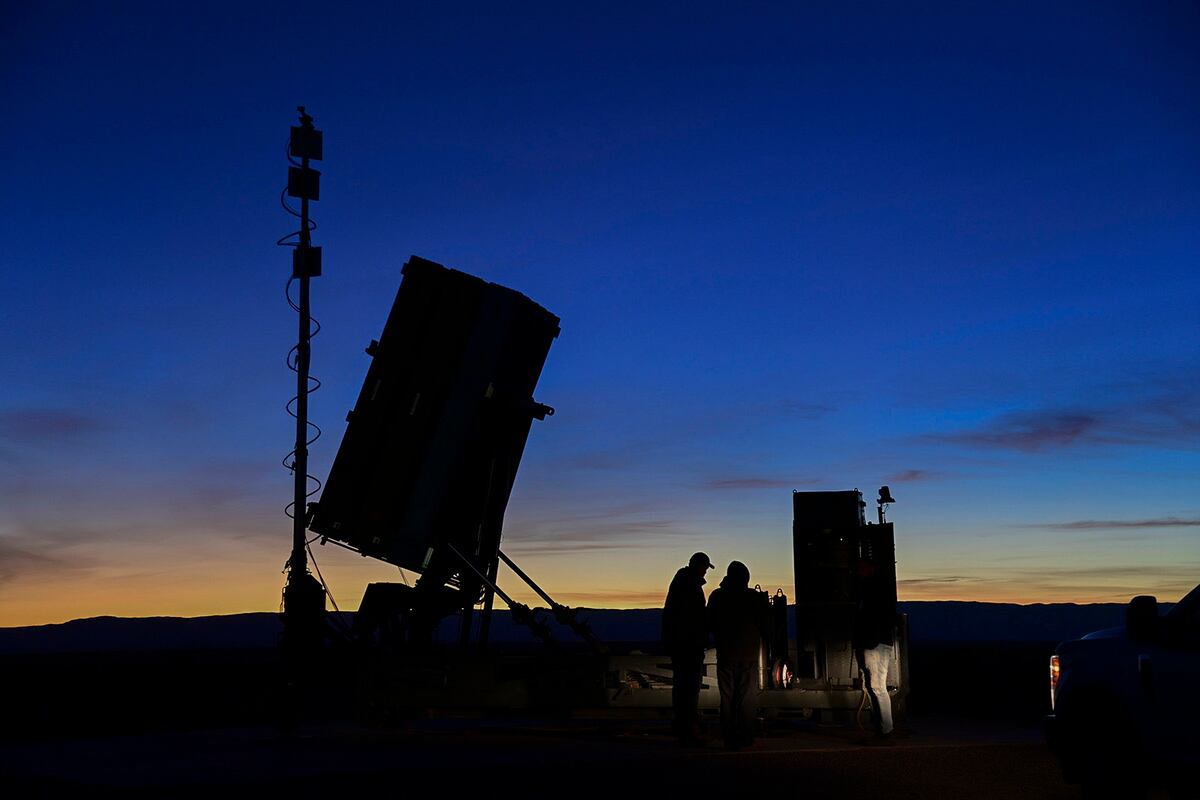
WASHINGTON — U.S. Marine Corps officials have met with defense industry representatives in Arkansas to discuss a potential facility to build air defense missiles pivotal to the service’s modernization plans.
The Corps’ Program Executive Office Land Systems has worked since 2018 to combine existing technology to create a short- to medium-range air defense system to defend Marines against cruise missiles and other airborne threats. This effort for a so-called Medium Range Intercept Capability incorporates two systems already in the service’s inventory: the Ground/Air Task Oriented Radar, and the Common Aviation Command and Control System.
It also relies on a piece of Israeli gear: the Tamir intercept missile built by Rafael Advanced Defense Systems that’s part of the Iron Dome homeland defense system.
Rafael is partnering with the American firm RTX ( formerly Raytheon Technologies ) to build these missiles in the U.S. under the collaborative name Raytheon Rafael Systems, or R2S. Company representatives met with program officials in Camden, Arkansas, on July 19 to discuss their concept for a production facility and to tour the potential site, the Marine Corps announced this week.
“This will be a great thing for the Medium Range Intercept Capability program and for the USMC, if this occurs,” Don Kelley, the program manager for ground-based air defense at PEO Land Systems, said in a service statement. The statement noted the location would not only provide a U.S. production line for the American version of the missile, dubbed SkyHunter, but could also serve as a second source of Tamir missiles for the Israel Missile Defense Organization.
Marines put the intercept capability through a series of successful live-fire tests in September. In December, the service decided to move forward and prepare a first platoon for a deployment in fiscal 2025. In a later decision, the service determined it would buy Medium Range Intercept Capability systems for up to three batteries from FY25 to FY27.
“We’re excited that MRIC testing has gone well and by all accounts the [U.S. Marine Corps] is moving forward with this important air defense program. It’s premature, at the moment, to confirm details related to the status or the location of our planned U.S. production facility. When established, it will be the first production facility in the U.S. to help support the [Defense Department] and allies across the globe with this highly-capable, medium-range air defense weapon system,” RTX told Defense News in a written statement.
The two businesses announced in 2020 they would establish an “all-up-round” Iron Dome production facility in the U.S. They had already partnered on the program, following a 2014 agreement for RTX to supply major components of the Tamir missile to support Rafael as the prime contractor.
“While a significant portion of Iron Dome is already built in the U.S., Rafael is cooperating and coordinating with our U.S. partner, Raytheon, regarding increasing U.S. production for our U.S. customers. This is part of our broader commitment to fully Americanize the system and meet U.S. requirements for technology transfer,” Rafael told Defense News in a statement.
The Marine Corps tests its Medium Range Intercept Capability system during a live-fire event at White Sands Missile Range, N.M., in September 2022. (Courtesy of the U.S. Marine Corps)
The Corps is refining and beginning to execute operational concepts that rely on spreading out small groups of Marines across an operating area that’s within range of enemy weapons. The Medium Range Intercept Capability would be an “imperative” organic air defense capability for these Marines, according to the service , keeping them safe so they can focus on other missions like surveillance, setting up refueling and replenishment hubs, and firing on enemy targets.
The capability would detect, track, identify and defeat incoming cruise missiles and other manned and unmanned aerial threats.
The system was established as a middle-tier acquisition rapid prototyping effort and went from concept to live-fire testing in less than five years.
“Force Design 2030 [the service’s modernization effort] and updates emphasize experimentation and a strong air defense for the Marine Corps,” said Lt. Col. Matthew Beck, product manager for the envisioned capability. “Middle tier acquisition, with rapid prototyping, aligns with these goals. By integrating high technology readiness level components and seeking Marine feedback through small-scale deployments, we can refine and scale the Medium-Range Intercept Capability and get it to the fleet in a timely manner.”
“The real challenge lies in introducing this unprecedented system to the Marines who have no prior analogous equipment,” he added, but training and logistics teams are already working to build skill sets for those who would operate this system.
Even as the service works toward a first platoon deployment with a prototype in 2025, the program office is moving toward beginning formal procurement of the Medium-Range Intercept Capability system.
A quick-reaction assessment under the middle-tier acquisition rapid prototyping framework would take place in September 2024, the Corps reported , and the program could enter production in FY25.
Megan Eckstein is the naval warfare reporter at Defense News. She has covered military news since 2009, with a focus on U.S. Navy and Marine Corps operations, acquisition programs and budgets. She has reported from four geographic fleets and is happiest when she’s filing stories from a ship. Megan is a University of Maryland alumna.
华盛顿——美国海军陆战队官员在阿肯色州与国防工业代表会面,讨论建设一个潜在的防空导弹生产设施,该设施对于海军陆战队的现代化计划至关重要。
自2018年以来,海军陆战队陆地系统项目执行办公室一直致力于整合现有技术,打造一套短程至中程防空系统,以保护海军陆战队员免受巡航导弹和其他空中威胁。这项名为“中程拦截能力”的计划整合了海军陆战队现有的两套系统:地面/空中任务导向雷达和通用航空指挥控制系统。
它还依赖于以色列的一项装备:由拉斐尔先进防御系统公司制造的“塔米尔”拦截导弹,它是“铁穹”国土防御系统的一部分。
拉斐尔公司正与美国公司RTX(前身为雷神技术公司)合作,以合作名称雷神拉斐尔系统公司(Raytheon Rafael Systems,简称R2S)在美国生产这些导弹。海军陆战队本周宣布,公司代表于7月19日在阿肯色州卡姆登与项目官员会面,讨论了他们的生产设施概念并参观了潜在的厂址。
“如果此事成真,这对中程拦截能力计划和美国海军陆战队来说都是一件好事,”美国海军陆战队陆基防空项目执行办公室(PEO Land Systems)的项目经理唐·凯利在一份军方声明中表示。声明指出,该地点不仅将为美国版“天猎者”(SkyHunter)导弹提供一条美国生产线,还可以作为以色列导弹防御组织“塔米尔”(Tamir)导弹的第二个供应来源。
海军陆战队于9月成功进行了一系列拦截能力实弹测试。12月,海军陆战队决定推进该项目,并准备组建第一个排,计划于2025财年部署。随后,海军陆战队决定在2025财年至2027财年期间,采购最多三个连的中程拦截能力系统。
RTX在一份书面声明中告诉《防务新闻》:“我们很高兴MRIC测试进展顺利,而且据各方消息,美国海军陆战队正在推进这项重要的防空项目。目前,确认我们计划在美国建设的生产设施的现状或地点还为时尚早。建成后,它将成为美国首个生产这种高性能中程防空武器系统的工厂,为美国国防部及其全球盟友提供支持。”
这两家公司在 2020 年宣布,他们将在美国建立一个“全方位”的铁穹生产设施。此前,他们已经就该项目展开合作,根据 2014 年的一项协议,RTX 将为作为主承包商的拉斐尔公司提供泰米尔导弹的主要部件。
拉斐尔公司在一份声明中告诉《防务新闻》:“虽然‘铁穹’系统的大部分部件已经在美国制造,但拉斐尔公司正与我们的美国合作伙伴雷神公司合作协调,以提高美国本土的产量,从而更好地服务于我们的美国客户。这是我们致力于实现系统全面美国化并满足美国技术转让要求的更广泛承诺的一部分。”
2022年9月,美国海军陆战队在新墨西哥州白沙导弹靶场进行实弹射击演习,测试其中程拦截能力系统。(图片由美国海军陆战队提供)
海军陆战队正在完善并开始实施一些作战概念,这些概念依赖于将小股海军陆战队员分散部署在敌方武器射程范围内的作战区域。海军陆战队表示,中程拦截能力将成为这些海军陆战队员“必不可少”的自有防空能力,保障他们的安全,使他们能够专注于其他任务,例如侦察、建立加油补给中心以及打击敌方目标。
该能力可以探测、跟踪、识别和击落来袭的巡航导弹和其他人载及无人驾驶空中威胁。
该系统最初是作为中级采购快速原型项目而建立的,从概念到实弹测试,用了不到五年时间。
“‘2030部队设计’(海军陆战队的现代化计划)及其更新强调试验和强大的防空能力,”负责该设想能力的马修·贝克中校说道。“中等规模的采购,加上快速原型开发,符合这些目标。通过集成高科技成熟度组件,并通过小规模部署收集海军陆战队的反馈,我们可以改进和扩展中程拦截能力,并及时将其交付舰队。”
“真正的挑战在于如何将这套前所未有的系统引入海军陆战队,因为他们以前从未接触过类似的装备,”他补充道,但训练和后勤团队已经在努力培养操作这套系统的人员所需的技能。
尽管该军种正努力在 2025 年实现首个排级部署原型机,但项目办公室正在着手正式采购中程拦截能力系统。
据海军陆战队报告,将在 2024 年 9 月根据中层采购快速原型框架进行快速反应评估,该计划可能在 2025 财年投入生产。
梅根·埃克斯坦是《防务新闻》的海军作战记者。自2009年以来,她一直从事军事新闻报道,主要关注美国海军和海军陆战队的行动、采购项目和预算。她曾报道过四个不同地理区域的舰队,最喜欢在舰艇上进行新闻报道。梅根毕业于马里兰大学。