How Taiwan plans to counter drones by mid-2024台湾计划如何在2024年中期之前应对无人机威胁
Taiwan is trying to accelerate the development and production of military drones and countermeasures by expanding two national defense programs.
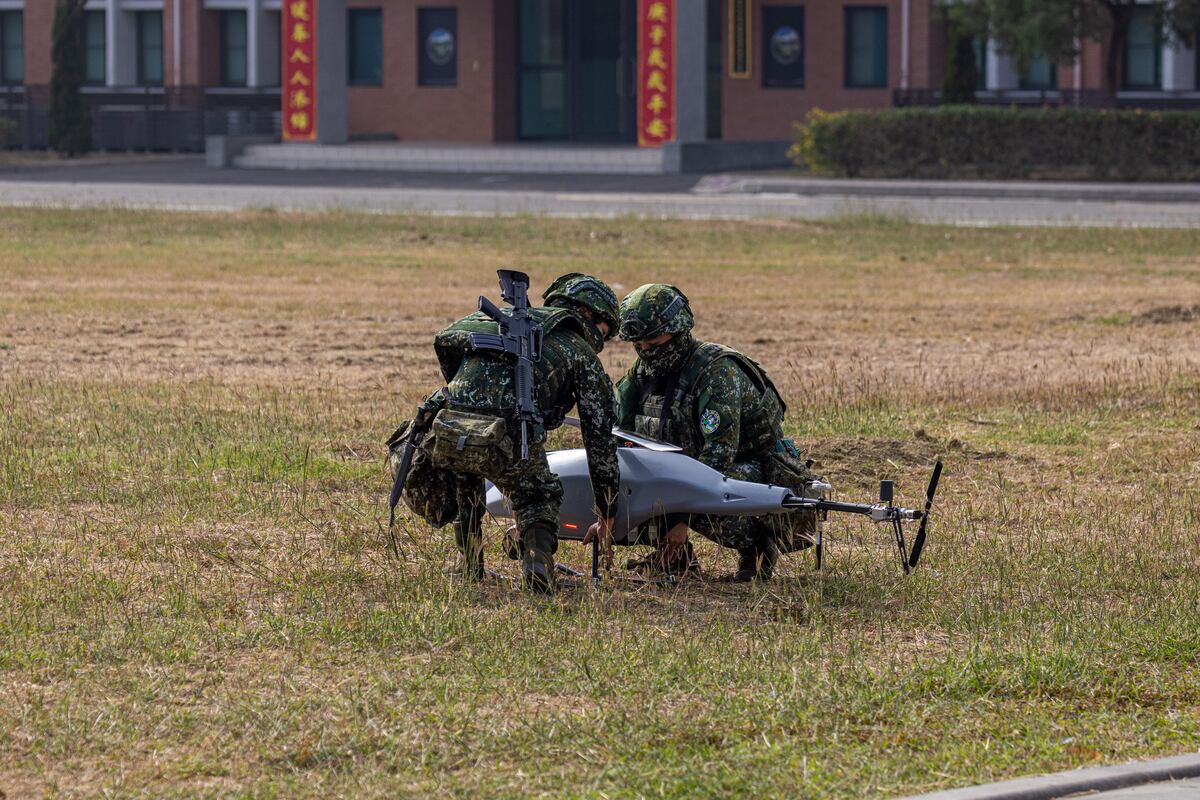
MILAN — Taiwan is trying to accelerate the development and production of military drones and countermeasures by expanding two national defense programs and focusing on autonomous swarms.
Taiwan’s air defense identification zone has over the last year been subject to drone intrusions carried out by the Chinese People’s Liberation Army. Since the PLA began flying drones within the area last September, Taiwan’s Defense Ministry recorded one flight in April and two in May.
According to the Institute for the Study of War, a think tank based in Washington, D.C., that tracks these developments, the PLA might begin conducting these unmanned flights more often over the next two years, along with piloted aircraft. China considers Taiwan a rogue province, and has threatened to take it back by force.
Amid this ongoing threat, Taiwanese defense officials have pointed to their country’s underdeveloped drone capabilities. Taipei has attempted to tackle this gap by creating two national drone programs focused on different capabilities.
“The first is the Drone National Team and focuses on building and producing a variety of military drones, with nine private companies included thus far in the program. The second, the Drone Defense National Team, centers around counter-drone systems, and its sole prime contractor is Tron Future,” Yu-Jiu Wang, the CEO of the Taiwan-based firm, told Defense News.
During the IDEX arms fair held in the United Arab Emirates in February, Tron Future said its aim was to produce 100 anti-drone radars in 2023 due to an increased demand. It’s unclear if the company reached this objective.
Ships launching countermeasures are seen on a screen showing a real-time feed from an indigenously made Rui Yuan drone during a military exercise at the Pingtung Airbase in southern Taiwan on Jan. 24, 2019. (Sam Yeh/AFP via Getty Images)
The executive said three other private companies are qualified as subcontractors to supply counter-drone equipment to Tron Future for system integration, and that the manufacturer also provides radars, jammers and sensors to the Drone Defense program for its own assembly.
Taiwan ultimately wants to amass about 3,200 military UAVs of different types by June 2024 under the Drone National Team, the more offensive-oriented program, Reuters reported .
Yu-Jiu decline to comment on the feasibility of this goal, but stated the project is expected to last at least five years, and that the drones’ specifications are regularly assessed and upgraded based on the latest trial results.
“Taiwan is preparing to have some of the world’s most comprehensive drone-defense capabilities in all major military and civilian infrastructure within the next two years,” Yu-Jiu said. “This is a race of technologies, so the requirements are constantly being enhanced.”
Any countermeasures must be able to neutralize drone swarms, Yu-Jiu added, by using sophisticated sensors, artificial intelligence and distributed control systems.
“Autonomous swarm soft-kill [non-kinetic] countermeasures are starting to be deployed later this year [in Taiwan], and autonomous swarm hard-kill ones are currently under development,” he said.
Elisabeth Gosselin-Malo was a Europe correspondent for Defense News. She covers a wide range of topics related to military procurement and international security, and specializes in reporting on the aviation sector. She is based in Milan, Italy.
米兰——台湾正试图通过扩大两项国防计划并重点发展自主集群来加快军用无人机和反制措施的研发和生产。
过去一年来,台湾防空识别区屡遭中国人民解放军无人机入侵。自解放军去年9月开始在该区域内飞行无人机以来,台湾国防部记录到4月份发生1次飞行,5月份发生2次飞行。
据总部位于华盛顿特区的智库“战争研究所”称,解放军可能在未来两年内更频繁地进行无人驾驶飞行,同时也会进行有人驾驶飞机的飞行。中国视台湾为叛离省份,并威胁要武力收复台湾。
面对持续不断的威胁,台湾国防官员指出,台湾的无人机能力发展不足。台北方面试图通过建立两个侧重不同能力的国家无人机项目来弥补这一差距。
“第一个是无人机国家队,专注于研发和生产各种军用无人机,目前已有九家私营公司参与其中。第二个是无人机防御国家队,重点是反无人机系统,其唯一的总承包商是Tron Future,”这家总部位于台湾的公司首席执行官王宇九告诉《防务新闻》。
今年2月在阿联酋举行的IDEX防务展上,Tron Future公司表示,由于市场需求增长,其目标是在2023年生产100部反无人机雷达。目前尚不清楚该公司是否实现了这一目标。
2019年1月24日,在台湾南部屏东空军基地举行的军事演习中,屏幕上实时显示着国产瑞源无人机发射反制措施的画面。(Sam Yeh/AFP via Getty Images)
该高管表示,另有三家私营公司有资格作为分包商向 Tron Future 提供反无人机设备以进行系统集成,并且该制造商还向无人机防御计划提供雷达、干扰器和传感器,供其自行组装。
路透社报道称,台湾最终希望在“无人机国家队”(一个更偏重进攻性的项目)的指导下,到 2024 年 6 月之前集结约 3200 架不同类型的军用无人机。
余九拒绝就此目标的可行性发表评论,但他表示该项目预计至少持续五年,并且无人机的规格会根据最新的试验结果定期进行评估和升级。
“台湾正准备在未来两年内,在所有主要军事和民用基础设施中部署全球最全面的无人机防御能力,”余九说。“这是一场技术竞赛,因此相关要求也在不断提高。”
余九补充说,任何反制措施都必须能够利用先进的传感器、人工智能和分布式控制系统来消除无人机群。
他说:“自主集群软杀伤(非动能)对抗措施将于今年晚些时候(在台湾)开始部署,而自主集群硬杀伤对抗措施目前正在研发中。”
伊丽莎白·戈斯林-马洛曾任《防务新闻》欧洲通讯员。她的报道涵盖军事采购和国际安全等广泛领域,尤其擅长航空领域的报道。她常驻意大利米兰。