EU’s new defense czar looks to kick rearmament into high gear欧盟新任国防沙皇计划加快重整军备步伐
Russia is the greatest military threat to the EU and will remain so for “quite a period of time,” Commissioner for Defence and Space Andrius Kubilius said.
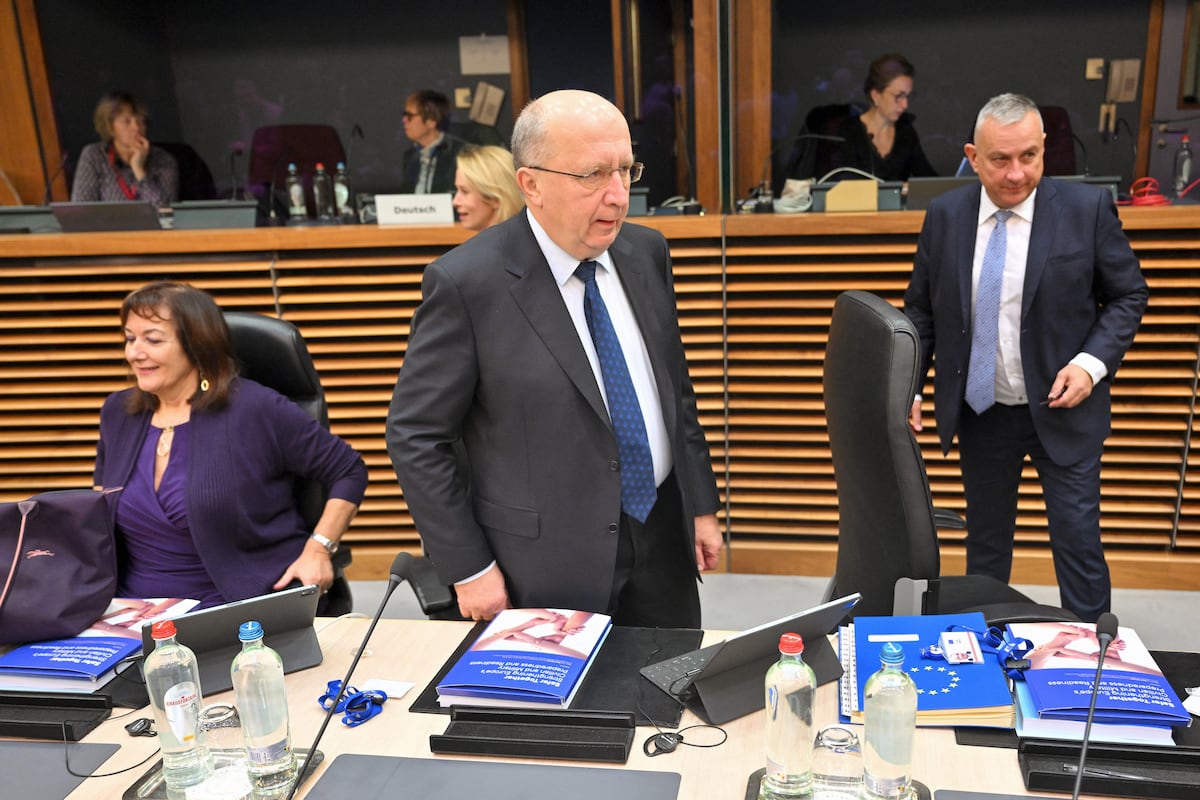
PARIS — The European Union’s brand new defense commissioner laid out his priorities for the 27-nation bloc in coming years, including keeping military aid flowing to Ukraine and arming up to prepare for possible Russian aggression against EU member states.
Russia is the greatest military threat to the EU and will remain so for “quite a period of time,” Commissioner for Defence and Space Andrius Kubilius told the European Parliament security and defense subcommittee on Thursday following his appointment this month. The former prime minister of Lithuania is the first to fill the newly created role within the EU’s executive body.
Kubilius is preparing a defense white paper to be published in his first 90 days that “should define the measures which we need to implement in the European Union in order for us to be ready for most extreme military contingencies,” including a Russian threat against EU or NATO members.
Intelligence services from countries including Germany and NATO representatives indicate Russia may be ready for “some kind of military aggression against us” before 2030, the commissioner said. Russia on a war economy footing is now able to produce more military equipment in six months than the German Army has in stock, he said.
The EU faces a longer-term challenge due to China’s rise, which is refocusing American attention and may prompt the U.S. to reduce its European presence. The EU has to take into account its dependency on the U.S. for military force and technology, Kubilius said.
Europe still has “quite big capability gaps,” lagging in conventional weapons and big defense projects, and needs to consider how to move forward on “strategic enablers,” Kubilius told lawmakers. He didn’t provide details, though defense analysts have pointed to strategic airlift, space-based intelligence and early airborne warning as areas where Europe depends on the U.S.
The European community faces a defense crisis for the first time in its history, and the commissioner said he hopes the bloc will come out stronger.
Kubilius called on the EU attitude towards defense development to move from incrementalism to a “Big Bang approach,” with the three major topics being Ukraine, ramping up Europe’s own production and readiness, and financing defense.
Failure to support Ukraine means “extreme military contingencies or possibility of Russian aggression is coming even earlier and may be more extreme,” Kubilius said. Europe is currently losing a “war of narratives” with Russian President Vladimir Putin, who is able to spread a message that Ukraine can’t win.
The EU needs clear plans with financial backing to aid Ukraine, signaling to Putin that the bloc will stand by the embattled country for a long time. That should equally be the message to Washington, rather than waiting to see what the new U.S. administration will do, Kubilius said.
He said North Koreans are learning to fight in Ukraine, and allies showing weakness there may impact South Korea as well as the Chinese position. The U.S. abandoning Ukraine would be “not a very strategically wise message,” as China is watching and would conclude the West is weak and they can target Taiwan.
“When we’re talking about Ukraine, we can see very clearly that we’re facing the whole axis of authoritarian regimes,” Kubilius said. “Everything is very much interconnected, and that’s what we need to see, really, as a threat.”
The commissioner said democracies should be united, and for example avoid an EU-U.S. trade war which “Putin would be very happy to see.”
NATO is working on capability targets for 2044, and the EU should adopt those, but aim to implement them by 2030, according to Kubilius. “We cannot ask Putin, can he postpone his plans of aggression until we shall be ready. Times are very limited.”
He said EU knowledge of the NATO targets is surprisingly “very limited,” and the commissioner hopes dialogue with the alliance will provide more insight. The dispute between Cyprus and Turkey prevents the sharing of classified information between both organizations, according to analysts.
Kubilius said there is a need to create more clear European structures within NATO as part of developing a European defense pillar.
The EU can provide added value by pooling demand as well as financing, which is what the defense industry is waiting for, according to the commissioner. The EU’s next multi-annual financial framework will include more money for defense, but will only come in 2028, and additional funds are needed before then, according to Kubilius.
The bloc is looking at options to raise €500 billion for defense in the next 10 years, a “sensitive topic, especially when in some countries there are elections and so on.” Kubilius said the issue of defense bonds is “very, very sensitive,” as the understanding is they would be guaranteed by the EU budget, similar to the Covid-19 pandemic bonds.
Beyond creating a common defense market with joint procurement and production, the EU also simply needs more kit, according to the commissioner.
“We need to understand that aggression you can stop not with the best processes in your market, but with a number of artillery pieces, with a number of tanks, and so on.”
Eight EU members spend less than the NATO target of 2% of GDP on defense, including Spain, Italy and Belgium. If those would lift spending to the target, that would already be €60 billion more for defense, according to Kubilius. A hypothetical NATO target of 3% would translate into €200 billion of additional European spending, the commissioner told the subcommittee.
The initial evaluation of the costs for a European air shield, a possible defense project of common European interest, is around €500 billion, according to Kubilius. The EU will need to look how an air-defense initiative led by Germany as well French-Italian and Polish-Greek plans can be combined into one package, the commissioner said.
“We need to be realistic what we can do,” Kubilius said. “But of course all of us, we see from Ukraine, air defense really is problematic.”
Rudy Ruitenberg is a Europe correspondent for Defense News. He started his career at Bloomberg News and has experience reporting on technology, commodity markets and politics.
巴黎——欧盟新任国防专员阐述了他未来几年对这个由27个成员国组成的集团的优先事项,包括继续向乌克兰提供军事援助,以及武装起来以应对俄罗斯可能对欧盟成员国发动的侵略。
欧盟国防与空间事务专员安德留斯·库比柳斯周四在欧洲议会安全与防务小组委员会作证时表示,俄罗斯是欧盟面临的最大军事威胁,而且这种情况“在相当长的一段时间内”仍将持续。库比柳斯本月刚刚就任该职位。这位立陶宛前总理是首位担任欧盟执行机构新设立的这一职务的人。
库比留斯正在准备一份国防白皮书,计划在他上任后的前 90 天内发布。这份白皮书“应该明确欧盟需要采取哪些措施,以便我们能够应对最极端的军事突发事件”,包括俄罗斯对欧盟或北约成员国的威胁。
这位专员表示,包括德国在内的多个国家的情报机构和北约代表都指出,俄罗斯可能已做好在2030年前对我们发动“某种军事侵略”的准备。他还说,处于战时经济状态的俄罗斯现在能够在六个月内生产出比德国陆军库存还多的军事装备。
欧盟面临着来自中国崛起带来的长期挑战,这重新转移了美国的注意力,并可能促使美国减少其在欧洲的存在。库比柳斯表示,欧盟必须考虑到其在军事力量和技术方面对美国的依赖。
库比柳斯告诉议员们,欧洲仍然存在“相当大的能力差距”,在常规武器和大型国防项目方面落后,需要考虑如何在“战略赋能”方面取得进展。他没有提供细节,但国防分析人士指出,战略空运、天基情报和早期空中预警等领域,欧洲都依赖美国。
欧洲共同体历史上首次面临国防危机,欧盟委员会委员表示,他希望欧盟能够变得更加强大。
库比留斯呼吁欧盟对国防发展的态度从渐进主义转向“大爆炸式方法”,其中三大主题是乌克兰问题、提高欧洲自身的生产和战备能力以及为国防提供资金。
库比柳斯表示,不支持乌克兰意味着“极端军事事件或俄罗斯侵略的可能性会更早到来,而且可能更加严重”。欧洲目前正与俄罗斯总统普京展开一场“舆论战”,普京成功地散布了一种乌克兰无法取胜的信息。
欧盟需要制定明确的援助计划并提供资金支持,以向普京表明欧盟将长期支持这个饱受战火蹂躏的国家。库比柳斯表示,欧盟也应该向华盛顿传递同样的信息,而不是坐等美国新政府的举动。
他表示,朝鲜正在乌克兰学习如何作战,盟友在乌克兰的软弱表现可能会影响韩国以及中国的立场。美国放弃乌克兰“并非明智之举”,因为中国正在密切关注,并会由此得出结论:西方软弱,他们可以转而攻击台湾。
库比柳斯说:“谈到乌克兰,我们可以非常清楚地看到,我们面对的是整个威权政权轴心。一切都紧密相连,这才是我们真正需要看到的威胁。”
该专员表示,民主国家应该团结一致,例如避免欧盟与美国之间爆发贸易战,“普京会非常乐见这种情况发生”。
库比柳斯表示,北约正在制定2044年的能力目标,欧盟应该采纳这些目标,但目标是在2030年前实现。“我们不能要求普京推迟他的侵略计划,直到我们做好准备。时间非常有限。”
他表示,欧盟对北约目标的了解出乎意料地“非常有限”,并希望与北约的对话能够提供更多信息。分析人士指出,塞浦路斯和土耳其之间的争端阻碍了双方共享机密信息。
库比柳斯表示,作为发展欧洲防务支柱的一部分,需要在北约内部建立更清晰的欧洲结构。
据欧盟委员会委员称,欧盟可以通过汇集需求和资金来创造附加值,而这正是国防工业所期盼的。库比柳斯表示,欧盟下一个多年期财政框架将包含更多国防资金,但要到2028年才能落实,在此之前还需要额外的资金。
欧盟正在考虑未来十年筹集5000亿欧元用于国防的方案,这是一个“敏感话题,尤其是在一些国家举行选举等重要时刻”。库比柳斯表示,国防债券问题“非常非常敏感”,因为据了解,这些债券将由欧盟预算担保,类似于新冠疫情债券。
这位专员表示,除了建立联合采购和生产的共同国防市场外,欧盟也确实需要更多装备。
“我们需要明白,阻止侵略行为,不是依靠市场上最好的流程,而是依靠大量的火炮、坦克等等。”
包括西班牙、意大利和比利时在内的八个欧盟成员国,其国防开支低于北约设定的占GDP 2%的目标。库比柳斯表示,如果这些国家将国防开支提高到目标水平,欧盟的国防开支将增加600亿欧元。这位委员告诉小组委员会,如果北约将目标设定为占GDP 3%,则欧盟将需要额外支出2000亿欧元。
库比柳斯表示,初步评估显示,欧洲防空系统(一项可能具有共同欧洲利益的防御项目)的成本约为5000亿欧元。这位专员指出,欧盟需要研究如何将德国牵头的防空倡议以及法意和波兰-希腊的方案整合为一个整体方案。
库比柳斯说:“我们需要务实地看待我们能做的事情。但当然,从乌克兰的情况来看,防空确实是一个问题。”
鲁迪·鲁伊滕贝格是《防务新闻》的欧洲记者。他的职业生涯始于彭博新闻社,拥有报道科技、大宗商品市场和政治方面的经验。