China-Russia cooperation poses rising threat in Arctic, Pentagon warns五角大楼警告:中俄合作在北极地区构成日益严重的威胁
A surge in collaboration between China and Russia in the Arctic is heightening the Pentagon's urgency to devote resources to the region.
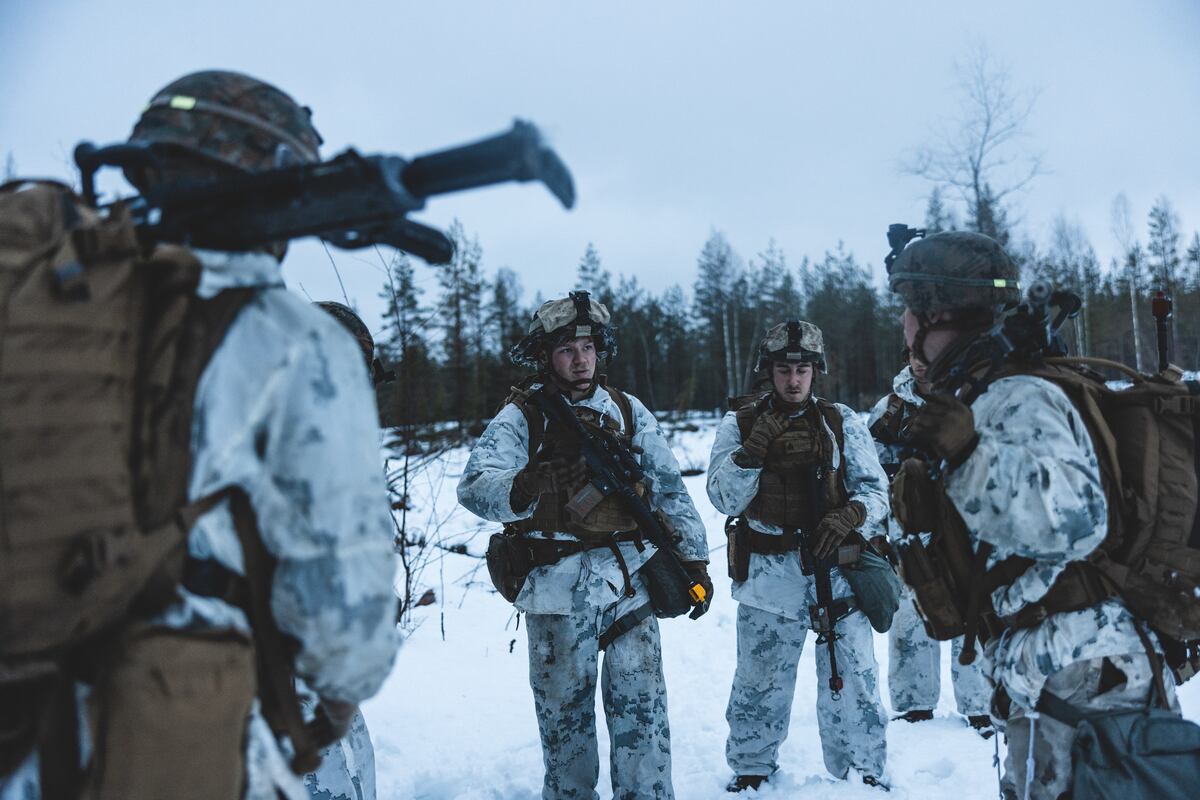
For years, the U.S. has been pushed by military officials and lawmakers to devote more resources to the rapidly evolving Arctic environment, but it is a recent surge in regional collaboration between China and Russia that is giving rise to an all-new sense of urgency.
Speaking at the Center for Strategic and International Studies on Thursday, Iris A. Ferguson, the deputy assistant secretary of defense for Arctic and Global Resilience, warned that Beijing is increasingly eyeing the Arctic as a domain that would further China’s power assertions and economic resources.
Those concerns have been amplified by a swarm of recent military activity in the region. Despite Russia approaching its third year of war following its February 2022 invasion of Ukraine, it has remained committed to directing military and economic resources to the region — at times with China by its side.
In summer 2023, Russian and Chinese militaries conducted joint training in the Bering Strait, a strategic waterway separating Russian and Alaskan peninsulas. Joint air exercises and patrols by the two nations’ coast guards have since added to the uneasiness stirring in the Pentagon.
“This kind of increasing levels of military cooperation is new,” Ferguson said. “Certainly, it’s new within and around Alaska . ... Just this past summer, right after we released our department [Arctic] strategy , we saw a joint bomber patrol off of the coast.”
Russian fighter jet flies dangerously close to U.S. F-16 over Alaska
China’s regional ambitions, meanwhile, are not limited to a military presence, Ferguson said. Scientific research projects, among other endeavors, have provided another gateway through which Beijing is staking claim.
Such projects could yield long-term economic gains while planting China on America’s doorstep.
“We really just need to be clear-eyed about some of their intentions and ... thinking about their long-term interests and how we can best protect ours,” Ferguson said. “The strategic interests that they have in the region are … giving us pause.”
Further exacerbating developments has been a warming climate throughout the high North, where temperatures since 1979 have heated four times faster than the rest of the world , degrading ice caps and glaciers and opening previously inaccessible shipping and settlement routes.
In summer 2020, Canada’s last remaining ice shelf collapsed into the Arctic Ocean , severing over 40% of its total area near Nunavut’s Ellesmere Island.
A mixture of air temperatures 9 degrees Fahrenheit above average, offshore winds and open waters adjacent to the Milne Ice Shelf instigated a break of ice approximately 80 square kilometers in size, or roughly 20 square kilometers larger than Manhattan .
In its 2024 Arctic Strategy , the Pentagon noted the “increasingly accessible region is becoming a venue for strategic competition, and the United States must stand ready to meet the challenge alongside allies and partners.”
Service-specific and multinational exercises, routine Arctic training and a continued presence that ensures the stability and defense of international waterways were points emphasized in the DOD strategy that would go toward meeting those demands.
To what extent this blend of near-peer enemy and environmental unpredictabilities will be impacted by the incoming Trump administration remains to be seen. But for now, at least from the Pentagon’s perspective, the U.S. must remain regionally stout, Ferguson said, and bolster relationships with northern European allies.
“[We have] seven like-minded partners that are incredibly militarily capable and also have heavy geostrategic alignment with us,” she said. “We’ve long had exercises that operate in the region, but we’re really looking at how we can use those as a deterrent effect, working alongside our allies and partners.”
J.D. Simkins is Editor-in-Chief of Military Times and Defense News, and a Marine Corps veteran of the Iraq War.
多年来,美国一直受到军方官员和立法者的敦促,要求其投入更多资源应对快速变化的北极环境,但最近中国和俄罗斯之间区域合作的激增,才真正引发了一种全新的紧迫感。
周四,负责北极和全球韧性的国防部副助理部长艾里斯·A·弗格森在战略与国际研究中心发表讲话时警告说,北京正日益将北极视为进一步巩固中国实力和获取经济资源的领域。
近期该地区频繁的军事活动加剧了这些担忧。尽管俄罗斯自2022年2月入侵乌克兰以来,战争已持续近三年,但它仍然致力于向该地区投入军事和经济资源——有时甚至与中国并肩作战。
2023年夏季,俄罗斯和中国军队在白令海峡举行了联合训练,白令海峡是分隔俄罗斯和阿拉斯加半岛的战略水道。此后,两国海岸警卫队的联合空中演习和巡逻加剧了五角大楼的不安情绪。
弗格森说:“这种日益密切的军事合作是前所未有的。当然,在阿拉斯加及其周边地区,这更是新鲜事……就在去年夏天,在我们发布部门(北极)战略之后不久,我们就看到海岸附近出现了联合轰炸机巡逻。”
俄罗斯战斗机在阿拉斯加上空危险地靠近美国F-16战斗机飞行。
弗格森表示,与此同时,中国的地区野心并不局限于军事存在。科学研究项目等举措也为北京拓展其地区影响力提供了另一途径。
此类项目既能带来长期的经济收益,又能将中国推到美国的家门口。
弗格森说:“我们确实需要清醒地认识到他们的一些意图,并思考他们的长远利益以及我们如何才能最好地保护我们的利益。他们在该地区的战略利益……让我们感到担忧。”
进一步加剧局势的是整个北部地区的气候变暖,自 1979 年以来,该地区的气温上升速度是世界其他地区的四倍,导致冰盖和冰川消融,并开辟了以前无法通行的航运和定居路线。
2020 年夏季,加拿大仅存的冰架崩塌入北冰洋,努纳武特地区埃尔斯米尔岛附近超过 40% 的总面积被切断。
气温比平均水平高出 9 华氏度,加上离岸风和米尔恩冰架附近的开阔水域,导致冰层破裂,面积约为 80 平方公里,比曼哈顿大约大 20 平方公里。
五角大楼在其 2024 年北极战略中指出,“这个日益开放的地区正在成为战略竞争的场所,美国必须做好准备,与盟友和伙伴一起迎接挑战。”
国防部战略强调,为满足这些需求,应开展特定军种和多国联合演习、例行北极训练以及持续存在以确保国际水道的稳定和防御。
特朗普政府即将上任,其对这种势均力敌的敌人和环境不确定性并存的局面究竟会产生多大影响,目前尚不得而知。但弗格森表示,至少从五角大楼的角度来看,美国现在必须保持在该地区的强大影响力,并加强与北欧盟友的关系。
她说:“我们有七个志同道合的伙伴,它们军事实力雄厚,而且与我们有着高度的地缘战略契合度。我们长期以来一直在该地区开展演习,但我们正在认真研究如何与盟友和伙伴合作,利用这些演习发挥威慑作用。”
JD Simkins 是《军事时报》和《防务新闻》的总编辑,也是参加过伊拉克战争的海军陆战队老兵。