MRT reliability hits record high in August8月份地铁可靠性创历史新高
In August, the MRT network's mean kilometres between failures (MKBF) rose to a record 2.88 million train-km.
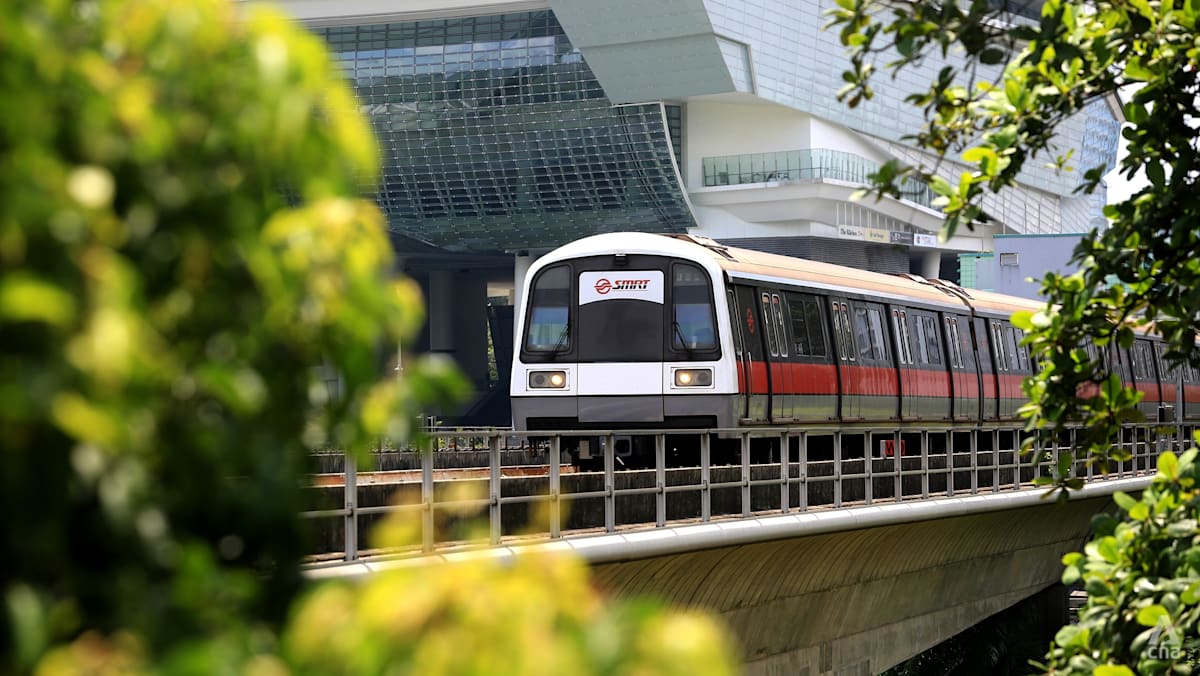
In August, the MRT network's mean kilometres between failures (MKBF) rose to a record 2.88 million train-km.
It is “likely” that Singapore’s two busiest MRT train lines - the North-South and East-West Lines - will see shortened operating hours on weekdays to give rail workers more time to carry out maintenance and asset renewal work. TODAY file photo.
This audio is generated by an AI tool.
SINGAPORE: The reliability of the MRT network, excluding the Thomson-East Coast Line (TEL), reached a new record in August, according to the Land Transport Authority’s (LTA) monthly report published on Friday (Sep 11).
In August, the MRT network's mean kilometres between failures (MKBF) rose to 2.88 million train-km, up from 2.37 million train-km the preceding month. LTA publishes its reliability figures using a 12-month moving average of MKBF - a metric that measures train reliability and tracks the average distance that a train travels before it encounters a delay of more than five minutes.
"This is the highest MKBF our MRT network has ever achieved," said the authority. According to LTA data, the previous high of 2,627,000 train-km was achieved in June 2024.
August was also the fifth consecutive month that the MRT network's MKBF has exceeded 2 million train-km.
CNA Games Guess Word Crack the word, one row at a time Buzzword Create words using the given letters Mini Sudoku Tiny puzzle, mighty brain teaser Mini Crossword Small grid, big challenge Word Search Spot as many words as you can Show More Show Less The MRT network, excluding the TEL, also had no delays exceeding 30 minutes in August. This marked the tenth consecutive month without such a delay, the longest period since LTA began tracking the statistic in 2011.
The MRT network, excluding the TEL, also had no delays exceeding 30 minutes in August. This marked the tenth consecutive month without such a delay, the longest period since LTA began tracking the statistic in 2011.
On the MRT network's reliability, LTA said: "This was only possible because of our transport workers and rail operators.
"Our high MKBF levels over the last five months reflect their sustained effort and dedication to uplift reliability and improve their response to faults and incidents.
"It also reflects the impact of the recommendations made by the Rail Reliability Taskforce in Feb 2026, which LTA, SMRT and SBST have been following up on."
All five mature MRT lines either improved or maintained their MKBF figures in August from a month ago.
The Downtown Line almost doubled its MKBF, going from 4,200,000 train-km to 8,370,000 train-km .
The MKBF for the Circle Line improved from 2,450,000 train-km to 2,510,000 train-km, while the North East Line's MKBF edged up to 4,480,000 train-km from 4,470,000 train-km.
At 1,650,000 train-km, the North-South Line saw no MKBF change, while the East-West Line improved from 2,020,000 train-km in July to 2,520,000 train-km in August.
" The Downtown and North East Lines also continued to perform strongly, recording their highest theoretically possible MKBF of over 8 million and 4 million train-km respectively in the past 12 months," said LTA.
TRAIN SERVICE DELIVERY AND PUNCTUALITY
LTA also uses other metrics to measure rail reliability, including train service delivery, which measures whether trains operated according to schedule.
It is calculated by measuring the actual distance travelled by trains compared to the scheduled distance, and expressed as a percentage.
In August, the tain service delivery for the overall MRT network was at 99.62 per cent compared with 99.71 per cent in July.
Another metric used to measure rail reliability is train punctuality, which calculates the percentage of train trips that are completed on time at the end of each line within two minutes of schedule.
Train punctuality is affected by service disruption and other operational issues that do not result in a full stoppage of services.
Lower punctuality reflects less regular train frequencies, which can cause longer wait times and more crowding.
Overall, train punctuality dipped slightly, from 99.29 per cent in July to 99.03 per cent in August.
THOMSON-EAST COAST LINE
The MKBF of Singapore's newest MRT line rose to 415,000 train-km in August, up from 373,000 train-km the month before.
The reliability figures exclude the TEL as it is still undergoing construction, extension and system integration works while in regular operation.
"Such teething issues that arise during initial operations and as a result of system updates can result in delays, even though the nature of such delays are different from those encountered during the operation of mature lines," LTA said last month.
Newer lines tend to operate significantly lower mileage since ridership is relatively low and trains are not run at more typical frequencies when compared with more mature lines.
The authority said last year that it expects the performance of the TEL to improve after it fully opens in 2026 and operations have stabilised.
Get our pick of top stories and thought-provoking articles in your inbox
Stay updated with notifications for breaking news and our best stories
Join our channel for the top reads for the day on your preferred chat app
8 月份,地铁网络的平均故障间隔公里数 (MKBF) 上升至创纪录的 288 万列车公里。
新加坡两条最繁忙的地铁线路——南北线和东西线——很可能在工作日缩短运营时间,以便铁路工人有更多时间进行维护和设备更新工作。(图片为《今日报》资料照片)
这段音频是由人工智能工具生成的。
新加坡:根据陆路交通管理局(LTA)周五(9月11日)发布的月度报告,除汤申-东海岸线(TEL)外,地铁网络的可靠性在8月份创下新纪录。
8月份,地铁网络的平均故障间隔里程(MKBF)上升至288万列车公里,高于上月的237万列车公里。陆路交通管理局(LTA)发布其可靠性数据时,采用的是MKBF的12个月移动平均值——该指标衡量列车可靠性,并追踪列车在发生超过5分钟的延误之前平均行驶的距离。
“这是我们地铁网络有史以来最高的单次列车运行里程(MKBF),”陆路交通管理局表示。根据陆路交通管理局的数据,此前的最高纪录是2024年6月创下的262.7万列车公里。
8 月也是地铁网络 MKBF 连续第五个月超过 200 万列车公里。
CNA游戏 猜词游戏 逐行破解单词 流行词游戏 用给定的字母组成单词 迷你数独 小谜题,大挑战 迷你填字游戏 小方格,大挑战 单词搜索 尽可能多地找出单词 显示更多 显示更少 地铁网络(不包括汤申-东线)8月份也没有出现超过30分钟的延误。这是连续第十个月没有出现此类延误,也是自陆路交通管理局2011年开始追踪该统计数据以来的最长记录。
除汤申-东线(TEL)外,地铁网络8月份也未出现超过30分钟的延误。这是连续第十个月没有出现此类延误,也是自陆路交通管理局(LTA)2011年开始追踪该统计数据以来的最长记录。
关于地铁网络的可靠性,陆路交通管理局表示:“这完全得益于我们的交通运输工人和铁路运营商。”
“过去五个月我们较高的 MKBF 水平反映了他们为提高可靠性和改善对故障和事故的响应而持续付出的努力和奉献精神。
“这也反映了铁路可靠性工作组在 2026 年 2 月提出的建议的影响,陆路交通管理局、SMRT 和 SBST 一直在跟进这些建议。”
所有五条成熟的捷运线路在 8 月份的 MKBF 数据均较上月有所改善或保持稳定。
市区线的 MKBF 几乎翻了一番,从 4,200,000 列车公里增加到 8,370,000 列车公里。
环线的 MKBF 从 2,450,000 列车公里提高到 2,510,000 列车公里,而东北线的 MKBF 从 4,470,000 列车公里小幅上升到 4,480,000 列车公里。
南北线列车运行公里数为 1,650,000 列公里,MKBF 没有变化,而东西线列车运行公里数从 7 月份的 2,020,000 列公里增加到 8 月份的 2,520,000 列公里。
“市区线和东北线也继续保持强劲的运营势头,在过去 12 个月中分别创下了理论上最高的 MKBF(列车运行里程)超过 800 万公里和 400 万公里,”陆路交通管理局表示。
列车服务交付和准点率
陆路交通管理局还使用其他指标来衡量铁路可靠性,包括列车服务交付情况,该指标衡量列车是否按时刻表运行。
它是通过测量列车实际行驶距离与预定行驶距离的比值来计算的,并以百分比表示。
8 月份,整个地铁网络的列车服务交付率为 99.62%,而 7 月份为 99.71%。
衡量铁路可靠性的另一个指标是列车准点率,它计算的是每条线路的列车行程在时刻表到达终点站时,与时刻表时间相差不超过两分钟的百分比。
列车准点率会受到服务中断和其他运营问题的影响,这些问题不会导致服务完全停止。
准点率降低反映出列车班次减少,这会导致候车时间延长和列车更加拥挤。
总体而言,列车准点率略有下降,从 7 月份的 99.29% 下降到 8 月份的 99.03%。
汤姆逊-东海岸线
新加坡最新地铁线路的 MKBF 在 8 月份上升至 415,000 列车公里,高于上个月的 373,000 列车公里。
由于 TEL 仍在正常运行的同时进行建设、扩建和系统集成工作,因此可靠性数据不包括 TEL。
“初期运营和系统更新过程中出现的此类初期问题可能会导致延误,尽管此类延误的性质与成熟线路运营中遇到的延误不同,”陆路交通管理局上个月表示。
较新的线路由于客流量相对较低,列车运行频率也低于较成熟的线路,因此其运营里程往往明显较低。
该机构去年表示,预计 TEL 在 2026 年全面开通运营后,其性能将有所改善,运营也将趋于稳定。
订阅我们的邮件,即可获取精选热点新闻和引人深思的文章。
订阅通知,第一时间获取突发新闻和精彩报道。
加入我们的频道,即可在您常用的聊天应用上获取当日热门文章。