Swedish air chief talks next-gen warplane, Gripen’s anti-drone role瑞典空军司令谈下一代战机及“鹰狮”的反无人机作用
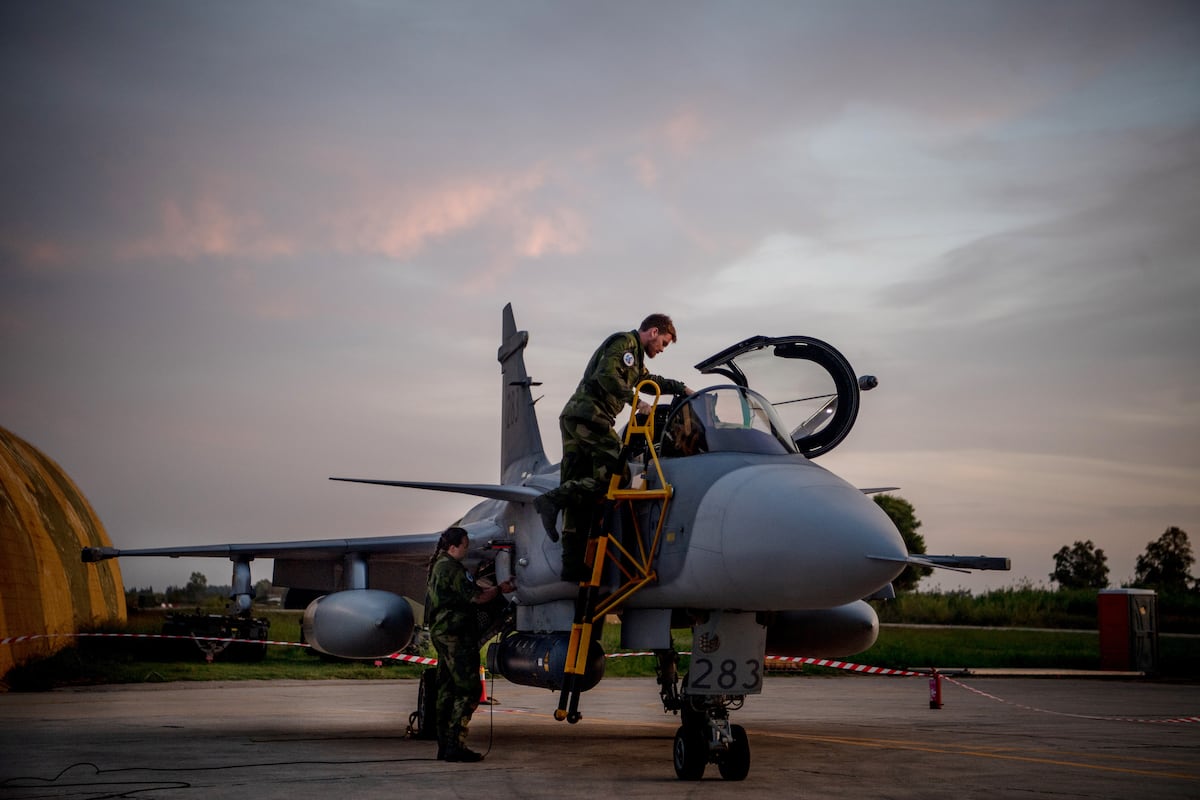
The year 2026 promises to be a time of decisions, as the Swedish air force strives to keep its options open when it comes to a new fighter design.
Maj. Gen. Jonas Wikman has served as commander of the Swedish Air Force since December 2022, overseeing a major modernization program for new combat capabilities while shaping the country’s new NATO membership. He leads more than 2,700 military personnel and a growing fleet of Gripen fighter jets, with a goal to operate 120 in total in the long-term, mixing older C/D models with new E variants. The Scandinavian country also plans to increase its defense spending by $2.9 billion in 2026, representing an 18% increase over 2025.
In an interview ahead of the new year, the air chief shared the status of Sweden’s future fighter program, the new electronic-warfare capabilities fitted on the Gripen E, the biggest threat to Swedish security, his priorities, and his take on Canada’s interest in buying the Swedish-made aircraft.
This interview was edited for length and clarity.
Where does Sweden currently stand regarding its future fighter program, in light of Saab being awarded a contract to continue a concept study to work on this technology? A year ago you said a loyal wingman or a combination of unmanned assets was being considered. What are your thoughts now?
When it comes to the overall direction of where we go with the next-generation fighter platform, we are still in the same process. We are still investing in the knowledge and flexibility to choose which option suits us best. What I can tell you is that we will be ready to answer at the political level regarding our viewpoint on what that looks like in the upcoming year. From there, I think we will have a good national standpoint on the way to move forward with the program.
When it comes to the unmanned question, one thing has increased – that is, our interest in fusing new knowledge into current capabilities and operations. We originally intended to explore and provide options to politicians, wait for a decision, and then move on to the next platform or system part of the collaborative fighter. We have realized that if new technology is developed during this process, we probably cannot wait that long to introduce other unmanned platforms.
Maj. Gen. Jonas Wikman is chief of the Swedish Air Force. (U.S. Air Force photo by Eric Dietrich)
To give you an example, we have the same idea when it comes to the development of the Gripen D version – whenever we develop a new capability or software for the E version, we make sure as fast as possible to also introduce it on the older variants as well.
At this point, could you rank the following options based on your preference or feasibility: developing a national fighter; joining a joint venture with other countries or companies; procuring an existing design and producing it under license in Sweden?
That is the question I have never been able to answer. Partly because our answer will be more complex than those three options. It will also not be graded like that. The result will likely be some kind of cooperation, some kind of national project that would combine different elements of each. We’ve also been tasked to ensure that all of those alternatives are available.
I could, as a person, answer you with my thoughts on it, but that would not be the correct way to move forward with the process.
We are still exploring all three on a principle level. One thing I have been worried about is that the program will be too platform-centric, but we [Sweden] have a history and culture of not doing so. There’s also considerations and an importance to be given to ground operations, command-and-control missions, and how well that will fit into the new platform.
Regarding the upgrades made to the electronic-warfare suite on the new Gripen E aircraft, what sort of capabilities are you most excited about?
We are very much looking forward to the EW spectrum technology on it, as I expect it will be the central strength of that aircraft. For us, these types of capabilities, both when it comes to protection and hiding, but also offensive ones, have been a very high priority.
The combination of the EW suite with multiple types of sensors working together, sharing and receiving both internal and external information across the network, and providing that to other platforms – very much like the F-35. I think we are in the same realm of operations. With the new capabilities, we can go deeper into battle and can affect the opponent in a more offensive way while also sending that data to a Global Eye and other shooters and sensors.
That is why we are eager to get such a capability, because it means we will be able to operate much closer to the threat. I think most people are underestimating the power we will get with the E version in that fight. I am looking for a sum of abilities, not a method, for example, the actual capability of not being detected and that can be reached in many ways — small radar cross-section, stealth features, EW suite. The E version has great capabilities in not being detected, spoofing, or affecting other sensors.
What is the biggest threat to Swedish security currently?
For us, we have our eyes, and I think we are on all levels quite clear that the threat to our security is Russia, for sure. We have a systematic kind of conflict between the collective West and Russia.
What is the biggest challenge the Air Force will tackle next year, and what are your priorities for 2026?
I don’t think we are struggling, but the pace to meet for our national capability development is definitely higher, and something we have to adapt to. Moving towards meeting the goal of reaching 3.5% of our GDP for core defense spending by 2030 means we have to, at the same time, keep a high level of operations nationally, but also as an ally. Our priority to be a net contributor to NATO is very high. That is why the Swedish Air Force and Navy conducted two operations this year in Poland and will also again deploy to Latvia next year.
We have to balance our air force resources and readjust our training so we can do operations and training while also simultaneously developing our own capabilities.
When we went to Poland, we had capability targets, and the fighter unit brought extra personnel and equipment and did some development work both in terms of air and ground operations. I think that is the correct way to go moving into the future because we are only one force.
Also exciting for 2026 is that we will be celebrating the service’s 100th anniversary.
You spoke about the NATO air policing missions the Gripen took part in earlier this year in Poland, which was a success for its first overseas deployment. During some of the missions, the aircraft was able to identify and engage very low and slow targets. Is this a mode of operation you are increasingly practicing?
Yes, but that is a bit of a complex question. One of the reasons is that we originally designed radars, the previous generation ones, so they wouldn’t detect those kinds of small moving targets. Going down to the operations in Poland, the second one we did included the protection of a very important logistics hub, which meant that those kinds of targets were present.
Here I am thinking of Shahed drones that were part of the mission set.
So we had to verify that we could successfully detect and engage these types of targets. We did a rapid verification program before deploying. It is not an easy mission, either from a tactical or technical standpoint.
They fly slow, which is the problem for us as we are not designed to fight small, moving targets to begin with. That means we need to train for it and make sure we have the technical capability to locate and strike them. That is what we did. Now we have verified that the Gripen and our forces can do it, and it is part of our capabilities [against Shahed drones].
What are your thoughts about Canada considering the prospect of acquiring the Gripen as its next-fighter jet instead of the F-35? Would you see a space for deeper cooperation?
I don’t really want to have any thoughts about that. I had a great conversation with the Canadian air chief and made sure we have all the information exchange necessary and the same understanding of the platform [Gripen]. It is their decision to make, and I respect all the components that are involved in it, whether that’s political, technical, or technological. It is not on my table at all.
If we are not talking about the procurement of fighter jets, I think certainly the future room for us [Canada and Sweden] to cooperate will increase. We are both engaged in the setting up of a new logistics headquarters in Enköping, Sweden [to support NATO’s Northwest Area of Operations], and that will be a common footprint that could be utilized to have a dialogue around the overlapping threat.
It’s a long distance between Sweden and Canada, but we have an interest in the same geography and share a lot of cultural and mindset similarities.
On both sides, we agree that it would be profitable to have closer cooperation between our air forces. Sweden’s introduction into NATO and that command will also mean we will meet each other on a more regular basis.
Elisabeth Gosselin-Malo was a Europe correspondent for Defense News. She covers a wide range of topics related to military procurement and international security, and specializes in reporting on the aviation sector. She is based in Milan, Italy.
自2022年12月起,约纳斯·维克曼少将担任瑞典空军司令,负责监督一项旨在提升瑞典空军作战能力的重大现代化计划,同时也在塑造瑞典加入北约后的新局面。他领导着超过2700名军事人员和一支不断壮大的“鹰狮”战斗机机队,长期目标是拥有120架该型战机,将老款C/D型与新款E型混合使用。这个北欧国家还计划在2026年增加29亿美元的国防开支,比2025年增长18%。
在新年到来之际的一次采访中,空军司令分享了瑞典未来战斗机计划的现状、鹰狮E战斗机上安装的新型电子战能力、瑞典安全面临的最大威胁、他的工作重点以及他对加拿大有意购买瑞典制造的飞机的看法。
为了篇幅和清晰度,本次采访内容经过编辑。
鉴于萨博公司已获得合同继续开展相关技术的概念研究,瑞典目前在未来战斗机项目方面处于什么阶段?一年前您曾表示正在考虑采用忠诚僚机或多种无人作战设备的组合方案。您现在的想法是什么?
关于下一代战斗机平台的总体发展方向,我们目前仍处于探索阶段。我们仍在投入资源,积累知识,增强灵活性,以便选择最适合我们的方案。我可以告诉大家的是,明年我们将准备好在政治层面阐述我们对该平台发展方向的看法。届时,我相信我们将拥有一个清晰的国家战略,从而更好地推进该项目。
在无人作战问题上,有一点显著提升——那就是我们对将新知识融入现有能力和作战行动的兴趣日益浓厚。我们最初的计划是探索并向政界人士提供各种方案,等待决策,然后再着手研发协同作战战斗机的下一个平台或系统部件。但我们意识到,如果在此过程中开发出新技术,我们可能无法等待那么久就推出其他无人平台。
约纳斯·维克曼少将是瑞典空军司令。(美国空军照片,摄影:埃里克·迪特里希)
举例来说,我们在开发鹰狮D型战斗机时也秉持着同样的理念——每当我们为E型战斗机开发出新的功能或软件时,我们都会确保尽快将其引入到旧型号中。
此时,您能否根据您的偏好或可行性对以下选项进行排序:开发本国战斗机;与其他国家或公司成立合资企业;采购现有设计并在瑞典获得许可进行生产?
这个问题我一直都无法回答。部分原因是我们的答案会比这三个选项复杂得多。而且,它的评分方式也不会如此。最终的结果很可能是一种合作,某种融合了各个选项不同要素的国家项目。我们的任务也是确保所有这些方案都能得到落实。
作为个人,我可以就此发表我的看法,但这并不是推进此事的正确方法。
我们仍在原则层面探讨这三点。我一直担心该项目会过于以平台为中心,但我们(瑞典)历来有避免这种情况的传统和文化。此外,地面作战、指挥控制任务以及它们与新平台的契合度也需要认真考虑和重视。
关于新型鹰狮E战斗机电子战系统的升级,您最期待哪些方面的提升?
我们非常期待这款飞机搭载的电子战频谱技术,我预计这将是该机的核心优势。对我们而言,这类能力,无论是在防御和隐蔽方面,还是在进攻方面,都至关重要。
电子战系统与多种传感器协同工作,通过网络共享和接收内部及外部信息,并将其提供给其他平台——这与F-35非常相似。我认为我们处于相同的作战领域。凭借这些新能力,我们可以更深入地参与战斗,以更具进攻性的方式打击对手,同时还能将数据发送给全球视野系统和其他武器及传感器。
这就是我们渴望获得这种能力的原因,因为它意味着我们将能够在更接近威胁的地点作战。我认为大多数人低估了E型战机在对抗中将发挥的作用。我追求的是一系列能力,而非单一方法,例如,真正意义上的不被探测能力,而这可以通过多种方式实现——例如,更小的雷达反射截面积、隐身性能、电子战系统等等。E型战机在不被探测、欺骗以及干扰其他传感器方面都拥有强大的能力。
目前瑞典安全面临的最大威胁是什么?
对我们来说,我们已经看清了形势,我认为在各个层面上我们都非常清楚,对我们安全的威胁无疑来自俄罗斯。西方集体与俄罗斯之间存在着一种系统性的冲突。
空军明年将面临的最大挑战是什么?2026 年的优先事项是什么?
我认为我们目前的情况并不艰难,但要达到国家能力发展的目标,步伐确实更快了,我们必须适应这一点。为了实现到2030年国防开支占GDP 3.5%的目标,我们必须在保持国内高水平作战能力的同时,也作为盟友保持高水平的作战能力。我们高度重视成为北约的净贡献国。正因如此,瑞典空军和海军今年在波兰开展了两次军事行动,明年还将再次部署到拉脱维亚。
我们必须平衡空军资源,调整训练计划,以便在开展作战和训练的同时,也能发展自身的能力。
我们去波兰的时候,设定了能力目标,战斗机部队带来了额外的人员和装备,并在空中和地面作战方面都开展了一些研发工作。我认为这是未来发展的正确方向,因为我们只是一个整体。
2026年同样令人兴奋的是,我们将庆祝该服务成立100周年。
您谈到了今年早些时候“鹰狮”战斗机在波兰参与的北约空中警戒任务,这是它首次海外部署并取得成功。在一些任务中,该机能够识别并攻击极低空、低速目标。这是你们正在越来越多地练习的一种作战模式吗?
是的,但这确实是个比较复杂的问题。原因之一是,我们最初设计的雷达,也就是上一代雷达,无法探测到这类小型移动目标。再说波兰的行动,我们执行的第二个行动包括保护一个非常重要的后勤枢纽,这意味着这类目标确实存在。
我这里想到的是作为任务的一部分的沙赫德无人机。
因此,我们必须验证我们能否成功探测并打击这类目标。部署前,我们进行了一项快速验证计划。无论从战术角度还是技术角度来看,这都不是一项简单的任务。
它们的飞行速度很慢,这对我们来说是个问题,因为我们本来就不是用来对付小型移动目标的。这意味着我们需要进行专门的训练,并确保我们具备定位和打击它们的技术能力。我们正是这样做的。现在我们已经验证了“鹰狮”战斗机和我们的部队能够做到这一点,这已经成为我们对抗“沙赫德”无人机能力的一部分。
您如何看待加拿大考虑采购鹰狮战斗机而非F-35作为其下一代战斗机?您认为双方之间是否存在更深入的合作空间?
我实在不想考虑这个问题。我和加拿大空军司令进行了很好的沟通,确保我们掌握了所有必要的信息,并且对“鹰狮”战机平台有着相同的理解。这是他们的决定,我尊重所有相关方的意见,无论是政治、技术还是其他方面。这完全不在我的考虑范围之内。
如果抛开战斗机采购不谈,我认为加拿大和瑞典未来的合作空间肯定会扩大。我们双方都在瑞典恩雪平筹建一个新的后勤总部(以支持北约西北作战区),这将是一个共同的据点,可以用来就共同面临的威胁展开对话。
瑞典和加拿大相距遥远,但我们对同一地理区域感兴趣,并且在文化和思维方式上有很多相似之处。
双方一致认为,加强两国空军合作将大有裨益。瑞典加入北约及其指挥部也将意味着我们将更频繁地会面。
伊丽莎白·戈斯林-马洛曾任《防务新闻》欧洲通讯员。她的报道涵盖军事采购和国际安全等广泛领域,尤其擅长航空领域的报道。她常驻意大利米兰。