Interview: Norwegian Army chief wants to generate ‘more firepower’专访:挪威陆军总司令希望增强“火力”
Maj. Gen. Lars S. Lervik says he doesn't care where military equipment comes from – Europe or the United States – as long as it works as intended.
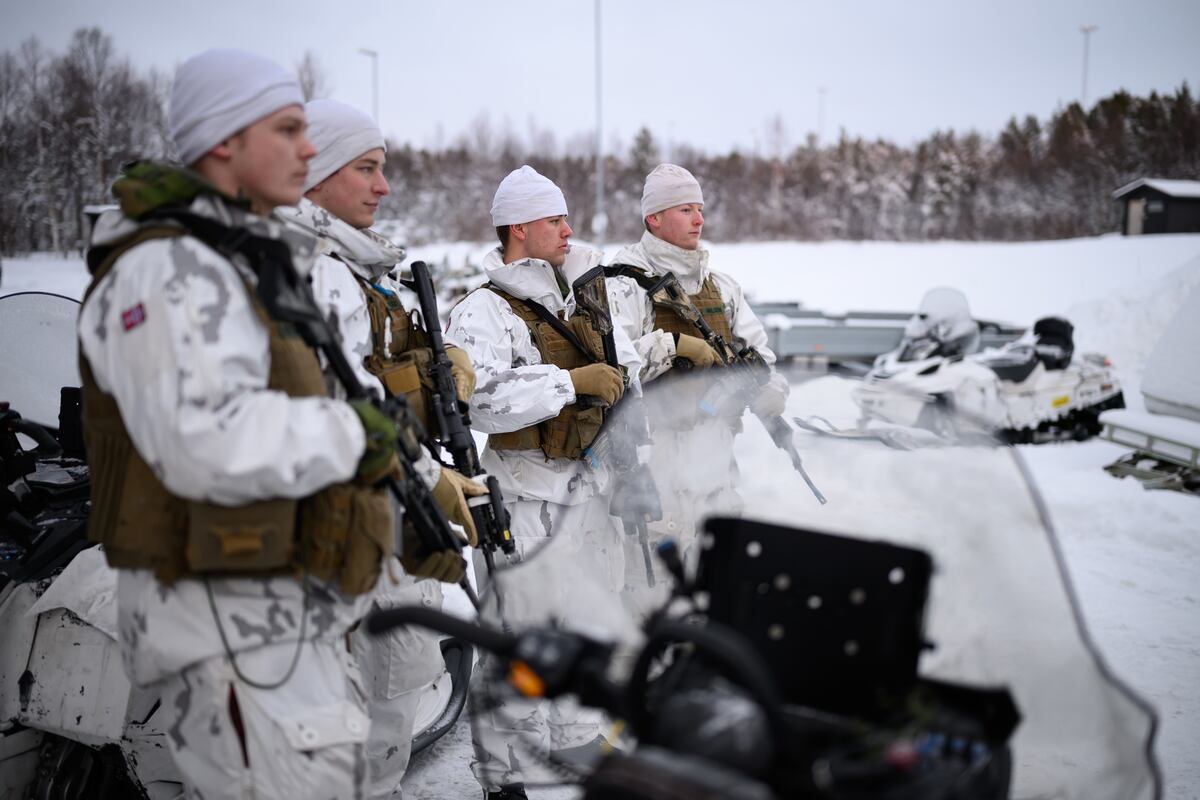
SETERMOEN, Norway — Norwegian Maj. Gen. Lars S. Lervik has been chief of the Norwegian Army since 2020, based in Bardufoss, in Northern Norway. As of early 2025, the force is made up of approximately 9,000 personnel which includes soldiers, civilians and conscripts, as conscription is mandatory for both men and women.
Lervik has been an avid supporter of assisting Ukraine. The Norwegian Army, alongside other military branches, has trained over 6,000 Ukrainian soldiers in the country as well as in the United Kingdom as part of Operation Interflex.
Before this role, Lervik was the commander of Brigade North, the largest unit in the Norwegian Army. In an interview with Defense News, he discussed the timeline for Norway’s boost in defense posture, urgent equipment requirements for his military branch, cooperation with other Arctic nations, and Russian activity in the region.
This interview was edited for length and clarity.
Then-Brig. Gen. Lars Lervik speaks to the media during the Nordic Response military exercise on March 9, 2024, in Kivilompolo, Finland. (Photo by Leon Neal/Getty Images)
You have been an advocate for Norway to invest more significantly and more rapidly in its defense capabilities. How fast would you like to see this happen, considering the capability gaps that Norway is currently facing?
We have a window of opportunity and obligation to do as much as possible to increase our ability as a country and to NATO as a whole. We are trying to do as much as we can as fast as we can to increase our combat power and our defense posture.
In some areas, such as buying new equipment, some things may take two to three years because that is the procurement process and the average time that it takes to produce systems as well. In other areas, such as manning, I’d like to see that happen now – recruitment, both in terms of getting people back in uniform who previously served in the Army while also increasing the number of conscripts coming in as well and the number of officers being trained.
What is the most urgent equipment you need from an army perspective?
They are in terms of acquiring new types of capabilities. [That includes] rocket artillery, more air defense systems, more infantry fighting vehicles, and the list goes on. But from a general standpoint, our focus and what we are looking to do is generate more firepower while also simultaneously investing further in developing unmanned systems and protection against them.
Some of the equipment the Norwegian Army relies on is American-made, systems that aren’t necessarily made to operate in harsh Arctic conditions. Considering the increased push recently for European nations to buy more from European manufacturers to reduce dependency on the U.S., do you have a preference for European equipment – is that a priority for you?
The way we think is more along the lines of: Whatever is best we want to get, as long as we can get it to operate and perform well in our type of environment, and as long as it doesn’t come from parts of the world we don’t want to buy from.
We don’t want to buy Chinese drones for instance but whether it’s American or European is not a concern. We are all members of the same alliance that is NATO.
From a military perspective, I’d like to buy the best available equipment. It could be Swedish, American, German, or Norwegian systems. Norway makes excellent air defense systems – using American ammunition, that is.
Nordic nations announced over the last year ambitions to operate as a joint air force and cooperate more closely in this domain. Are there similar aspirations to establish a joint Arctic Army for instance?
We are in the process of setting up not a Nordic one per se, but a new NATO Land Command in Finland [formally called Multi Corps Land Component Command to operate under the alliance’s U.S.-based Norfolk Joint Force Command]. It will include both Nordic and Arctic countries as well as others, tasked with leading the alliance’s land forces operations in Northern Europe.
That will make it possible to operate as a joint force – but it is important to note that we will still be and have our individual armies, but will be working together, shoulder to shoulder. For instance, we are in the process of looking to acquire the same infantry fighting vehicles, which will make it easier to fight between all of us.
What about any plans to set up some kind of information-sharing alliance amongst Arctic nations specifically which would include Canada and the United States?
We [already] have some kind of cooperation like that. We have a Cold Weather Operations Centre of Excellence, which sort of acts like that, under the NATO umbrella. It brings together Arctic allies, where we share best practices on everything ranging from how to handle climate change in this environment to what kind of equipment we need, how we train and more.
By some accounts, Russia is considered to be more advanced in terms of Arctic military presence and number of military bases in the region than NATO. At this stage, do you believe that this is true, or do you think we overestimate Russian Arctic capabilities?
What we have seen is that Russians, because they live in the Arctic, are very capable of operating in that type of environment. But at the same time, we have been surprised by how badly Russia has performed [in some areas]. On the other hand, they are still in the fight — that has demonstrated that they are learning as well. We are trying to keep very close attention to what happens when it comes to Russian activity in the Arctic.
Elisabeth Gosselin-Malo was a Europe correspondent for Defense News. She covers a wide range of topics related to military procurement and international security, and specializes in reporting on the aviation sector. She is based in Milan, Italy.
挪威塞特穆恩——自2020年起,挪威陆军少将拉尔斯·S·勒维克一直担任挪威陆军总司令,驻地位于挪威北部的巴杜福斯。截至2025年初,挪威陆军约有9000名人员,包括士兵、文职人员和义务兵,因为挪威实行男女强制征兵制。
勒维克一直积极支持援助乌克兰。作为“国际协调行动”(Operation Interflex)的一部分,挪威军队与其他军事部门一起,在乌克兰和英国训练了超过6000名乌克兰士兵。
在此之前,莱尔维克曾任挪威陆军最大部队——北方旅的指挥官。在接受《防务新闻》采访时,他谈到了挪威提升国防态势的时间表、其所属军种的紧急装备需求、与其他北极国家的合作以及俄罗斯在该地区的活动。
为了篇幅和清晰度,本次采访内容经过编辑。
2024年3月9日,时任准将拉尔斯·勒维克在芬兰基维洛姆波洛举行的“北欧响应”军事演习期间接受媒体采访。(图片来源:Leon Neal/Getty Images)
您一直倡导挪威加大对国防能力的投资力度,并加快投资速度。考虑到挪威目前面临的能力差距,您希望这一目标以多快的速度实现?
我们现在面临着一个机遇和义务,要尽一切可能提升我们国家以及整个北约的能力。我们正竭尽所能,以最快的速度提升我们的战斗力和防御态势。
在某些领域,例如采购新设备,一些事情可能需要两到三年时间,因为这是采购流程,也是系统生产的平均时间。而在另一些领域,例如人员配备,我希望看到这些工作能够立即开展——包括招募人员,让曾经服役于军队的人员重返岗位,同时增加应征入伍的人数以及接受培训的军官人数。
从军队的角度来看,你们最迫切需要的装备是什么?
他们正在寻求获得新型能力,包括火箭炮、更多防空系统、更多步兵战车等等。但总的来说,我们的重点和目标是在提升火力的同时,加大对无人系统及其防护能力的投入。
挪威军队依赖的一些装备是美国制造的,这些系统未必适合在严酷的北极环境下运行。考虑到最近欧洲各国都在加大力度从欧洲制造商采购更多产品,以减少对美国的依赖,您是否更倾向于欧洲装备?这是否是您的优先事项?
我们的想法更像是:只要能在我们这种环境下运行良好、性能优异,并且不是来自我们不想购买的地区,我们就选择最好的。
例如,我们不想购买中国的无人机,但无论是美国的还是欧洲的,我们都不在意。我们都是北约成员国。
从军事角度来看,我希望采购最好的装备。可以是瑞典、美国、德国或挪威的系统。挪威的防空系统非常出色——当然,前提是使用美国弹药。
北欧国家在过去一年中宣布了组建联合空军并在该领域加强合作的计划。那么,它们是否也有建立联合北极军队的类似愿望呢?
我们正在筹建的并非严格意义上的北欧司令部,而是在芬兰设立一个新的北约陆地司令部(正式名称为多军陆地作战司令部,隶属于北约位于美国的诺福克联合部队司令部)。该司令部将包括北欧和北极国家以及其他国家,负责领导北约在北欧的陆地部队行动。
这将使我们能够以联合部队的形式作战——但需要注意的是,我们仍然各自拥有军队,只是会并肩作战。例如,我们正在寻求采购相同的步兵战车,这将使我们之间的作战更加便捷。
是否有任何计划在北极国家之间建立某种信息共享联盟,特别是将加拿大和美国纳入其中?
我们[已经]开展过类似的合作。我们有一个寒冷天气作战卓越中心,它在北约框架下发挥着类似的作用。该中心汇集了北极盟国,我们在这里分享最佳实践,涵盖从如何应对气候变化到我们需要哪些装备、如何进行训练等等各个方面。
一些说法认为,俄罗斯在北极地区的军事存在和军事基地数量方面比北约更胜一筹。您认为现阶段这种说法是否属实?或者您认为我们高估了俄罗斯在北极的能力?
我们看到,俄罗斯人由于生活在北极地区,非常擅长在那种环境下开展行动。但与此同时,俄罗斯在某些领域的糟糕表现也让我们感到惊讶。另一方面,他们仍在继续努力——这表明他们也在不断学习。我们将密切关注俄罗斯在北极地区的活动。
伊丽莎白·戈斯林-马洛曾任《防务新闻》欧洲通讯员。她的报道涵盖军事采购和国际安全等广泛领域,尤其擅长航空领域的报道。她常驻意大利米兰。