Cheap first-person-view drones now hunting larger prey in Ukraine廉价的第一人称视角无人机现在在乌克兰猎杀更大的猎物
The Ukrainian military released footage showing one of its FPV drones successfully hitting the tail rotor of a Russian Mi-28 Havoc attack helicopter.
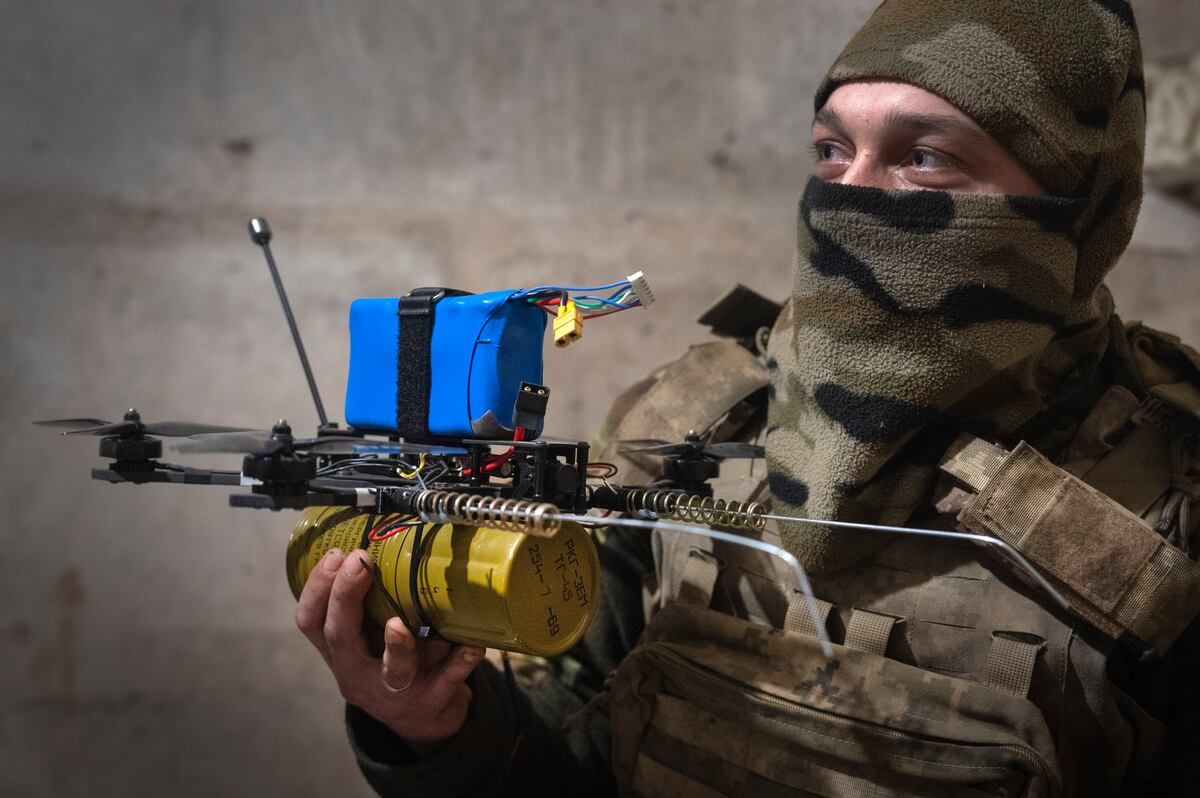
MILAN – Low-cost first-person-view drones are proving increasingly capable of striking larger platforms — such as combat helicopters — in Ukraine , as their pace of development has accelerated to allow them to fly faster and further.
On Aug. 7, the Ukrainian military released footage showing one of its unknown models of FPV drones successfully hitting the tail rotor of a Russian Mi-28 Havoc attack helicopter over the battlefield.
The hit represented one of the first filmed strikes on a manned Russian helicopter, in flight, using a Ukrainian FPV platform. While these variations of drones have been used widely across the battlefield , experts say efforts to use them to bring down larger, expensive aircraft have been previously unsuccessful.
“There were numerous attempts of Ukrainian FPVs trying to chase Russian helicopters before, but all such attacks were near misses,” Sam Bendett, a research analyst at the U.S.-based Center for Naval Analyses, said. “It’s difficult to pilot an FPV drone towards a military helicopter flying at high speeds.”
Although it is not possible from the available recording to certify the overall impact of the hit on the aircraft, Bendett says that the fast-paced evolution of these small drones and the ways they can be used should be watched closely by militaries globally.
“The sky over the [Ukraine] battlefield is now teeming with fast-flying FPVs hunting much larger prey, and assuming one can be piloted to the helicopter’s vulnerable part — like its rear propeller — major damage can be done,” he said.
Helicopters have proven especially vulnerable throughout the war in Ukraine, due in part to the proliferation of ground-based air defenses that have rendered manned flight across the battlefield extremely difficult.
As of July 27, Ukraine’s military intelligence unit, HUR, reported that Russian forces have lost up to 326 helicopters since the start of the invasion. Bendett notes that some of Moscow’s rotorcraft are larger and fly at slower speeds than the Mi-28, which could offer more occasions for a successful FPV attack.
FPV drones were introduced relatively early on in the war to fulfill different tasks. In late 2023, Ukrainian President Volodymyr Zelenskyy announced the country’s intention to produce one million of the platforms in 2024.
Whereas initially the drones had a significantly limited range, between 3 to 5 kilometers on average, Bendett says that number has expanded to 15-20 kilometers today.
The future use of FPVs in combat will likely involve them flying “in swarms and groups in order to overwhelm adversary defenses,” according to Bendett.
Beyond this, other military experts argue that the rise of this new threat alongside the already exposed vulnerabilities of helicopters will necessitate a reconsideration of the use and role of rotary aircraft.
“The future use of helicopters in combat can and should be rethought, especially with the growth of unmanned systems,” Serhii Kuzan, a former adviser to the Ukrainian Ministry of Defense, told Defense News. “It is quite likely that their role as strike means may change after the Russian-Ukraine war, as potentially this feature will be used by attack drones or even unmanned helicopters.”
Elisabeth Gosselin-Malo was a Europe correspondent for Defense News. She covers a wide range of topics related to military procurement and international security, and specializes in reporting on the aviation sector. She is based in Milan, Italy.
米兰——低成本的第一人称视角无人机在乌克兰越来越有能力打击大型平台(例如武装直升机),因为其发展速度加快,使其能够飞得更快更远。
8月7日,乌克兰军方公布了一段视频,显示其一款未知型号的FPV无人机在战场上成功击中了一架俄罗斯米-28“浩劫”攻击直升机的尾桨。
这次袭击是首次使用乌克兰FPV平台对飞行中的俄罗斯有人驾驶直升机进行实弹攻击的影像记录。虽然这类无人机已在战场上广泛使用,但专家表示,此前利用它们击落大型、昂贵飞机的尝试均以失败告终。
“此前乌克兰的FPV无人机曾多次尝试追逐俄罗斯直升机,但每次都险些击中目标,”美国海军分析中心的研究分析师萨姆·本德特说。“操控FPV无人机接近高速飞行的军用直升机非常困难。”
虽然从现有录像中无法确定此次撞击对飞机造成的总体影响,但本德特表示,全球各国军队都应该密切关注这些小型无人机的快速发展及其使用方式。
他说:“乌克兰战场上空现在到处都是高速飞行的FPV无人机,它们正在猎杀体型更大的猎物。假设有人能操控其中一架无人机飞到直升机的脆弱部位——比如后螺旋桨——就能造成重大破坏。”
在整个乌克兰战争中,直升机已被证明特别脆弱,部分原因是地面防空系统的扩散使得有人驾驶飞机在战场上飞行变得极其困难。
截至7月27日,乌克兰军事情报机构HUR报告称,自入侵开始以来,俄军已损失多达326架直升机。本德特指出,莫斯科的一些旋翼机比米-28更大,飞行速度更慢,这可能为第一人称视角(FPV)攻击的成功提供更多机会。
FPV无人机在战争初期就被引入战场,用于执行各种任务。2023年底,乌克兰总统泽连斯基宣布该国计划在2024年生产100万架此类无人机。
虽然最初无人机的飞行范围非常有限,平均只有 3 到 5 公里,但本德特表示,如今这个数字已经扩大到 15 到 20 公里。
据本德特称,未来 FPV 在战斗中的应用很可能涉及“成群结队地飞行,以压倒敌方的防御”。
除此之外,其他军事专家认为,这种新威胁的出现,加上直升机已经暴露出的脆弱性,将需要重新考虑旋翼飞机的使用和作用。
“随着无人系统的发展,未来直升机在作战中的使用方式可以而且应该重新思考,”乌克兰国防部前顾问谢尔盖·库赞告诉《防务新闻》。“俄乌战争后,直升机作为打击手段的角色很可能会发生变化,因为攻击无人机甚至无人直升机可能会利用这一特性。”
伊丽莎白·戈斯林-马洛曾任《防务新闻》欧洲通讯员。她的报道涵盖军事采购和国际安全等广泛领域,尤其擅长航空领域的报道。她常驻意大利米兰。