Lockheed vows quick action on German Typhon missile launcher request洛克希德公司承诺迅速响应德国提出的“台风”导弹发射器请求。
The U.S. defense giant sees new business in Europe for its multifunction launcher, which can fire more than a dozen missile types.
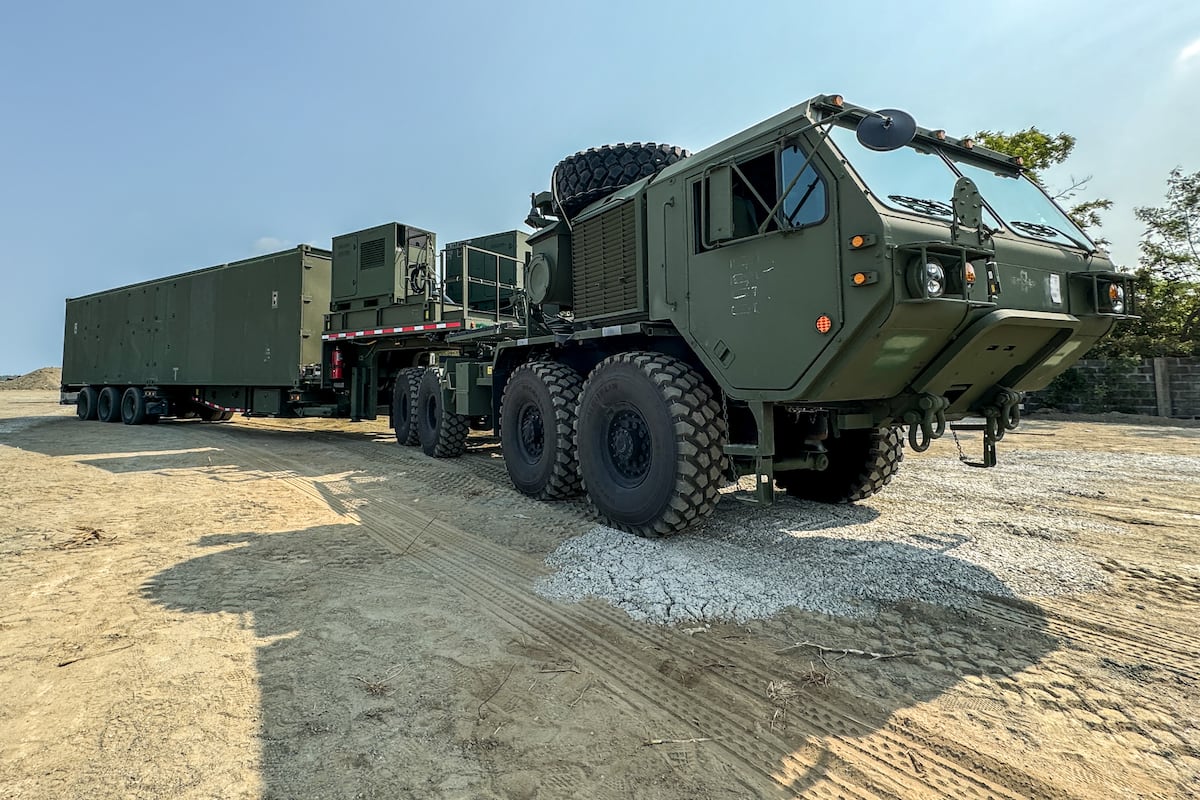
COLOGNE, Germany — Lockheed Martin has vowed to make haste in building Typhon strike missile launchers for Germany if Berlin and Washington can finalize a sales agreement.
The promise of speedy delivery is the centerpiece of the manufacturer’s pitch to Germany. Lockheed’s “hot production” line in Moorestown, New Jersey, could pump out launchers in time for Berlin’s envisioned fielding time a year from now, Edward Dobeck, program director of launching systems, told Defense News in an interview.
That is, if the two governments succeed in moving quickly through the foreign military sales process that governs such transactions, Dobeck added.
In Germany, the proposed purchase will also have to pass parliamentary consideration after the summer break, which could turn controversial given the weapon’s intended purpose.
German Defense Minister Boris Pistorius announced July 16 Germany’s interest in the system as a means to bolster the country’s deterrence posture vis-à-vis Russia. He said Typhon would serve only as a counterstrike capability, threatening punishment if Moscow were to attack first.
The Typhon, a containerized, land-based version of the Mk-41 vertical launch system installed on many Western warships, can fire missiles up to 2,000 kilometers, including Tomahawks and SM-6.
The U.S. Army commissioned the weapon’s naval-to-land repurposing, and Biden administration officials had planned to field the launcher, named Mid-Range Capability in the ground service’s lingo, to combatant commands across the globe, including Europe.
In the Army’s nomenclature, one MRC battery includes four Typhon launchers with four cells each, for a total of 16 missiles to be loaded at once; a command-and-control shelter; a reloader; and a support vehicle.
When the U.S. Army embarked on the MRC program in 2020, it was intended to fill an urgent capability gap to hit moving targets at land and at sea, which was left open in the wake of the service’s failed cross-domain upgrade to the Army Tactical Missile System. That effort experienced a variety of technical problems and delays.
The Army fielded the new capability in three years.
According to Dobeck, Lockheed has delivered two batteries to the service and completed production of the third last month. The company is now beginning production for the fourth and final battery currently under contract.
German officials consider the potential Typhon buy as a gap-filler for an eventual European program, dubbed ELSA, that would fulfill the continent’s mid- and long-range strike needs.
As such, Berlin defense leaders have stressed that the utility for the Bundeswehr, the armed forces here, would be fleeting.
The German government’s vision of buying, owning and operating Typhons independently comes as Pistorius has portrayed the acquisition as linked to a German-U.S. pact from a year ago aimed at temporarily stationing mid-range weapons in Germany by 2026 on a bilateral basis.
That announcement on the sidelines of the 2024 NATO summit in Washington came at a time when U.S. plans to field mid-range strike capabilities — presumably Typhon — to key worldwide commands anyway were still alive and well.
Since Donald Trump took office as president in January, those machinations are no longer set in stone. Results of a Pentagon global force posture review, which could upend capability deployment plans for Europe, are expected in the fall.
Dobeck, the Lockheed executive, said the company has been in touch with Germany’s Diehl Defence and Rheinmetall about local partnering on Typhon.
European missiles for purposes other than strike, including Diehl’s Iris-T and the Franco-Italian Aster anti-air missiles, could eventually be fired from the U.S. launcher, he said.
Jen Judson in Washington contributed this report.
Sebastian Sprenger is associate editor for Europe at Defense News, reporting on the state of the defense market in the region, and on U.S.-Europe cooperation and multi-national investments in defense and global security. Previously he served as managing editor for Defense News. He is based in Cologne, Germany.
德国科隆——洛克希德·马丁公司承诺,如果柏林和华盛顿能够最终敲定销售协议,将加快为德国建造“台风”打击导弹发射器。
快速交付的承诺是制造商向德国推销的核心卖点。洛克希德公司发射系统项目主管爱德华·多贝克在接受《防务新闻》采访时表示,该公司位于新泽西州摩尔斯敦的“热线生产线”可以及时生产发射装置,满足柏林方面一年后部署的要求。
多贝克补充说,也就是说,如果两国政府能够迅速完成规范此类交易的对外军售流程的话。
在德国,这项拟议的采购还需要在夏季休会后经过议会审议,考虑到该武器的预期用途,这可能会引发争议。
德国国防部长鲍里斯·皮斯托瑞斯于7月16日宣布,德国有意采购该系统,以加强其对俄罗斯的威慑态势。他表示,“台风”系统仅作为反击能力,并警告称,如果莫斯科先发制人,德国将予以惩罚。
Typhon 是 Mk-41 垂直发射系统的陆基集装箱版本,安装在许多西方军舰上,可以发射射程达 2000 公里的导弹,包括战斧导弹和 SM-6 导弹。
美国陆军委托进行了该武器从海军到陆地的改装,拜登政府官员计划将这种在陆军术语中被称为“中程能力”的发射器部署到全球各地的作战司令部,包括欧洲。
在陆军的命名中,一个 MRC 连包括四个 Typhon 发射器,每个发射器有四个发射单元,一次可装填 16 枚导弹;一个指挥控制掩体;一个装填器;以及一辆支援车辆。
美国陆军于2020年启动多用途导弹系统(MRC)项目,旨在填补其打击陆地和海上移动目标的迫切能力缺口。此前,由于陆军战术导弹系统跨域升级失败,这一缺口一直存在。而陆军战术导弹系统的跨域升级工作遭遇了各种技术难题和延误。
陆军在三年内完成了这项新能力的部署。
据多贝克称,洛克希德公司已向美军交付了两块电池,并于上个月完成了第三块电池的生产。该公司目前正在开始生产合同中规定的第四块也是最后一块电池。
德国官员认为,购买 Typhon 导弹可以填补欧洲最终推出的名为 ELSA 的计划的空白,该计划将满足欧洲大陆的中远程打击需求。
因此,柏林国防领导人强调,这种做法对德国联邦国防军(驻德武装部队)的效用将是短暂的。
德国政府希望独立购买、拥有和运营“台风”导弹系统。与此同时,皮斯托瑞斯将此次采购描述为与一年前德美两国达成的双边协议有关,该协议旨在到 2026 年在德国临时部署中程武器。
在华盛顿举行的 2024 年北约峰会期间,美国宣布了这一消息。与此同时,美国向全球主要指挥部部署中程打击能力(据推测是 Typhon)的计划仍然有效。
自唐纳德·特朗普1月就任总统以来,这些既定策略已不再一成不变。五角大楼的全球兵力态势评估结果预计将于秋季公布,该评估结果可能会彻底改变欧洲的兵力部署计划。
洛克希德公司的高管多贝克表示,该公司已与德国的迪尔防务公司和莱茵金属公司就台风导弹的本地合作事宜进行了接触。
他说,包括迪尔公司的 Iris-T 导弹和法意联合研制的 Aster 防空导弹在内的欧洲导弹,其用途并非打击,最终可能会从美国发射装置发射。
华盛顿的珍·贾德森对此报道亦有贡献。
塞巴斯蒂安·斯普伦格是《防务新闻》欧洲版副主编,负责报道该地区的防务市场状况,以及美欧在防务和全球安全领域的合作和多国投资。此前,他曾担任《防务新闻》执行主编。他现居德国科隆。