NATO must find a unified voice to talk about — not to — China, advisers find顾问们认为,北约必须找到统一的声音来与中国对话,而不是与中国对着干。
The report produced by the so-called Reflection Group minces no words when it comes to describing China's government as a rising threat.
COLOGNE, Germany — An influential report by NATO advisers has urged the alliance to find a common course toward standing up to China, nixing proposals to create a direct line of communication with Beijing in the style of the NATO-Russia Council.
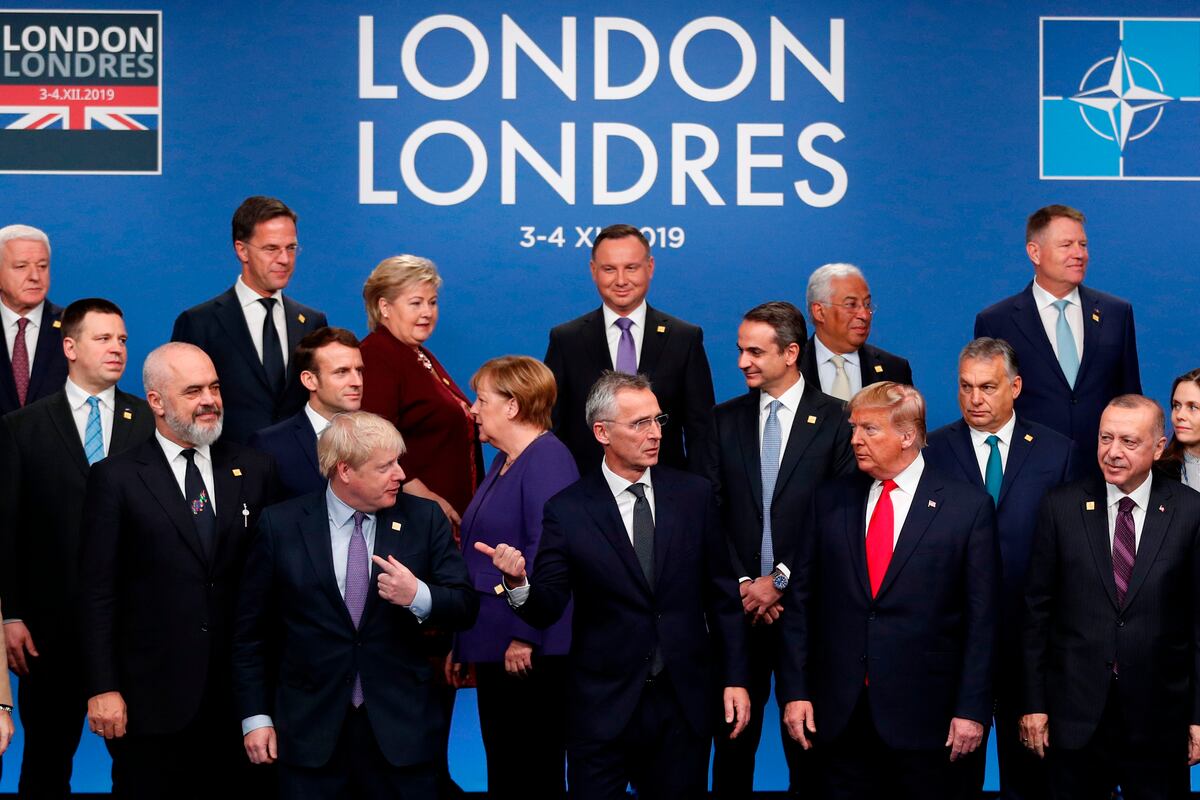
The recommendation is included in a new report by the so-called Reflection Group, which started its work on reforming the alliance in April. Member states tasked Secretary General Jens Stoltenberg at the December 2019 summit in London with beginning a comprehensive soul-searching period about NATO’s raison d’être and its inner workings.
The report, which was produced by the advisory panel and unveiled this week, minces no words when it comes to China as a rising threat. “The scale of Chinese power and global reach poses acute challenges to open and democratic societies, particularly because of that country’s trajectory to greater authoritarianism and an expansion of its territorial ambitions,” it stated.
Unlike Russia, which the authors argue poses a more near-term threat to Europe’s security, the rise of China has the potential to affect the alliance’s security fortunes in the long run.
“China is the most consequential challenger,” said Wess Mitchell, a former diplomat who spearheaded the U.S. State Department’s Europe policy under the Trump administration until early 2019.
Mitchell co-chaired the Reflection Group along with Thomas de Maizière, a German lawmaker and former defense minister.
According to Mitchell, the advisers debated at length the idea of formal consultations with Beijing by way of a dedicated council, but they ultimately ditched the idea.
“We first need to come to a consensus on how to talk about China, not yet with China,” he said during an online event Thursday organized by the Carnegie Endowment for International Peace. “That’s the dialogue that needs to happen.”
To find such a consensus, de Maizière said NATO should foster a “new culture of consultations” among member states. That process could lead to a dedicated “body” within the alliance structure dedicated only to Chinese matters.
Officials on both sides of the Atlantic are putting a lot of stock in U.S. President-elect Joe Biden to reinvigorate the frosty relationship under outgoing President Donald Trump. Making NATO into a political organization, versus a strictly military one, is a key component of the reform group’s recommendations.
“This is the only place where North America and Europe come together on a daily basis to decide and act,” Stoltenberg said.
Amid the report’s portrayal of China as a force intent on world domination, Anna Wieslander, a defense analyst with the Atlantic Council, said the alliance should not forget about “dialogue paths” with Beijing.
Indeed, the experts’ report said NATO should “keep open the prospect of political dialogue on shared interests and differences,” for example in arms control.
“In all of its actions toward China, NATO should continue to show that it has no quarrel with the Chinese people and that any actions it undertakes are defensive in nature and in response to the stated intentions or actions of the current Chinese government,” the report stated.
A cluster of recommendations aims to streamline NATO decision-making. While the principle of consensus decisions within the alliance will remain in place, officials should find ways to end the practice of single states using unanimity as “an excuse for blockage,” de Maizière said.
In addition, the alliance should allow for select members to break off and conduct missions on their own, albeit with the endorsement of NATO, he said.
In effect, such a move would allow the organization to “claim the framework of ‘coalitions of the willing’ ” as a routine deployment mode, said Alexandra de Hoop Scheffer, who heads the Paris office of the German Marshall Fund of the United States.
Sebastian Sprenger is associate editor for Europe at Defense News, reporting on the state of the defense market in the region, and on U.S.-Europe cooperation and multi-national investments in defense and global security. Previously he served as managing editor for Defense News. He is based in Cologne, Germany.
德国科隆——北约顾问的一份有影响力的报告敦促北约找到共同路线来对抗中国,否决了效仿北约-俄罗斯理事会与北京建立直接沟通渠道的提议。
这项建议包含在所谓的“反思小组”的一份新报告中,该小组于今年4月开始着手改革北约。成员国在2019年12月伦敦峰会上责成秘书长延斯·斯托尔滕贝格启动一项全面的反思行动,探讨北约存在的理由及其内部运作机制。
这份由咨询小组撰写并于本周发布的报告毫不含糊地指出,中国正构成日益增长的威胁。报告称:“中国强大的实力和全球影响力对开放民主社会构成严峻挑战,尤其因为中国正走向更加专制的道路,并不断扩大其领土野心。”
与作者认为对欧洲安全构成更近期威胁的俄罗斯不同,中国的崛起有可能从长远来看影响联盟的安全前景。
“中国是最具影响力的挑战者,”韦斯·米切尔说道。他曾是一名外交官,在特朗普政府时期领导美国国务院的欧洲政策,直到 2019 年初。
米切尔与德国议员、前国防部长托马斯·德·梅齐埃共同主持了反思小组。
据米切尔称,顾问们曾就通过专门委员会与北京进行正式磋商的想法进行了长时间的辩论,但最终放弃了这个想法。
“我们首先需要就如何谈论中国达成共识,而不是与中国对话,”他在周四由卡内基国际和平基金会组织的一次线上活动中说。“这才是需要进行的对话。”
德梅齐埃表示,为了达成这样的共识,北约应该在成员国之间倡导一种“新的磋商文化”。这一进程可能会促成联盟内部设立一个专门负责处理中国事务的“机构”。
大西洋两岸的官员都对美国当选总统乔·拜登寄予厚望,希望他能重振在即将卸任的总统唐纳德·特朗普领导下陷入冷淡的美北关系。将北约从纯粹的军事组织转变为政治组织,是改革小组建议的关键组成部分。
斯托尔滕贝格说:“这是北美和欧洲每天齐聚一堂,共同决策和行动的唯一场所。”
报告将中国描绘成一个意图称霸世界的力量,大西洋理事会的国防分析师安娜·维斯兰德表示,联盟不应忘记与北京的“对话途径”。
事实上,专家报告称,北约应该“保持就共同利益和分歧进行政治对话的可能性”,例如在军备控制方面。
报告指出:“北约在对华采取的一切行动中,都应继续表明它与中国人民没有争端,它采取的任何行动都具有防御性质,是对中国政府所宣称的意图或行动的回应。”
一系列建议旨在简化北约决策流程。德梅齐埃表示,虽然联盟内部的共识决策原则将继续保留,但官员们应该找到方法,杜绝个别成员国以“一致同意”为借口进行阻挠的做法。
此外,他还表示,联盟应该允许部分成员国脱离联盟,自行执行任务,但必须得到北约的认可。
美国德国马歇尔基金会巴黎办事处负责人亚历山德拉·德·霍普·谢弗表示,实际上,此举将使该组织能够“声称‘自愿联盟’的框架”是一种常规部署模式。
塞巴斯蒂安·斯普伦格是《防务新闻》欧洲版副主编,负责报道该地区的防务市场状况,以及美欧在防务和全球安全领域的合作和多国投资。此前,他曾担任《防务新闻》执行主编。他现居德国科隆。