Key European defense chiefs want Ukraine aid group to remain active欧洲主要国防领导人希望乌克兰援助组织继续保持活跃。
As is the case with most trans-Atlantic security projects, there’s no telling if the incoming Trump administration will sustain bridges built under Biden.
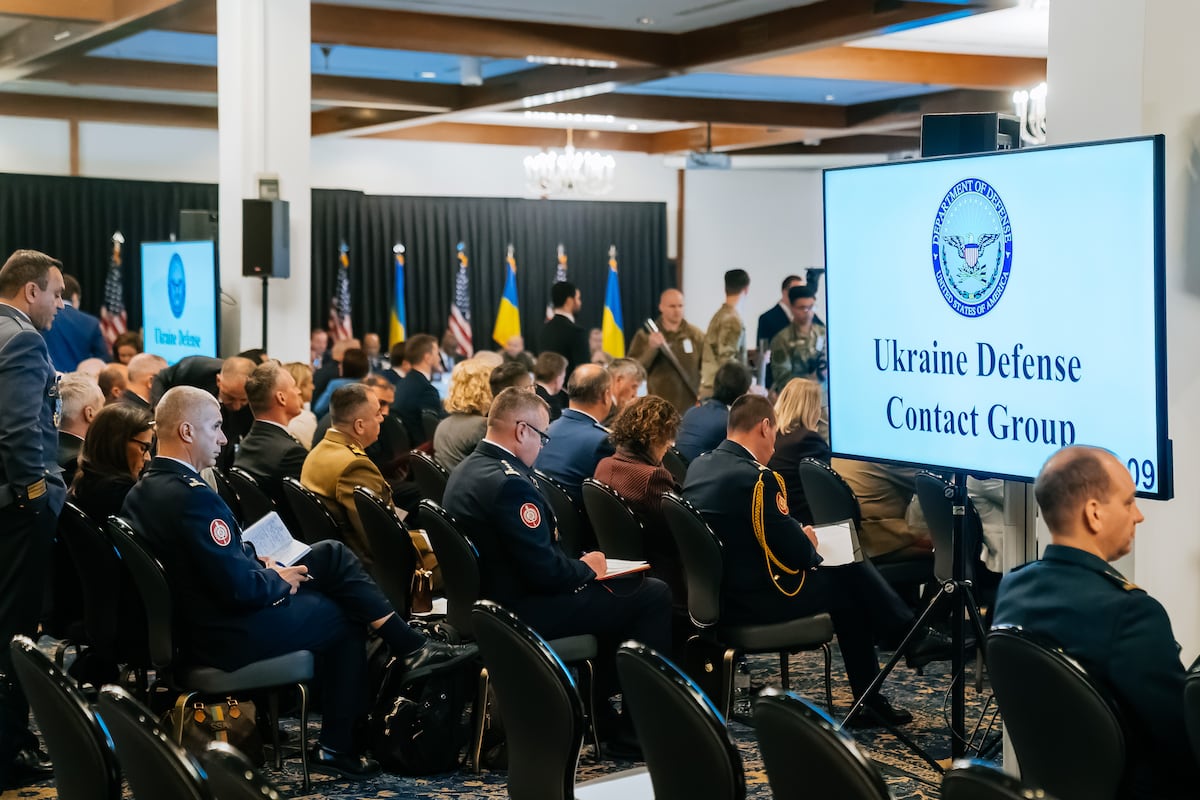
COLOGNE and PARIS — Top defense officials from Europe’s biggest military spenders want the international Ukraine Defense Contact Group to continue working after Donald Trump assumes the U.S. presidency, which many analysts here believe will not be as favorable to Kyiv as the Biden White House.
The 50-plus nation forum, also known as the Ramstein Group, has been hosted by U.S. Defense Secretary Lloyd Austin, representing Ukraine’s most powerful ally in the defense against Russia’s invasion. Its regular meetings at the air base in Germany, or sometimes via teleconference, have been instrumental in drumming up new rounds of military aid and financial contributions to the war-torn nation.
Keeping the group going is a priority for top defense leaders from Germany, France, the U.K, Poland and Italy, who met in Berlin on Monday to take stock of Europe’s defense strategy as Trump ascends to the White House once again
“The five of us want to stick to the UDCG format, keep supporting it and lobby for its continued existence,” German Defense Secretary Boris Pistorius told reporters.
Pistorius noted that Ukrainian Defense Minister Rustem Umerov, who dialed into the meeting remotely, had made the request.
Another goal of the five-nation group is to focus on building Ukraine’s defense industry, as the local production of weapons would cut down fielding times, Pistorius said. Special emphasis will be on providing Ukraine with artificial intelligence-enabled drones as well as munitions, especially artillery rounds, he added.
The ministers stressed the importance of maintaining military support for Ukraine, while at the same time ramping up their own defense spending.
Meanwhile, France in the coming weeks will provide Ukraine with Mistral air defense missiles and other weapon systems, including equipment it’s supplying together with Italy, French Defense Minister Sebastien Lecornu told reporters in Berlin.
The aid will be funded using interest income from frozen Russian assets, an innovative solution that will please French and European taxpayers, according to the French minister.
The country has been training an entire brigade in the east of France, which includes equipping the force of more than 2,000 soldiers with VAB armored personnel carriers, AMX 10 RC infantry fighting vehicles and Caesar 155mm artillery.
Lecornu said the work of training the brigade is complementary to what France is doing in Poland, noting that Umerov had asked for continued support in training troops.
The French defense minister said he expects to make quick progress on the European Long-Range Strike Approach, the proposal to develop a land-based long-range cruise missile.
France, Germany, Italy and Poland signed on for ELSA in July, with the U.K. and Sweden joining later this year. The project touches on Europe’s capability to provide security for the continent, not only against threats from the east but also the Middle East, Lecornu said.
Pan-European missile maker MBDA has proposed a truck-mounted version of its naval cruise missile as a short-term option for the ELSA project.
Leaders from the United States and Germany agreed at the NATO summit in Washington this summer to station U.S. medium-range and long-range missiles in Germany to deter Russia, under what Pistorius labeled an “interim” solution until the ELSA project yields results.
As is the case with most trans-Atlantic security projects, there’s no telling if the incoming Trump administration plans to follow through on the missile commitment.
Either way, Pistorius told reporters there is no fallback plan.
“There are no indications that the decision would change,” he said, adding, “If that were to happen, we’d have to think anew about alternative interim solutions.”
Sebastian Sprenger is associate editor for Europe at Defense News, reporting on the state of the defense market in the region, and on U.S.-Europe cooperation and multi-national investments in defense and global security. Previously he served as managing editor for Defense News. He is based in Cologne, Germany.
Rudy Ruitenberg is a Europe correspondent for Defense News. He started his career at Bloomberg News and has experience reporting on technology, commodity markets and politics.
科隆和巴黎——欧洲军费开支最大的国家的国防官员希望国际乌克兰防务联络小组在唐纳德·特朗普就任美国总统后继续运作,但许多分析人士认为,特朗普入主白宫后对基辅的形势不会像拜登入主白宫那样有利。
这个由50多个国家组成的论坛,也被称为拉姆施泰因集团,由美国国防部长劳埃德·奥斯汀主持,代表着乌克兰在抵御俄罗斯入侵方面最强大的盟友。该论坛定期在德国拉姆施泰因空军基地举行会议,有时也通过电话会议进行,这些会议在争取新一轮对这个饱受战争蹂躏的国家的军事援助和财政捐助方面发挥了重要作用。
维持该组织的正常运转是德国、法国、英国、波兰和意大利高级国防领导人的首要任务。他们周一在柏林举行会议,评估欧洲的国防战略,此时特朗普再次入主白宫。
德国国防部长鲍里斯·皮斯托里乌斯告诉记者:“我们五个人希望坚持UDCG模式,继续支持它,并游说它继续存在下去。”
皮斯托里乌斯指出,乌克兰国防部长鲁斯捷姆·乌梅罗夫通过远程电话参加了会议,并提出了这一要求。
皮斯托瑞斯表示,五国集团的另一目标是着力发展乌克兰的国防工业,因为武器的本地化生产可以缩短武器部署时间。他还补充说,重点将放在向乌克兰提供人工智能无人机以及弹药,特别是炮弹。
部长们强调了维持对乌克兰军事支持的重要性,同时加大本国的国防开支。
与此同时,法国国防部长塞巴斯蒂安·勒科尔努在柏林告诉记者,法国将在未来几周内向乌克兰提供“西北风”防空导弹和其他武器系统,其中包括法国与意大利共同提供的装备。
据法国部长称,这笔援助资金将来自冻结的俄罗斯资产的利息收入,这一创新解决方案将令法国和欧洲纳税人感到满意。
该国一直在法国东部训练一个完整的旅,其中包括为这支2000多名士兵配备VAB装甲运兵车、AMX 10 RC步兵战车和凯撒155毫米火炮。
莱科尔努表示,训练该旅的工作与法国在波兰所做的工作相辅相成,并指出乌梅罗夫曾要求继续支持部队训练。
法国国防部长表示,他预计欧洲远程打击方案(即开发陆基远程巡航导弹的提案)将取得快速进展。
法国、德国、意大利和波兰于7月签署了ELSA协议,英国和瑞典将于今年晚些时候加入。莱科尔努表示,该项目旨在提升欧洲大陆的安全保障能力,不仅要应对来自东方的威胁,还要应对来自中东的威胁。
泛欧导弹制造商 MBDA 提出了一种车载式海军巡航导弹方案,作为 ELSA 项目的短期选择。
今年夏天,美国和德国领导人在华盛顿举行的北约峰会上达成一致,将在德国部署美国的中程和远程导弹以威慑俄罗斯。皮斯托里乌斯称此举为“临时”解决方案,直到ELSA项目取得成果。
与大多数跨大西洋安全项目一样,目前尚不清楚即将上任的特朗普政府是否计划履行导弹承诺。
无论如何,皮斯托瑞斯告诉记者,他没有备用方案。
“没有任何迹象表明这一决定会改变,”他说道,“如果真的发生了改变,我们就必须重新考虑其他临时解决方案。”
塞巴斯蒂安·斯普伦格是《防务新闻》欧洲版副主编,负责报道该地区的防务市场状况,以及美欧在防务和全球安全领域的合作和多国投资。此前,他曾担任《防务新闻》执行主编。他现居德国科隆。
鲁迪·鲁伊滕贝格是《防务新闻》的欧洲记者。他的职业生涯始于彭博新闻社,拥有报道科技、大宗商品市场和政治方面的经验。