In Japan, a more muted cheering for the British-led GCAP warplane在日本,人们对英国主导的GCAP战机的欢呼声则较为低沉。
By contrast, there is “GCAP silence” in Japan, says one local observer of business ties between Japan and the West.
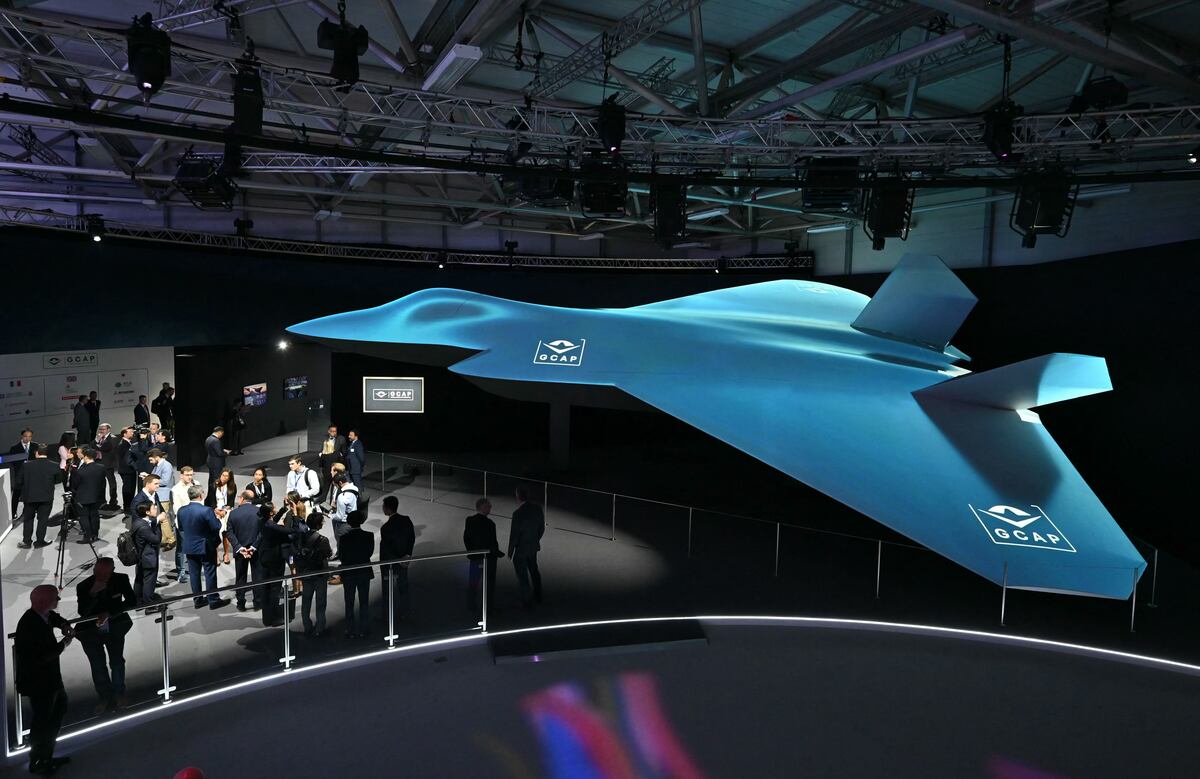
MANILA, Philippines — Japan and British defense ministers met last week to discuss an ongoing joint fighter jet development program with Italy and to unveil the trinational headquarters for the project in Reading, 36 miles west of London.
Japan defense minister Gen Nakatani’s U.K. itinerary includes a meeting with Secretary of State for Defense John Healy on the Global Combat Air Programme and a visit to the headquarters of the GCAP International Government Organization (GIGO), the international body tasked with overseeing its development, production, and future exports.
“Today, Minister Nakatani and I have highlighted the positive progress being made on our important next-generation fighter jet program, to strengthen our security cooperation,” Healy was quoted as saying in a press release.
Partners are developing the fighter jets to enter service in 2035 while incurring less costs. The timeframe is crucial for Japan which will start retiring around 100 F-2s in the same year.
The three countries are expected to hammer out the finer details in Reading, including work, cost, and revenue sharing; proprietary information and technology transfers; and the involvement of third countries like Saudi Arabia.
“All three countries and all the people want to have more work share and profit, but they will minimize the financial responsibility as well,” says Sadamasa Oue, consulting senior fellow of the Asia Pacific Initiative of the International House of Japan, a Tokyo-based think tank. Oue is a retired lieutenant general of the Japan Air Self-Defense Force.
“This is going to be a very difficult negotiation,” Oue tells Defense News.
In Britain, GCAP is a popular, widely reported multinational initiative. Groups waited with bated breath when Prime Minister Keir Starmer took office and heaved a collective sigh of relief when he approved the program.
While experts scrutinized the U.K.’s two billion pounds ($2.4 billion) allocation for initial research and scoping, GCAP partners drummed up attention when they unveiled the fighter jet’s concept model at the Farnborough Airshow near London in July.
And British officials in a comprehensive report last week reiterated a need to rein in finances and “break the mould” of previous programs, which saw decades-long delays, development hurdles, and massive cost overruns. They also called for annual allocations to sustain British engagement.
In contrast, there is “GCAP silence” in Japan, says James Angelus, President of the International Security Industry Council, a Tokyo-based group devoted to connecting Western and Japanese defense firms. Last year, they wanted to raise awareness of the fighter jets, which the public knew little or nothing about. This attempt, Angelus says, met objections.
“We try to put together a program for GCAP — it’s on our website: the next fighter jet — but we had to modify the title and keep the word GCAP out of the title. Why? Because of so many objections from Japan,” Angelus told Defense News. Local officials, he added, didn’t want the program to be a focus. “We have a lot of big decisions we have not made,” Angelus said, summarizing the local officials’ reason for the apprehension.
According to the analyst, local companies involved in the company “are a little embarrassed. They want to come out at a time when they can really trumpet success… that [they] have this formula put together.”
GCAP is Japan’s largest, most expensive and most important defense project since the Asian nation redefined Article 9 of its pacifist constitution and relaxed post-war arms export policies in 2014.
However, it took eight years before the government released a new security strategy in December 2022 that elaborated buildup goals, troop deployments, and defense transfers amid increasing nuclear missile threats from North Korea.
GCAP is expected to revitalize Japan’s defense industry, which faced public criticism in the past, says Yusuke Takagi, associate professor of the National Graduate Institute for Policy Studies, a public policy school and think tank in Tokyo.
“The defense industry in Japan has been in trouble for decades. There are many people who want to cut the defense industry. They say, ‘Japan should be a pacifist nation, Japan doesn’t need a defense industry’—that’s one position,” Takagi said. “And some politicians are very concerned about these voices.”
Since signing the GCAP treaty in 2022, Japan has allocated billions of yen for research and development to be spread out over the next five years in its annual defense budget and tapped hundreds of engineers, experts and personnel.
Mitsubishi Heavy Industries in July last year established with Japanese Aerospace Companies the Japan Aircraft Industrial Enhancement Co. Ltd., or JAIEC, a unified entity representing the domestic defense industry in the trinational collaboration.
Before leaving office last fall, then-Prime Minister Fumio Kishida wrangled with lawmakers, even with coalition partners, to revise the existing defense transfer rules to accommodate GCAP. The policy was loosened but the Diet, the national parliament, set strict conditions on future exports, which experts hope will be changed before 2035.
Meanwhile, opposition parties criticized the move, saying it’s a preamble to Japan becoming an arms exporter.
GCAP is likely to face similar political resistance and public scrutiny in the future. The ruling Liberal Democratic Party led by Prime Minister Shigeru Ishiba and its junior coalition partner Komeito failed to take majority seats in last year’s elections.
Oue says revising defense transfer rules will not be a high priority or might not even be tackled in this Cabinet.
This may also derail the remaining years of Japan’s five-year buildup plan to set aside 2% of the country GDP on defense spending as the country grapples with high inflation, shrinking yen, and a social welfare crisis.
“Weak ruling party, weak government is problematic,” Oue says. “I hope this Cabinet or the following Cabinet—I don’t when know the next election will be conducted and if Prime Minister Ishiba will still be surviving or not, but I hope that despite this political situation, GCAP is implemented as planned.”
“If the government can convince the people that GCAP is by far cheaper than fighter jets from the United States, maybe it can be popular, but I don’t think so,” Takagi says.
Experts said a much bigger player might influence GCAP: President Donald Trump’s return to the White House.
Unlike President Joe Biden who built and strengthened alliance networks, experts describe Trump as “unpredictable,” “transactional,” and “demanding.”
“He prioritizes arms deals that are beneficial for the American defense industry,” Takagi says. “During the first Trump administration, Prime Minister (Shinzo) Abe had a good relationship with Trump, so somehow he managed the relationship. But now, our prime minister is not as strong as Abe so we don’t know to what extent Japan can absorb the pressure from the United States,” Takagi explains.
“And even under Abe … Abe promised to buy more fighter jets from the United States,” Takagi pointed out, adding that with Trump in office, GCAP might face competition from American-made jets.
Oue agrees but says the Japanese government needs convince the Trump administration about their security strategy. “Japan will try to play an important role in improving the security environment in this region and work together with the United States to deter China, North Korea, and Russia,” he says.
The best next step for GCAP, Takagi says, is to make it more concrete.
“They have to show the progress of the program,” he said. “It’s quite often the case that there are delays. How is this carrier program being carried out, show it one by one, step by step… If Saudi Arabia comes into the picture—yes, why don’t we invite the Saudis more?”
“I think time is of the essence … and I think Japan’s going to make its decisions based on what’s happening in Ukraine and Russia. And they’re going to support the Brits with the GCAP program. They are committed,” Angelus says.
Leilani Chavez is an Asia correspondent for Defense News. Her reporting expertise is in East Asian politics, development projects, environmental issues and security.
菲律宾马尼拉——上周,日本和英国国防部长举行会晤,讨论与意大利正在进行的联合战斗机开发计划,并揭幕了该项目在伦敦以西 36 英里(约 58 公里)的雷丁设立的三国总部。
日本防卫大臣中谷元的英国之行包括与英国国防大臣约翰·希利就全球作战航空计划举行会晤,以及访问全球作战航空计划国际政府组织(GIGO)总部。GIGO是负责监督该计划的开发、生产和未来出口的国际机构。
“今天,我和中谷大臣重点介绍了我们在重要的下一代战斗机项目上取得的积极进展,以加强我们的安全合作,”希利在一份新闻稿中表示。
合作伙伴正在研发将于2035年投入使用的战斗机,同时力求降低成本。这一时间节点对日本至关重要,因为日本也将在同一年开始退役约100架F-2战斗机。
预计这三个国家将在雷丁敲定更详细的细节,包括工作、成本和收入分成;专有信息和技术转让;以及沙特阿拉伯等第三国的参与。
“这三个国家和所有民众都希望获得更多的工作份额和利润,但同时也会尽可能减少经济责任,”总部位于东京的智库日本国际之家亚太倡议高级顾问大江贞正说道。大江贞正曾任日本航空自卫队中将,现已退役。
“这将是一场非常艰难的谈判,”欧伊告诉《防务新闻》。
在英国,全球合作行动计划(GCAP)是一项广受欢迎、备受关注的跨国倡议。基尔·斯塔默首相上任之初,各团体就翘首以盼,而当他批准该计划时,大家才集体松了一口气。
在专家们仔细审查英国为初步研究和范围界定拨款 20 亿英镑(24 亿美元)之际,GCAP 的合作伙伴在 7 月于伦敦附近的范堡罗航展上展示了这款战斗机的概念模型,引起了人们的关注。
英国官员上周在一份综合报告中重申,需要控制财政支出,并“打破”以往项目的模式。以往的项目往往延误数十年,发展受阻,且成本严重超支。他们还呼吁每年拨付专项资金,以维持英国的参与。
相比之下,日本对全球防务合作计划(GCAP)却保持着“沉默”。总部位于东京的国际安全产业理事会主席詹姆斯·安吉勒斯表示,该理事会致力于促进西方和日本国防企业之间的合作。去年,他们曾试图提高公众对GCAP战斗机的认知度,但公众对此知之甚少。安吉勒斯说,这一尝试遭到了反对。
“我们尝试为GCAP项目制定一个计划——它就在我们的网站上:下一代战斗机——但我们不得不修改标题,去掉‘GCAP’这个词。为什么?因为日本方面提出了太多反对意见,”安吉勒斯告诉《防务新闻》。他补充说,当地官员不希望这个项目成为关注的焦点。“我们还有很多重大决定尚未做出,”安吉勒斯总结了当地官员的顾虑。
分析师表示,参与该公司的当地企业“有点尴尬。他们希望在真正能够大肆宣扬成功的时候再公开露面……表明他们已经找到了成功的秘诀。”
GCAP 是日本自 2014 年重新定义其和平宪法第 9 条并放宽战后武器出口政策以来规模最大、最昂贵、最重要的国防项目。
然而,时隔八年,政府才于 2022 年 12 月发布了一项新的安全战略,详细阐述了在朝鲜核导弹威胁日益加剧的情况下,军事建设目标、部队部署和国防转让。
东京公共政策研究大学院大学副教授高木祐介表示,GCAP有望重振日本国防工业,该工业过去曾受到公众批评。
“日本的国防工业几十年来一直举步维艰。很多人都想削减国防工业。他们说,‘日本应该是一个和平国家,日本不需要国防工业’——这是一种观点,”高木说。“一些政界人士非常关注这些声音。”
自 2022 年签署《全球防务合作条约》以来,日本已在其年度国防预算中拨款数十亿日元用于未来五年的研发,并投入了数百名工程师、专家和人员。
去年 7 月,三菱重工与日本航空航天公司共同成立了日本飞机工业增强有限公司(JAIEC),这是一个代表日本国内国防工业参与三国合作的统一实体。
去年秋季卸任前,时任首相岸田文雄曾与国会议员,甚至包括执政联盟的伙伴,就修改现有的国防出口规则以适应全球防务合作计划(GCAP)进行磋商。虽然政策有所放宽,但国会(日本国会)对未来的出口设定了严格的条件,专家希望这些条件能在2035年之前得到修改。
与此同时,反对党批评此举,称这是日本成为武器出口国的前奏。
GCAP未来很可能面临类似的政治阻力和公众审查。由首相石破茂领导的执政自民党及其执政联盟伙伴公明党在去年的选举中未能赢得多数席位。
欧威表示,修改国防转让规则不会是本届内阁的优先事项,甚至可能不会被提上日程。
由于日本正面临高通胀、日元贬值和社会福利危机,这可能会破坏日本为期五年的国防建设计划,该计划旨在将国内生产总值的 2% 用于国防开支。
“执政党软弱,政府软弱,这都是问题,”大江说。“我希望本届内阁或下届内阁——我不知道下次选举何时举行,也不知道石破茂首相是否还能继续执政——但我希望,尽管政治形势如此,GCAP(全球反腐败法案)仍能按计划实施。”
“如果政府能够说服民众,GCAP 比美国的战斗机便宜得多,也许它会受到欢迎,但我认为不会,”高木说。
专家表示,一个更大的因素可能会影响GCAP:那就是唐纳德·特朗普总统重返白宫。
与建立和加强联盟网络的乔·拜登总统不同,专家们形容特朗普“难以预测”、“注重交易”和“要求苛刻”。
“他优先考虑那些对美国国防工业有利的军售交易,”高木说。“在特朗普第一任期内,安倍晋三首相与特朗普关系良好,所以他勉强维持了这种关系。但现在,我们的首相不如安倍强势,所以我们不知道日本能在多大程度上承受来自美国的压力,”高木解释道。
“即使在安倍执政时期……安倍也承诺从美国购买更多战斗机,”高木指出,并补充说,随着特朗普上台,GCAP可能会面临来自美国制造的战斗机的竞争。
大江对此表示赞同,但他指出,日本政府需要让特朗普政府相信其安全战略。“日本将努力在改善本地区安全环境方面发挥重要作用,并与美国合作,共同遏制中国、朝鲜和俄罗斯。”他说道。
高木表示,GCAP 下一步最好的做法是使其更加具体化。
“他们必须展示项目的进展情况,”他说。“延误的情况很常见。这个航母项目是如何进行的?一步一步地展示出来……如果沙特阿拉伯参与进来——是的,为什么我们不更多地邀请沙特人呢?”
“我认为时间至关重要……而且我认为日本会根据乌克兰和俄罗斯的局势做出决定。他们会支持英国的全球援助计划(GCAP)。他们是坚定的支持者,”安吉勒斯说道。
莱拉尼·查韦斯是《防务新闻》的亚洲记者。她的报道专长是东亚政治、发展项目、环境问题和安全。