Israeli firm looks to expand Arctic footprint of loitering munitions以色列公司寻求扩大巡飞弹在北极地区的部署范围
Vendor UVision claims its Hero-120 explosive drone functioned as intended in a cold-weather test over the winter.
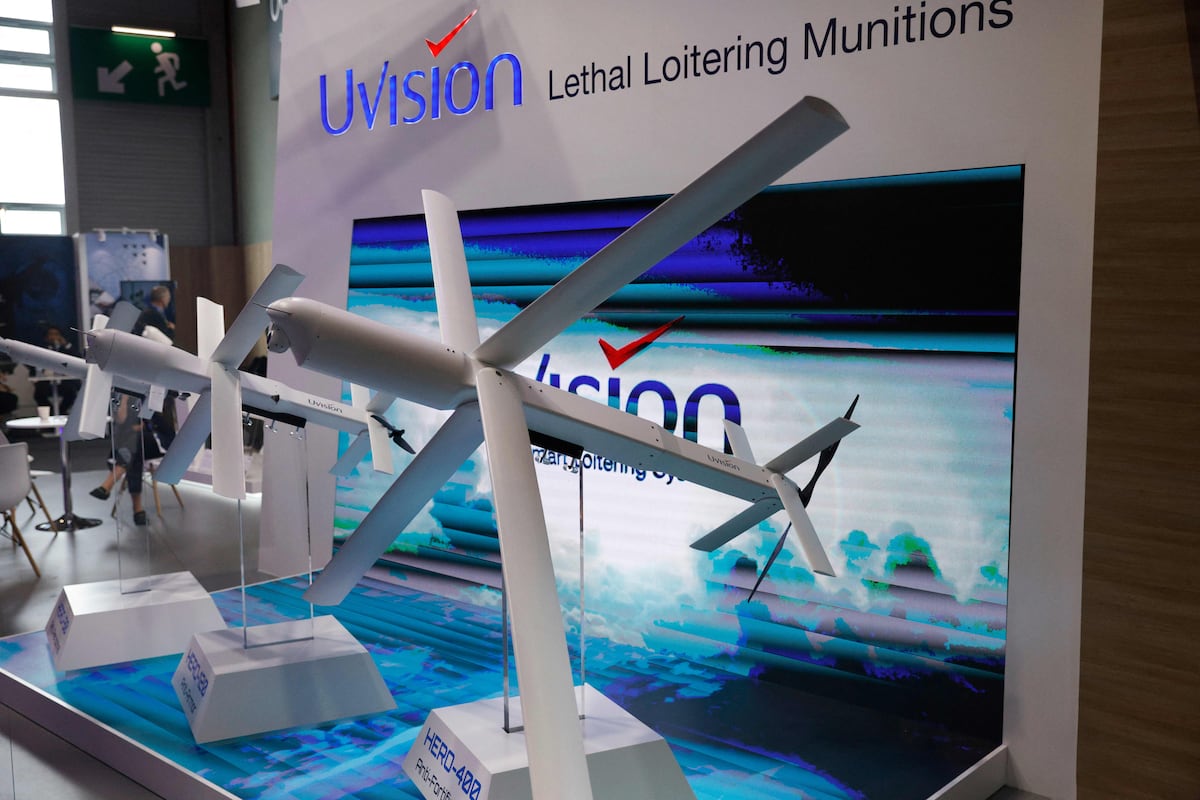
MILAN — Israeli manufacturer UVision tested its Hero-120 loitering munition for the first time in the Arctic, as company officials say they are looking to expand their footprint in the region.
Earlier this year, in a location the company did not disclose, where temperatures reached below -20 degrees Celsius, UVision conducted a series of flight missions to assess the capabilities of the Hero-120 loitering munition under extreme weather conditions.
During the tests, the system carried photographic sensors and infrared cameras as payloads, and some flights were conducted at night time, a company representative told Defense News.
The official added that the demonstration, which was attended by members from several defense forces with Arctic warfare capabilities, was an initiative driven by requests and interest of potential customers of the explosive drone.
None of the Nordic countries are known to currently operate any of the Hero systems, but are regular customers of Israeli weapons.
Most recently, Finland contracted German-Israeli arms provider Eurospike for anti-tank missiles, and the country received approval from the U.S. to buy the David’s Sling air defense system. Norway also issued a tender notice in January looking to acquire small, tactical unmanned aerial systems.
Further testing of the company’s systems in the region are in the cards, as “it is in our R&D roadmap to not only enhance the capabilities of the Hero-120, but also to adjust additional members of the Hero family for operation in Arctic conditions,” the representative said.
According to the company, the result of the evaluation found that the Hero-120 is effective in combat situations in the Arctic environment and compliant with storage and transportation equipment.
The harsh-weather operation effectiveness addressed not only the specific needs of military forces operating in the region, but also the broader north and east of Europe, a UVision press release stated.
Elisabeth Gosselin-Malo was a Europe correspondent for Defense News. She covers a wide range of topics related to military procurement and international security, and specializes in reporting on the aviation sector. She is based in Milan, Italy.
米兰——以色列制造商 UVision 首次在北极地区测试了其 Hero-120 巡飞弹,该公司官员表示,他们正寻求扩大在该地区的业务。
今年早些时候,在公司未透露的某个地点(气温低于零下 20 摄氏度),UVision 进行了一系列飞行任务,以评估 Hero-120 巡飞弹在极端天气条件下的性能。
该公司一位代表告诉《防务新闻》,在测试过程中,该系统携带了照相传感器和红外摄像机作为有效载荷,并且一些飞行是在夜间进行的。
该官员补充说,此次演示活动由几支具备北极作战能力的国防部队的成员参加,是应爆炸性无人机的潜在客户的要求和兴趣而发起的一项举措。
目前尚无任何北欧国家使用“英雄”系统,但它们都是以色列武器的常规客户。
最近,芬兰与德以合资武器供应商Eurospike签订了反坦克导弹合同,并获得了美国批准购买“大卫投石器”防空系统。挪威也在1月份发布招标公告,寻求采购小型战术无人机系统。
该代表表示,公司计划在该地区对系统进行进一步测试,“我们的研发路线图不仅旨在增强 Hero-120 的性能,还要调整 Hero 系列的其他成员,使其能够在北极条件下运行”。
据该公司称,评估结果表明,Hero-120 在北极环境下的作战情况下有效,并且符合存储和运输设备的要求。
UVision 的一份新闻稿称,恶劣天气下的作战效能不仅满足了在该地区作战的军队的特定需求,也满足了更广泛的欧洲北部和东部的需求。
伊丽莎白·戈斯林-马洛曾任《防务新闻》欧洲通讯员。她的报道涵盖军事采购和国际安全等广泛领域,尤其擅长航空领域的报道。她常驻意大利米兰。