‘Father of emergency medicine’ among 17 doctors to receive apex title in S’pore medical field“急诊医学之父”等17位医生获颁新加坡医学界最高荣誉称号
Another recipient is a paediatrician who led vaccine trials for rotavirus and has a rare disease named after him. Read more at straitstimes.com.
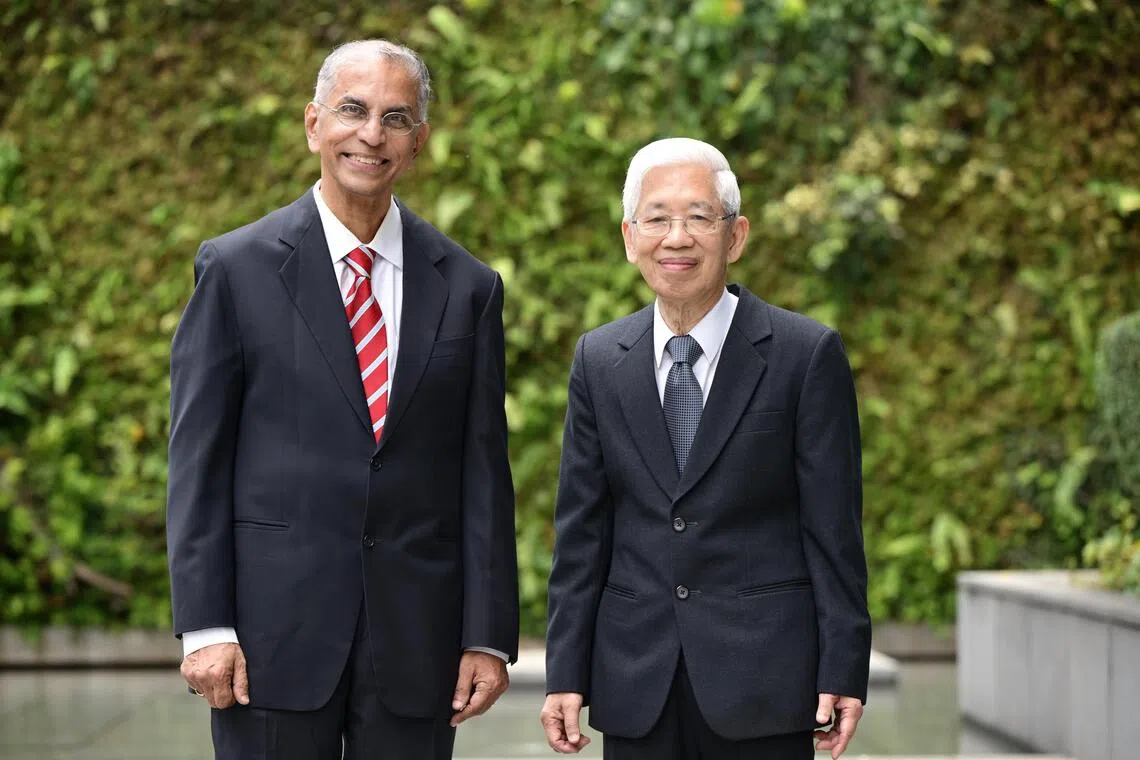
Venkataraman Anantharaman and Phua Kong Boo were among 17 doctors and dentists who received the Eminent Academician title.
Published Sep 12, 2026, 06:24 PM
Updated Sep 12, 2026, 06:24 PM
Seventeen pioneering doctors, including Venkataraman Anantharaman and Phua Kong Boo, received the Eminent Academician title, Singapore's highest medical title.
Anantharaman improved emergency medicine standards and public lifesaving training, establishing Singapore's National Resuscitation Council and disaster medical response plans.
Phua led successful rotavirus vaccine trials and discovered PKB Syndrome, urging future paediatricians to focus on treatable conditions and emerging health issues like childhood obesity and mental health.
SINGAPORE – A professor of medicine recognised as the “Father of Emergency Medicine” in Singapore, Venkataraman Anantharaman, and paediatrician Phua Kong Boo, who led vaccine trials for rotavirus, received the highest medical honour on Sept 12.
They were among 17 pioneering doctors and dentists who received the Eminent Academician title from the Academy of Medicine, Singapore, at the Lee Kong Chian School of Medicine’s Clinical Sciences Building.
In a speech at the ceremony to confer the titles, Health Minister Ong Ye Kung said the title honours clinicians who have made a significant lifetime of contributions.
He added: “Not only have they journeyed alongside the development of Singapore’s healthcare system – guiding, enriching and improving it over many years, they have also touched the lives of many patients and their families.
“Concurrently, they have made their mark in clinical excellence, research, education and leadership, and have upheld the ethos and standards of the medical profession.”
Ong said the title demonstrates to the medical profession what the highest standards of medicine and dentistry look like.
“To those who are just starting out on your medical career, the life’s work of the Eminent Academicians in this room is a testament to what each of you can and should aspire towards,” he added to an audience that included graduates of the Academy of Medicine.
Ong said the title sees Singapore medicine and dentistry join countries such as the United States and United Kingdom in a well-established international best practice.
The Academy of Medicine noted that there are also comparable practices and recognition among other professions in Singapore including engineers and lawyers.
For lawyers, the Senior Counsel title is reserved for an elite group of lawyers who have top-tier advocacy skills, professional integrity and are learned in the law.
In an interview with The Straits Times, Anantharaman said he was spurred to raise the standards of emergency care because he was unsatisfied with the quality of care emergency patients were given when he started out as a medical officer at the Singapore General Hospital (SGH) in the 1970s.
“For example, a patient was not able to pass urine, his bladder has been distended all the way, and we were not allowed to put in a tube to relieve that blockage.
“We were told it’s only safe to do this in a ward... the patient will be distressed all the way until he reaches the ward,” added the 74-year-old emeritus consultant at SGH.
He took to designing and organising regular training programmes for doctors in public hospitals once emergency medicine was recognised as a specialised discipline in the 1980s.
“Today there is definitive treatment (like blood tests) initiated at all our emergency departments, and therefore a lot of patients begin to get better much faster. And some of them don’t even need hospital admission.
“That’s very important because patients don’t like to stay in hospitals,” he added.
Beyond the hospitals, Anantharaman sought to prepare the public in lifesaving skills, to respond to people who collapse on the street. He helped to form the National Resuscitation Council in the 1990s.
To date, about 180,000 people are trained yearly in Cardiopulmonary resuscitation (CPR) and in using the automated external defibrillator, to be first responders when people suffer a heart attack.
After the Hotel New World collapsed in 1986, Singapore wanted to relook the way in which medical support is provided during civil disasters. Anantharaman drew up the plan which was eventually accepted by MOH.
“Over the years, every hospital would’ve prepared teams, equipment, always on standby, so they can respond on very short notice.”
Anantharaman recalled how the former World Trade Centre received casualties after the cruise ship Royal Pacific sank in the Strait of Malacca in 1992, and medical teams were dispatched to the airport after a Singapore Airlines flight was hijacked in 1991.
The 17 pioneering doctors were mainly nominated through their respective colleges in the Academy of Medicine. All nominations had to be disseminated to MOH’s Director-General of Health for comments and concurrence.
Phua, an emeritus consultant with the KK Women’s and Children’s Hospital led clinical studies for a new rotavirus vaccine for infants in the early 2000s. Rotavirus was a leading cause of gastroenteritis in children in the past.
The clinical trial, which involved more than 2,000 healthy babies, led to an oral vaccine. Although strongly recommended, it is not mandatory in Singapore.
Phua also recently discovered a rare genetic disease called PKB Syndrome, after encountering a six-year-old patient with curious symptoms.
A test he ordered identified a mutation in the EIF6 gene, which caused symptoms such as growth failure, blood-related abnormalities and bone marrow failure.
This discovery was published in a 2020 paper, and the disease was named after him .
With years of teaching experience, his lasting message to his medical students is: “Never miss a treatable condition. It’s great to diagnose all these rare conditions, but if you can’t do anything for them... treatable condition must not miss.”
On what the next generation of paediatricians should focus on, the 85-year-old highlighted childhood obesity, mental health and inflammatory bowel disease, which he has been encountering more of in recent years.
Symptoms include bloody diarrhoea, abdominal discomfort and pain, and ulcers in the intestines. Currently, the hospital sees 20 to 30 patients a year, compared to one every few years in the past.
In his speech, Ong told the audience that Singapore has now established three career tracks for doctors in Singapore as the key pillars of a well-rounded medical profession.
They are family physicians, who anchor care in the community; hospital clinicians, with broad-based competencies to coordinate and integrate care; and specialists, with deep expertise in specific disciplines.
Addressing the clinicians and healthcare professionals, Ong laid out the challenges on the horizon including Singapore as a super-aged society, epidemics of mental health, antimicrobial resistance and another global pandemic crisis like Covid-19.
“Our ability to respond and overcome them, depends on how well we can synergise our collective know-how and experience,” he said.
文卡塔拉曼·阿南塔拉曼和普阿·孔·布是获得杰出院士称号的17位医生和牙医之一。
发布于 2026 年 9 月 12 日下午 6:24
更新于2026年9月12日下午6:24
包括 Venkataraman Anantharaman 和 Phua Kong Boo 在内的 17 位先驱医生获得了新加坡最高医学荣誉——杰出院士称号。
阿南塔拉曼提高了紧急医疗标准和公共救生培训水平,建立了新加坡国家复苏委员会和灾难医疗响应计划。
Phua领导了成功的轮状病毒疫苗试验,并发现了PKB综合征,敦促未来的儿科医生关注可治疗的疾病和新兴的健康问题,如儿童肥胖症和心理健康。
新加坡——被誉为新加坡“急诊医学之父”的医学教授文卡塔拉曼·阿南塔拉曼 (Venkataraman Anantharaman) 和领导轮状病毒疫苗试验的儿科医生傅光宝 (Phua Kong Boo) 于 9 月 12 日荣获医学界最高荣誉。
他们是17位在新加坡李光前医学院临床科学大楼获得新加坡医学科学院颁发的“杰出院士”称号的先驱医生和牙医之一。
在授予称号的仪式上,卫生部长王乙康发表讲话称,该称号旨在表彰那些毕生做出重大贡献的临床医生。
他补充道:“他们不仅与新加坡医疗保健系统的发展历程相伴而行——多年来指导、丰富和改进了该系统,而且也影响了许多患者及其家人的生活。
“与此同时,他们在临床卓越、研究、教育和领导力方面都取得了显著成就,并维护了医学界的道德准则和标准。”
Ong表示,该称号向医学界展示了医学和牙科的最高标准是什么样的。
“对于那些刚刚开始医学事业的人来说,在座各位杰出院士的毕生工作证明了你们每个人都可以而且应该追求的目标,”他对包括医学科学院毕业生在内的听众补充道。
Ong表示,这一称号使新加坡的医学和牙科与美国和英国等国家一起,跻身于成熟的国际最佳实践行列。
新加坡医学科学院指出,新加坡其他行业,包括工程师和律师,也有类似的实践和认可。
对于律师而言,“高级律师”这一头衔只授予那些拥有顶尖辩护技巧、职业操守和精通法律的精英律师群体。
阿南塔拉曼在接受《海峡时报》采访时表示,他之所以致力于提高急诊护理标准,是因为他在 20 世纪 70 年代刚开始在新加坡中央医院 (SGH) 担任医生时,对急诊病人所受到的护理质量感到不满。
“例如,一名病人无法排尿,他的膀胱已经完全膨胀,而我们却被禁止插入导管来缓解这种阻塞。
“我们被告知,只有在病房里这样做才是安全的……病人在到达病房之前都会一直很痛苦,”这位74岁的新加坡中央医院荣誉顾问补充道。
20 世纪 80 年代,急诊医学被公认为一门专门学科后,他开始为公立医院的医生设计和组织定期培训计划。
“如今,我们所有急诊科都会开展确诊治疗(例如验血),因此很多患者的康复速度都快了很多。有些患者甚至不需要住院治疗。”
“这一点非常重要,因为病人都不喜欢待在医院里,”他补充道。
除了医院之外,阿南塔拉曼还致力于向公众普及救生技能,以便应对街头突然倒地的人。他在上世纪90年代帮助成立了国家复苏委员会。
迄今为止,每年约有 18 万人接受心肺复苏 (CPR) 和自动体外除颤器使用方面的培训,以便在人们心脏病发作时成为第一响应者。
1986年新世界酒店倒塌后,新加坡希望重新审视在民事灾难中提供医疗援助的方式。阿南塔拉曼制定了一项计划,最终被卫生部采纳。
“多年来,每家医院都会准备好团队和设备,随时待命,以便在接到通知后能够迅速做出反应。”
阿南塔拉曼回忆起1992年皇家太平洋号邮轮在马六甲海峡沉没后,前世界贸易中心如何接收伤员;以及1991年新加坡航空公司一架航班被劫持后,医疗队如何被派往机场。
这17位先驱医生主要由他们在医学科学院的各自学院提名。所有提名都必须提交给卫生部卫生总监征求意见和批准。
Phua是KK妇女儿童医院的荣誉顾问,他在2000年代初领导了针对婴儿的新型轮状病毒疫苗的临床研究。轮状病毒在过去是儿童肠胃炎的主要病因之一。
这项涉及2000多名健康婴儿的临床试验最终研发出一种口服疫苗。虽然强烈建议接种,但在新加坡并非强制接种。
Phua 最近还发现了一种名为 PKB 综合征的罕见遗传疾病,起因是他遇到了一位出现奇怪症状的六岁患者。
他要求进行的一项检查发现 EIF6 基因发生突变,导致生长发育迟缓、血液异常和骨髓衰竭等症状。
这一发现发表于 2020 年的一篇论文中,这种疾病以他的名字命名。
凭借多年的教学经验,他始终向医学生传达的信息是:“永远不要漏诊可治疗的疾病。诊断出所有这些罕见疾病固然很好,但如果你无能为力……那么可治疗的疾病就绝不能错过。”
这位 85 岁的老人在谈到下一代儿科医生应该关注的重点时,强调了儿童肥胖症、心理健康和炎症性肠病,他近年来遇到的炎症性肠病病例越来越多。
症状包括血性腹泻、腹部不适和疼痛以及肠道溃疡。目前,该医院每年接诊20至30名患者,而过去几年才接诊一名。
王在演讲中告诉听众,新加坡现在已经为医生建立了三个职业发展路径,作为全面发展的医疗行业的支柱。
他们是家庭医生,在社区中提供医疗服务;是医院临床医生,具备协调和整合医疗服务的广泛能力;以及专科医生,在特定学科拥有深厚的专业知识。
王先生在向临床医生和医疗保健专业人员发表讲话时,阐述了即将面临的挑战,包括新加坡作为一个超老龄化社会、精神健康流行病、抗菌素耐药性以及像新冠肺炎这样的另一场全球大流行危机。
他说:“我们应对和克服这些挑战的能力,取决于我们能否很好地协同利用我们的集体知识和经验。”