China amps up its 2026 defense budget by 7% amid purge of generals中国在清洗将军的同时,将2026年国防预算增加7%。
The top table reserved for the Central Military Commission – the leading body in charge of China’s military apparatus – was manned by just two people.
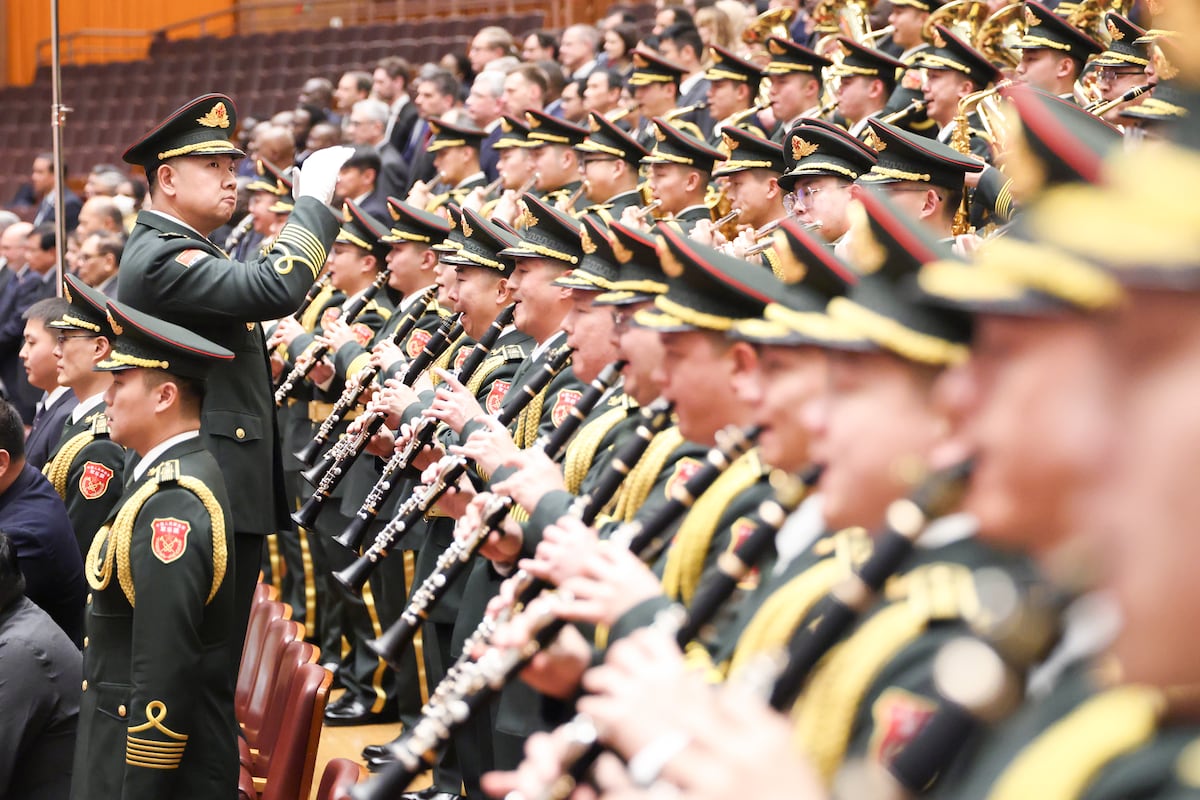
CHRISTCHURCH, New Zealand — China is increasing its 2026 defense budget by 7%, bringing the nation’s military expenditure for the coming year to 1.91 trillion yuan, or about $277 billion.
This year’s increase compares to 7.2% rises for the past three years, with Beijing claiming its defense spending “remains comparatively modest across key relative indicators, including its share of gross domestic product, per capita defense expenditure, and defense expenditure per military personnel.”
The budget was announced on March 5, as China’s top leaders convened for the 14th National People’s Congress in Beijing. After once splurging on double-digit percentage growth for many years, China has now reported single-digit increases for the past 11 years as economic realities bit.
State news agency Xinhua cited officials: “China maintains that adjusting defense budgets to meet national security demands is a sovereign right, and is keeping steady and moderate growth in military expenditures to safeguard its sovereignty, security and development interests in a fast-changing world.”
Putting China’s military expenditure in perspective, it is nearly five times that of Japanese spending, and approximately nine times larger than Taiwan’s budget.
The London-based International Institute of Strategic Studies calculated that, last year, China’s share of total military expenditure in Asia grew to almost 44%.
It is likely Chinese defense spending is far greater than the $277 billion it declared. The Pentagon’s most recent report on China’s military development, published last December, warned, “There is broad consensus among academic, think-tank and industry experts that China’s publicly announced defense budget does not contain the totality of China’s defense spending.”
The Pentagon gave the example of the 2024 budget, suggesting it was probably 32-63% higher than the figure announced. China does not include defense-related research and development, some capital spending, internal security and mobilization activities, for example.
At a meeting the same day on March 5, the top table reserved for the Central Military Commission (CMC) – the leading body in charge of China’s military apparatus – was manned by just two people. These were President Xi Jinping and vice chairman General Zhang Shengmin. When Xi became chairman in 2012, the CMC had eleven members.
This made stark the ferocious culling of the highest ranks of the People’s Liberation Army (PLA) in Xi’s resurgent anti-corruption campaign. The turbulent purge recently netted two CMC members, Generals Zhang Youxia and He Weidong.
The U.S.-based Center for Strategic and International Studies calculated that Xi has purged 101 senior PLA leaders since 2022. Indicative of the decimation, it said of 47 leaders who were generals in 2022 or promoted to three-star ranks since then, 41 have been potentially purged.
In light of such detentions, it is little wonder that Zhang ordered the armed forces to “thoroughly implement the system of ultimate responsibility resting with the CMC chairman, improve political rectification and advance campaigns to improve conduct and combat corruption.”
Xi has encouraged the PLA to act more aggressively against Taiwan, with a record 5,709 aircraft sorties in the Taiwan Strait and into Taiwan’s air defense identification zone last year.
Gordon Arthur is an Asia correspondent for Defense News. After a 20-year stint working in Hong Kong, he now resides in New Zealand. He has attended military exercises and defense exhibitions in about 20 countries around the Asia-Pacific region.
新西兰基督城——中国将2026年国防预算增加7%,使该国明年的军费开支达到1.91万亿元人民币,约合2770亿美元。
今年的增长幅度与过去三年 7.2% 的增长幅度相比有所下降,北京方面声称其国防开支“在关键相对指标上仍然相对温和,包括占国内生产总值的比例、人均国防开支和每名军人的国防开支”。
3月5日,中国最高领导人在北京召开第十四届全国人民代表大会之际,公布了预算案。中国经济曾多年保持两位数的增长率,但随着经济现实的冲击,过去11年里,中国的经济增长率已降至个位数。
新华社援引官员话说:“中国坚持认为,根据国家安全需要调整国防预算是主权权利,在瞬息万变的世界中,中国保持军费开支稳步适度增长,以维护国家主权、安全和发展利益。”
如果从整体上看,中国的军费开支几乎是日本的五倍,大约是台湾军费预算的九倍。
总部位于伦敦的国际战略研究所计算得出,去年中国在亚洲军事总支出中所占的份额增长到近 44%。
中国的国防开支很可能远高于其公布的2770亿美元。五角大楼去年12月发布的最新一份关于中国军事发展的报告警告说:“学术界、智库和业界专家普遍认为,中国公开公布的国防预算并未包含中国国防开支的全部数额。”
五角大楼以2024年预算为例,暗示实际预算可能比公布的数字高出32%至63%。例如,中国的预算不包括国防相关的研发、部分资本支出、内部安全和动员活动等。
3月5日当天举行的一次会议上,中央军委——中国军事机器的最高领导机构——的主会议桌旁只有两个人:国家主席习近平和副主席张胜民上将。习近平2012年就任主席时,中央军委共有11名成员。
这使得习近平重振反腐运动,对解放军高层进行残酷清洗的现实更加凸显。这场动荡的清洗最近导致两名中央军委成员——张有霞将军和何卫东将军——落马。
美国战略与国际研究中心计算得出,自2022年以来,习近平已清洗了101名解放军高级领导人。该中心表示,这表明清洗力度之大,在2022年是将军或此后晋升为三星将军的47名领导人中,有41人可能已被清洗。
鉴于此类拘留事件,张军命令军队“彻底贯彻中央军委主席最终责任制,完善政治整顿,推进行为改革和反腐败运动”也就不足为奇了。
习近平鼓励解放军对台湾采取更强硬的行动,去年解放军在台湾海峡和台湾防空识别区出动飞机5709架次,创下历史纪录。
戈登·阿瑟是《防务新闻》的亚洲特派记者。在香港工作20年后,他现居新西兰。他曾到访亚太地区约20个国家,参加过军事演习和防务展览。