British troops test laser weapon as cheap option to fry drones英国军队测试激光武器,认为其是摧毁无人机的廉价方案。
The British Army’s experimental laser weapon uses advanced sensors and tracking systems to maintain lock on target.
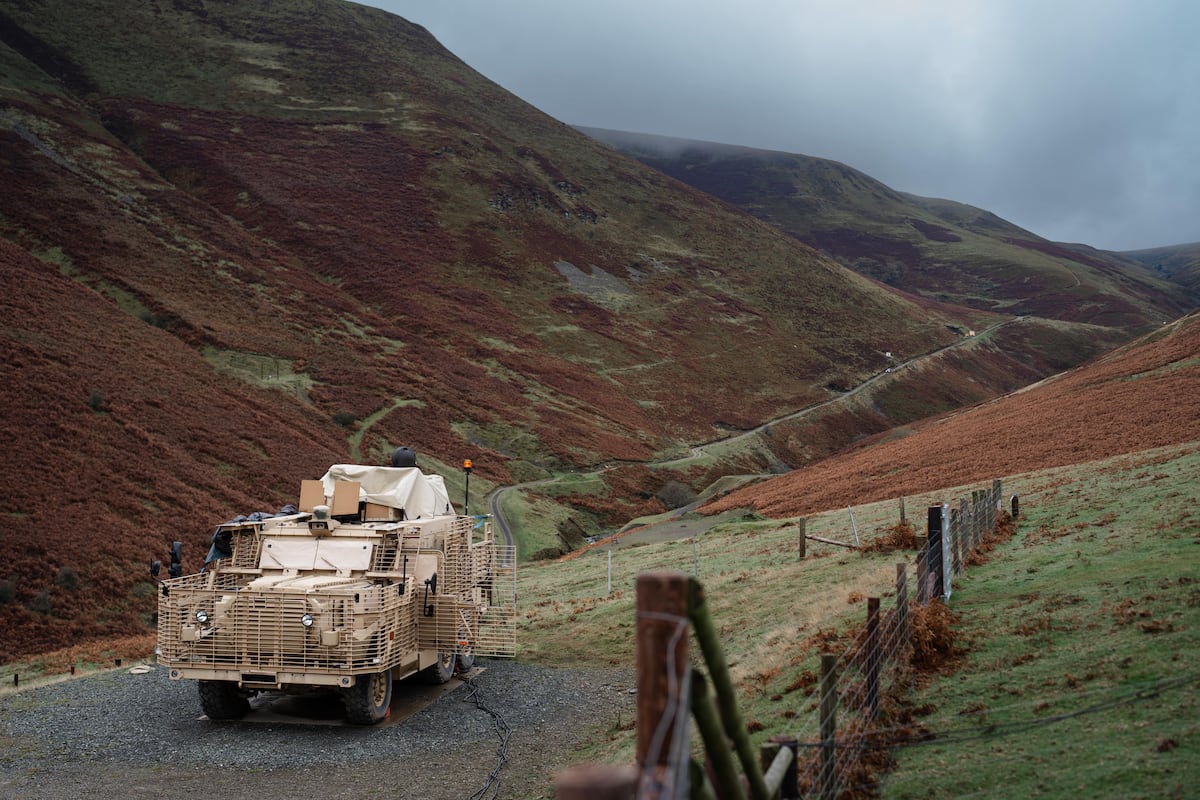
PARIS — British Army troops fired a high-energy laser from an armored vehicle for the first time, using beams of infrared light to destroy dozens of flying drones, in what may be a cost-effective way to address the threat of unmanned aerial systems, the Ministry of Defence said.
Soldiers from the U.K.’s 16th Regiment Royal Artillery , which specializes in providing air defense for ground troops, used the laser mounted on a Wolfhound armored personnel carrier to destroy drones at a variety of distances and speeds, the MoD said in a statement on Wednesday.
The ubiquity of drones over the battlefield in Ukraine, where infantry typically operates under a constant buzz of multiple UAVs overhead, has Western armies racing to find countermeasures. The U.S. Army in September tested laser-equipped Stryker combat vehicles to destroy drones, while France deployed a vehicle-mounted prototype anti-drone laser during the Paris Olympic Games.
“This is still an emerging technology, but the world has changed and we are seeing more use of drones in the battlespace,” said Stephen Waller, directed-energy weapons team leader at the MoD’s Defence Equipment & Support organization, or DE&S. “This requires a more cost-effective solution to protect our troops.”
Ukrainian troops are using thousands of drones every week, including first-person view drones that can cost as little as a few hundred dollars apiece but can be lethal when packed with explosives, while small commercial quadcopters costing a few thousand dollars are used for scouting and adjusting artillery.
The “virtually limitless” ammo supply of laser weapons could make them more cost-efficient than some alternatives, the MoD said. This year’s Eurosatory defense show in Paris featured counter-UAS measures ranging from cannons with airburst munitions to net-firing drones, rockets packed with metal balls, jammers and spoofers.
The British Army’s experimental laser weapon uses advanced sensors and tracking systems to maintain lock on target, according to the MoD, which has said the setup is fully portable and easy to operate. As part of its Land Laser Directed Energy Weapon Demonstrator program the ministry in July tested the laser on enemy drones at distances of more than 1 kilometer at its testing range in Porton Down.
“Having the capability to track and eliminate moving drones will give U.K. troops a better operational advantage and these successful trials have demonstrated that we are well on our way to achieving this,” Waller said.
The MoD will now assess the steps needed to develop laser weapons for future frontline use by the British Army, the ministry statement said.
The 16th Regiment Royal Artillery tested the laser, developed in cooperation between the Ministry of Defence and an industry consortium led by Raytheon UK, at Radnor Range in central Wales. The weapon is being developed under a £16.8 million (US$21.4 million) contract from the British government.
In the live test, the soldiers destroyed dozens of quadcopter drones within the constraints of the Radnor range, the MoD told Defense News, without providing details. Radnor, situated in a steep valley, features a 5-kilometer-long testing range for 40mm cannons and aerial countermeasures.
Every engagement using the laser weapon removed a drone from the sky, and what was notable was “how quick a drone can be taken out,” Warrant Officer Matthew Anderson, trials manager for the Army’s mounted close combat trials and development group, said in the statement.
The U.K. is working on other laser weapons, and earlier this year fired the DragonFire laser weapon against aerial targets for the first time. That weapon is being developed within a £100 million program with industry partners MBDA, Leonardo and QinetiQ, and the ministry said the technologies employed between the two weapon systems differ.
Firing the DragonFire laser typically costs less than £10 a shot , with both the Army and the Royal Navy considering the technology for future air defense, according to the MoD.
Rudy Ruitenberg is a Europe correspondent for Defense News. He started his career at Bloomberg News and has experience reporting on technology, commodity markets and politics.
巴黎——英国国防部表示,英国陆军部队首次从装甲车上发射高能激光,利用红外光束摧毁了数十架飞行无人机,这可能是应对无人机系统威胁的一种经济有效的方法。
英国国防部周三在一份声明中表示,英国皇家炮兵第16团的士兵(该团专门为地面部队提供防空)使用安装在“狼犬”装甲运兵车上的激光器,摧毁了各种距离和速度的无人机。
在乌克兰战场上,无人机无处不在,步兵经常在多架无人机的持续盘旋下作战,这促使西方军队竞相寻找应对措施。美国陆军在9月份测试了配备激光武器的“斯特瑞克”装甲车,用于摧毁无人机;而法国则在巴黎奥运会期间部署了一种车载反无人机激光原型机。
“这项技术仍处于发展初期,但世界已经改变,我们看到无人机在战场上的应用越来越广泛,”英国国防部国防装备与保障局(DE&S)定向能武器团队负责人斯蒂芬·沃勒表示,“这就需要一种更具成本效益的解决方案来保护我们的部队。”
乌克兰军队每周使用数千架无人机,其中包括第一人称视角无人机,这种无人机每架成本可能低至几百美元,但如果装满炸药,则可能造成致命后果;而小型商用四旋翼无人机,每架成本为几千美元,则用于侦察和调整火炮。
英国国防部表示,激光武器“几乎无限”的弹药供应使其比某些替代方案更具成本效益。今年在巴黎举行的欧洲防务展(Eurosatory)上,展出了一系列反无人机系统(UAS)措施,包括配备空爆弹药的火炮、网状发射无人机、装有金属弹丸的火箭、干扰器和欺骗器。
英国国防部表示,英国陆军的实验性激光武器采用先进的传感器和跟踪系统来锁定目标,并且该装置完全便携,易于操作。作为其陆地激光定向能武器演示器计划的一部分,国防部于7月在波顿唐的测试靶场对该激光武器进行了测试,目标距离超过1公里,目标为敌方无人机。
沃勒说:“拥有追踪和摧毁移动无人机的能力将使英国军队获得更好的作战优势,这些成功的试验表明,我们正朝着实现这一目标稳步前进。”
英国国防部声明称,国防部现在将评估为英国陆军未来在前线使用而研发激光武器所需的步骤。
英国皇家炮兵第16团在威尔士中部的拉德诺靶场测试了这款激光器。该激光器由英国国防部与以雷神英国公司为首的工业财团合作研发,是英国政府根据一份价值1680万英镑(约合2140万美元)的合同进行研发的。
英国国防部告诉《防务新闻》,在实战测试中,士兵们在拉德诺靶场的限制范围内摧毁了数十架四旋翼无人机,但未提供更多细节。拉德诺靶场位于一个陡峭的山谷中,拥有一条5公里长的靶场,用于测试40毫米火炮和空中对抗措施。
陆军车载近战试验和开发小组的试验经理马修·安德森准尉在声明中表示,每次使用激光武器都能击落一架无人机,值得注意的是“无人机被击落的速度有多快”。
英国正在研发其他激光武器,并于今年早些时候首次对空中目标进行了“龙火”(DragonFire)激光武器的实弹射击。该武器是与MBDA、Leonardo和QinetiQ等工业合作伙伴共同研发的一项耗资1亿英镑的项目的一部分。英国国防部表示,这两种武器系统采用的技术有所不同。
据英国国防部称,发射“龙火”激光炮每次的成本通常不到 10 英镑,陆军和皇家海军都在考虑将这项技术用于未来的防空。
鲁迪·鲁伊滕贝格是《防务新闻》的欧洲记者。他的职业生涯始于彭博新闻社,拥有报道科技、大宗商品市场和政治方面的经验。