Britain to join EU push for easing the flow of forces in Europe英国将加入欧盟推动欧洲力量流动缓和的行列
London has reservations about the bloc's rules for non-members in defense projects, but playing in this one made sense, said Defence Minister Ben Wallace.
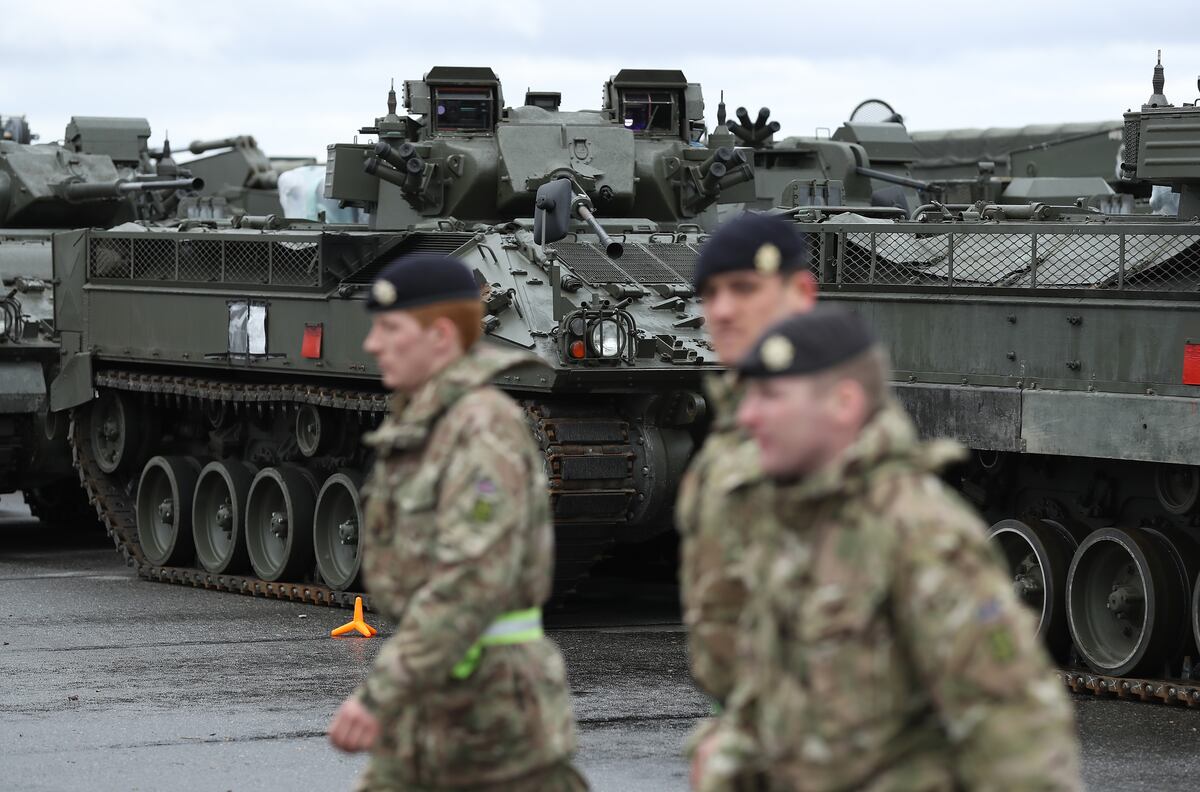
STUTTGART, Germany — The United Kingdom will join a European Union initiative to help military troops and equipment move swiftly across the continent, with alliance officials citing Russia’s war against Ukraine as a critical factor in bringing the former EU member on board.
The announcement was made during a Nov. 15 meeting of the EU’s Foreign Affairs Council on defense issues in Brussels, where the council adopted a decision to invite the UK to join the Permanent Structured Cooperation’s (PESCO) Military Mobility project, which was launched in 2018.
London recently requested to participate in the program, which aims to streamline and standardize cross-border military transport procedures within the EU, for example by cutting red tape on customs requirements between nations. Union ambassadors endorsed Britain’s inclusion in the program in mid-October, teeing up the formal decision at the defense and foreign ministers’ regular autumn session.
While the project is four years in the making, the ongoing Russian invasion of Ukraine has caused EU members to more readily focus on the need to quickly move across the continent.
“Sharing information and experiences with key partners is crucial. The PESCO project ‘Military Mobility’ provides the right platform in this regard,” said Josep Borrell, the EU’s high representative for foreign affairs and security policy, in a Tuesday statement. “Ensuring fast movement and secure transport of armed forces is crucial to improve the EU and NATO’s ability to respond to crises, in particular now as we provide urgent military support to Ukraine.”
U.K. Minister of Defense Ben Wallace on Nov. 14 called the Military Mobility project “an important scheme for all of us to move our assets around Europe at the time of a war.”
During a bilateral press conference with Germany’s Defense Minister Christine Lambrecht, Wallace shared that Britain “still has concerns overall” with PESCO’s policy on third-party involvement, along with the protection of intellectual property. But he noted that this particular initiative made sense for both the EU and its former member.
“I take a pragmatic case-by-case basis. This [project] suited perfectly,” he said.
Lambrecht added that Germany appreciated that London will participate in the project, and called the U.K. “a very, very important” partner when it comes to deploying troops in Europe. British troops currently lead one of NATO’s Enhanced Forward Presence (EFP) battle groups in Estonia, and a handful of Royal Air Force (RAF) service members participated in the recent “Baltic Tiger” exercise coordinated by Germany’s Air Force and Navy, at Estonia’s Ämari Air Base.
According to PESCO guidance, the Military Mobility project’s goals will be achieved via a number of working groups within and beyond the Union, and with EU institutions. The Netherlands serves as lead coordinator for the program, and other members include: Austria; Belgium; Bulgaria; Cyprus; the Czech Republic; Germany; Estonia; Greece; Spain; Finland; France; Croatia; Hungary; Italy; Lithuania; Luxembourg; Latvia; Poland; Portugal; Romania; Sweden; Slovenia; and Slovakia.
Canada, Norway and the United States joined the project as non-EU members in 2021, and at the time were the first third-party partners to join a PESCO project.
Vivienne Machi is a reporter based in Stuttgart, Germany, contributing to Defense News' European coverage. She previously reported for National Defense Magazine, Defense Daily, Via Satellite, Foreign Policy and the Dayton Daily News. She was named the Defence Media Awards' best young defense journalist in 2020.
德国斯图加特——英国将加入欧盟的一项倡议,以帮助军事部队和装备在欧洲大陆快速调动。欧盟官员指出,俄罗斯对乌克兰的战争是促使这个前欧盟成员国加入该倡议的关键因素。
该消息是在 11 月 15 日于布鲁塞尔举行的欧盟外交事务委员会防务会议上宣布的。会上,委员会通过了一项决定,邀请英国加入于 2018 年启动的永久结构性合作(PESCO)军事机动项目。
伦敦近期申请加入该计划,该计划旨在简化和规范欧盟内部跨境军事运输程序,例如减少各国之间的海关手续。欧盟大使于10月中旬批准英国加入该计划,为国防和外交部长秋季例会上的正式决定铺平了道路。
虽然该项目已经筹备了四年,但俄罗斯对乌克兰的持续入侵使得欧盟成员国更加迫切地需要迅速跨越整个欧洲大陆。
欧盟外交与安全政策高级代表何塞普·博雷尔周二在一份声明中表示:“与关键伙伴分享信息和经验至关重要。‘军事机动性’永久结构性合作项目为此提供了合适的平台。确保武装部队的快速调动和安全运输对于提升欧盟和北约应对危机的能力至关重要,尤其是在我们当前向乌克兰提供紧急军事援助之际。”
英国国防大臣本·华莱士于 11 月 14 日称军事机动项目是“一项重要的计划,让我们能够在战争时期在欧洲各地调动我们的资产”。
在与德国国防部长克里斯蒂娜·兰布雷希特举行的双边新闻发布会上,华莱士表示,英国“总体上仍然对永久性结构性合作(PESCO)中关于第三方参与以及知识产权保护的政策存在担忧”。但他指出,这项倡议对欧盟及其前成员国而言都具有意义。
“我采取务实的具体情况处理。这个项目非常符合我的需求,”他说。
兰布雷希特补充说,德国感谢伦敦参与该项目,并称英国在欧洲部署部队方面是“非常非常重要”的合作伙伴。目前,英国军队在爱沙尼亚领导着北约增强前沿部署(EFP)战斗群之一,少数英国皇家空军(RAF)官兵参加了最近由德国空军和海军在爱沙尼亚阿马里空军基地协调举行的“波罗的海之虎”演习。
根据永久性结构化合作(PESCO)指导原则,军事机动项目的目标将通过欧盟内外多个工作组以及与欧盟机构的合作来实现。荷兰担任该项目的牵头协调国,其他成员包括:奥地利、比利时、保加利亚、塞浦路斯、捷克共和国、德国、爱沙尼亚、希腊、西班牙、芬兰、法国、克罗地亚、匈牙利、意大利、立陶宛、卢森堡、拉脱维亚、波兰、葡萄牙、罗马尼亚、瑞典、斯洛文尼亚和斯洛伐克。
加拿大、挪威和美国于 2021 年作为非欧盟成员加入该项目,当时是首批加入 PESCO 项目的第三方合作伙伴。
薇薇安·马奇是驻德国斯图加特的一名记者,主要负责《防务新闻》的欧洲报道。她此前曾为《国家防务杂志》、《防务日报》、《卫星通讯》、《外交政策》和《代顿每日新闻》撰稿。2020年,她荣获防务媒体奖最佳青年防务记者称号。