Pentagon to swap out nuclear boss, Europe commander and more五角大楼将更换核武器部门负责人、欧洲司令等职务
Three combatant commands are preparing to welcome new leaders, pending Senate confirmation.
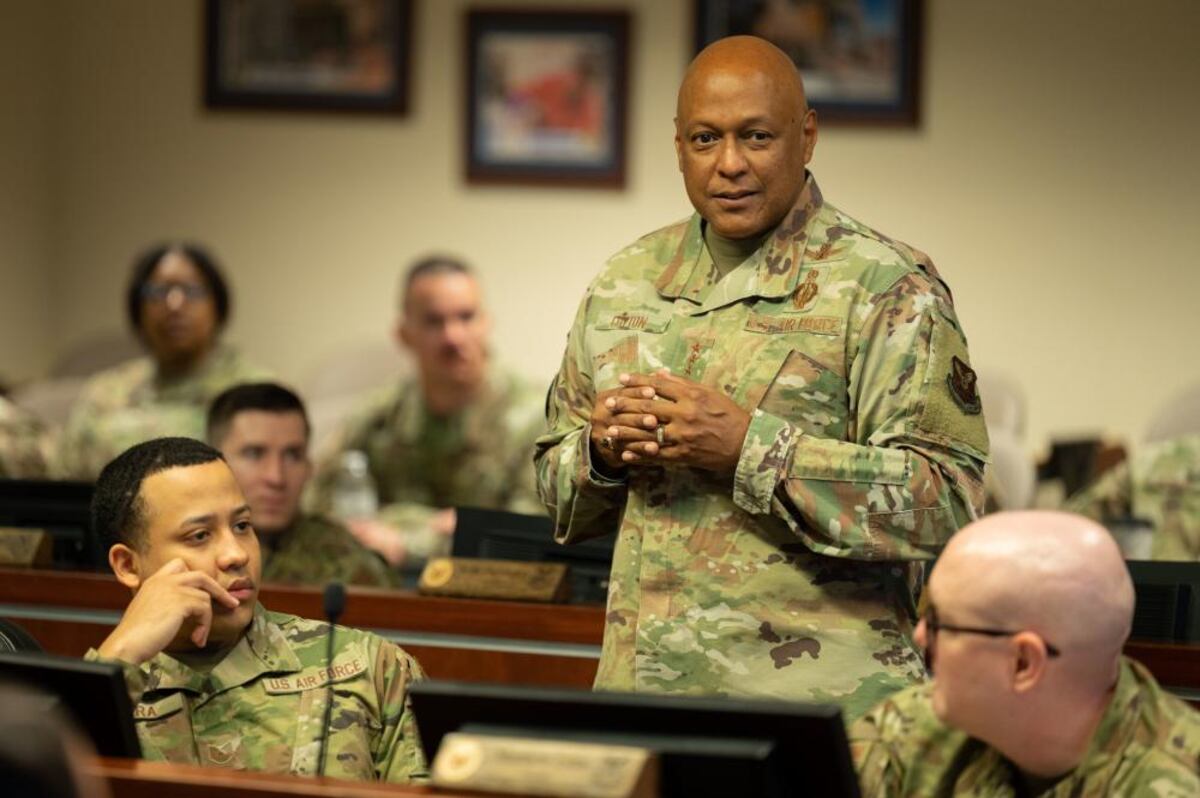
The summer season of military musical chairs is underway as several high-ranking Air Force officers take new jobs or head into retirement.
Gen. Anthony Cotton, who manages the Air Force’s nuclear weapons and bombers as commander of Air Force Global Strike Command, was nominated June 7 to lead the Pentagon’s nuclear enterprise at U.S. Strategic Command.
Cotton is a career nuclear missileer and oversaw the intercontinental ballistic missile force at 20th Air Force before becoming Global Strike’s deputy commander in October 2019. He rose to the command’s top job in August amid efforts to modernize the service’s nuclear arsenal, build a new stealth bomber and chart out the retirement of two other bombers.
If confirmed by the Senate, he would become the second Black service member to run STRATCOM and the second person of color among the current slate of combatant commanders. He will replace Adm. Charles Richard , who took the job in November 2019.
The Air Force has not announced who is next in line to replace Cotton at Global Strike.
He is one of two recent picks to lead a combatant command, which split up responsibility for daily operations in regions around the world as well as for specialized missions like cyber and space warfare.
The other, Army Lt. Gen. Bryan Fenton, was tapped to lead U.S. Special Operations Command and for a promotion to four-star general, the Pentagon announced Monday. He is now at the helm of Joint Special Operations Command.
Some defense watchers had speculated Lt. Gen. Jim Slife, the three-star in charge of Air Force Special Operations Command, would take over the top special ops job after hitting the three-year mark at AFSOC this month — around when stints in the role typically end.
The Pentagon on June 8 said Lt. Gen. Tony Bauernfeind, SOCOM’s current No. 2, is on deck to lead AFSOC, though the Air Force has not revealed what’s next for Slife.
AFSOC has been embroiled in allegations of unfairly playing favorites with an officer who could become the first female airman to break into the elite special tactics field. The Air Force inspector general cleared the command of wrongdoing in an investigation report released June 7.
Asked about his future plans in March, the special ops pilot said: “I’m anxious to find out whether I’m going to become a shepherd on my farm or whether I’m going to another job.”
Bauernfeind commissioned into the Air Force in 1991 upon graduating from the U.S. Air Force Academy in Colorado. He piloted the MC-130 special operations airlift and commanded two special operations wings. He has also held the No. 2 job at SOCOM since August 2020.
And amid Europe’s most tenuous security situation in decades , Gen. Tod Wolters will retire as U.S. European Command boss and NATO’s supreme allied commander. Wolters commissioned into the Air Force in 1982. Another fighter pilot who has hopscotched into positions around the world, he took over at EUCOM in May 2019.
His departure comes as Russia’s assault on Ukraine continues into its fourth month, spurring a massive effort to arm Ukrainian troops as well as new requests from countries to join NATO.
Gen. Christopher Cavoli, head of U.S. Army Europe and Africa, was nominated to replace Wolters.
Other resume updates include:
Maj. Gen. Alexus Grynkewich will take over at Air Forces Central Command’s headquarters in South Carolina. The career fighter pilot has served as U.S. Central Command’s operations director since June 2020.
Lt. Gen. James Hecker is slated to leave Air University at Maxwell Air Force Base, Alabama, to assume command of U.S. Air Forces in Europe and Air Forces Africa. He joined the university as president in November 2019.
Lt. Gen. Brad Webb is retiring as commander of Air Education and Training Command after 38 years of military service. He handed the reins to Lt. Gen. Brian Robinson, formerly the No. 2 officer at Air Mobility Command and a career airlift pilot.
Gen. Arnold Bunch retired Monday after three years as Air Force Materiel Command’s top officer and almost 40 years in the service. Gen. Duke Richardson, the former military deputy for acquisition at Air Force headquarters, took over the post.
Rachel Cohen is the editor of Air Force Times. She joined the publication as its senior reporter in March 2021. Her work has appeared in the Washington Post, the Frederick News-Post (Md.), Air and Space Forces Magazine, Inside Defense, Inside Health Policy and elsewhere.
随着多名空军高级军官调任新职或退休,夏季军方人事变动季已经开始。
负责管理空军核武器和轰炸机的空军全球打击司令部司令安东尼·科顿将军于6月7日被提名为美国战略司令部五角大楼核力量的领导人。
科顿是一名资深的核导弹专家,在 2019 年 10 月成为全球打击司令部副司令之前,他曾负责第 20 航空队的洲际弹道导弹部队。同年 8 月,他晋升为该司令部最高指挥官,当时正值美军努力实现核武库现代化、建造新型隐形轰炸机并规划另外两款轰炸机退役之际。
如果获得参议院确认,他将成为第二位担任战略司令部司令的非裔军人,也是现任作战司令中第二位有色人种。他将接替于2019年11月上任的查尔斯·理查德海军上将。
空军尚未宣布谁将接替科顿担任全球打击行动负责人。
他是近期被选中领导作战司令部的两位领导人之一,该司令部负责世界各地地区的日常作战行动以及网络战和太空战等专门任务。
五角大楼周一宣布,另一位被任命为美国特种作战司令部司令的陆军中将布莱恩·芬顿,将晋升为四星上将。他目前担任联合特种作战司令部司令。
一些国防观察人士曾猜测,空军特种作战司令部三星中将吉姆·斯莱夫本月将在该司令部任职满三年后接任最高特种作战职务——这通常是该职位任期结束的时间。
6月8日,五角大楼表示,特种作战司令部现任二号人物托尼·鲍恩费因德中将将接任空军特种作战司令部司令,但空军尚未透露斯莱夫的下一步计划。
空军特种作战司令部(AFSOC)一直深陷于偏袒一名军官的指控之中,该军官有望成为首位进入这支精英特种战术部队的女性空军士兵。空军监察长在6月7日发布的调查报告中,宣布该司令部并无不当行为。
3月份被问及未来的计划时,这位特种作战飞行员说:“我很想知道我是会回到自己的农场当牧羊人,还是会去从事其他工作。”
鲍恩费因德于1991年从科罗拉多州美国空军学院毕业后加入空军。他曾驾驶MC-130特种作战运输机,并指挥过两个特种作战联队。自2020年8月起,他还担任特种作战司令部二号人物。
在欧洲安全局势数十年来最为动荡之际,托德·沃尔特斯将军即将卸任美国欧洲司令部司令兼北约盟军最高司令一职。沃尔特斯于1982年加入美国空军。这位曾辗转世界各地担任要职的战斗机飞行员,于2019年5月接任欧洲司令部司令。
在他离职之际,俄罗斯对乌克兰的侵略已进入第四个月,这促使俄罗斯大力武装乌克兰军队,并引发了各国加入北约的新请求。
美国陆军欧洲和非洲司令部司令克里斯托弗·卡沃利将军被提名接替沃尔特斯。
其他简历更新内容包括:
阿莱克西斯·格林克维奇少将将接管位于南卡罗来纳州的美国空军中央司令部总部。这位职业战斗机飞行员自2020年6月以来一直担任美国中央司令部作战主任。
詹姆斯·赫克尔中将即将离开位于阿拉巴马州麦克斯韦空军基地的空军大学,出任美国驻欧洲空军和驻非洲空军司令。他于2019年11月加入该大学担任校长。
布拉德·韦伯中将结束了38年的军旅生涯,卸任空军教育训练司令部司令一职。他将指挥权移交给布莱恩·罗宾逊中将,罗宾逊中将此前曾任空军机动司令部二号人物,也是一名资深空运飞行员。
阿诺德·邦奇将军周一退休,结束了他担任空军装备司令部最高指挥官三年、服役近40年的生涯。空军总部前军事采购副主管杜克·理查森将军接任了他的职位。
瑞秋·科恩是《空军时报》的编辑。她于2021年3月加入该刊物,担任高级记者。她的作品曾发表在《华盛顿邮报》、《弗雷德里克新闻邮报》(马里兰州)、《空军与太空部队杂志》、《国防内幕》、《卫生政策内幕》等刊物上。