What’s old is new again: How to boost NATO’s air defenses in Europe旧方法焕发新生:如何加强北约在欧洲的防空能力
Opinion: Early European investments to expand industrial capacity for air defense systems are already benefiting Ukraine.
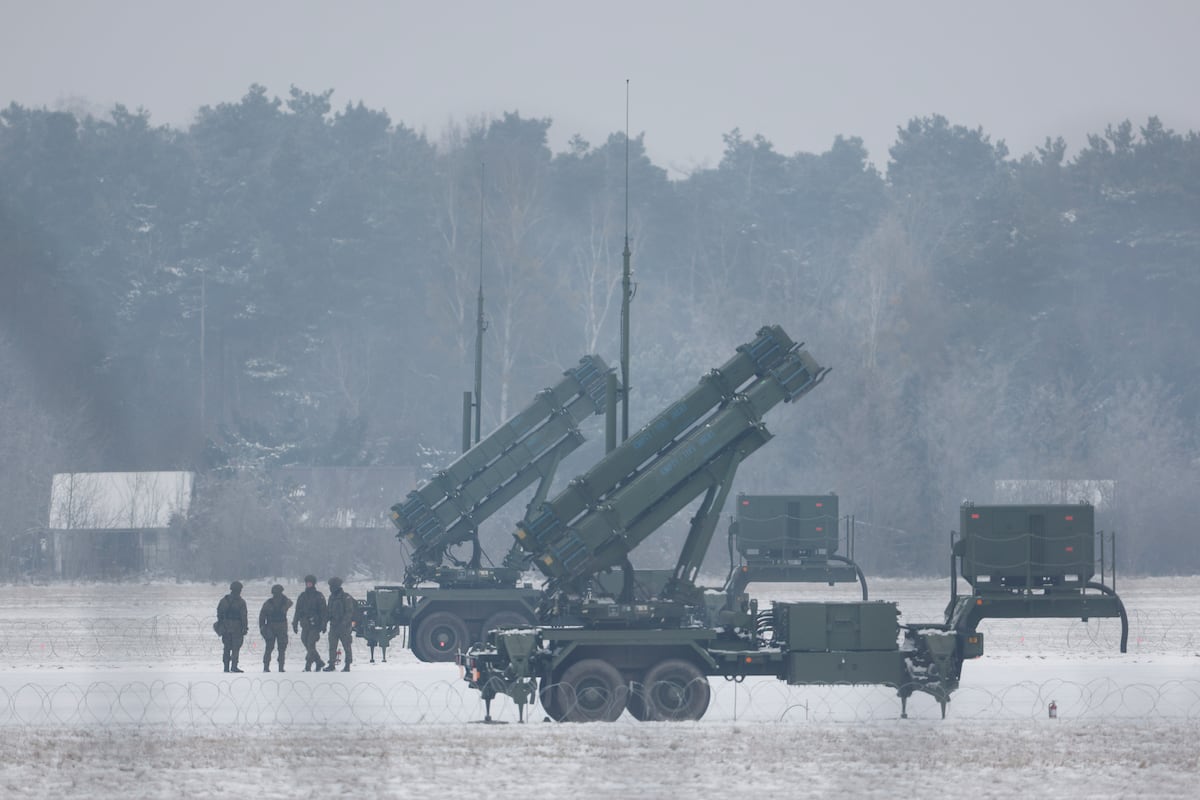
In December 1983, amid the heightened tensions of the “second Cold War,” U.S. Defense Secretary Caspar Weinberger and his West German counterpart, Manfred Wörner, agreed on a $3 billion program (worth more than $9 billion today) to boost NATO’s air defenses along the central front: the inner-German border with the Soviet-controlled eastern bloc. Four decades later, under the impression of Russia’s missile war against Ukraine , NATO leaders are wrestling once again with the strategic, operational and technical complexities of the air defense mission. They should revisit the 40-year-old U.S.-West German agreement for inspiration.
Throughout the first half of the Cold War, ground-based air defenses, or GBAD, were postured to support NATO’s Forward Defense strategy for Central Europe. Nike and Hawk surface-to-air missiles were deployed in a two-layer belt in West Germany. By the 1970s, after several improvement programs, both systems were exhausting their modernization potential, whereas the Soviet threat was steadily rising.
Moreover, as NATO turned toward Flexible Response — emphasizing graduated, primarily conventional options over massive nuclear retaliation — there was a desire for a non-nuclear replacement of Nike. But this required greater speed, range and maneuverability of the interceptors, a leap in sensor and guidance technology, as well as improvements to command, control and communication systems. Patriot was to provide this capability upgrade to U.S. and allied ground-based air defenses.
Members of the German 88th Element of Light Air Defense Artillery Battery prepare a Hawk missile unit for an emergency missile transfer at McGregor Reservation, N.M., during exercise Roving Sands on June 6, 1996. (U.S. Defense Department)
With defense budgets strained by other modernization priorities, Bonn and Washington struck an elaborate cost-sharing agreement to equip West Germany’s Bundeswehr with 36 Patriot fire units , ultimately boasting a total of 288 missile launchers with upward of 2,300 interceptors. Twelve fire units would be purchased by Bonn outright, and another 12 would be supplied by Washington. Twelve more would be lent to West Germany by the United States for an initial period of 10 years; all would be operated by approximately 2,000 Bundeswehr soldiers.
Bonn and Washington also agreed to procure several dozen Roland fire units — a Franco-German mobile short-range surface-to-air missile system — to protect U.S. and West German airfields in the country. These, too, would be operated by Bundeswehr troops. The Cold War ended before all Patriot systems arrived in now-reunified Germany.
In the post-Cold War period, costly air defense assets were a welcome target for cuts to military budgets across Europe. The U.S.-German-Italian Medium Extended Air Defense System development effort floundered ; counter-UAV capabilities, too, received little attention. German Air Force officer Friederike Hartung’s recent study provides an excellent overview of the changing role of the Bundeswehr’s shrinking GBAD capability after 1990, barely able to keep running a dozen Patriot batteries and little else when Russia launched its full-scale invasion of Ukraine in February 2022. But gaps are even wider elsewhere in Europe.
Russia’s missile and drone attacks on military and civilian targets across Ukraine, and the shock of the war more broadly, produced a hurried response from European leaders to finally follow through on NATO plans to rebuild allied air defenses. By donating various systems, they helped Kyiv erect the densest air defense bubble on the continent. But this further strained European capabilities.
German Chancellor Olaf Scholz’s European Sky Shield Initiative , or ESSI, attempts to aggregate demand and leverage economies of scale for off-the-shelf GBAD systems, principally Patriot and the German-produced IRIS-T SLM. While 18 of Germany’s European partners signed up for the initiative to date, some criticized the choice of systems included (the French-Italian SAMP/T is not on the list, for example). Paris voiced concerns about the strategic implications of Berlin’s decision to purchase Israel’s Arrow 3 to protect against exo-atmospheric threats, worrying that it signals distrust in deterrence and could undermine strategic stability. Warsaw, meanwhile, decided years ago to modernize all layers of the Polish GBAD infrastructure . It saw no benefit from join the German-led initiative.
There are several paths to further broaden and deepen European cooperation on GBAD. The new Polish government outlined in its agenda for the first 100 days to follow through on its predecessor’s plan to acquire six Patriot batteries and to now also join ESSI. Poland’s desired Integrated Battle Command System configuration for its new Patriot batteries was previously considered a technical barrier to such a move, but other Europeans’ early expressions of interest in the capability could pave the way, thus reducing the price tag for Warsaw and expanding the initiative with a key Eastern European ally.
The 1983 agreement’s mechanism for U.S.-owned GBAD fire units to be operated by West German soldiers could serve as a template to move ESSI from a buyers club to a more integrated European pillar in NATO’s air and missile defense architecture. Instead of deploying their own troops to the eastern front, some Western European allies might find it easier to procure the hardware and have it then be operated by Estonian, Polish or Romanian personnel. This would further incentivize standardization and move European GBAD from interoperable to interchangeable.
Early European investments to expand industrial capacity for air defense systems are already benefiting Ukraine as well. A significant part of the growing production of interceptors for IRIS-T, for example, goes to Ukraine. The establishment of a tactical Patriot Advanced Capability-2 Guidance Enhanced Missile production facility in Germany will also help to replenish its stocks. But to get more urgently needed launchers and fire units there, the 1983 agreement’s lending model could be attractive for Ukraine’s partners by lowering the immediate financial burden compared to donations.
Today, NATO’s border with Russia is double the length of the Cold War’s inner-German dividing line. To extend an effective missile shield over the entirety of NATO’s European territory — or even only of front-line allies — would be both technically infeasible and prohibitively expensive. European NATO allies must complement efforts to strengthen GBAD with investments in deep-strike capabilities. But to advance cooperation in these areas, they do not need to reinvent the wheel. Their archives hold plenty inspiration.
Rafael Loss is the coordinator for pan-European data projects at the European Council on Foreign Relations’ Berlin office. He is an expert in German and European foreign and security policy, European integration, trans-Atlantic relations, and nuclear policy.
1983年12月,正值“第二次冷战”局势高度紧张之际,美国国防部长卡斯帕·温伯格与西德国防部长曼弗雷德·沃纳达成一项价值30亿美元(相当于今天的90多亿美元)的协议,旨在加强北约在中线——即德国与苏联控制的东欧集团接壤的边界——的防空能力。四十年后,在俄罗斯对乌克兰发动导弹战争的阴影下,北约领导人再次面临防空任务在战略、作战和技术层面上的复杂挑战。他们或许应该重新审视这项已有40年历史的美西协议,从中汲取经验。
在冷战前半期,地面防空系统(GBAD)部署于中欧,以支持北约的前沿防御战略。耐克和霍克地对空导弹在西德以双层防线部署。到了20世纪70年代,经过多次改进,这两个系统的现代化潜力已接近极限,而苏联的威胁却在稳步上升。
此外,随着北约转向灵活反应战略——强调以渐进式、以常规手段为主的应对措施而非大规模核报复——人们渴望找到一种非核的“耐克”导弹系统替代方案。但这需要拦截导弹具备更高的速度、射程和机动性,传感器和制导技术实现飞跃,以及指挥、控制和通信系统得到改进。“爱国者”导弹系统旨在为美国及其盟国的地面防空系统提供这种能力升级。
1996年6月6日,在“漫游沙地”演习期间,德国第88轻型防空炮兵连的士兵在新墨西哥州麦格雷戈保留地准备一枚“鹰”式导弹,以进行紧急导弹转移。(美国国防部)
由于其他现代化优先事项导致国防预算捉襟见肘,波恩和华盛顿达成了一项复杂的成本分摊协议,为西德联邦国防军配备36套“爱国者”导弹防御系统,最终将拥有288套导弹发射装置和超过2300枚拦截弹。其中12套由波恩直接购买,另外12套由华盛顿提供。美国还将向西德借用12套,初始借用期限为10年;所有这些系统将由大约2000名联邦国防军士兵操作。
波恩和华盛顿还同意采购数十套“罗兰”导弹防御系统——一种法德联合研制的移动式短程地对空导弹系统——用于保护美国和西德在德国境内的机场。这些系统也将由德国联邦国防军操作。冷战在所有“爱国者”导弹系统运抵统一后的德国之前就结束了。
冷战结束后,昂贵的防空设施成为欧洲各国削减军费预算的首选目标。美德意联合研制的中型增程防空系统(MEAS)项目进展缓慢;反无人机能力也鲜少受到重视。德国空军军官弗里德里克·哈通(Friederike Hartung)近期的一项研究出色地概述了1990年后德国联邦国防军地面防空能力的萎缩及其作用的变化。2022年2月俄罗斯全面入侵乌克兰时,德国联邦国防军仅勉强维持十几套“爱国者”导弹系统的运转,其他防空能力几乎为零。但欧洲其他地区的防空能力缺口更大。
俄罗斯对乌克兰境内军事和民用目标发动的导弹和无人机袭击,以及战争带来的更广泛的冲击,促使欧洲领导人迅速采取行动,最终落实北约重建盟军防空系统的计划。他们捐赠了各种系统,帮助基辅在欧洲大陆建立了最密集的防空体系。但这进一步加剧了欧洲防空能力的紧张。
德国总理奥拉夫·朔尔茨提出的“欧洲天空之盾倡议”(ESSI)旨在整合市场需求,并利用规模经济效应推广现成的地面防空系统,主要包括“爱国者”导弹系统和德国自主研发的IRIS-T SLM系统。迄今为止,已有18个德国的欧洲伙伴国加入了该倡议,但一些国家对所选系统的选择提出了批评(例如,法意联合研制的SAMP/T系统并未列入名单)。巴黎方面对柏林决定购买以色列的“箭-3”导弹系统以应对大气层外威胁表示担忧,认为此举表明对威慑力量缺乏信任,并可能破坏战略稳定。与此同时,华沙早在多年前就决定对波兰的地面防空基础设施进行全面现代化改造,因此认为加入这项由德国主导的倡议并无益处。
在地面防空领域,有多种途径可以进一步拓展和深化欧洲合作。波兰新政府在其百日议程中明确表示,将延续前任政府的计划,采购六套“爱国者”导弹系统,并加入欧洲战略战略倡议(ESSI)。波兰希望为其新“爱国者”导弹系统配备集成作战指挥系统(IBCS),这曾被认为是实现这一目标的技术障碍。但其他欧洲国家早期对该能力的关注,可能为波兰铺平道路,从而降低其采购成本,并与一个重要的东欧盟友扩大合作范围。
1983年协议中关于由西德士兵操作美国拥有的地面防空系统(GBAD)火力装置的机制,可以作为模板,推动欧洲地面防空系统倡议(ESSI)从一个采购俱乐部转变为北约防空和导弹防御体系中更加一体化的欧洲支柱。一些西欧盟国或许会发现,与其向东线部署自己的部队,不如采购相关装备,然后由爱沙尼亚、波兰或罗马尼亚的人员操作,这样会更加便捷。这将进一步促进标准化,并使欧洲的地面防空系统从互操作走向互换。
欧洲早期对扩大防空系统工业产能的投资也已惠及乌克兰。例如,IRIS-T拦截弹产量不断增长,其中相当一部分流向乌克兰。在德国建立的“爱国者”先进能力-2型制导增强型导弹战术生产设施也将有助于补充乌克兰的库存。但若要获得乌克兰急需的发射装置和火力单元,1983年协议中的贷款模式对乌克兰的合作伙伴来说可能更具吸引力,因为与捐赠相比,贷款模式可以减轻乌克兰的直接财政负担。
如今,北约与俄罗斯的边界线长度是冷战时期德意志内部边界线的两倍。要在整个北约欧洲领土——甚至仅仅是前线盟国——部署有效的导弹防御系统,在技术上既不可行,成本也极其高昂。欧洲北约盟国必须在加强地面防空能力的同时,加大对纵深打击能力的投资。但要推进这些领域的合作,他们无需另辟蹊径。他们的历史经验蕴藏着丰富的借鉴。
拉斐尔·洛斯是欧洲对外关系委员会柏林办事处泛欧数据项目协调员。他是德国和欧洲外交与安全政策、欧洲一体化、跨大西洋关系和核政策方面的专家。