DOD wants to cut red tape on foreign arms deals, Hegseth says赫格塞斯说,国防部希望简化对外军售的繁文缛节。
Hegseth emphasized European countries need to invest more while the U.S. needs to make it easier for countries to buy its weapons.
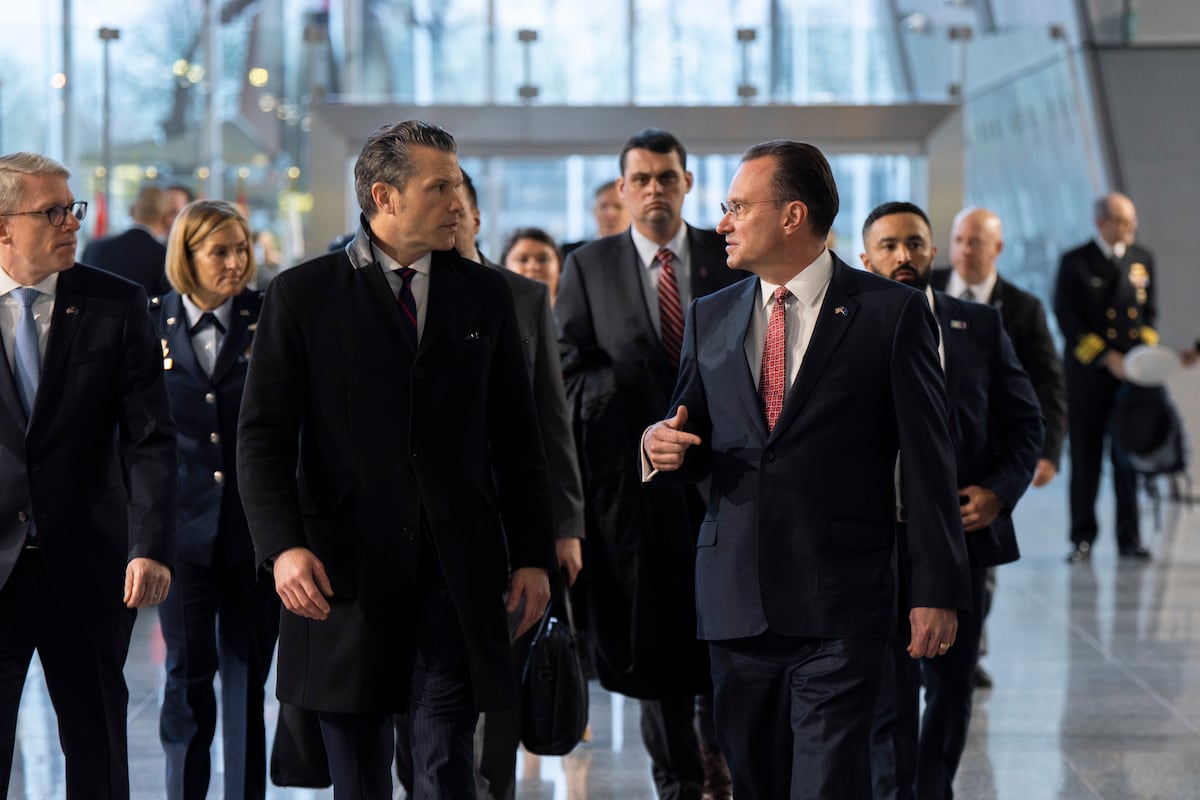
The Defense Department wants to reform how it sells weapons to foreign countries , Defense Secretary Pete Hegseth said Thursday.
The U.S. foreign military sales, or FMS, process involves years of back-and-forth between the U.S. and countries interested in buying American-made weapons before anything ends up on foreign soil. The process, which has been criticized for its slow pace, has been the focus of reform efforts prompted by the war in Ukraine.
In 2023, the Pentagon, State Department and Congress launched an effort to reform the FMS process, establishing a Tiger Team focused on pressure points and barriers to advancing desired sales.
“We need to reform that process so it’s quicker, so a request today isn’t delivered seven years from now but three years from now with less red tape and with the most efficient and effective technology possible,” Hegseth said in a press briefing directly following a NATO Defense Ministerial meeting in Brussels.
In 2024, a year after the Tiger Team worked to reform the FMS process, the Pentagon was still trying to implement many of its recommendations.
However, one challenge persists: No matter how quickly the U.S. government moves to make the reforms to speed up the approval of a sale, industry still has to build the weapons on order.
Defense firms have begun expanding manufacturing and have worked to ramp up production on munitions and other high-demand weapons, but building more production capacity also takes time and money.
Demand for American weapons systems has also spiked since the start of the war in Ukraine. Total U.S. FMS were well above $80 billion in fiscal 2024 by the end of the third quarter — higher than the total in FY23 and more than $30 billion over sales in FY22.
Hegseth’s comments to reform FMS were paired with his repeated emphasis that European countries must invest more toward the deterrence of Russian aggression and the overall security in Europe.
“One of the self-evident conclusions of the war in Ukraine was the underinvestment that both the European continent and America has had, unfortunately, in the defense industrial base,” Hegseth said. “The ability to produce munitions, emerging technologies rapidly and field them was a blind spot exposed through the aggression against Ukraine. … Europe is responding to that and so is America.”
Hegseth repeated the Trump administration’s conviction that NATO allies should invest more in defense and spend 5% of their gross domestic product as a continued commitment to the alliance.
“Leaders of our European allies should take primary responsibility for defense of the continent,” Hegseth said. “That begins with increasing the defense spending; 2% is a start, as President Trump has said, but it’s not enough.”
When asked if the U.S. would also meet a 5% spending goal, Hegseth pointed to the U.S. defense budget, which stands at $850 billion, representing 3.4% of America’s GDP.
“I think nobody can or should contest the extent of America’s willingness to invest in national security. … 3.4% is a very robust investment, larger than most of our allies within NATO.”
Hegseth also stressed European countries should increase their share of support to Ukraine.
“The American Defense Department fully supports the efforts of the Trump administration, and we look to allies to support this important work with leading on Ukraine security assistance now through increased contributions and greater ownership of future security assistance to Ukraine.”
Jen Judson is an award-winning journalist covering land warfare for Defense News. She has also worked for Politico and Inside Defense. She holds a Master of Science degree in journalism from Boston University and a Bachelor of Arts degree from Kenyon College.
国防部长皮特·赫格塞斯周四表示,国防部希望改革向外国出售武器的方式。
美国对外军售(FMS)流程涉及美国与有意购买美制武器的国家之间长达数年的反复磋商,最终才能将武器交付到这些国家。该流程因进展缓慢而备受诟病,也成为乌克兰战争引发的改革重点。
2023 年,五角大楼、国务院和国会启动了一项改革对外军售 (FMS) 流程的工作,成立了一个“老虎队”,专注于解决推进预期销售的压力点和障碍。
“我们需要改革这一流程,使其更快,这样今天的请求就不会在七年后得到满足,而是在三年内得到满足,减少繁文缛节,并采用最有效率的技术,”赫格塞斯在布鲁塞尔举行的北约国防部长会议结束后立即举行的新闻发布会上说。
2024 年,也就是老虎小组致力于改革对外军售流程一年后,五角大楼仍在努力落实其提出的许多建议。
然而,一个挑战依然存在:无论美国政府采取多快的改革措施来加快军售审批速度,工业界仍然需要按订单生产武器。
国防企业已开始扩大生产规模,并努力提高弹药和其他高需求武器的产量,但扩大生产能力也需要时间和金钱。
自乌克兰战争爆发以来,对美国武器系统的需求也急剧上升。截至2024财年第三季度末,美国对外军售总额已远超800亿美元,高于2023财年的总额,比2022财年的销售额高出300多亿美元。
赫格塞斯在发表改革对外军售协议的评论时,反复强调欧洲国家必须加大对遏制俄罗斯侵略和维护欧洲整体安全的投入。
“乌克兰战争带来的一个显而易见的结论是,不幸的是,欧洲大陆和美国在国防工业基础方面的投资都严重不足,”赫格塞斯说。“快速生产和部署新兴弹药的能力,以及在对乌克兰的侵略中暴露出的盲点……欧洲和美国都在对此做出回应。”
赫格塞斯重申了特朗普政府的信念,即北约盟国应该加大国防投入,将国内生产总值的 5% 用于国防,以此作为对联盟的持续承诺。
“我们欧洲盟国的领导人应该承担起保卫欧洲大陆的首要责任,”赫格塞斯说。“这首先要从增加国防开支开始;正如特朗普总统所说,2%只是一个开始,但这还远远不够。”
当被问及美国是否也能达到 5% 的支出目标时,赫格塞斯指出,美国的国防预算为 8500 亿美元,占美国 GDP 的 3.4%。
“我认为任何人都不能也不应该质疑美国在国家安全方面投入的力度。……3.4% 是一项非常可观的投资,比我们大多数北约盟国的投资额都要高。”
赫格塞斯还强调,欧洲国家应该增加对乌克兰的支持份额。
“美国国防部全力支持特朗普政府的努力,我们期待盟友支持这项重要工作,通过增加捐助和对未来对乌克兰安全援助承担更大责任,在当前乌克兰安全援助方面发挥领导作用。”
珍·贾德森是一位屡获殊荣的记者,为《防务新闻》报道陆地战争。她也曾为《政治报》和《内幕防务》工作。她拥有波士顿大学新闻学硕士学位和凯尼恩学院文学学士学位。