Japan becomes Boeing’s newest customer of latest Chinook helo variant日本成为波音公司最新款奇努克直升机的新客户
Japan is the fourth country to purchase the latest version of the U.S. Army's CH-47 Chinook cargo helicopter to modernize its older fleet of CH-47 JAs.
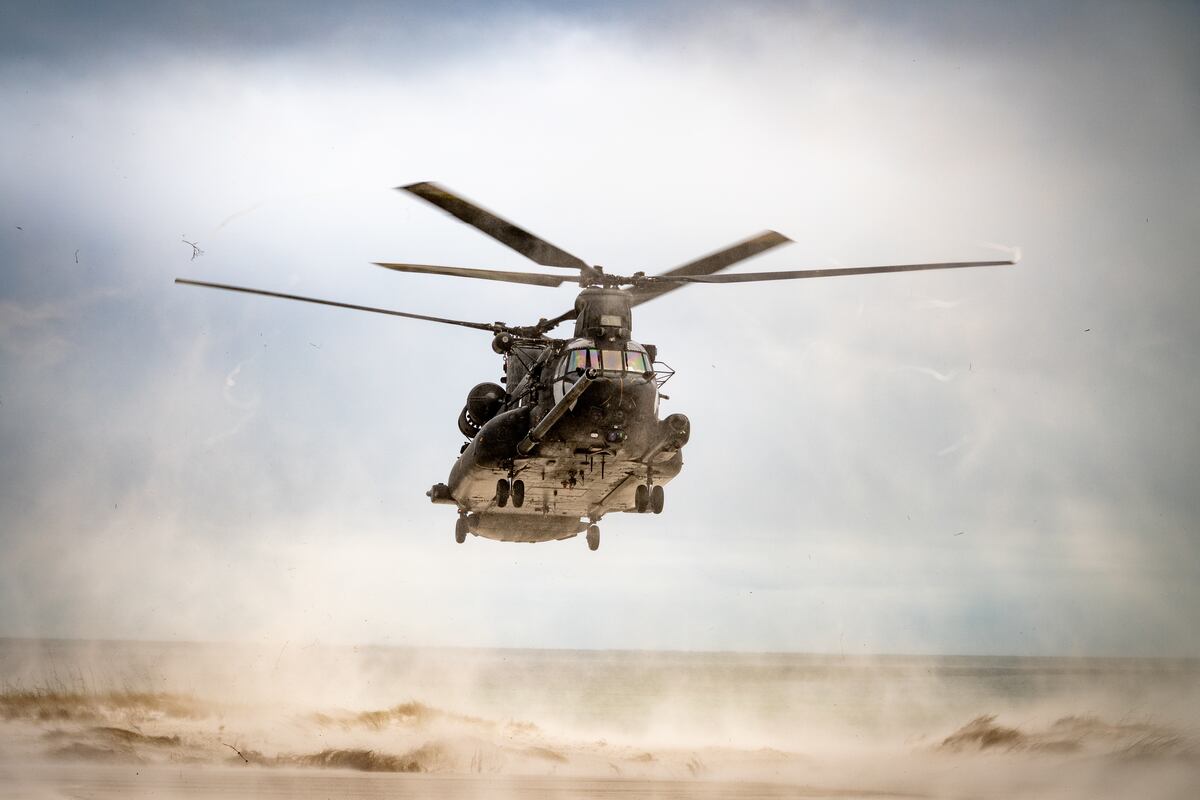
Japan has ordered 17 of the latest variant of the Boeing-manufactured CH-47 Chinook cargo helicopter, the company said Thursday.
The CH-47 Block II Chinook is an extended-range version of the aircraft that is used by the U.S. Army and U.S. Special Operations Command. Japan is the fourth customer for the new variant.
Germany purchased 60 of the helicopters in a $4 billion deal in 2022, and the U.K. finalized its deal for 14 Chinooks in early 2024.
The CH-47s will be co-produced by Boeing and Kawasaki Heavy Industries. The Japanese company similarly provided elements for the CH-47 JA helicopters.
The helicopters purchased for the Japan Self-Defense Forces will replace some of its CH-47 JA aircraft, which were purchased in the 1980s and delivered by the early 2000s. The helicopters have been used, for example, to respond to the Fukushima nuclear power plant disaster in 2011, with special lead plates attached to the floor to protect the crew from radiation exposure. The aircraft collected ocean water and dropped it over hot spots.
“This award strengthens our decades-long relationship with [Kawasaki Heavy Industries] and provides critical capability improvements that will keep the Japan Self-Defense Forces operating heavy-lift aircraft for decades to come,” Heather McBryan, vice president and program manager for Boeing cargo programs, said in a statement. “The Block II configuration and digital flight controls will modernize and significantly improve Japan’s helicopter transport capabilities by improving aircraft stability, safety, and efficiency.”
The U.S. Army decided in 2019 that it would not procure the CH-47F Block II for the active fleet so it could begin making heavier investments in its Future Long Range Assault Aircraft, or FLRAA, and the Future Attack Reconnaissance Aircraft, or FARA, that it wanted to field in the early 2030s. The service decided it would build 69 of the latest Chinook variant for special operations in the form of the MH-47 “G” model and stop there.
But the Block II had a comeback after several years of uncertainty when the Army decided to return funding to build the variant for the active force following pressure from Congress. And as the result of the service’s decision to cancel its FARA program in 2024, $465.2 million in fiscal 2025 funding became available to enable a Block II production start for the regular Army.
The version incorporates a new fuel system, electrical system and stronger airframe to increase lift capability. The Block II version of the Chinook featured new rotor blades, but the Army abandoned the effort in 2022 due to excessive rotor blade vibrations that, according to the Pentagon’s chief weapons tester, posed a flight risk.
Jen Judson is an award-winning journalist covering land warfare for Defense News. She has also worked for Politico and Inside Defense. She holds a Master of Science degree in journalism from Boston University and a Bachelor of Arts degree from Kenyon College.
波音公司周四表示,日本已订购17架波音制造的最新型CH-47“支奴干”货运直升机。
CH-47 Block II“支奴干”直升机是美国陆军和美国特种作战司令部使用的增程型直升机。日本是该新型直升机的第四个客户。
德国在 2022 年以 40 亿美元的价格购买了 60 架该型直升机,英国在 2024 年初最终敲定了购买 14 架奇努克直升机的交易。
CH-47直升机将由波音公司和川崎重工联合生产。此前,这家日本公司也曾为CH-47 JA直升机提供过零部件。
日本自卫队采购的直升机将取代部分上世纪80年代采购、本世纪初交付的CH-47 JA型直升机。例如,这些直升机曾参与2011年福岛核电站事故的救援行动,机舱地板上安装了特制铅板,以保护机组人员免受辐射。此外,这些直升机还收集海水并将其投放到核事故热点区域。
“这项合作巩固了我们与川崎重工长达数十年的合作关系,并带来了关键的能力提升,这将确保日本自卫队在未来几十年内继续使用重型运输机,”波音公司货运项目副总裁兼项目经理希瑟·麦克布莱恩在一份声明中表示。“Block II配置和数字飞行控制系统将通过提高飞机的稳定性、安全性和效率,实现日本直升机运输能力的现代化和显著提升。”
美国陆军在2019年决定不再为现役部队采购CH-47F Block II型直升机,以便加大对未来远程突击飞机(FLRAA)和未来攻击侦察飞机(FARA)的投资,这两款飞机计划在2030年代初投入使用。陆军决定建造69架最新型的“支奴干”直升机(MH-47“G”型),用于特种作战,并就此停止采购。
但经过数年的波折,Block II 型步枪终于迎来了转机。在国会的压力下,陆军决定恢复为现役部队生产该型号步枪的资金。此外,由于陆军决定在 2024 年取消其《外国武装部队改革法案》(FARA)项目,2025 财年腾出了 4.652 亿美元的资金,用于启动正规陆军的 Block II 型步枪的生产。
该版本采用了新的燃油系统、电气系统和更坚固的机身,以提高升力能力。奇努克直升机的Block II版本配备了新型旋翼叶片,但由于旋翼叶片振动过大,美国陆军于2022年放弃了该项目。据五角大楼首席武器测试员称,过大的振动会造成飞行风险。
珍·贾德森是一位屡获殊荣的记者,为《防务新闻》报道陆地战争。她也曾为《政治报》和《内幕防务》工作。她拥有波士顿大学新闻学硕士学位和凯尼恩学院文学学士学位。