Cold comfort冷安慰
A Polish naval commando walks into a bar…in the latest Fictional Intelligence column.
A Polish naval commando walks into a bar…in the latest Fictional Intelligence column.
Peter W. Singer and August Cole
Fictional Intelligence
The arrival of new weapons has often been followed closely by their use against civilian populations for strategic effects. Submarines, bombers, rockets; The Lusitania , Dresden, London. This 20th-century history portends that the emerging capabilities of the 21st century—cyber attacks, information warfare—will be similarly used against civilian targets. The challenge will be all the greater as extreme weather becomes more common. This month’s Fictional Intelligence narrative, set in the late 2030s, explores how adversaries could exploit the combination to raise existential questions about political, military, and societal resiliency.
An empty bar is a terrible thing to waste.
Tomec took in the Loui Bar at Steigenberger Icon Wiltcher’s grand hotel in Brussels and set himself in a plush leather club chair. The young sergeant in Poland’s JW FORMOZA naval commando unit was a large man, meaning he found most chairs uncomfortable. And he enjoyed his quiet, now more than ever. It was half an hour before a driver would pick him up, but he wanted to be sure not to miss them.
His military service had taken him to three continents, but he had never been to NATO’s headquarters, let alone imagined he would go for an awards ceremony, albeit a discreet one held after hours. He assumed it was a hushed matter due to the sensitivity of his wartime missions. The war had been officially over for four months, but a great deal of it remained clouded. With so much disinformation and outright damage to computer systems and cloud networks, people were still trying to piece together what had happened.
Tomec took a sip from his highball glass, careful not to get the cocktail’s muddled basil on his chin. He pulled out a paperback novel he had picked up at the airport, no longer trusting his old digital book reader after all the hacks. But as he tried to lose himself in the story, he found his solitude disturbed by a man and a woman entering the bar.
The woman was taller than Tomec’s nearly two meters; her black suit contrasted with her short platinum-and-purple-streaked hair. The man, shorter and bald, wore a loose-fitting gray suit, a white shirt, and a squadron tie in maroon polyester.
Tomac’s hearing wasn’t as good as it had been before the war, so it was hard to make out what they were saying on the other side of the room. But it was just loud enough to break the silence he had so welcomed. Then they collected their drinks, looked around at him, and walked over. The pair seemed entirely comfortable, which put him on edge. He put his book down, ran a hand through his thick brown hair, and started to stand.
The woman motioned for him to sit and did so herself, in a plush chair that faced his.
“You have good taste,” she said, in what Tomac took for a Dutch accent. “The bartender said we’re having what you’re having.”
“ Gin Basil Smash ,” Tomec said.
“Exactly. Less bevvy, more salad,” said the man, who spoke with a carefully neutral British accent. He was bald and significantly shorter than the woman. He wore a loose-fitting gray suit, a white shirt, and a polyester maroon squadron tie.
“I’m Aniek, and this is Wing Commander James Crick, 617 Squadron RAF ,” the woman said. “You’re Sgt. Tomec Majka, Polish Navy special forces? We’re going with you to the awards ceremony.”
She pulled out her phone and showed Tomec a message from the staff officer who was coordinating the ceremony and reception.
“ Bona fides ,” said the man, offering a white-toothed grin. “Call me Jim.”
The bartender brought their drinks over and set them down on the low table between them, carefully placing a coaster with the hotel’s “W” logo oriented vertically in front of each.
“And this is Aniek Rasmussen of the Dutch Joint Sigint Cyber Unit , the real star of the show,” James said, toasting her with his glass.
“Not so much,” said Aniek. “I sat at my desk during the entire war.”
James and Aniek each took a sip. Tomec leaned back in his chair.
“Delicious,” James said. “How quickly we can take for granted something like a bunch of fresh basil and proper tonic water.” Tomec thought he sounded like a BBC announcer from the last world war.
“What kind of aircraft do you fly?” Tomec asked.
“F-35Bs,” James said. “Always thought when we went to war, I’d be doing close-air support or battling other 5th-gen fighters. Instead, they had us sucking up electronic emissions to track those sub-swarm motherships . That’s why I’m here. Led a few of those missions, made it back. Seemed to be enough.” He took a longer sip. “How about you?”
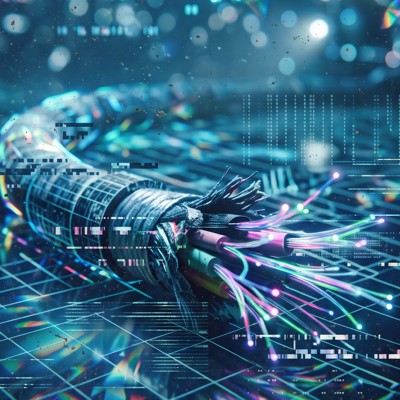
Tomec sighed. Sometimes what appeared simple was far more complicated to say. He was being decorated for defending the fiber-optic cable taps that ran through the Baltic Sea. A microsecond advantage in transmission time had produced a vital edge for NATO’s artificial intelligence-driven campaign. Some of the war’s most important battles had been fought hand-to-hand in the icy waters above glass threads carrying petabytes of data across the bottom of the sea. Gdzie diabeł mówi dobranoc , he thought, the place where the devil says goodnight.
“Badly paid undersea fiber-optic cable technician,” Tomec said.
Aniek laughed softly and started fiddling with her phone.
“How about you, Major?” Tomec asked.
“Cyber defense,” said Aniek. “Civilian infrastructure, mostly.”
“You remember the heat disaster last summer?” said James.
“Of course. We joked that seafloor was only cool place,” said Tomec.
“Yes, we should have wargamed not just what climate change would do to our weather, but how an enemy would take advantage of it. A cyberattack taking advantage of a heat wave. Diabolical,” said James. “Not just the power grid, but the aircon systems for care homes and hospitals and schools, let alone our MoD and government facilities.”
Tomec thought back to a video call with his parents that August. It was 41 degrees Celsius in Krakow. They had been panting and red-faced like they were running for their lives, and yet they were just sitting in their small apartment’s living room, gasping out wishes that he would stay safe.
Aniek put her phone down and leaned forward. “It was more than just hacking, like all good operations,” she said. “We were subjected to an info-op campaign during the heat wave. They wanted to cause societal unrest, if not collapse.”
“People get angry at everyone when it’s too hot,” said James, fishing an ice cube from his glass.
“What did you do?” Tomec asked.
“We had lots of meetings,” said Aniek.
Tomec looked at her dubiously, as if she was also trying to keep her operation secret.
“Really, we did,” she said, with a smile. “We coordinated with private-sector companies and public institutions and allied intelligence agencies and hacker collectives. We shared data on everything. Absolutely everything, from incoming threats to best practices. We sent teams of experts to work on-site at targeted networks.
“That was our advantage in the end. The enemy had to keep their operations behind the veil, while we could pool all our information, ideas, and resources—as long as we broke down the bureaucratic and organizational culture barriers. And there is nothing like a good crisis to force that.”
“Well, however boring you want to paint what you did, if the attack had gone on a few more days, I’m pretty certain the alliance would have collapsed,” said James. “A toast, then, to the real hero of the war.”
Tomec nodded in agreement and lifted his glass in salute.
Aniek smiled in thanks, evidently embarrassed at the praise.
The Polish sergeant took a sip, rattling the ice in his glass, savoring the cool drink. It was true what James had said about how quickly we could take things for granted. Even something as simple as ice in a glass.
“Another round?” he said. “I think we have time.”
NEXT STORY: The Pentagon is using polygraphs to hunt leakers, but the tests are more theater than fact
一位波兰海军突击队员走进一家酒吧……这是最新一期“虚构情报”专栏的内容。
彼得·W·辛格和奥古斯特·科尔
虚构智能
新式武器的出现往往紧随其后,并被用于对付平民以达到战略目的。潜艇、轰炸机、火箭;“卢西塔尼亚号”沉船、德累斯顿、伦敦。20世纪的这段历史预示着,21世纪新兴的能力——网络攻击、信息战——也将以类似的方式被用于攻击平民目标。随着极端天气日益频繁,挑战将更加严峻。本月“虚构情报”故事的背景设定在2030年代末,探讨了对手如何利用这些因素,引发关于政治、军事和社会韧性的根本性问题。
空荡荡的吧台简直是浪费。
托梅克走进布鲁塞尔施泰根贝格尔·伊康·威尔彻酒店的Loui酒吧,在一张舒适的皮质扶手椅里坐了下来。这位波兰海军特种部队“JW FORMOZA”的年轻中士身材魁梧,所以大多数椅子对他来说都不太舒服。他现在比以往任何时候都更享受这份宁静。司机还有半小时才来接他,但他不想错过。
他的军旅生涯让他走遍了三大洲,但他从未去过北约总部,更别提参加颁奖典礼了——即便那是一个在下班后举行的低调典礼。他以为这是因为他战时任务的敏感性,所以才会如此低调。战争官方结束已经四个月了,但很多事情仍然扑朔迷离。由于充斥着大量虚假信息,计算机系统和云网络也遭到了彻底破坏,人们仍在努力拼凑出战争的真相。
托梅克抿了一口高脚杯里的酒,小心翼翼地不让杯底的罗勒碎屑沾到下巴上。他掏出一本在机场买的平装小说,经历了几次黑客攻击后,他再也不敢用以前的电子书阅读器了。正当他试图沉浸在故事中时,一对男女走进了酒吧,打破了他的宁静。
那女人比托梅克高出近两米;她一身黑色套装,与她铂金色和紫色挑染的短发形成鲜明对比。那男人个子矮一些,是个秃头,穿着宽松的灰色西装,内搭白色衬衫,系着一条酒红色涤纶领带。
托马克的听力不如战前了,所以很难听清房间另一头的人在说什么。但声音刚好打破了他无比珍惜的宁静。他们拿起饮料,环顾四周看了看他,然后走了过来。两人看起来十分自在,这让他感到不安。他放下书,用手捋了捋浓密的棕色头发,开始起身。
女人示意他坐下,然后自己也坐到了一张面向他的豪华椅子上。
“你品味不错,”她用托马克听得出是荷兰口音的腔调说道。“酒保说我们也点了跟你一样的酒。”
“杜松子罗勒碎冰鸡尾酒,”托梅克说道。
“没错。少喝酒,多吃沙拉。”男人说道,他操着一口刻意保持中立的英国口音。他秃顶,比女人矮得多。他穿着一套宽松的灰色西装,一件白衬衫,系着一条深红色涤纶领带。
“我是阿涅克,这位是英国皇家空军第617中队的詹姆斯·克里克中校,”那位女士说。“你是波兰海军特种部队的托梅克·马伊卡中士吗?我们要和你一起去参加颁奖典礼。”
她拿出手机,给托梅克看了一条来自负责协调仪式和招待会的工作人员的信息。
“货真价实,”那人咧嘴一笑,露出一口洁白的牙齿。“叫我吉姆就好。”
酒保把他们的酒端过来,放在他们中间的矮桌上,小心翼翼地在每杯酒前放上一个印有酒店“W”标志的杯垫,标志是竖向的。
“这位是荷兰联合信号网络部队的阿尼克·拉斯穆森,他是本次活动的真正明星,”詹姆斯说着,举起酒杯向她敬酒。
“倒也未必,”阿尼克说。“整个战争期间我都坐在办公桌前。”
詹姆斯和阿尼克各抿了一口。托梅克向后靠在椅子上。
“真好吃,”詹姆斯说。“我们竟然这么快就把新鲜罗勒和正宗汤力水这种东西视为理所当然了。”托梅克觉得他说话的口气听起来像极了二战时期的BBC播音员。
“你开的是什么类型的飞机?”托梅克问道。
“F-35B,”詹姆斯说。“我一直以为,等我们打仗的时候,我会执行近距离空中支援或者跟其他第五代战斗机空战。结果,他们让我们去接收电子辐射信号,追踪那些亚集群母舰。这就是我来这儿的原因。我指挥过几次这样的任务,都平安回来了。感觉够了。”他又喝了一口。“你呢?”
托梅克叹了口气。有时候,看似简单的事情,说起来却远比想象中复杂。他因保卫贯穿波罗的海的光纤电缆窃听器而受勋。传输时间哪怕只有微秒级的优势,都为北约的人工智能驱动的战役带来了至关重要的胜利。战争中一些最重要的战役,都是在冰冷的海水中,在承载着PB级数据的光纤之上,进行的近身肉搏。他心想,Gdzie diabeł mówi dobranoc,魔鬼道晚安的地方。
“海底光缆技术员收入很低,”托梅克说。
阿尼克轻笑一声,开始摆弄她的手机。
“少校,你呢?”托梅克问道。
阿尼克说:“网络防御,主要是民用基础设施。”
“你还记得去年夏天的那场热浪灾难吗?”詹姆斯问道。
“当然。我们开玩笑说,海底是唯一一个很酷的地方,”托梅克说道。
“没错,我们不仅应该进行气候变化对天气影响的兵棋推演,还应该推演敌人会如何利用气候变化。比如利用热浪发动网络攻击。简直太邪恶了,”詹姆斯说。“不仅是电网,还有养老院、医院和学校的空调系统,更不用说我们的国防部和政府设施了。”
托梅克回想起八月份和父母的一次视频通话。当时克拉科夫的气温高达41摄氏度。他们气喘吁吁,脸涨得通红,好像在拼命逃命似的,可他们只是坐在小公寓的客厅里,哽咽着祈祷他平安无事。
阿尼克放下手机,向前倾身。“这不仅仅是黑客攻击,就像所有成功的行动一样,”她说。“在热浪期间,我们遭受了一场信息战。他们想要制造社会动荡,甚至导致社会崩溃。”
“天气太热的时候,人们会迁怒于所有人,”詹姆斯一边说着,一边从杯子里拿出一块冰块。
“你做了什么?”托梅克问道。
“我们开了很多会,”阿尼克说。
托梅克怀疑地看着她,仿佛她也在试图对自己的行动保密。
“真的,我们做到了,”她笑着说。“我们与私营企业、公共机构、盟友情报机构和黑客组织进行了协调。我们共享了所有数据。绝对所有数据,从即将到来的威胁到最佳实践。我们派遣了专家团队到目标网络现场工作。”
“最终,这成了我们的优势。敌人不得不秘密行动,而我们可以集中所有信息、想法和资源——只要我们打破官僚主义和组织文化壁垒。没有什么比一场好的危机更能促成这一点了。”
“好吧,不管你怎么粉饰你的所作所为,如果袭击再持续几天,我几乎可以肯定联盟会崩溃,”詹姆斯说。“那么,让我们为这场战争真正的英雄干杯吧。”
托梅克点头表示同意,并举杯致敬。
阿尼克微笑着表示感谢,显然对赞扬感到不好意思。
波兰中士抿了一口,晃了晃杯中的冰块,细细品味着这冰凉的饮品。詹姆斯说得没错,我们是多么容易把一切都视为理所当然。哪怕是像杯子里的冰块这样简单的东西。
“再来一轮?”他问道,“我觉得时间还来得及。”
下一篇报道:五角大楼正利用测谎仪追捕泄密者,但这些测试更多的是作秀而非事实。