Canadian NATO troops in Latvia get air-defense, anti-tank upgrades驻拉脱维亚的加拿大北约部队获得防空和反坦克装备升级
The new equipment spending comes as Western nations boost the capabilities of forces deployed in the eastern part of the alliance.
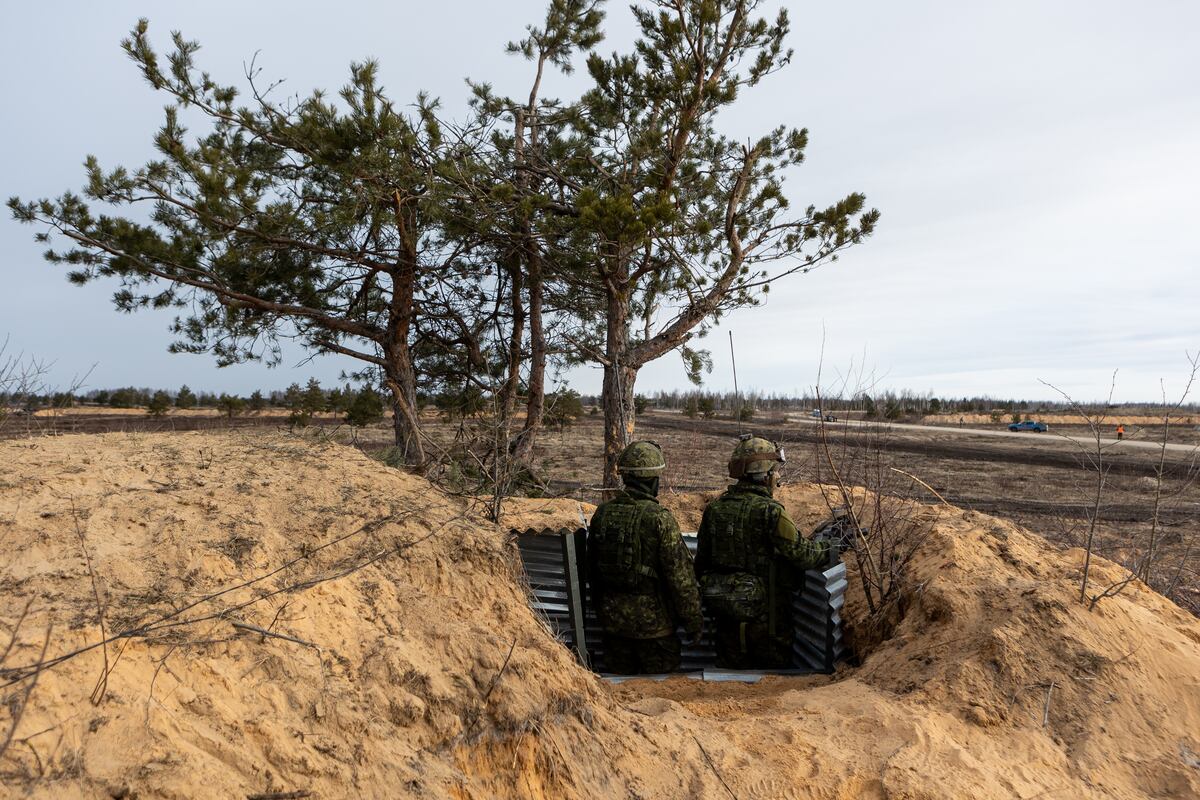
VICTORIA, British Columbia — Canada is spending $316 million Canadian dollars ($234 million) for new air-defense and counter-drone systems as well as anti-tank missiles for its troops in Latvia as part of shoring up its NATO commitments.
Canadian Defence Minister Bill Blair announced Feb. 15 that $227 million Canadian will go toward the RBS 70 NG short-range Air Defence System. The equipment, made by Saab, is expected to be delivered later this year.
Blair also announced that Canada is spending $46 million Canadian to acquire new counter-drone equipment. TRD Systems of Singapore, CACI Inc., of the United States, and Leonardo UK will all receive contracts for various elements.
Blair, who was in Brussels for a NATO defense ministers’ gathering , linked the purchases to Canada’s ongoing support to NATO and Euro-Atlantic security. “Canada’s support for the NATO alliance is steadfast,” Blair said in a statement announcing the new equipment deals.
The procurements come in the wake of Canadian Prime Minister Justin Trudeau’s announcement in July 2023 that, as part of a major commitment to NATO, Canada would spend another $2.6 billion Canadian to double the number of troops it has stationed in Latvia. Canada currently has roughly 1,000 military personnel in that country.
The government announced Dec. 15 that it is also buying new anti-tank missiles for its troops in the Baltic country. Defense News has confirmed that the Spike LR2 anti-tank system, made by Israeli vendor Rafael Advanced Defense Systems, is the weapon of choice for a cost of $43 million Canadian.
Kened Sadiku, a spokesman for Canada’s Department of National Defence, stated in an email that initial operating capability of the Spike weapons is expected to be achieved by mid 2024. Full operational capability is expected in the winter of 2026. “Due to operational security, the total number of units to be acquired cannot be disclosed,” he added.
Canada’s equipment efforts for its faraway NATO troop contingent come as Baltic neighbor Estonia noted that the alliance’s new emphasis on forward defense, approved at the 2023 summit in Vilnius, Lithuania, was starting to bear fruit.
“We are on track with the regional plans and, if needed, they are executable already now,” Estonian Minister of Defence Hanno Pevkur said in a Feb. 15 statement. He was referring to the concept of defending the eastern flank forcefully, as opposed to weathering an initial attack and waiting for reinforcements, as had been the plan before.
Blair had also announced Dec. 15 that starting in summer 2024, Canada will deploy four Royal Canadian Air Force Griffon helicopters to Latvia. The government will also periodically deploy Chinooks, starting in fall 2025. This is the first time that Canada has persistently deployed tactical aviation capabilities to Europe since operations in Bosnia and Kosovo in the late 1990s and early 2000s, according to Blair.
Also for the first time, Canada has deployed its medium-range radar capabilities to support the contingent in Latvia, Blair noted. The sensors are designed to provide aerial surveillance for the brigade, as well as quickly and accurately identify air vehicles and munitions.
A Canadian Army tank squadron of 15 Leopard 2A4M tanks, along with supporting personnel and equipment recently arrived in Latvia. The full complement of approximately 130 personnel should be in place by spring 2024, Blair said.
David Pugliese is the Canada correspondent for Defense News.
加拿大不列颠哥伦比亚省维多利亚市——加拿大斥资 3.16 亿加元(2.34 亿美元)为其驻拉脱维亚部队购置新的防空和反无人机系统以及反坦克导弹,以加强其对北约的承诺。
加拿大国防部长比尔·布莱尔于2月15日宣布,将拨款2.27亿加元用于采购RBS 70 NG短程防空系统。这套由萨博公司制造的设备预计将于今年晚些时候交付。
布莱尔还宣布,加拿大将斥资4600万加元采购新的反无人机设备。新加坡的TRD系统公司、美国的CACI公司和英国的莱昂纳多公司都将获得不同部件的采购合同。
当时正在布鲁塞尔参加北约国防部长会议的布莱尔表示,此次采购与加拿大对北约和欧洲-大西洋安全的持续支持有关。布莱尔在宣布新装备交易的声明中说:“加拿大对北约联盟的支持是坚定不移的。”
此次采购是在加拿大总理贾斯汀·特鲁多于2023年7月宣布之后进行的。特鲁多当时表示,作为对北约的一项重大承诺,加拿大将再花费26亿加元,将其在拉脱维亚的驻军人数增加一倍。加拿大目前在拉脱维亚驻扎着大约1000名军事人员。
加拿大政府于12月15日宣布,将为其驻波罗的海国家的部队采购新型反坦克导弹。《防务新闻》证实,此次采购的武器是以色列拉斐尔先进防御系统公司生产的“长钉”LR2反坦克导弹系统,总价为4300万加元。
加拿大国防部发言人肯尼德·萨迪库在一封电子邮件中表示,Spike武器的初始作战能力预计将于2024年中期实现,全面作战能力预计将于2026年冬季实现。他补充说:“出于作战安全考虑,采购总量无法透露。”
加拿大为其远在北约的部队提供装备的努力正值波罗的海邻国爱沙尼亚指出北约在2023年立陶宛维尔纽斯峰会上批准的对前沿防御的新重视开始取得成果之际。
爱沙尼亚国防部长汉诺·佩夫库尔在2月15日的一份声明中表示:“我们正按计划推进区域计划,如有必要,这些计划现在即可执行。”他指的是强力防御东翼的构想,而不是像之前的计划那样,先承受住最初的攻击,然后等待援军。
布莱尔于12月15日宣布,从2024年夏季开始,加拿大将向拉脱维亚部署四架加拿大皇家空军的“狮鹫”直升机。政府还将从2025年秋季开始定期部署“支奴干”直升机。布莱尔表示,这是自上世纪90年代末和本世纪初在波斯尼亚和科索沃的军事行动以来,加拿大首次持续向欧洲部署战术航空力量。
布莱尔指出,加拿大还首次部署了其中程雷达能力,以支援驻拉脱维亚特遣队。这些传感器旨在为该旅提供空中监视,并能快速准确地识别空中载具和弹药。
加拿大陆军一个由15辆豹2A4M坦克组成的坦克中队,连同支援人员和装备,近日抵达拉脱维亚。布莱尔表示,预计到2024年春季,全部约130名人员将全部到位。
David Pugliese 是《国防新闻》的加拿大通讯员。