NATO eastern deterrence strategy takes shape around ‘autonomous zone’北约东部威慑战略围绕“自治区”形成
“What we see in Ukraine, no vehicle movements are in the gray zone at all,” one Latvian commander said. “Any movement is destroyed.”
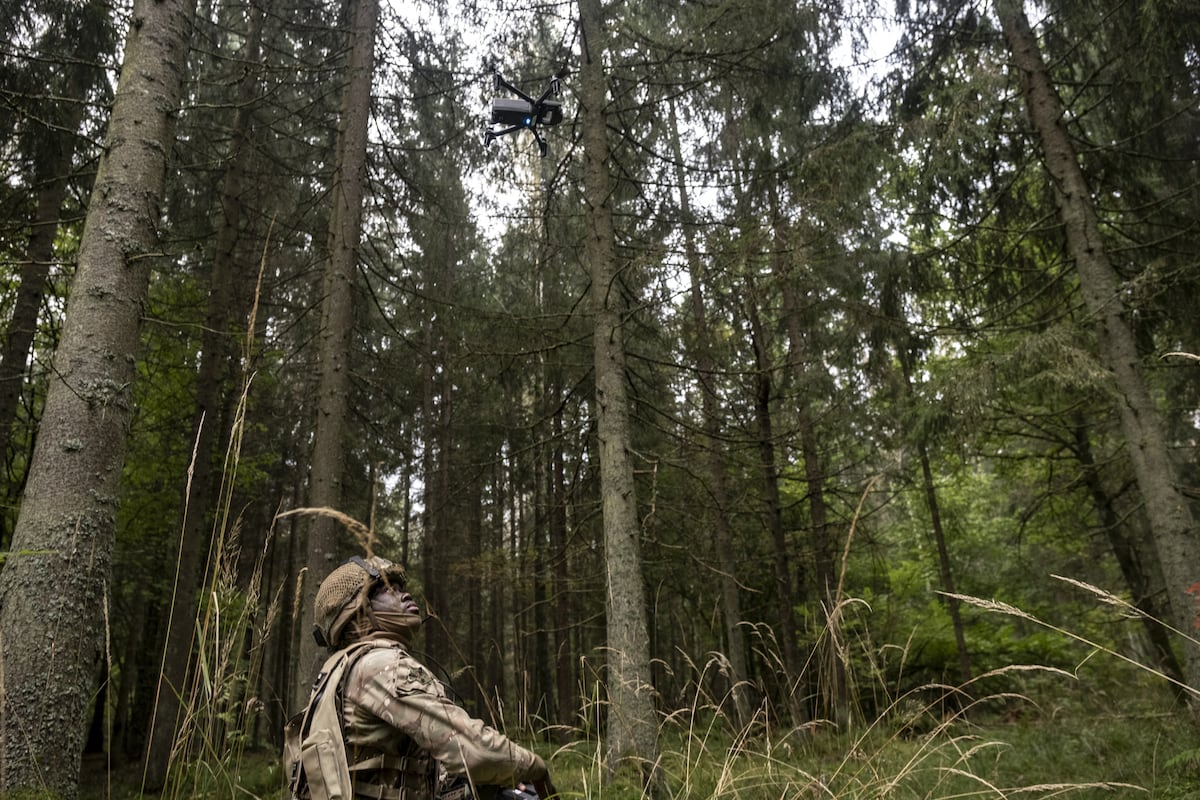
RIGA, Latvia — NATO’s plans to strengthen deterrence along its eastern flank envision an “autonomous zone” where only unmanned systems operate, with linked sensors, drones and long-range fires to detect and target invading Russian forces at the start of a conflict, alliance officials said on the sidelines of military exercises in Latvia last week.
Latvian troops tried out unmanned ground vehicles during the Crystal Arrow exercise as part of operational testing to integrate new technology into NATO’s Eastern Flank Deterrence Initiative, inspired by lessons from Ukraine, said Brig. Gen. Chris Gent , deputy chief of staff transformation and integration at NATO Allied Land Command.
“There’s no secrets here, it’s how warfare develops,” Gent told Defense News in an interview at the Sēlija training area in Latvia last week. “There is now a zone in front of you where you’re not going to put humans in harm’s way, and it’s all about machines taking the risk and absorbing that risk for you, and attrition.”
With European intelligence agencies warning Russia could threaten NATO territory within a few years after fighting ends in Ukraine, the alliance’s Eastern Flank Deterrence Initiative aims to help build up a more credible border defense. Several countries on NATO’s eastern flank, including Latvia and Poland, have faced drone incursions from the direction of Russia over the past year.
The initiative, shorthanded as EFDI, “has really picked up momentum very quickly,” United States Army Europe and Africa commander Gen. Chris Donahue told officers and officials in a briefing at the Sēlija range, describing it as NATO’s war-fighting concept.
Donahue first discussed the concept at a conference in Germany last July. He said that beyond showing PowerPoint slides, it’s now about fielding capabilities and countries exercising with them to prove they work, and “make sure we have deterrence every day.”
The concept includes a unified network of connected sensors, unmanned systems and both offensive and defensive effectors, according to Gent. The Eastern Flank Deterrence Initiative envisions “an autonomous zone, well documented already” where only unmanned systems can operate effectively before either side starts taking casualties, Gent said.
“This is here right now,” Gent said, citing press reports of Ukraine capturing a position in April using only unmanned systems. “We’re not talking about science fiction, we’re not talking about the future. We’re not talking about 2040. We are talking about the requirement today.”
Brig. Gen. Chris Gent speaks to NATO military staff at the Sēlija Military Training Area in Latvia on May 12, 2026. (Rudy Ruitenberg/staff)
The challenge then becomes how many autonomous systems one side has, how effective they are, and how effective the counters are, according to Gent, who said the only way to understand that is through exercises such as Crystal Arrow. One hurdle remains different levels of permissions between NATO nations about allowing autonomous sensors to fire effectors, he said.
“More and more nations are being challenged or are having that argument developed for them in real time, when, for example, you might see a drone incursion in peacetime,” Gent said. “Do we shoot that drone down, where might it land, for example. It’s become very real here in Latvia .”
NATO has been testing new technologies in support of the EFDI since September within the Task Force X framework. During the first pilot in Lithuania in September, German forces integrated unmanned ground vehicles and counter-UAS in their operations, while testing in Finland in December focused on connectivity, according to Gent.
The alliance is developing a “data backbone” across the Eastern Flank Deterrence Initiative, with a network tying together thousands of sensors and effectors, including acoustic and electro-optical sensors as well as counter-UAS and UGVs, Gent said. The idea is for sensors across the eastern flank to talk to each other and “trigger each other’s effectors across international boundaries,” he said.
Trying out new capabilities during exercises is key to helping troops integrate them, Gent said, noting how Latvia’s Mechanized Infantry Brigade used UGVs during Crystal Arrow. NATO covered the cost of travel and accommodation for media attending the exercise, including for Defense News.
The alliance is also asking companies to talk about how they’ll connect unmanned ground systems into NATO operating systems, with Gent saying there are lessons to be learned from Task Force X Baltic.
Work is ongoing within NATO’s operational experimentation to establish the effective size of the autonomous zone, which varies depending on the terrain, according to Gent.
In Ukraine, the term “kill zone” is used informally to describe an area near the front where movement is rapidly detected and targeted by drones, artillery or loitering munitions, and which can range to 15 kilometers or more from the line of contact in some areas.
Latvian troops are training every day to secure this “kill zone” with only unmanned systems, said Maj. Eduards Šinkūns, chief of the operational, planning and training department of the Mechanized Infantry Brigade, in a briefing with reporters during Crystal Arrow. He described a multilayered system of drones supported by infantry and artillery.
“What we see in Ukraine, no vehicle movements are in the gray zone at all,” Šinkūns said. “Any movement is destroyed.”
Šinkūns declined to detail how Latvia would defend against a Russian invasion, saying “we Latvians, especially the mechanized brigade, we have a plan, and we know how to execute it. That’s all I can say about it.”
The Eastern Flank Deterrence Initiative is one part in a multilayered approach to dissuade a Russian attack, said Brig. Gen. Jamie Murray, the deputy commander of the Estonian Division , in an interview with Defense News at the Sēlija training area.
While the deterrence initiative creates a “day zero problem” by being able to detect and strike an attacker immediately, the next layer is the ability of Latvia, Estonia and Lithuania to hit targets in the deep if Russia does invade. He noted Estonia’s purchase of additional Chunmoo rocket artillery systems from Hanwha Aerospace with a range of 290 kilometers.
He said the most demanding challenge for the alliance would be “a gambling Putin, throwing some forces, gambling that NATO doesn’t react, nibbling a bit of any of our countries,” Murray said.
“If deterrence has failed, we reserve that right to then strike back at military targets,” Murray said. “The thing about the kill zone, it’s not going to be symmetrical. The Estonians, for example, have a very clear ‘no Russian boots on our territory.’ So the kill zone could be conceivably on their side of the border.”
Shaping the terrain with physical barriers in combination with the deterrence initiative can allow NATO forces to compensate for the force-ratio imbalance with Russia, Murray said. He cited the Baltic Defense Line of anti-tank ditches and physical obstacles, and the difficulty Soviet troops faced in 1944 to remove German troops due to the forest cover.
“The first act is to deter them, the second is to stop them, and the third is to get them into a position where ultimately they’ve culminated, we’re forcing them to do an echelon change, and as they do that, they’re really vulnerable,” Murray said.
He said NATO’s logic has moved from the tripwire force to “deterrence by punishment and denial.”
“The end state is clear, and we’re all working towards it,” Murray said. “Prove to Russia that they shouldn’t invade.”
Rudy Ruitenberg is a Europe correspondent for Defense News. He started his career at Bloomberg News and has experience reporting on technology, commodity markets and politics.
拉脱维亚里加——北约官员上周在拉脱维亚举行的军事演习间隙表示,北约加强其东翼威慑的计划设想建立一个“自主区”,该区域仅由无人系统运行,并配备联网传感器、无人机和远程火力,以便在冲突开始时探测和打击入侵的俄罗斯军队。
北约盟军陆地司令部转型与整合副参谋长克里斯·根特准将表示,拉脱维亚军队在“水晶箭”演习期间试用了无人地面车辆,这是将新技术融入北约东翼威慑倡议的作战测试的一部分,该倡议的灵感来自乌克兰的经验教训。
“这没什么秘密可言,战争就是这样发展的,”根特上周在拉脱维亚塞利亚训练区接受《防务新闻》采访时表示。“现在你们面前存在一个区域,在这个区域里,你们不会让人员身处险境,一切都由机器承担风险并吸收风险,最终以消耗战取胜。”
欧洲情报机构警告称,乌克兰冲突结束后几年内,俄罗斯可能威胁北约领土。为此,北约的“东翼威慑倡议”旨在帮助建立更可靠的边境防御体系。过去一年,北约东翼的几个国家,包括拉脱维亚和波兰,都曾遭受来自俄罗斯方向的无人机入侵。
美国陆军欧洲和非洲司令克里斯·多纳休将军在塞利亚靶场向军官和官员们通报情况时表示,这项简称为 EFDI 的倡议“发展势头非常迅速”,他将其描述为北约的作战概念。
多纳休去年七月在德国的一次会议上首次提出了这个概念。他说,现在除了展示幻灯片之外,更重要的是部署相关能力,并让各国进行演练以证明其有效性,“确保我们每天都能起到威慑作用”。
据根特介绍,该概念包含一个由互联传感器、无人系统以及进攻和防御效应器组成的统一网络。根特表示,东翼威慑倡议设想建立一个“已有充分论证的自主区域”,在该区域内,只有无人系统才能有效运作,避免任何一方出现伤亡。
“这事就发生在眼前,”根特说道,他援引媒体报道,称乌克兰在四月份仅使用无人系统就夺取了一个阵地。“我们不是在谈论科幻小说,我们不是在谈论未来,我们也不是在谈论2040年。我们谈论的是当下的需求。”
2026年5月12日,克里斯·根特准将在拉脱维亚塞利亚军事训练区向北约军事人员发表讲话。(鲁迪·鲁伊滕贝格/摄)
根特表示,接下来的挑战在于一方拥有多少自主系统,这些系统的效能如何,以及反制措施的有效性如何。他指出,了解这些问题的唯一途径就是通过“水晶箭”等演习。他还提到,北约各国在允许自主传感器发射武器方面权限不一,这仍然是一个障碍。
“越来越多的国家正面临挑战,或者说,当发生无人机入侵等情况时,相关论点会实时呈现,”根特说。“例如,我们是否应该击落这架无人机?它会落在哪里?在拉脱维亚,这种情况已经变得非常现实。”
自9月以来,北约一直在X特遣部队框架内测试新技术,以支持欧洲防务与直接投资(EFDI)。据根特方面称,在9月于立陶宛进行的首次试点中,德国军队将无人地面车辆和反无人机系统整合到其作战行动中,而12月在芬兰进行的测试则侧重于互联互通。
根特表示,该联盟正在东翼威慑计划中构建一个“数据骨干网”,将数千个传感器和效应器连接起来,其中包括声学和光电传感器,以及反无人机系统和无人地面车辆。他指出,其构想是让东翼各处的传感器相互通信,并“跨越国际边界触发彼此的效应器”。
根特表示,在演习中试用新技术是帮助部队整合这些技术的关键,并举例说明了拉脱维亚机械化步兵旅在“水晶箭”演习中使用无人地面车辆的情况。北约承担了包括《防务新闻》在内的所有媒体参加此次演习的差旅和住宿费用。
该联盟还要求各公司讨论如何将无人地面系统连接到北约操作系统,根特表示,可以从波罗的海第十特遣队中吸取经验教训。
据根特称,北约正在进行作战试验,以确定自治区的有效范围,该范围会因地形而异。
在乌克兰,“杀伤区”一词被非正式地用来描述前线附近的一个区域,在这个区域内,任何移动都可能被无人机、火炮或巡飞弹迅速探测和攻击,在某些地区,这个区域的范围可能距离接触线 15 公里甚至更远。
拉脱维亚机械化步兵旅作战、计划和训练部门负责人爱德华兹·辛昆斯少校在“水晶箭”军演期间向记者介绍说,拉脱维亚军队每天都在进行训练,力求仅使用无人系统来确保这一“杀伤区”的安全。他描述了一个由步兵和炮兵支援的多层无人机作战系统。
“我们在乌克兰看到的是,所有车辆的移动都完全不在灰色地带,”辛昆斯说。“任何移动都会被阻止。”
辛昆斯拒绝详细说明拉脱维亚将如何抵御俄罗斯入侵,他说:“我们拉脱维亚人,特别是机械化旅,我们有计划,而且我们知道如何执行。我只能说这么多。”
爱沙尼亚师副指挥官杰米·默里准将在塞利亚训练区接受《防务新闻》采访时表示,“东翼威慑计划”是阻止俄罗斯发动攻击的多层次方法的一部分。
虽然威慑行动能够立即探测并打击攻击者,从而造成“零日危机”,但下一层保障是拉脱维亚、爱沙尼亚和立陶宛在俄罗斯入侵时打击纵深目标的能力。他指出,爱沙尼亚已从韩华航天公司购买了射程达290公里的“天武”火箭炮系统。
默里说,联盟面临的最大挑战将是“普京孤注一掷,投入一些兵力,赌北约不会做出反应,蚕食我们任何一个国家的领土”。
“如果威慑失败,我们保留对军事目标进行反击的权利,”默里说。“关于杀伤区,它不会是对称的。例如,爱沙尼亚人明确表示‘俄罗斯军队不得踏足我们的领土’。因此,杀伤区完全有可能设在他们一侧的边界上。”
默里表示,利用实体屏障改造地形并结合威慑行动,可以使北约部队弥补与俄罗斯兵力比例上的不平衡。他举例说,波罗的海防线由反坦克壕沟和实体障碍物组成,并指出1944年苏军由于森林覆盖而难以清除德军。
“第一步是威慑他们,第二步是阻止他们,第三步是让他们陷入困境,最终迫使他们进行层级调整,而当他们这样做时,他们就非常脆弱了,”默里说。
他表示,北约的逻辑已经从“绊线部队”转变为“通过惩罚和拒止来威慑”。
“最终目标很明确,我们都在朝着这个方向努力,”默里说。“向俄罗斯证明他们不应该入侵。”
鲁迪·鲁伊滕贝格是《防务新闻》的欧洲记者。他的职业生涯始于彭博新闻社,拥有报道科技、大宗商品市场和政治方面的经验。