US, Japan exploring partnership on hypersonic missile interceptor美国和日本正在探索高超音速导弹拦截器方面的合作
Discussions are ongoing that could lead to a partnership between the U.S. and Japan to build a hypersonic missile interceptor.
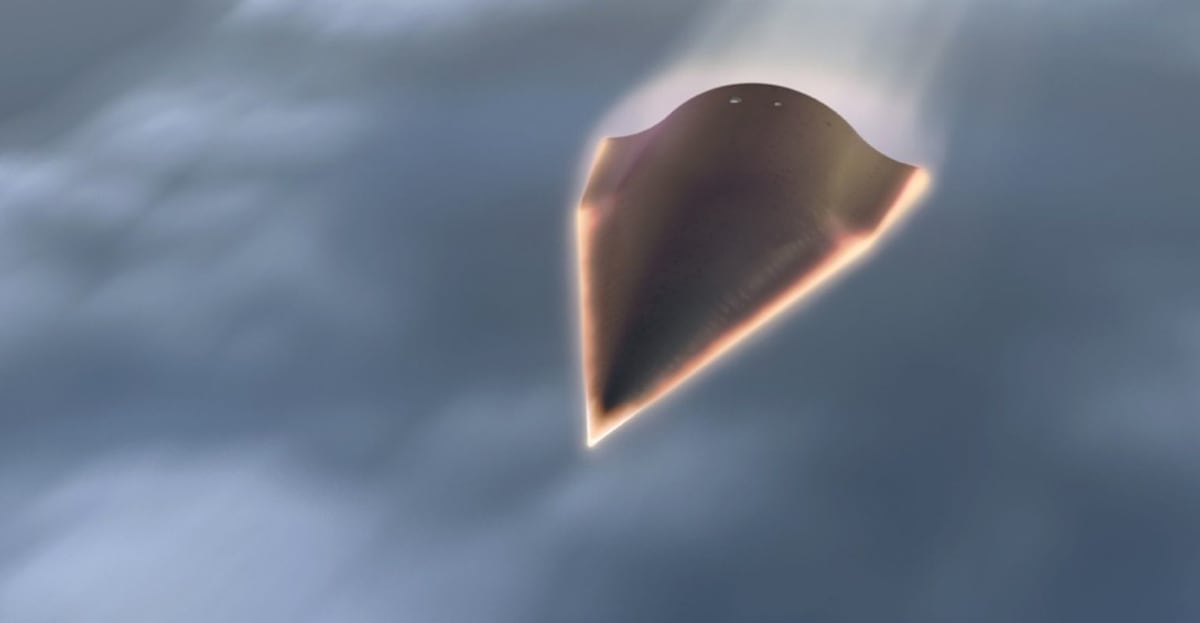
WASHINGTON — The U.S. and Japan are exploring a partnership to develop a hypersonic missile defense capability as the Pentagon enters the early stages of a program to develop an interceptor capable of neutralizing hypersonic threats in the glide phase of flight.
Vice Adm. Jon Hill, who leads the U.S. Missile Defense Agency, confirmed last week that the organization is considering cooperation with Japan to work on the Glide Phase Interceptor, or GPI, one of the agency’s top priorities .
“Right now we’re exploring the opportunity to just identify what those cooperative development areas would be,” Hill said at the McAleese & Associates conference in Washington.
The effort could take on similar attributes to the successful U.S.-Japan development of the Raytheon Technologies-manufactured SM-3 block IIA program , which the company is now building and the countries will field, Hill said.
“The easy way to go with Japan is to offer up [development of] propulsion stacks because they build the second stage and the third stage on the SM-3 block IIA today,” Hill explained. But this time Japan would like to get “a little more into, say, the front end of the missile” — the portion of the interceptor containing the warhead — he added, “so we’re looking for common parts.”
But the effort is complicated because two companies are competing to design the GPI — Raytheon Technologies and Northrop Grumman. Each company won contracts to continue developing hypersonic weapons interceptors in an MDA-led competition in June 2022.
“The challenge is when you’ve got two [companies] in play, that means Japan has to sign up to do two different designs, knowing that one of them may be a throwaway,” Hill said. “They know one of them is going to go away downstream. I don’t know when that downselect will happen. It’s going to depend on how well they mature technically.”
Hill said during a press briefing at the March 15 conference that MDA has a team in Japan holding an executive steering council, which is essentially a technical interchange with the Japanese government that includes acquisition, technology and logistics officials.
Following the meeting, “we’ll come back, take a breather, then we’ll go back out [to Japan] and we’ll bring industry with us next time around so that we’re not speaking for industry.”
Ideally, Hill said, industry would willingly subcontract work to a Japanese company for agreed-upon components of the interceptor, but “if we can’t get to that, then we’ll do what we initially did in the SM-3 block IIA program, which is we directed the American company to go subcontract.”
Defeating a hypersonic weapon in its glide-phase of flight is a challenging technical problem, as the missiles can travel more than five times the speed of sound and can maneuver in flight, making it hard to predict a missile’s trajectory.
The MDA is still early in the development process — “the mission solution analysis phase,” as Hill put it during a fiscal 2024 budget request briefing on March 13 at the Pentagon. “What we’re doing during this phase is determining what technologies do we need and how we can bring that together as a weapons system.”
The budget, he added, supports “a deployment or getting to that first article out there in the early [20]30s.”
MDA is asking for $209 million in FY24 to fund the ongoing GPI competition.
The interceptors will be designed to fit into the U.S. Navy’s current Aegis ballistic missile defense-equipped destroyers. The weapon will fire from the standard vertical launching system and be integrated with the modified Baseline 9 Aegis Weapon System that detects, tracks, controls and engages hypersonic threats.
Jen Judson is an award-winning journalist covering land warfare for Defense News. She has also worked for Politico and Inside Defense. She holds a Master of Science degree in journalism from Boston University and a Bachelor of Arts degree from Kenyon College.
华盛顿——美国和日本正在探索建立合作伙伴关系,以发展高超音速导弹防御能力。与此同时,五角大楼正进入一项计划的早期阶段,该计划旨在开发一种能够在滑翔阶段消除高超音速威胁的拦截器。
美国导弹防御局局长乔恩·希尔海军中将上周证实,该机构正在考虑与日本合作研发滑翔相拦截器(GPI),这是该机构的首要任务之一。
“目前我们正在探索确定这些合作开发领域的机会,”希尔在华盛顿举行的麦卡利斯联合公司会议上说。
希尔表示,这项努力可能会具有与美国和日本成功开发的雷神技术公司制造的SM-3 Block IIA项目类似的特征,该公司目前正在制造该项目,两国将部署该项目。
希尔解释说:“与日本合作最简单的方法是提供推进系统组件的研发,因为他们目前负责SM-3 Block IIA导弹的第二级和第三级。”但他补充道,这次日本希望“更多地参与到导弹前端——也就是拦截器中包含弹头的部分——的研发,所以我们正在寻找通用部件。”
但由于雷神技术公司和诺斯罗普·格鲁曼公司两家公司竞相设计GPI,这项工作变得十分复杂。这两家公司在2022年6月由导弹防御局(MDA)主导的竞标中分别赢得了继续研发高超音速武器拦截器的合同。
希尔说:“挑战在于,当有两家公司参与竞标时,这意味着日本必须签署两份不同的设计方案,而且他们也知道其中一份可能最终会被淘汰。他们知道其中一份方案会在后续阶段被淘汰。我不知道最终方案何时会被选定。这取决于他们的技术成熟程度。”
希尔在 3 月 15 日的新闻发布会上表示,MDA 在日本有一个团队,该团队主持一个执行指导委员会,这本质上是与日本政府进行技术交流,其中包括采购、技术和后勤官员。
会后,“我们会回来,喘口气,然后再去(日本),下次我们会带上业界人士,这样我们就不是只代表业界发言了。”
希尔表示,理想情况下,工业界会乐意将拦截器中约定的部件分包给一家日本公司,但“如果我们无法做到这一点,那么我们将采取我们在SM-3 Block IIA项目中最初的做法,即指示美国公司进行分包。”
在滑翔阶段击败高超音速武器是一个具有挑战性的技术难题,因为导弹的飞行速度可以超过音速的五倍,并且可以在飞行中进行机动,这使得预测导弹的轨迹变得困难。
MDA仍处于研发初期阶段——正如希尔在3月13日五角大楼举行的2024财年预算申请简报会上所说,目前仍处于“任务解决方案分析阶段”。“我们在这个阶段的工作是确定我们需要哪些技术,以及如何将这些技术整合到一个武器系统中。”
他补充说,预算支持“在 2030 年代初期部署或推出第一件产品”。
MDA 要求在 2024 财年拨款 2.09 亿美元,用于资助正在进行的 GPI 竞赛。
这些拦截器将设计成可适配美国海军现役配备宙斯盾弹道导弹防御系统的驱逐舰。该武器将通过标准的垂直发射系统发射,并与改进型的基线9宙斯盾武器系统集成,该系统能够探测、跟踪、控制和拦截高超音速威胁。
珍·贾德森是一位屡获殊荣的记者,为《防务新闻》报道陆地战争。她也曾为《政治报》和《内幕防务》工作。她拥有波士顿大学新闻学硕士学位和凯尼恩学院文学学士学位。