Fincantieri CEO talks US frigates, vision for Europe’s naval sector芬坎蒂尼集团首席执行官谈美国护卫舰及欧洲海军愿景
The building of new U.S. Navy frigates in Wisconsin is about to get more efficient thanks to the introduction of techniques used to make cruise ships.
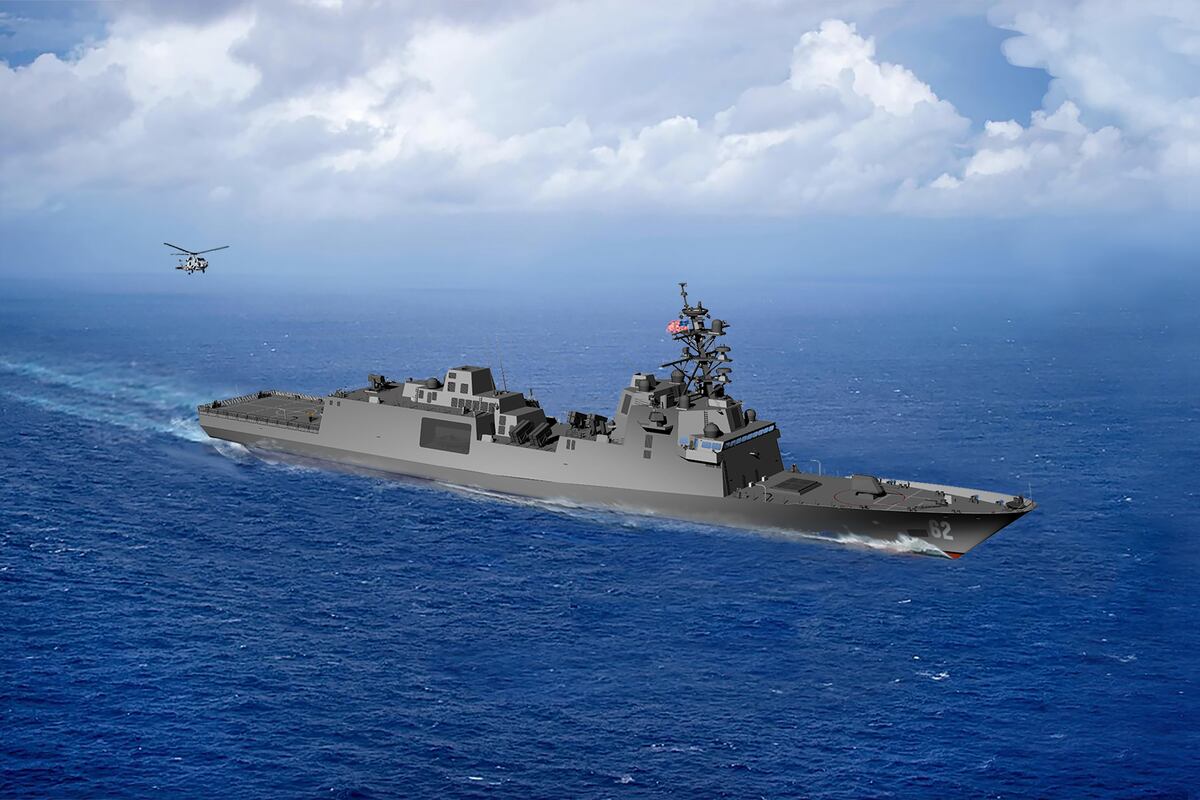
ROME — The building of new U.S. Navy frigates in Wisconsin is about to get more efficient thanks to the introduction of techniques used to make luxury cruise ships in Italy.
The Italian company Fincantieri, which is constructing Constellation-class guided-missile frigates at its stateside Marinette Marine yard, plans to implement processes it perfected building cruise ships on tight deadlines at its Monfalcone yard in Italy, CEO Pierroberto Folgiero told Defense News.
“We aim to use more preconstruction on land at Marinette, which means building modules before adding them to the vessel, meaning less work in the dock and more work on land — which is much more efficient,” he said. “It is the model we use for our cruise ships at Monfalcone and other merchant shipyards in the group. We are transferring the technique to our naval yards in Italy, and we have carried out a study to make changes at Marinette. We have sent a team and plan to put the changes into effect in 2023.”
Eight months after he was named head of the state-controlled company, Folgiero, 50, is focusing on the 2020 contract from the U.S. Navy for three frigates — of an expected total order of 20 — based on the FREMM vessels Fincantieri built for the Italian Navy. Work is already underway at Marinette, which Fincantieri purchased in 2008 and where it already builds Freedom-class littoral combat ships for the U.S. Navy.
“We’ve invested more than $300 million in our Wisconsin shipyards to meet the Navy’s requirement of two frigates a year, and it’s important we continue to improve productivity,” Folgiero said, adding that the move to producing more modules on land will require additional covered areas and cranes to transfer the modules.
The challenge is finding the employees to make it happen, he noted. “The key point is the availability of skilled staff, which is the bottleneck to maximize production,” he said.
As production accelerates, Fincantieri has said, the company will need 1,000 extra staff members at Marinette and the two other yards it controls in Wisconsin. At Marinette alone, the firm aims to increase the head count by 700 in the next three to four years, from 1,900 to 2,600.
Fincantieri’s unusual blend of work on defense platforms — which accounted for 29% of its 2021 — and cruise ships has produced synergies before, with lessons on comfortable quarters learned in cruise ship construction passed onto military vessels; conversely, cruise ships have benefited from naval tricks to make them more silent.
The firm also claims it applies the same punctuality to defense orders as it does in the deadline-conscious cruise sector.
“The operational discipline we have in the cruise sector we apply to naval construction, and we have a control of costs and times, which clients greatly appreciate: for example, Qatar, to which we have just delivered vessels on budget and on time despite COVID-19 disruptions,” Folgiero said.
The CEO was named to take over from retiring head Giuseppe Bono in April after nine years running Italian engineering firm Maire Tecnimont Group, which is involved in building petrochemical plants. When it came to entering a new field, Folgiero said he had no qualms.
“This business is about engineering, procurement and construction. We manage clients and contracts and sell, and that is what I have done for many years,” he said. “I don’t believe you must only be an expert on the product. Companies can suffer by obsessing about the product. What you must know is how to improve processes, achieve operational excellence and perfect the engineering. It’s about how you buy and build.”
Folgiero also told Defense News that he is plotting tighter cooperation with another Italian defense giant. Leonardo, which builds systems for Fincantieri vessels destined for the Italian Navy, is already partnered with Fincantieri in the joint venture Orizzonte Sistemi Navali.
“We want to increase cooperation with Leonardo and reinforce Orizzonte Sistemi Navali to increase the integration between platforms and combat systems. We also want to increase joint marketing,” he said.
Pierroberto Folgiero took over as CEO of Fincantieri in April 2022. (Fincantieri)
He also said Naviris, Fincantieri’s joint venture with France’s Naval Group, is the “perfect” springboard to usher in a more integrated European defense industry. “Naviris can help Europe align requirements and make industry cooperate. We will bring in more industries as more common multinational requirements appear.”
But he warned governments — not industry — must take the lead in pushing integration .
“This is, above all, geopolitical and depends on alliances between states. I don’t believe managers should be in charge of the industrial policy choices of a nation. The nation should do that while managers should take care of their companies along the lines defined by nations,” he said.
One possible catalyst for European integration will be the sale of Oto Melara , the Leonardo-owned firm making turrets for tanks and naval cannons. French and German buyers have expressed interest since Leonardo hinted it was on the block, with Fincantieri a rumored Italian investor.
But Folgiero appeared to pour cold water on the idea.
“I am extremely prudent about moving outside our core business. A firm should focus on its core business, so this is not the first idea that comes to mind,” he said.
Tom Kington is the Italy correspondent for Defense News.
罗马——由于引进了意大利用于建造豪华游轮的技术,美国海军在威斯康星州建造新型护卫舰的效率即将提高。
意大利芬坎蒂尼公司正在其位于美国马里内特的造船厂建造星座级导弹护卫舰。该公司首席执行官皮埃罗贝托·福尔杰罗告诉《防务新闻》,该公司计划将此前在意大利蒙法尔科内造船厂建造游轮时积累的、在紧迫期限内完成的工艺应用于该级导弹护卫舰的建造。
“我们计划在马里内特船厂更多地采用陆上预制构件,这意味着在将模块安装到船体之前先进行预制,从而减少船坞内的工作量,增加陆上作业——这样效率更高,”他说道。“这是我们在蒙法尔科内船厂建造邮轮以及集团其他商船船厂所采用的模式。我们正在将这项技术推广到我们在意大利的造船厂,并且已经开展了一项研究,旨在对马里内特船厂进行相应的改进。我们已经派出一个团队,计划在2023年实施这些改进措施。”
在被任命为这家国有控股公司总裁八个月后,现年50岁的福尔杰罗正专注于2020年与美国海军签订的合同,该合同涉及建造三艘护卫舰——预计总订单为20艘——这些护卫舰基于芬坎蒂尼为意大利海军建造的FREMM护卫舰。目前,相关工作已在马里内特船厂展开。芬坎蒂尼于2008年收购了该船厂,并已在那里为美国海军建造自由级濒海战斗舰。
“我们已在威斯康星州的造船厂投资超过 3 亿美元,以满足海军每年建造两艘护卫舰的要求,继续提高生产效率至关重要,”福尔杰罗说,并补充说,在陆地上生产更多模块将需要额外的有顶区域和起重机来转移模块。
他指出,真正的挑战在于找到合适的员工来实现这一目标。“关键在于能否获得熟练的员工,这是提高生产效率的瓶颈所在。”他说。
芬坎蒂尼集团表示,随着生产加速,公司需要在马里内特船厂以及其在威斯康星州控制的另外两家船厂增聘1000名员工。仅在马里内特船厂,公司就计划在未来三到四年内将员工人数增加700人,从1900人增至2600人。
芬坎蒂尼集团将国防平台(占其 2021 年业务的 29%)和邮轮业务独特地结合起来,此前已产生过协同效应,例如在邮轮建造中获得的舒适舱室经验被应用到军舰上;反过来,邮轮也受益于海军的技巧,使其更加安静。
该公司还声称,其对国防订单的准时性与对交货期限要求严格的邮轮行业一样严格。
“我们在邮轮领域拥有的运营纪律也被应用到船舶建造中,我们对成本和时间都有很好的控制,客户对此非常赞赏:例如,尽管受到 COVID-19 疫情的影响,我们仍然按预算按时向卡塔尔交付了船舶,”Folgiero 说。
今年4月,福尔杰罗接替即将退休的朱塞佩·博诺,出任首席执行官。此前,他已执掌意大利工程公司迈尔·泰克尼蒙特集团九年,该公司主要从事石化工厂的建设。谈到进军新领域,福尔杰罗表示他毫无顾虑。
“这个行业的核心是工程、采购和施工。我们管理客户、合同和销售,而这正是我多年来一直从事的工作,”他说道。“我认为你不必仅仅是产品专家。公司如果过于关注产品反而会吃亏。你必须懂得如何改进流程、实现卓越运营并完善工程设计。关键在于如何采购和建造。”
福尔杰罗还告诉《防务新闻》,他正计划与另一家意大利国防巨头加强合作。莱昂纳多公司为芬坎蒂尼集团为意大利海军建造的舰艇制造系统,该公司已与芬坎蒂尼集团成立合资企业“地平线海军系统公司”(Orizzonte Sistemi Navali)。
“我们希望加强与莱昂纳多公司的合作,并强化Orizzonte Sistemi Navali项目,以提高平台和作战系统之间的集成度。我们也希望加强联合市场推广,”他说道。
皮埃罗贝托·福尔杰罗于2022年4月接任芬坎蒂尼集团首席执行官一职。(芬坎蒂尼集团)
他还表示,芬坎蒂尼集团与法国海军集团的合资企业Naviris是推动欧洲国防工业一体化的“完美”跳板。“Naviris可以帮助欧洲统一需求,促进产业合作。随着更多共同的多国需求出现,我们将引入更多产业。”
但他警告说,推动一体化的主导力量应该是政府,而不是企业。
“这首先是一个地缘政治问题,取决于国家间的联盟。我不认为管理者应该掌控一个国家的产业政策选择。国家应该负责制定产业政策,而管理者应该按照国家制定的规则来管理自己的公司,”他说道。
奥托梅莱拉公司(Oto Melara)的出售可能是推动欧洲一体化进程的一个潜在催化剂。这家由莱昂纳多集团控股的公司主要生产坦克炮塔和舰炮炮塔。自从莱昂纳多暗示有意出售该公司以来,法国和德国的买家都已表示出兴趣,而据传意大利芬坎蒂尼集团(Fincantieri)也可能成为潜在投资者。
但福尔杰罗似乎对这个想法泼了一盆冷水。
“我对涉足核心业务之外的领域非常谨慎。公司应该专注于核心业务,所以这并不是我首先想到的主意,”他说。
汤姆·金顿是《防务新闻》驻意大利记者。