Ukraine opens battlefield AI data to allies in world-first move乌克兰首次向盟友开放战场人工智能数据
Ukraine is giving international partners and defense companies access to its trove of real combat data to train AI models for autonomous drone systems.
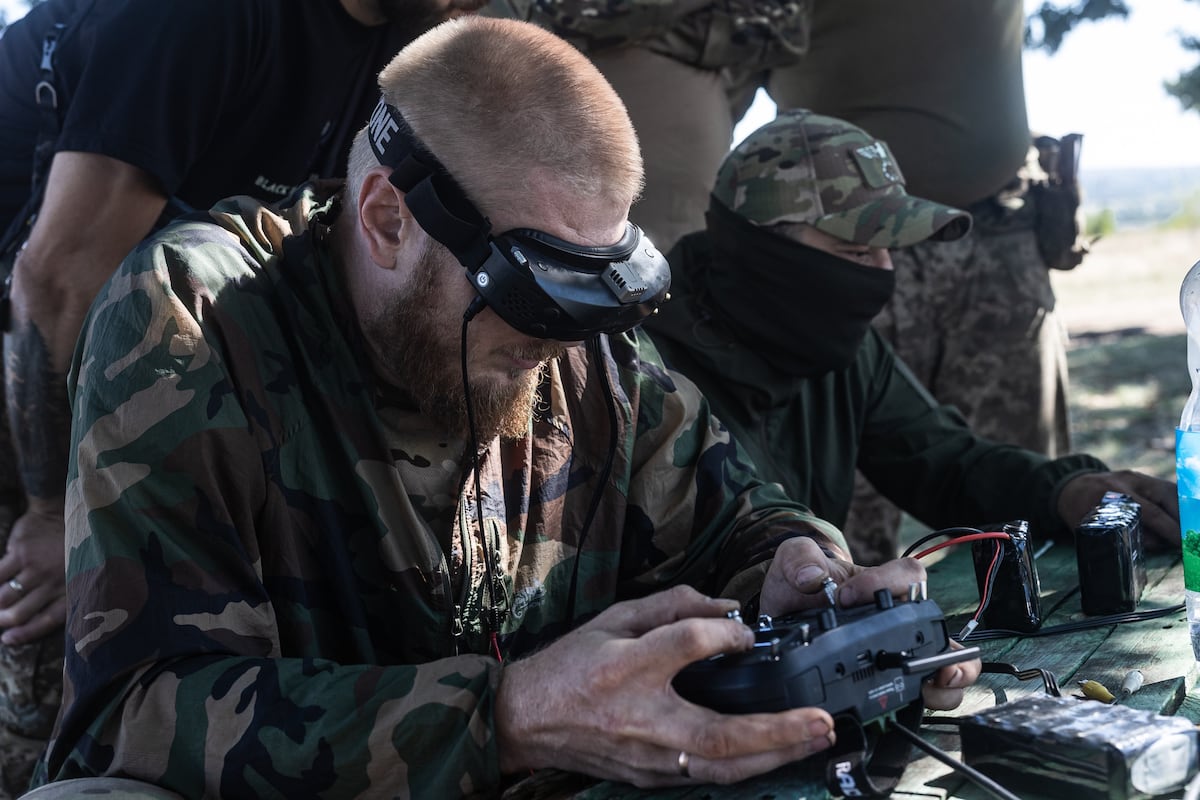
Ukraine is giving international partners and defense companies access to its vast trove of real combat data to train artificial intelligence models for autonomous drone systems — a move Kyiv is calling “the first initiative of its kind in the world.”
Officials approved a resolution this week launching a new cooperation framework between the state, domestic defense companies and foreign partners, the Ministry of Defense announced Thursday.
“The future of warfare belongs to autonomous systems,” Ukrainian Defense Minister Mykhailo Fedorov wrote in a release announcing the program.
“Our objective is to increase the level of autonomy in drones and other combat platforms so they can detect targets faster, analyze battlefield conditions, and support real-time decision-making.”
The resolution comes as over a dozen countries are enmeshed in the war that started in Iran late last month, and as militaries globally accelerate investment in autonomous defense systems .
For companies building autonomous systems or target recognition software, the value is straightforward: Validated, real-world training data compresses development timelines and improves model performance in ways no laboratory environment can replicate.
For allied governments, it offers a faster path to fielding AI-enabled defense capabilities — without having to generate their own combat datasets from scratch.
Fedorov framed it as a “win-win” — partners get better training data, and Ukraine gets faster development of autonomous capabilities for its own front lines.
At the center of Ukraine’s new program is a dedicated AI platform built inside Ukraine’s Ministry of Defense Center for Innovation and Development of Defense Technologies.
The platform allows partners to train AI models on real battlefield data without gaining direct access to other sensitive military databases linked to the country’s digital control system, DELTA — a significant security safeguard.
Deputy Defense Minister Lt. Col. Yuriy Myronenko told Military Times last month that the platform’s security is built on the American National Institute of Standards and Technology standards and audited annually by Big Four consulting firms.
Ukraine’s datasets already power the DELTA battlefield management system, which uses neural networks to automatically detect ground and aerial targets in real time.
That kind of data backbone is essential in a war increasingly defined by scale, speed and AI.
“You can control only with data,” Myronenko said. “Otherwise, I don’t even know how you can control such a number of drones, people, front lines and such a number of resources. And so fast.”
Through the platform, partners can work with large volumes of labeled photo and video data collected during active combat operations, and draw from datasets that are continuously updated in almost real time as Russia’s full-scale invasion moves into its fifth year.
As a result, the country’s data may be the most operationally rich in the world right now — no other country has ever been able to offer this volume of labeled, real-world combat imagery delivered directly from the soldiers fighting an ongoing, high-intensity conventional war.
“We have built our system in such a way that the data is brought in directly by the people who are fighting,” Myronenko said. “They bring the data there, and this data is aggregated in certain forms, then centralized for us.”
Ukraine currently holds millions of annotated frames and databases gathered across tens of thousands of missions using hundreds of different types of weapons, unit formations and combinations and targeting techniques.
“We have more than 5 million drones,” the deputy minister explained. “And it’s a very difficult job to coordinate everything on such a big front line.”
Under the new framework, partners can conduct joint analytics, train their own AI models and codevelop new technological solutions using live, granular operational data.
The central challenge in military AI is not creating algorithms but testing them against real operational conditions and mission outcomes to prove they can improve decision-making in combat, according to the Center for Strategic and International Studies .
That’s the gap Ukraine’s new data-sharing program fills — and international defense companies and allied governments have already asked for access, according to the Ukrainian Ministry of Defense.
The timing also lands as nations across the world grapple with how to integrate artificial intelligence into defense networks securely and quickly — before their enemies do.
The United States is still working out its own rules of the road for military AI.
In January, Defense Secretary Pete Hegseth issued a memo calling for widespread AI integration across the military and demanding that AI companies make their technology available for unrestricted use, according to The Associated Press .
The high-profile battle over the use of AI in military operations and analysis is just getting started, Myronenko predicted, as warfare becomes more and more a battle of technology over all else.
“The highest risk is the absence of information,” he said.
乌克兰正在向国际合作伙伴和国防公司开放其庞大的真实作战数据,以训练用于自主无人机系统的人工智能模型——基辅称此举是“世界上首例此类举措”。
国防部周四宣布,官员们本周批准了一项决议,启动国家、国内国防企业和外国合作伙伴之间的新合作框架。
“战争的未来属于自主系统,”乌克兰国防部长米哈伊洛·费多罗夫在宣布该计划的新闻稿中写道。
“我们的目标是提高无人机和其他作战平台的自主性,使它们能够更快地发现目标、分析战场状况并支持实时决策。”
这项决议出台之际,十几个国家卷入了上个月底在伊朗爆发的战争,全球各国军队都在加速投资自主防御系统。
对于构建自主系统或目标识别软件的公司而言,其价值显而易见:经过验证的真实世界训练数据可以缩短开发时间,并以实验室环境无法复制的方式提高模型性能。
对于盟国政府而言,这提供了一条更快的途径来部署人工智能支持的防御能力——而无需从头开始生成自己的作战数据集。
费多罗夫将其描述为“双赢”——合作伙伴获得更好的训练数据,而乌克兰则能更快地发展其前线自主作战能力。
乌克兰新计划的核心是乌克兰国防部国防技术创新与发展中心内建立的专用人工智能平台。
该平台允许合作伙伴使用真实的战场数据训练人工智能模型,而无需直接访问与该国数字控制系统 DELTA 相连的其他敏感军事数据库——这是一项重要的安全保障措施。
国防部副部长尤里·米罗年科中校上个月告诉《军事时报》,该平台的安全性是建立在美国国家标准与技术研究院的标准之上的,并由四大咨询公司每年进行审计。
乌克兰的数据集已经为 DELTA 战场管理系统提供支持,该系统利用神经网络实时自动检测地面和空中目标。
在日益以规模、速度和人工智能为特征的战争中,这种数据骨干至关重要。
“只有通过数据才能进行控制,”米罗年科说。“否则,我甚至不知道如何才能控制如此多的无人机、人员、前线和资源。而且还要如此迅速。”
通过该平台,合作伙伴可以处理在积极作战行动中收集的大量带标签的照片和视频数据,并从几乎实时更新的数据集中获取数据,因为俄罗斯的全面入侵已经进入第五年。
因此,该国的数据可能是目前世界上作战数据最丰富的——没有其他国家能够提供如此大量的、带有标签的真实世界作战图像,这些图像直接来自正在进行的高强度常规战争中的士兵。
“我们构建的系统让数据直接由战斗人员提供,”米罗年科说。“他们把数据带到这里,这些数据会被汇总成特定形式,然后集中起来供我们使用。”
乌克兰目前拥有数百万个带注释的帧和数据库,这些帧和数据库来自数万次任务,使用了数百种不同类型的武器、部队编队和组合以及目标瞄准技术。
副部长解释说:“我们有超过500万架无人机。在如此庞大的前线协调所有行动是一项非常艰巨的任务。”
在新框架下,合作伙伴可以利用实时、细粒度的运营数据进行联合分析、训练自己的人工智能模型并共同开发新的技术解决方案。
据战略与国际研究中心称,军事人工智能的核心挑战不在于创建算法,而在于根据真实的作战条件和任务结果测试算法,以证明算法能够改善战斗中的决策。
乌克兰新的数据共享计划正是为了填补这一空白——据乌克兰国防部称,国际国防公司和盟国政府已经要求获得访问权限。
与此同时,世界各国都在努力思考如何在敌人之前,安全快速地将人工智能融入国防网络。
美国仍在制定其军事人工智能的发展规则。
据美联社报道,今年1月,国防部长皮特·赫格塞斯发布了一份备忘录,呼吁在军队中广泛整合人工智能,并要求人工智能公司开放其技术以供无限制使用。
米罗年科预测,围绕人工智能在军事行动和分析中的应用而展开的高调斗争才刚刚开始,因为战争越来越成为一场技术之战,凌驾于其他一切之上。
他说:“最大的风险是信息缺失。”