Lebanese government tries to avoid internal strife amid Israeli bombardment在以色列轰炸下,黎巴嫩政府试图避免内部冲突。
The Lebanese army is in no position to search for Hezbollah weapons while the country is under Israeli bombardment, one analyst said.
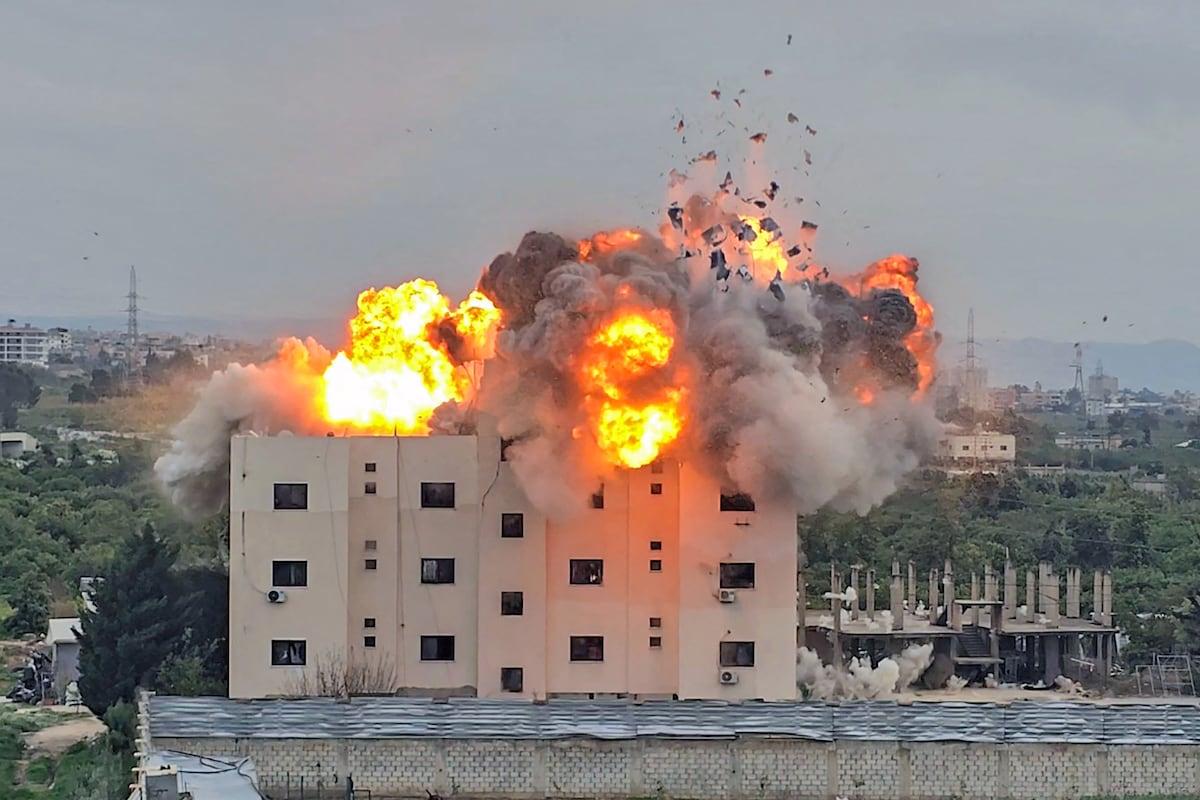
BEIRUT, Lebanon — Days after the United States and Israel started a war against Iran on Feb. 28, the Lebanese Cabinet banned any military activities of Iran-backed Hezbollah, requiring the armed group to hand over its weapons to the Lebanese state. The decision followed Hezbollah’s launch of a barrage of missiles toward northern Israel, the first such attack since the ceasefire of late 2024.
But enforcing the ban has proven difficult.
Hezbollah’s missile attacks, in response to the killing of Iran’s Supreme Leader, Ayatollah Ali Khamenei, have unleashed a punishing response from Israel that could further weaken the government and even lead to sectarian strife, according to analysts.
The government had instructed its army to “prevent any attacks originating from Lebanese territory” and declared its commitment to the cessation of hostilities outlined in a 2024 ceasefire agreement between Hezbollah and Israel.
“The Lebanese government’s decision is an attempt to contain the political and security fallout from Hezbollah’s preemptive strike on Israel, which has reignited the conflict in Lebanon amid the broader regional escalation,” said Dina Arakji, United Arab Emirates-based analyst at Control Risks and non-resident fellow at Middle East Institute.
“Hezbollah has lost what it is called ‘deterrence balance,’” said Hisham Jaber, a former major general of the Lebanese Armed Forces (LAF). “So, it believes it has no choice but to continue the battle.”
Since March 2, the Israeli army has ramped up its attacks on Lebanon and issued evacuation orders that have led to the mass displacement of hundreds of thousands of people from large areas of the country. According to the Lebanese Ministry of Health, more than 800,000 people have been displaced, and at least 773 people have been killed.
Before the current escalation, near-daily Israeli strikes have pummeled the south of the country, despite the 2024 ceasefire agreement.
The decision by the Lebanese government of directly targeting the group’s arsenal is unprecedented and sends a political message to regional and international interlocutors.
“Since the end of the civil war, Hezbollah’s weapons have been practically exempt from all decisions related to disarming militias, as they are considered weapons of resistance against Israeli occupation,” explained Mounir Shehade, a former brigadier general in Lebanon’s armed forces.
Prime Minister Nawaf Salam has stressed that the government remains committed to disarming Hezbollah and ultimately restoring the state’s monopoly over weapons and decisions of war and peace.
The ban provides political legitimacy for the army to take action, dismantling unofficial military structures and arresting individuals carrying unauthorized weapons.
However, according to Jaber, the army is in no position to search for weapons while the country is under Israeli bombardment.
Previous governments have avoided dealing with the issue of weapons. The reasons include the sensitivity of the sectarian balance, Hezbollah’s military and political power, and the limited capacity of the Lebanese state and the army.
According to analysts, these reasons continue to stall the implementation of any political decisions. Mounting Israeli and U.S. pressure on the Lebanese state further exacerbates the situation.
“This makes the enforcement of a decision to disarm it by force virtually impossible without a major internal conflict,” Shehade said.
The Lebanese army had begun arresting non-state actors and individuals carrying unlicensed weapons. But following one such arrest, the Military Court released three Hezbollah supporters on financial bail of approximately $20 for the illegal possession and transport of weapons.
According to Jaber, any conflict between the army and Hezbollah could even threaten the unity of the army itself. “Throughout the last five decades, the Lebanese army has been divided four times,” he noted.
Agnese Stracquadanio is a Middle East correspondent for Defense News. She has a background in writing and photojournalism, holds a master's degree in international relations, and previously worked for Reuters.
黎巴嫩贝鲁特——2月28日,美国和以色列对伊朗发动战争数日后,黎巴嫩内阁禁止伊朗支持的真主党进行任何军事活动,并要求该武装组织向黎巴嫩政府移交武器。此前,真主党向以色列北部发射了一连串导弹,这是自2024年底停火以来真主党首次发动此类袭击。
但事实证明,执行这项禁令非常困难。
分析人士称,真主党为报复伊朗最高领袖阿亚图拉·阿里·哈梅内伊遇刺而发动的导弹袭击,引发了以色列的严厉回应,这可能会进一步削弱伊朗政府,甚至导致教派冲突。
政府已指示其军队“防止任何源自黎巴嫩领土的袭击”,并宣布致力于遵守真主党与以色列于 2024 年达成的停火协议中概述的停止敌对行动。
“黎巴嫩政府的决定是为了遏制真主党对以色列发动先发制人打击所造成的政治和安全影响,此次打击在更广泛的地区局势升级背景下,重新点燃了黎巴嫩的冲突,”阿联酋 Control Risks 分析师、中东研究所非常驻研究员迪娜·阿拉克吉 (Dina Arakji) 表示。
“真主党已经失去了所谓的‘威慑平衡’,”黎巴嫩武装部队前少将希沙姆·贾贝尔说,“因此,它认为自己别无选择,只能继续战斗。”
自3月2日起,以色列军队加大了对黎巴嫩的袭击力度,并发布了撤离令,导致该国大片地区数十万人流离失所。据黎巴嫩卫生部统计,已有超过80万人流离失所,至少773人丧生。
在当前局势升级之前,尽管有2024年停火协议,以色列几乎每天都对该国南部进行空袭。
黎巴嫩政府直接打击该组织武器库的决定史无前例,并向地区和国际对话者发出了政治信号。
“自内战结束以来,真主党的武器实际上不受任何与解除民兵武装有关的决定约束,因为它们被认为是抵抗以色列占领的武器,”黎巴嫩武装部队前准将穆尼尔·谢哈德解释说。
纳瓦夫·萨拉姆总理强调,政府仍然致力于解除真主党的武装,并最终恢复国家对武器以及战争与和平决策的垄断。
该禁令为军队采取行动提供了政治合法性,可以解散非官方军事机构并逮捕携带未经授权武器的个人。
然而,据贾贝尔称,在以色列炮火轰炸下,军队无力搜寻武器。
以往历届政府都回避处理武器问题。原因包括教派平衡的敏感性、真主党的军事和政治实力,以及黎巴嫩国家和军队能力的有限。
分析人士认为,这些因素持续阻碍着任何政治决策的实施。以色列和美国对黎巴嫩政府不断施加的压力,进一步加剧了局势的恶化。
谢哈德说:“这使得在没有重大内部冲突的情况下,几乎不可能以武力强制执行解除武装的决定。”
黎巴嫩军队已开始逮捕非国家行为体和携带无证武器的个人。但在一次逮捕行动后,军事法庭以非法持有和运输武器的罪名,允许三名真主党支持者以约20美元的保释金获释。
贾贝尔表示,军队与真主党之间的任何冲突甚至可能威胁到军队自身的团结。“在过去的五十年里,黎巴嫩军队已经分裂了四次,”他指出。
阿格尼斯·斯特拉夸达尼奥是《防务新闻》的中东记者。她拥有写作和摄影新闻背景,持有国际关系硕士学位,此前曾在路透社工作。