Biden must act now to better arm Ukraine. Here’s what that should look like.拜登必须立即采取行动,加强对乌克兰的武装。以下是具体措施。
A large-scale Russian offensive would spell disaster not only for Ukraine and Europe but for U.S. interests and credibility as well.
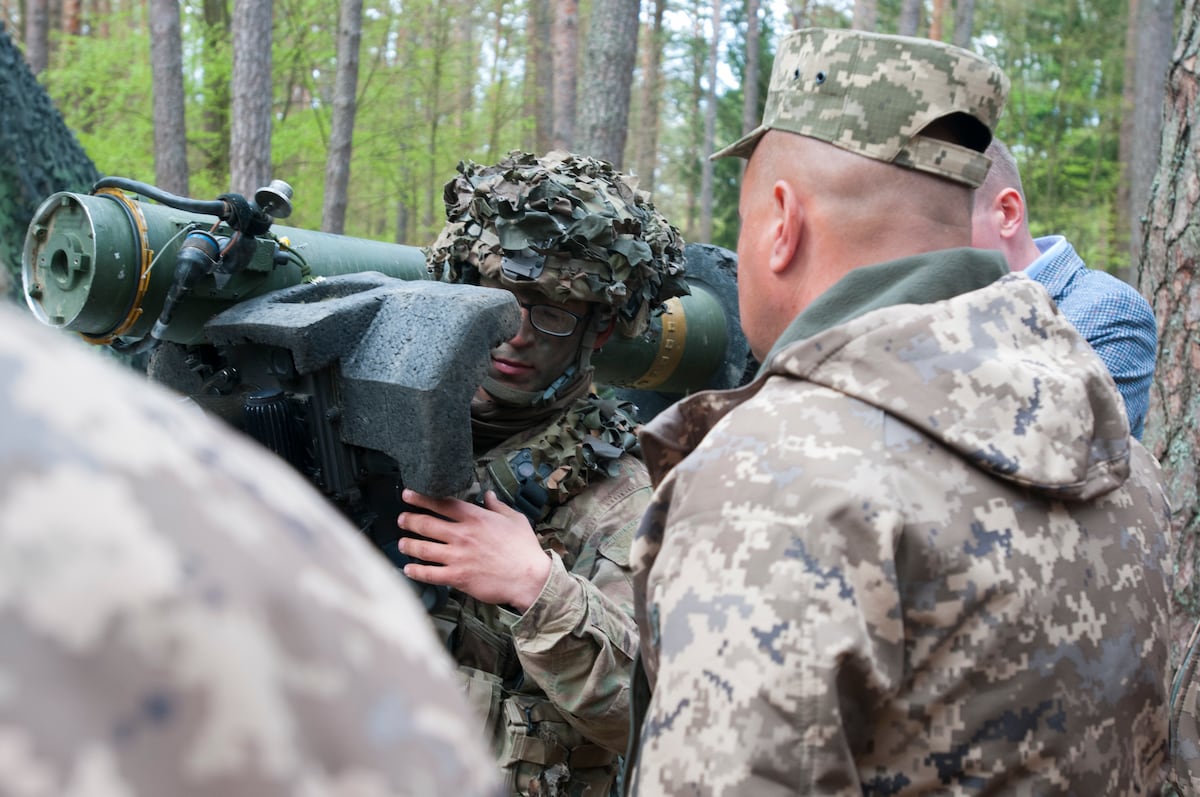
As Russian President Vladimir Putin continues to add troops on Ukraine’s borders in preparation for a potential large-scale military operation , the Biden administration is reportedly weighing whether to provide additional defensive weapons to Ukraine . This should not be a difficult decision for the White House. The administration should be moving heaven and earth to urgently provide Ukraine — a beleaguered democracy pleading for American help — with the weapons and other support it needs to deter a Russian offensive by increasing the costs of aggression for the Kremlin.
Hoping to prevent a Russian offensive, U.S. President Joe Biden has tried offering Moscow a diplomatic offramp while warning that a renewed Russian invasion would trigger harsh Western sanctions, a strengthened force posture on NATO’s eastern flank and a dramatic increase in U.S. defense assistance to Ukraine. That assistance could include support for a potential Ukrainian insurgency against Russian occupation forces.
Unfortunately, these warnings alone may well fail to deter Putin. Moscow has gone to considerable lengths to reduce the Russian economy’s vulnerability to sanctions . Putin likely expects that Western countries will forgo their toughest sanctions options if push comes to shove, fearing blowback on their own economies, and Moscow will surely seek to play on divisions within the trans-Atlantic alliance to weaken the Western response. Putin may also bet that Biden’s expressed desire to focus on other issues, such as China and the climate , will eventually impel the administration to seek an accommodation with Russia.
Moscow may further calculate that it can accomplish its political aims without a prolonged and costly occupation, instead using standoff strikes and a limited ground operation to force Kyiv to accept Russian suzerainty, and that similar military options would be more costly in the future.
In short, Putin may conclude that the long-term strategic benefits outweigh the costs and risks and that the time is ripe for action.
Some may ask why Americans should care. To be clear, a large-scale Russian offensive would spell disaster not only for Ukraine and Europe but for U.S. interests and credibility as well. It could be the largest military action in Europe since World War II, potentially killing thousands of Ukrainians, destabilizing Europe by sending millions more flooding westward, and harming the global economy as energy prices surge and markets react to a war in Europe.
An unstable Europe forced to contend with an aggressive and revisionist Russia will be less capable of joining the United States in addressing other major international challenges, such as the increasingly aggressive behavior of China.
More broadly, supporting Ukraine is about defending the post-war rules-based order in Europe that has been so beneficial to Americans and our European allies.
Putin has paired his troop buildup with demands that Washington and its allies accede to a Russian sphere of influence over neighboring countries, including by forswearing potential Ukrainian membership in NATO. Moscow’s efforts represent a direct challenge to the core principles underlying the existing security order in Europe, which Putin seeks to replace with a might-makes-right model whereby Russia is free to bully its smaller neighbors. Such a system would render Europe — home to top U.S. allies and trading partners — less secure, less prosperous and less free.
Moreover, advocates for an increased U.S. focus on China and the Indo-Pacific region should be extremely concerned that a weak U.S. response in Ukraine could undermine efforts to deter Chinese aggression against Taiwan or elsewhere. The time and resources the U.S. would be forced to spend on security challenges in Europe is an important reminder that it is cheaper to deter aggression than deal with its aftermath.
So what’s to be done?
The first step is to recognize that time may be running out. The situation around Ukraine is growing increasingly dire. Russian forces continue to flow toward Ukraine, including into neighboring Belarus, adding to the roughly 125,000 troops already perched on Ukraine’s borders and in illegally occupied Crimea and Donbas. Meanwhile, Moscow has begun withdrawing diplomatic personnel and their families from Ukraine, and U.S. and Ukrainian intelligence warn that Russia is laying the groundwork for potential false-flag attacks that Moscow could use as a pretext to attack Ukraine. The White House warns that Russian forces are now prepared to attack “at any point,” and that the offensive could begin between mid-January and mid-February .
Second, the Biden administration should do now what it should have done in November when indications of an invasion emerged: Move with a sense of urgency to provide Kyiv with additional defensive weapons and other support. The goal should be to help Ukrainian forces survive Russia’s initial air and missile assault, and to make clear to Putin that Russian forces would suffer major losses during an invasion and potential follow-on occupation.
Following pressure from Congress, the Biden administration reportedly has authorized America’s Baltic allies to rush U.S.-made weapons such as Javelin anti-tank missiles and Stinger man-portable air defense systems to Ukraine. The administration itself will begin shipping $200 million worth of Javelins, ammunition, medical supplies and other materiel to Ukraine in the coming days and weeks.
Unfortunately, the administration has dragged its feet, losing valuable time. The $200 million aid package lingered on the president’s desk for weeks over the administration’s fears of “provoking” Russia.
Much like with the Obama administration in 2014 , Biden’s hesitation stems from a desire to avoid provoking Putin, based on a misdiagnosis of how the Kremlin leader views concessions. Biden should fully reject that flawed approach and take urgent steps to better arm Ukraine now — before the invasion occurs. Admittedly, some of these efforts will take time, but there are opportunities to expedite delivery.
To help Ukrainian forces defend against low-flying Russian aircraft, Washington should look to provide Kyiv with additional man-portable air defense systems — U.S.-made Stingers or perhaps Grom systems from Poland — as well as counter-UAV capabilities.
Assistance should also include armed drones, long-range counter-artillery radars, electronic warfare capabilities, anti-ship capabilities, and anti-tank and naval mines, for example. The U.S. Harpoon and U.K. Brimstone systems are potential candidates.
If the United States is unable or unwilling to provide these capabilities, Washington should unambiguously signal support for allies to do so and should facilitate their efforts. In addition, Washington and its allies should help ensure Ukraine’s armed forces have sufficient ammunition, including by providing access to U.S. and NATO stockpiles in Europe as needed. And all equipment originally destined for Afghan forces should be immediately diverted to the Ukrainian military.
Putin should see American and other NATO cargo aircraft landing every few hours, offloading defensive weapons that will make any new invasion of Ukraine increasingly costly. These flights should stop only when Russian troops temporarily deployed near Ukraine’s borders return to their permanent garrisons.
Beyond weapons, Washington should also provide Ukraine with actionable battlefield intelligence, something the United States did not do following Russia’s 2014 aggression against Ukraine. In addition to enabling Ukrainian forces respond more quickly to a Russian offensive, such intelligence could also help Ukrainians disperse ahead of incoming air or missile strikes, as Dara Massicot of the think tank Rand has noted .
She also rightly argues that Washington should consult with Kyiv “on dispersal plans for Ukrainian air defenses” and on “hardening plans for other critical facilities,” which “will almost certainly be primary and early targets for Russian strikes.”
An authoritarian bully is threatening a beleaguered democracy. Fundamental democratic principles and national security interests are on the line. In a joint op-ed in 2014, the top Democrat and Republican on the Senate Armed Services Committee called on the Obama administration to provide “weapons to help Ukraine’s troops defend their nation.” That was the right bipartisan policy then, and it is the right bipartisan policy now.
Momentum is building again in Congress to help Kyiv better defend itself in light of Putin’s impending potential invasion of Ukraine. Let’s hope President Biden listens and acts — fast.
Bradley Bowman is the senior director of the Center on Military and Political Power at the Foundation for Defense of Democracies, where John Hardie is a research analyst and Jack Sullivan is a research associate.
随着俄罗斯总统普京持续向乌克兰边境增兵,为可能发动的大规模军事行动做准备,据报道,拜登政府正在权衡是否向乌克兰提供更多防御性武器。这对白宫来说应该不是什么难题。美国政府应该竭尽全力,紧急向乌克兰——这个饱受战火蹂躏、正恳求美国援助的民主国家——提供武器和其他支持,以增加克里姆林宫发动侵略的代价,从而遏制俄罗斯的进攻。
为了阻止俄罗斯发动进攻,美国总统拜登试图向莫斯科提供外交途径,同时警告称,如果俄罗斯再次入侵,将引发西方严厉制裁,北约东翼将加强兵力部署,美国对乌克兰的国防援助也将大幅增加。这些援助可能包括支持乌克兰民众可能发起的反抗俄罗斯占领军的起义。
不幸的是,仅凭这些警告恐怕难以震慑普京。莫斯科已竭尽全力降低俄罗斯经济受制裁的影响。普京可能预期,如果事态发展到紧要关头,西方国家会放弃最严厉的制裁选项,因为他们担心制裁会对自身经济造成反噬。而莫斯科也必将试图利用跨大西洋联盟内部的分歧来削弱西方的反应。普京或许还押注,拜登表达的将重点放在其他议题(例如中国和气候问题)上的意愿,最终会促使美国政府寻求与俄罗斯达成妥协。
莫斯科可能进一步认为,无需进行长期且代价高昂的占领,而是通过远程打击和有限的地面行动迫使基辅接受俄罗斯的宗主权,就能实现其政治目标;而且,类似的军事选择在未来会付出更高的代价。
简而言之,普京可能会得出结论:长期的战略利益大于成本和风险,现在是采取行动的时机。
有些人可能会问,美国人为什么要关心这件事?需要明确的是,俄罗斯的大规模进攻不仅对乌克兰和欧洲来说将是灾难性的,对美国的利益和信誉也将造成严重损害。这可能是二战以来欧洲规模最大的军事行动,可能导致数千名乌克兰人丧生,数百万难民涌向西方,从而破坏欧洲的稳定,并随着能源价格飙升和市场对欧洲战争的反应,损害全球经济。
一个动荡不安的欧洲,被迫与咄咄逼人且奉行修正主义的俄罗斯对抗,将更难与美国携手应对其他重大的国际挑战,例如中国日益咄咄逼人的行为。
更广泛地说,支持乌克兰是为了捍卫战后欧洲基于规则的秩序,这一秩序对美国人和我们的欧洲盟友来说非常有利。
普京在增兵的同时,还要求华盛顿及其盟友接受俄罗斯对邻国的势力范围,包括放弃乌克兰加入北约的可能性。莫斯科的举动直接挑战了欧洲现有安全秩序的核心原则,普京试图以“强权即公理”的模式取而代之,使俄罗斯可以肆意欺凌其较小的邻国。这样的体系将使欧洲——美国最重要的盟友和贸易伙伴的所在地——变得更加不安全、更加不繁荣、更加不自由。
此外,主张美国加大对中国和印太地区的关注的人士应该极其担忧,美国在乌克兰问题上反应软弱可能会削弱遏制中国对台湾或其他地区侵略的努力。美国被迫将时间和资源投入到欧洲安全挑战中,这有力地提醒我们,遏制侵略远比应对侵略后果要划算得多。
那么该怎么办呢?
首先要认识到时间可能所剩无几。乌克兰局势日益严峻。俄罗斯军队持续向乌克兰推进,甚至进入邻国白俄罗斯,这使得驻扎在乌克兰边境以及非法占领的克里米亚和顿巴斯地区的约12.5万俄军人数进一步增加。与此同时,莫斯科已开始从乌克兰撤离外交人员及其家属。美国和乌克兰情报部门警告称,俄罗斯正在为可能发动的“假旗行动”做准备,并可能以此为借口攻击乌克兰。白宫警告说,俄罗斯军队已做好“随时”发动攻击的准备,攻势可能在1月中旬至2月中旬之间开始。
其次,拜登政府现在应该做它在11月入侵迹象出现时就应该做的事情:以紧迫感向基辅提供更多防御武器和其他支持。其目标应该是帮助乌克兰军队在俄罗斯最初的空袭和导弹袭击中幸存下来,并向普京明确表明,俄罗斯军队在入侵和可能的后续占领中将遭受重大损失。
据报道,在国会的压力下,拜登政府已授权美国的波罗的海盟友向乌克兰紧急运送美国制造的武器,例如“标枪”反坦克导弹和“毒刺”便携式防空系统。美国政府自身也将在未来几天和几周内开始向乌克兰运送价值2亿美元的“标枪”导弹、弹药、医疗用品和其他物资。
不幸的是,政府行动迟缓,浪费了宝贵的时间。由于担心“挑衅”俄罗斯,这项2亿美元的援助计划在总统办公桌上搁置了数周之久。
与2014年奥巴马政府的做法类似,拜登的犹豫源于避免激怒普京的愿望,而这种愿望是基于对克里姆林宫领导人如何看待让步的误判。拜登应该彻底摒弃这种错误的做法,并立即采取紧急措施,在入侵发生之前更好地武装乌克兰。诚然,其中一些努力需要时间,但存在加快推进的机会。
为了帮助乌克兰军队防御低空飞行的俄罗斯飞机,华盛顿应该考虑向基辅提供更多的便携式防空系统——美国制造的“毒刺”防空系统,或者波兰的“雷鸣”防空系统——以及反无人机能力。
援助还应包括武装无人机、远程反炮兵雷达、电子战能力、反舰能力以及反坦克和水雷等。美国的“鱼叉”反潜导弹系统和英国的“硫磺石”反潜导弹系统都是潜在的选择。
如果美国无力或不愿提供这些能力,华盛顿应明确表示支持盟友提供这些能力,并为其努力提供便利。此外,华盛顿及其盟友应帮助确保乌克兰武装部队拥有充足的弹药,包括根据需要提供使用美国和北约在欧洲的弹药库的途径。所有原计划运往阿富汗部队的装备都应立即转运给乌克兰军队。
普京应该看到,每隔几个小时就有美国和其他北约国家的运输机降落,卸载防御性武器,这将使任何新的入侵乌克兰行动付出越来越高的代价。只有当临时部署在乌克兰边境附近的俄罗斯军队返回其常驻地时,这些航班才能停止。
除了武器之外,华盛顿还应该向乌克兰提供可操作的战场情报,而美国在2014年俄罗斯侵略乌克兰后并没有这样做。正如兰德智库的达拉·马西科特所指出的,此类情报不仅能使乌克兰军队更快地应对俄罗斯的进攻,还能帮助乌克兰军队在空袭或导弹袭击到来之前分散撤离。
她还正确地指出,华盛顿应该就“乌克兰防空系统的分散计划”和“其他关键设施的加固计划”与基辅进行磋商,因为这些设施“几乎肯定会成为俄罗斯打击的主要和早期目标”。
一个专制霸权正在威胁一个岌岌可危的民主国家。基本的民主原则和国家安全利益正面临考验。2014年,参议院军事委员会的民主党和共和党领袖联名发表评论文章,呼吁奥巴马政府向乌克兰军队提供“武器,帮助他们保卫国家”。这在当时是正确的两党政策,现在仍然是正确的两党政策。
鉴于普京可能即将入侵乌克兰,国会再次出现呼吁,帮助基辅更好地保卫自身的呼声。希望拜登总统能够听取民意并迅速采取行动。
布拉德利·鲍曼是保卫民主基金会军事和政治权力中心的高级主任,约翰·哈迪是该中心的研究分析师,杰克·沙利文是该中心的研究助理。