Raytheon says rocket-motor squeeze still constrains missile output雷神公司表示,火箭发动机的压缩仍然限制着导弹的输出功率。
“It’s not just about the constraint for demand today, it’s very much more about the increased demand we see in the future,” one company executive said.
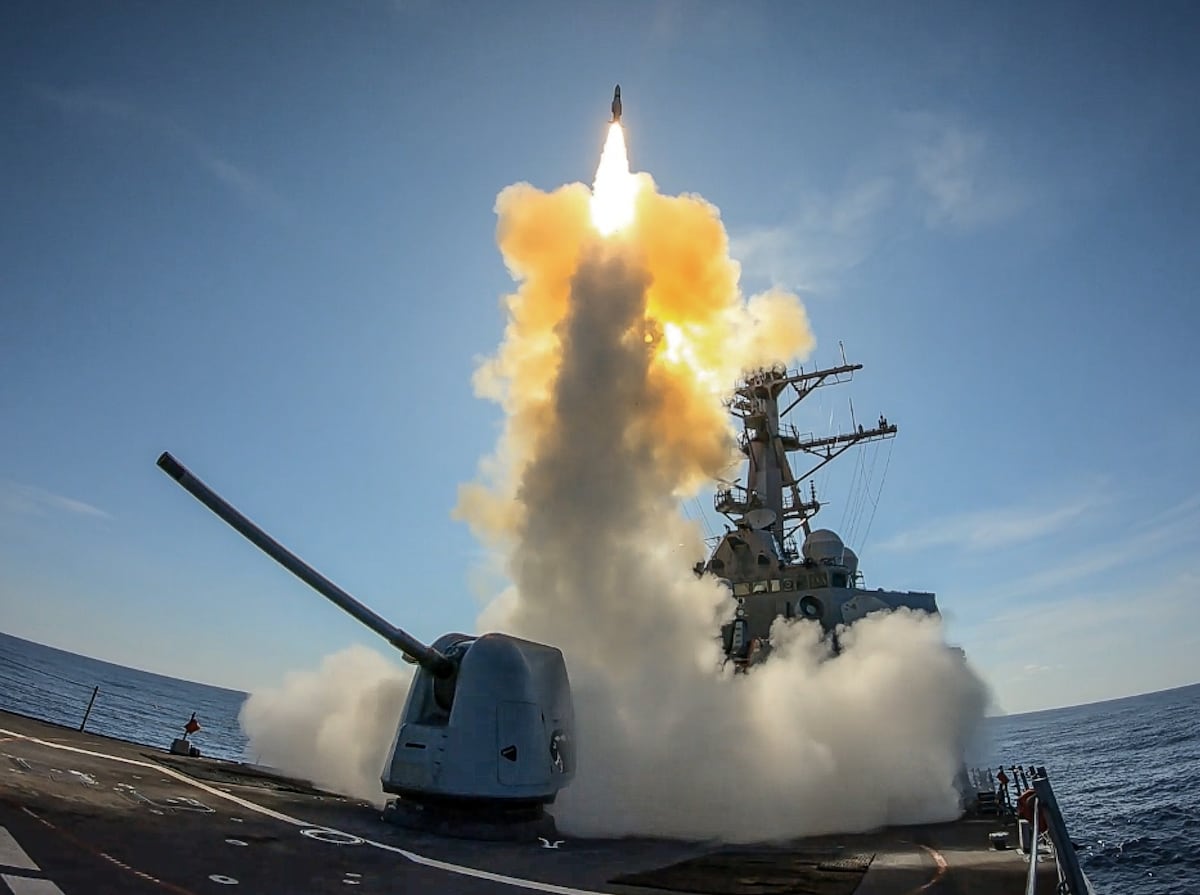
PARIS — United States production of some missiles continues to be constrained by a supply squeeze for rocket motors, Raytheon officials said at the Paris Air Show last week.
Raytheon’s naval power unit, which supplies missiles including the SM-2 and SM-6 models as well as the AIM-9X Sidewinder, is still hampered by availability of rocket motors, Barbara Borgonovi, who heads the business, said in a press briefing at the show.
“It’s not just about the constraint for demand today, it’s very much more about the increased demand we see in the future,” Borgonovi said. “We have to have more sources of supply qualified across a number of my programs for rocket motors to be able to reach that increased demand.”
Rocket motors have been a hurdle to ramping up American output of advanced munitions, with industry consolidation in recent decades shrinking the number of domestic suppliers of the key component. Meanwhile, the conflicts in Ukraine and the Middle East have used up thousands of missiles, depleting the stockpiles of the U.S. and its allies.
Missile makers and their suppliers have been looking to grow and diversify production in response, expanding existing capacity or adding entire production lines for rocket motors.
Raytheon is supporting current suppliers, which for many of the programs overseen by Borgonovi is Aerojet Rocketdyne, owned by L3Harris. The executive said Aerojet has been investing and had “a great start in 2025,” supplying as many primary rocket motors by May this year as in all of 2024.
The second part of Raytheon’s rocket-motor strategy is to expand business with a number of existing successful partners, Borgonovi said. The company relies on Norway’s Nammo for the rocket motors that power the AMRAAM air-to-air missile and the Evolved Sea Sparrow Missile, or ESSM.
Rocket motors are not a constraint for AMRAAM production, with a “very healthy” supply chain, said Sam Deneke, the company’s president of air & space defense systems. For ESSM, Nammo “do an incredible job supporting us on that program, not constrained there either,” Borgonovi said.
“So we are looking at extending our sources of supply for many of our programs to established providers,” Borgonovi said. Both Nammo as well as Italy’s Avio, another Raytheon supplier, are establishing U.S. manufacturing sites that will produce rocket motors for U.S. programs, she said.
The U.S. Government Accountability Office in a 2017 report noted that over two decades, the number of U.S. solid rocket motor manufacturers consolidated to two from six, with the number of suppliers also falling.
Meanwhile, in the Red Sea alone, the U.S. Navy and allied navies fired off hundreds of missiles to counter Houthi attacks against shipping since October 2023, while allies have provided Ukraine with thousands of missiles and rockets as it fends of Russia’s invasion.
“We have to be able to ensure that we deliver when it’s needed to the fleet,” Borgonovi said. “So lots of usage, we need to not just replace but we need to scale for the future because of future conflicts, future demand.”
The company is also looking to partners such as Ursa Major and Anduril for new technology and innovative manufacturing and design methods, according to Borgonovi. Raytheon and Ursa Major in December successfully tested a long-range solid rocket motor for the U.S. Army, using additive manufacturing to cut production costs.
Rudy Ruitenberg is a Europe correspondent for Defense News. He started his career at Bloomberg News and has experience reporting on technology, commodity markets and politics.
巴黎——雷神公司官员上周在巴黎航展上表示,由于火箭发动机供应紧张,美国部分导弹的生产仍然受到限制。
雷神公司海军动力部门(供应包括 SM-2 和 SM-6 型号以及 AIM-9X 响尾蛇导弹在内的导弹)仍然受到火箭发动机供应不足的制约。该部门负责人芭芭拉·博尔戈诺维在展会期间的新闻发布会上表示。
博尔戈诺维表示:“这不仅仅是当前需求受限的问题,更重要的是我们预计未来需求将会增加。为了满足不断增长的需求,我们需要在我的多个火箭发动机项目中增加合格的供应来源。”
火箭发动机一直是美国提高先进弹药产量的一大障碍,近几十年来行业的整合导致这一关键部件的国内供应商数量锐减。与此同时,乌克兰和中东的冲突消耗了数千枚导弹,严重削弱了美国及其盟国的导弹储备。
导弹制造商及其供应商一直在寻求扩大和多元化生产以应对这一挑战,扩大现有产能或增加火箭发动机的整条生产线。
雷神公司正在支持现有供应商,在博尔戈诺维负责的许多项目中,这些供应商是L3Harris旗下的Aerojet Rocketdyne公司。这位高管表示,Aerojet一直在加大投资,并在2025年取得了“良好的开端”,今年5月供应的主火箭发动机数量就达到了2024年全年的供应量。
博尔戈诺维表示,雷神公司火箭发动机战略的第二部分是与一些现有的成功合作伙伴拓展业务。该公司依靠挪威纳莫公司提供的火箭发动机,这些发动机为先进中程空空导弹(AMRAAM)和改进型海麻雀导弹(ESSM)提供动力。
公司空天防御系统总裁萨姆·德内克表示,火箭发动机并非AMRAAM导弹生产的瓶颈,其供应链“非常健康”。博尔戈诺维则表示,对于ESSM导弹,Nammo公司“在该项目上给予了我们极大的支持,这方面也未受到任何限制”。
博尔戈诺维表示:“因此,我们正在考虑将许多项目的供应来源扩展到现有供应商。”她还提到,Nammo公司以及另一家雷神公司供应商——意大利的Avio公司,都正在美国建立生产基地,为美国项目生产火箭发动机。
美国政府问责局在 2017 年的一份报告中指出,二十多年来,美国固体火箭发动机制造商的数量从六家减少到两家,供应商的数量也在减少。
与此同时,仅在红海,自 2023 年 10 月以来,美国海军及其盟国海军就发射了数百枚导弹,以反击胡塞武装对航运的袭击;此外,盟国还向乌克兰提供了数千枚导弹和火箭,以帮助其抵御俄罗斯的入侵。
博尔戈诺维表示:“我们必须确保在舰队需要时能够及时交付装备。因此,由于使用量巨大,我们不仅需要进行替换,还需要为未来做好准备,以应对未来的冲突和需求。”
据博尔戈诺维透露,该公司也在寻求与Ursa Major和Anduril等合作伙伴共同开发新技术和创新制造及设计方法。去年12月,雷神公司和Ursa Major成功测试了一款为美国陆军研制的远程固体火箭发动机,该发动机采用增材制造技术降低了生产成本。
鲁迪·鲁伊滕贝格是《防务新闻》的欧洲记者。他的职业生涯始于彭博新闻社,拥有报道科技、大宗商品市场和政治方面的经验。