11 Baltic cables damaged in 15 months, pushing NATO to boost security15个月内11条波罗的海海底电缆受损,促使北约加强安全防护。
NATO is deploying eyes in the sky and on the Baltic Sea to protect cables and pipelines that stitch together the nine countries with Baltic shores.
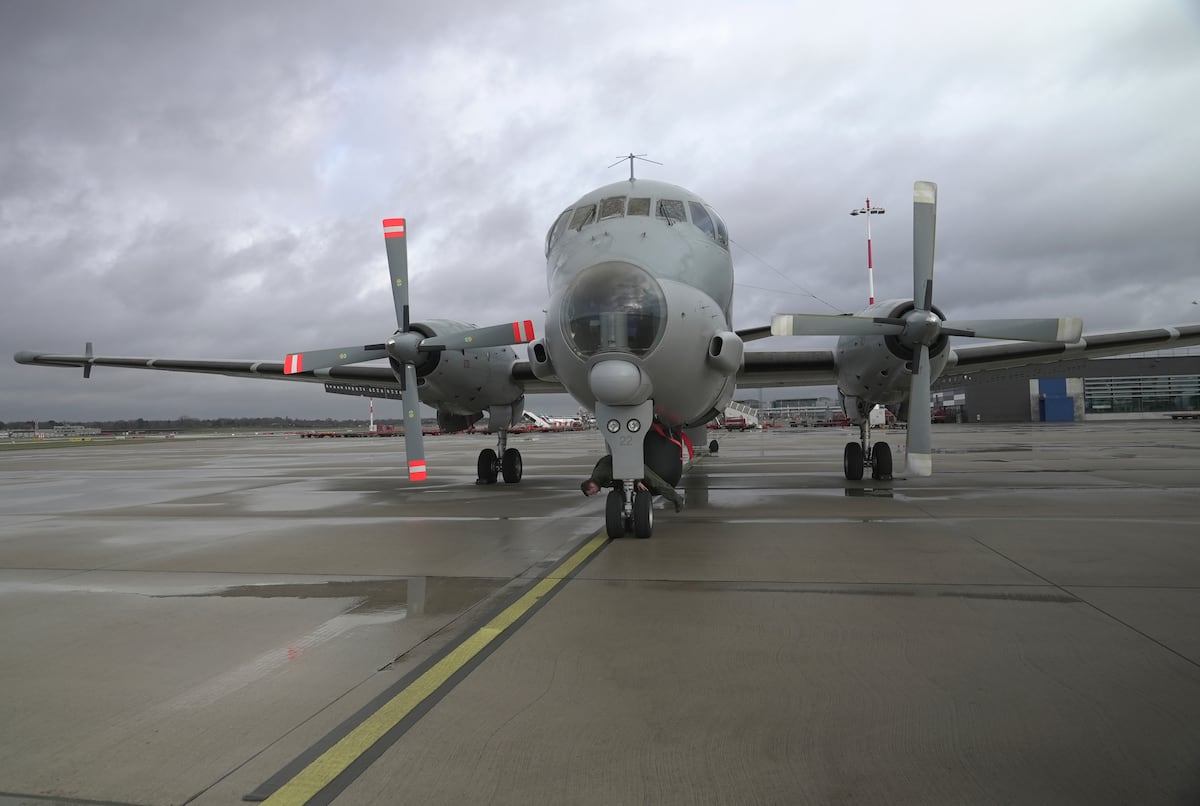
ABOARD A FRENCH NAVY FLIGHT OVER THE BALTIC SEA — With its powerful camera , the French Navy surveillance plane scouring the Baltic Sea zoomed in on a cargo ship plowing the waters below — closer, closer and closer still until the camera operator could make out details on the vessel’s front deck and smoke pouring from its chimney.
The long-range Atlantique 2 aircraft on a new mission for NATO then shifted its high-tech gaze onto another target, and another after that until, after more than five hours on patrol, the plane's array of sensors had scoped out the bulk of the Baltic — from Germany in the west to Estonia in the northeast, bordering Russia.
The flight’s mere presence in the skies above the strategic sea last week, combined with military ships patrolling on the waters , also sent an unmistakable message: The NATO alliance is ratcheting up its guard against suspected attempts to sabotage underwater energy and data cables and pipelines that crisscross the Baltic, prompted by a growing catalogue of incidents that have damaged them.
“We will do everything in our power to make sure that we fight back, that we are able to see what is happening and then take the next steps to make sure that it doesn’t happen again. And our adversaries should know this,” NATO Secretary-General Mark Rutte said this month in announcing a new alliance mission, dubbed “Baltic Sentry,” to protect the underwater infrastructure vital to the economic well-being of Baltic-region nations.
What’s under the Baltic?
Power and communications cables and gas pipelines stitch together the nine countries with shores on the Baltic, a relatively shallow and nearly landlocked sea. A few examples are the 94-mile Balticconnector pipeline that carries gas between Finland and Estonia, the high-voltage Baltic Cable connecting the power grids of Sweden and Germany, and the 729-mile C-Lion1 telecommunications cable between Finland and Germany.
Why are cables important?
Undersea pipes and cables help power economies, keep houses warm and connect billions of people. More than 807,800 miles of fiber optic cables — more than enough to stretch to the moon and back — span the world’s oceans and seas, according to TeleGeography, which tracks and maps the vital communication networks. The cables are typically the width of a garden hose. But 97% of the world’s communications, including trillions of dollars of financial transactions, pass through them each day.
“In the last two months alone, we have seen damage to a cable connecting Lithuania and Sweden, another connecting Germany and Finland, and most recently, a number of cables linking Estonia and Finland. Investigations of all of these cases are still ongoing. But there is reason for grave concern," Rutte said on Jan. 14.
Crew members aboard a French Navy Atlantique 2 surveillance plane patrol Thursday over the Baltic Sea as part of NATO's "Baltic Sentry" mission. (John Leicester/AP)
What's causing alarm?
At least 11 Baltic cables have been damaged since October 2023 — the most recent being a fiber optic cable connecting Latvia and the Swedish island of Gotland, reported to have ruptured on Sunday. Although cable operators note that subsea cable damage is commonplace, the frequency and concentration of incidents in the Baltic heightened suspicions that damage might have been deliberate.
There also are fears that Russia could target cables as part of a wider campaign of so-called “hybrid warfare” to destabilize European nations helping Ukraine defend itself against the full-scale invasion that Moscow has been pursuing since 2022.
Without specifically blaming Russia, Rutte said: “Hybrid means sabotage. Hybrid means cyber-attacks. Hybrid means sometimes even assassination attacks, attempts, and in this case, it means hitting on our critical undersea infrastructure.”
Finnish police suspect that the Eagle S , an oil tanker that damaged the Estlink 2 power cable and two other communications cables linking Finland and Estonia on Dec. 25th, is part of Moscow’s “shadow fleet” used to avoid war-related sanctions on Russian oil exports.
Finnish authorities seized the tanker shortly after it left a Russian port and apparently cut the cables by dragging its anchor. Finnish investigators allege the ship left an almost 62-mile-long anchor trail on the seabed.
Intelligence agencies’ doubts
Several Western intelligence officials, speaking on condition of anonymity because of the sensitive nature of their work, told The Associated Press that recent damage was most likely accidental, seemingly caused by anchors being dragged by ships that were poorly maintained and poorly crewed.
One senior intelligence official told AP that ships’ logs and mechanical failures with ships’ anchors were among “multiple indications” pointing away from Russian sabotage. The official said Russian cables were also severed. Another Western official, also speaking anonymously to discuss intelligence matters, said Russia sent an intelligence-gathering vessel to the site of one cable rupture to investigate the damage.
The Washington Post first reported on the emerging consensus among U.S. and European security services that maritime accidents likely caused recent damage.
Cable operators advise caution
The European Subsea Cables Association, representing cable owners and operators, noted in November after faults were reported on two Baltic links that, on average, a subsea cable is damaged somewhere in the world every three days. In northern European waters, the main causes of damage are commercial fishing or ship anchors, it said.
The cargo ship Vezhen is anchored outside Karlskrona, Sweden, on Monday for examination by Swedish authorities. (Johan Nilsson/TT News Agency via AP)
In the fiber-optic cable rupture on Sunday connecting Latvia and Sweden, Swedish authorities detained a Maltese-flagged ship bound for South America with a cargo of fertilizer.
Navibulgar, a Bulgarian company that owns the Vezhen, said any damage was unintentional and that the ship’s crew discovered while navigating in extremely bad weather that its left anchor appeared to have dragged on the seabed.
NATO’s ‘Baltic Sentry’ mission
The alliance is deploying warships, maritime patrol aircraft and naval drones for the mission to provide “enhanced surveillance and deterrence.”
Aboard the French Navy surveillance flight, the 14-member crew cross-checked ships they spotted from the air against lists of vessels they had been ordered to watch for.
“If we witness some suspicious activities from ships as sea — for example, ships at very low speed or at anchorage in a position that they shouldn’t be at this time — so this is something we can see,” said the flight commander, Lt. Alban, whose surname was withheld by the French military for security reasons.
“We can have a very close look with our sensors to see what is happening.”
Burrows reported from London. AP journalists Jill Lawless in London, David Klepper in Washington and Veselin Toshkov in Sofia, Bulgaria, contributed to this report.
在法国海军飞越波罗的海上空的飞机上——法国海军侦察机利用其强大的摄像机,在波罗的海上搜寻,镜头逐渐拉近一艘在下方海面上劈波斩浪的货船——越来越近,越来越近,直到摄像师能够辨认出船头甲板的细节以及从烟囱里冒出的浓烟。
为北约执行新任务的远程大西洋 2 型飞机随后将其高科技目光转向另一个目标,接着又转向另一个目标,经过五个多小时的巡逻,飞机上的传感器阵列已经侦察了波罗的海的大部分地区——从西部的德国到东北部与俄罗斯接壤的爱沙尼亚。
上周,这架飞机出现在战略海域上空,再加上军舰在水域巡逻,也传递了一个明确的信息:北约联盟正在加强对波罗的海海底能源和数据电缆及管道的破坏企图的防范,此前发生的破坏事件越来越多,促使北约采取了这一行动。
“我们将竭尽全力进行反击,确保我们能够看清正在发生的事情,然后采取下一步措施,确保此类事件不再发生。我们的对手应该明白这一点。”北约秘书长马克·吕特本月宣布了一项名为“波罗的海哨兵”的新联盟任务,旨在保护对波罗的海地区国家经济福祉至关重要的水下基础设施。
波罗的海下面有什么?
电力和通信电缆以及天然气管道将波罗的海沿岸的九个国家连接起来。波罗的海是一个相对较浅且几乎被陆地包围的海域。例如,连接芬兰和爱沙尼亚的94英里长的波罗的海连接管道输送天然气;连接瑞典和德国电网的高压波罗的海电缆;以及连接芬兰和德国的729英里长的C-Lion1通信电缆。
为什么电缆很重要?
海底管道和电缆为经济发展提供动力,为房屋供暖,并将数十亿人连接起来。据追踪和绘制重要通信网络的TeleGeography公司称,超过807,800英里的光纤电缆——足以往返月球——横跨世界各大洋。这些电缆的直径通常与花园水管相当。但全球97%的通信,包括数万亿美元的金融交易,每天都要通过它们进行传输。
“仅在过去两个月里,我们就发现连接立陶宛和瑞典的一条海底电缆、连接德国和芬兰的一条海底电缆,以及最近连接爱沙尼亚和芬兰的多条海底电缆遭到破坏。所有这些案件的调查仍在进行中。但有理由对此深感担忧,”吕特在1月14日表示。
周四,一架法国海军“大西洋2”型侦察机上的机组人员在波罗的海上空巡逻,这是北约“波罗的海哨兵”任务的一部分。(约翰·莱斯特/美联社)
什么引起了警觉?
自2023年10月以来,波罗的海至少有11条海底电缆遭到破坏——最近一次是连接拉脱维亚和瑞典哥特兰岛的一条光纤电缆,据报道该电缆于周日破裂。尽管电缆运营商指出海底电缆损坏很常见,但波罗的海地区事故的频繁发生和集中出现,加剧了人们对破坏可能是人为破坏的怀疑。
还有人担心,俄罗斯可能会以电缆为目标,作为所谓“混合战争”更广泛行动的一部分,以破坏帮助乌克兰抵御莫斯科自 2022 年以来一直在进行的全面入侵的欧洲国家的稳定。
吕特没有直接指责俄罗斯,而是说:“混合攻击意味着破坏。混合攻击意味着网络攻击。混合攻击有时甚至意味着暗杀袭击或企图,而就目前的情况而言,它意味着攻击我们关键的海底基础设施。”
芬兰警方怀疑,12月25日破坏了连接芬兰和爱沙尼亚的Estlink 2电力电缆和另外两条通信电缆的油轮“鹰S”号,是莫斯科用来规避与战争有关的俄罗斯石油出口制裁的“影子舰队”的一部分。
芬兰当局在油轮离开俄罗斯港口后不久便将其扣押,并显然通过拖拽锚链切断了缆绳。芬兰调查人员称,该船在海底留下了一条近62英里长的锚链痕迹。
情报机构的疑虑
几位西方情报官员因工作性质敏感而要求匿名,他们告诉美联社,最近的损害很可能是意外事故,似乎是由于维护不善、船员配备不足的船只拖拽锚造成的。
一位高级情报官员告诉美联社,船舶航海日志和船锚机械故障等“多项迹象”表明,此次事件并非俄罗斯所为。该官员还表示,俄罗斯的电缆也被切断。另一位不愿透露姓名的西方官员在谈及情报事宜时表示,俄罗斯已派遣一艘情报收集船前往其中一处电缆断裂地点调查损失情况。
《华盛顿邮报》率先报道了美国和欧洲安全部门逐渐达成的共识,即海上事故可能是造成近期损失的原因。
有线电视运营商建议谨慎行事
代表海底电缆所有者和运营商的欧洲海底电缆协会在11月两条波罗的海海底电缆出现故障后指出,平均每三天全球就有一条海底电缆受损。该协会表示,在北欧海域,造成电缆损坏的主要原因是商业捕鱼或船舶锚泊。
周一,货船“维真号”(Vezhen)停泊在瑞典卡尔斯克鲁纳港外,接受瑞典当局的检查。(Johan Nilsson/TT News Agency via AP)
周日,连接拉脱维亚和瑞典的光纤电缆发生断裂,瑞典当局扣押了一艘悬挂马耳他国旗、驶往南美的船只,船上载有化肥。
拥有“维真号”的保加利亚公司 Navibulgar 表示,任何损坏都是无意的,船员在极其恶劣的天气中航行时发现,左锚似乎拖到了海底。
北约的“波罗的海哨兵”任务
该联盟正在部署军舰、海上巡逻机和海军无人机执行“加强监视和威慑”的任务。
在法国海军侦察机上,14 名机组人员将从空中发现的船只与他们奉命监视的船只清单进行交叉核对。
“如果我们发现海上船只有一些可疑活动——例如,船只航速很低,或者停泊在此时不应该停泊的位置——那么这就是我们能够发现的情况,”飞行指挥官阿尔班中尉说道,出于安全原因,法国军方隐去了他的姓氏。
“我们可以利用传感器进行非常仔细的观察,看看发生了什么。”
伯罗斯从伦敦报道。美联社记者吉尔·劳利斯(伦敦)、大卫·克莱珀(华盛顿)和韦塞林·托什科夫(保加利亚索非亚)也对本报道做出了贡献。