Canada’s CAE buys L3Harris military training unit, with eyes on US programs加拿大CAE公司收购L3Harris军事训练部门,意在进军美国项目
CAE defense head Dan Gelston tells Defense News why the $1.05 billion deal positions the company to go after future fighter and bomber programs.
WASHINGTON — Canadian firm CAE announced Monday its intent to purchase the military training arm of L3Harris Technologies, a $1.05 billion move that will double the company’s American defense business.
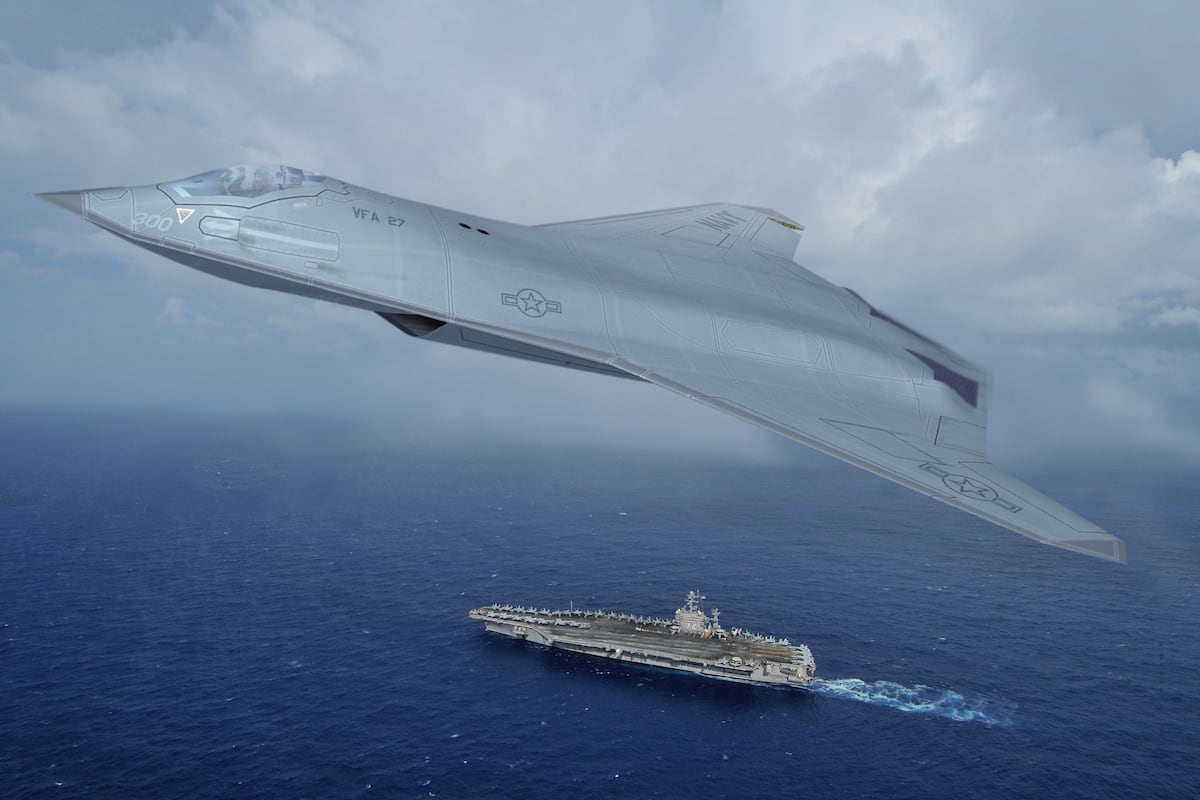
The acquisition, expected to be completed in the second half of the year, now positions CAE to aggressively target the U.S. Air Force’s programs for a next-generation fighter , a next-generation intercontinental ballistic missile and a next-generation bomber .
CAE has traditionally focused much attention in the commercial aviation industry, but once the acquisition is complete, the defense and commercial sides of the company will have rough parity, combining for about 95 percent of overall business; the remaining 5 percent is from the company’s medical training practice.
Once the sale is finalized, “there is no program in the United States that we can’t go after,” CAE president and CEO Marc Parent said on an investor call Monday morning. As of publication, the company’s stock was up 13 percent since the opening bell.
L3Harris on Monday also announced the sale of its Combat Propulsion Systems business to German company RENK AG for $400 million.
In a statement, L3Harris CEO and Chairman Bill Brown said the moves “place our Military Training and Combat Propulsion Systems and related businesses with well-suited buyers, while positioning L3Harris to further focus on its core technologies and execute its strategic priorities.”
The L3Harris training unit comes with roughly $500 million in annual revenue, putting CAE’s defense revenue at about $1.5 billion, of which $1 billion is in the U.S., according to Dan Gelston, the company’s defense head, who spoke with Defense News shortly after the announcement of the sale.
Gelston expects to split the U.S. side of the defense team into two groups: one focused on the development and manufacturing of physical simulators; and another on services — the actual pilot training that goes on at bases around the world. While he envisions a roughly 60-40 revenue split in favor of the simulator team, he stressed that there will be work done in the coming months to sort that out.
Gelston also expects “minimal” layoffs as the two teams are merged, with that coming almost entirely from back office support staff. (The company will likely shake up the L3Harris production setup, however, centralizing it at CAE’s facility in Montreal, Canada.) And while CAE’s defense team has been based in Tampa, Florida, for many years, he also doesn’t anticipate major movements to Florida for the Texas-based L3Harris group.
Rather, he said, the Arlington, Texas, facility in particular may be ripe for expansion, as L3Harris has what he called “hundreds of thousands of square feet” of space specifically for working on classified projects, something in which CAE has not been a major player. Roughly 80 percent of the 1,600-person workforce CAE is acquiring has a secret clearance or higher, according to the company.
While regulators will have the final say, CAE executives expressed confidence that there should be no antitrust issues that would require divesting a business unit for the merger to go through. Per Gelston, of the last 55 times CAE bid on a competitive contractor, it only faced competition from L3Harris 11 times, indicating there is limited overlap in their portfolios. And while CAE is poised to become the second-largest defense simulation and training firm in the U.S., behind only Lockheed Martin, it still only accounts for about 10 percent of that market.
Both Parent and Gelston stressed the complementary defense training and simulation portfolios of CAE and L3Harris.
“They do fighters and bombers; we do, you know, cargo and prop planes. We do surface ships; they do subsurface” platforms, Gelston said. “I mean, it really is a wonderful fit.”
On the American fighter market, CAE already had the training contract for the F-15 and F-22 jets, while L3Harris had the F-16 and F/A-18 aircraft. Combined, the group is now positioned to go after the F-35 Joint Strike Fighter training contract whenever it is next put up for bid domestically.
Gelston noted this also gives the company a leg up in international competitions, particularly in situations where a fourth-generation American fighter and a fifth-generation American fighter are both in the running; whichever is selected, CAE stands a good chance of ending up as the training partner selected by the foreign nation.
In fact, both men positioned this move as being key to CAE competing on the Pentagon’s top modernization efforts for the next decade, expressly highlighting the Next-Generation Air Dominance fighter effort , the B-21 bomber development and the Ground Based Strategic Deterrent project, to replace the Minuteman III intercontinental ballistic missile.
L3Harris is part of the Northrop Grumman team on GBSD, serving as the training systems integrator on the program — a contract Gelston put at about $1 billion, which could presumably grow over the life span of that program.
“[What] we’re really excited about is helping us move more into the mission and operations realm,” Gelston said of GBSD. “They’re going to be working on decision-making simulation and software to actually train the decision-making and create various digital versions, scenarios that help the training and eventually could be part of actual execution planning.”
On the B-21, CAE has never had a training contract for a bomber program, while L3Harris has been tied up in the B-2 program for decades. That experience, as well as the ongoing work being down at the company’s classified Texas facilities, suddenly gives CAE a classified bomber package to pitch on the B-21 program as it spins up.
And on NGAD, the combined company’s sudden dominance of U.S. fighter aircraft training means it is well slotted to compete on whatever that program looks like going forward, Gelston said. In addition, Parent noted during the conference call, L3Harris brings rotary-wing experience, which would be valuable in moving on the U.S. Army’s future vertical lift effort.
This is the biggest acquisition in CAE’s history, Gelston said, and there has been no directive ruling out future additions. He indicated he is looking to add to the company’s space and cyber business, even though the L3Harris acquisition does include some capacity in those areas.
Aaron Mehta was deputy editor and senior Pentagon correspondent for Defense News, covering policy, strategy and acquisition at the highest levels of the Defense Department and its international partners.
华盛顿——加拿大公司 CAE 周一宣布,计划以 10.5 亿美元收购 L3Harris Technologies 的军事训练部门,此举将使该公司在美国的国防业务翻一番。
预计此次收购将于今年下半年完成,这将使 CAE 能够积极争取美国空军的下一代战斗机、下一代洲际弹道导弹和下一代轰炸机项目。
CAE 一直以来都非常关注商业航空业,但收购完成后,该公司的国防和商业业务将大致持平,合计约占总业务的 95%;剩余的 5% 来自该公司的医疗培训业务。
CAE总裁兼首席执行官马克·帕伦特周一上午在投资者电话会议上表示,一旦交易完成,“在美国,没有我们拿不到的项目”。截至发稿时,该公司股价自开盘以来已上涨13%。
L3Harris周一还宣布将其战斗推进系统业务以4亿美元的价格出售给德国公司RENK AG。
L3Harris 首席执行官兼董事长比尔·布朗在一份声明中表示,这些举措“将我们的军事训练和作战推进系统及相关业务交给了合适的买家,同时使 L3Harris 能够进一步专注于其核心技术并执行其战略重点。”
据 CAE 公司国防负责人丹·格尔斯顿 (Dan Gelston) 在宣布这笔交易后不久接受《防务新闻》采访时表示,L3Harris 的培训部门每年带来约 5 亿美元的收入,使 CAE 的国防收入达到约 15 亿美元,其中 10 亿美元来自美国。
格尔斯顿计划将美国国防团队分成两个小组:一个小组专注于物理模拟器的研发和制造;另一个小组则负责服务——即在全球各地基地开展的实际飞行员训练。他设想模拟器小组将获得大约60%的收入,而服务小组则获得40%的收入,但他强调,未来几个月将对此进行调整。
格尔斯顿预计,随着两支团队的合并,裁员幅度将“极小”,几乎全部集中在后台支持人员。(不过,公司可能会调整L3Harris的生产布局,将其集中到位于加拿大蒙特利尔的CAE工厂。)虽然CAE的国防团队多年来一直设在佛罗里达州坦帕市,但他也不认为总部位于德克萨斯州的L3Harris团队会大规模迁往佛罗里达州。
他表示,位于德克萨斯州阿灵顿的工厂尤其具有扩张潜力,因为L3Harris拥有他所说的“数十万平方英尺”的专门用于开展机密项目的空间,而CAE在该领域并非主要参与者。据该公司称,CAE正在招募的1600名员工中,约有80%拥有秘密级或更高级别的安全许可。
尽管监管机构拥有最终决定权,但CAE高管表示有信心,此次合并不会涉及反垄断问题,因此无需剥离业务部门即可完成。据Gelston称,在过去55次CAE竞标承包商的过程中,只有11次与L3Harris竞争,这表明两家公司的业务重叠有限。尽管CAE有望成为美国第二大国防模拟和训练公司,仅次于洛克希德·马丁公司,但其市场份额目前仍仅占约10%。
Parent 和 Gelston 都强调了 CAE 和 L3Harris 互补的国防训练和模拟产品组合。
“他们造战斗机和轰炸机;我们造货机和螺旋桨飞机。我们造水面舰艇;他们造水下平台,”格尔斯顿说。“我的意思是,这真是绝妙的结合。”
在美国战斗机市场,CAE公司已经获得了F-15和F-22战斗机的训练合同,而L3Harris公司则获得了F-16和F/A-18战斗机的训练合同。如今,两家公司合并后,已做好准备,一旦F-35联合攻击战斗机的训练合同在国内再次招标,就全力竞标。
格尔斯顿指出,这也让公司在国际比赛中占据了优势,尤其是在第四代美国拳击手和第五代美国拳击手都在竞争的情况下;无论最终选择哪一位,CAE 都有很大的机会成为外国选择的训练伙伴。
事实上,两人都认为此举对于 CAE 在未来十年参与五角大楼最重要的现代化项目至关重要,他们特别强调了下一代空中优势战斗机项目、B-21 轰炸机开发项目以及用于取代民兵 III 洲际弹道导弹的陆基战略威慑项目。
L3Harris 是诺斯罗普·格鲁曼公司 GBSD 团队的成员,担任该项目的培训系统集成商——据 Gelston 估计,该合同价值约 10 亿美元,而且在该项目生命周期内,合同金额可能会增长。
“我们真正感到兴奋的是,GBSD将帮助我们更多地参与到任务和作战领域,”格尔斯顿在谈到GBSD时说道。“他们将致力于决策模拟和软件的开发,以实际训练决策能力,并创建各种数字版本和场景,这些都将有助于训练,并最终可能成为实际执行计划的一部分。”
在B-21轰炸机项目上,CAE从未获得过任何轰炸机项目的培训合同,而L3Harris则已深耕B-2项目数十年。凭借这些经验,以及该公司位于德克萨斯州的保密设施正在进行的研发工作,CAE突然拥有了一份保密的轰炸机方案,可以在B-21项目启动之际为其争取支持。
格尔斯顿表示,在下一代空中防御系统(NGAD)项目上,合并后的公司在美国战斗机训练领域突然占据主导地位,这意味着无论该项目未来如何发展,它都具备强大的竞争力。此外,帕伦特在电话会议上指出,L3Harris公司拥有旋翼机方面的经验,这对于推进美国陆军未来的垂直起降项目至关重要。
盖尔斯顿表示,这是CAE历史上规模最大的收购,而且目前没有任何迹象表明公司会排除未来进行更多收购的可能性。他指出,尽管收购L3Harris已经涵盖了公司在航天和网络安全领域的部分业务,但他仍希望进一步拓展这两项业务。
Aaron Mehta 曾任《国防新闻》副主编兼五角大楼高级记者,负责报道国防部及其国际合作伙伴最高层的政策、战略和采购事宜。