Pacific land force leaders seek ‘positional advantage’ against China太平洋陆军领导人寻求对华“阵地优势”
More ships, partnerships and strike assets are in store for Pacific land forces.
Top generals in the Pacific are aiming to create “positional advantage” using a combination of land forces and maritime assets to counter Chinese military aggression in the region.
Some units, such as the Japanese Self-Defense Force, are positioned inside the first island chain around China. While others, such as the Australian Defence Force and Armed Forces of the Philippines, are farther out but plan to use terrain as they monitor Chinese military maneuvers.
Leaders from those three militaries discussed their respective roles alongside the head of U.S. Army Pacific, Gen. Ronald Clark, on Wednesday at the Association of the U.S. Army’s annual Land Forces Pacific conference in Honolulu, Hawaii.
Lt. Gen. Roy Galido, commanding general of the Philippine Army, said changes in the operational environment, in part due to modern technologies, have “radically altered the definition of key terrain.”
Some of that is more ships and boats coming under the control of traditional land forces, while other influences include longer-reaching fires that can hold Chinese ships at bay.
Ultimately, though, Clark said, it will take a combination of those nations and others to effectively contain Chinese military action in the region.
“It’s not just about the United States Army, it’s not just about our joint force, it’s about our allies and partners,” Clark said.
Gen. Yasunori Morishita, chief of staff for Japanese Ground Self-Defense Forces, said he sees Japan’s location as a key block to Chinese expansion.
For Lt. Gen. Simon Stuart, chief of the Australian Army, ongoing, daily campaigning is key to winning the competition phase of any potential conflict, which leaders hope will ultimately deter conflict overall.
Stuart pointed to recent acquisitions of ships and light vehicles that his country has approved as ways to “achieve sea denial and kill ships from the land, dominate key and vital terrain” in the littoral regions, those areas of the sea close to land.
Following Australia’s 2023 defense review, the country began looking to acquire lighter, smaller vehicles for moving in and around littoral zone land features, Defense News previously reported.
At the same time, the Australian military will acquire 28 new ships for its land forces to facilitate that maneuver, the most it’s had since the end of World War II.
Other review recommendations include an enhanced long-range strike capability for multiple domains of warfare. Planners also expect to field a fully enabled and integrated amphibious combined arms land system and a mobile, joint expeditionary theater logistics system, Defense News reported.
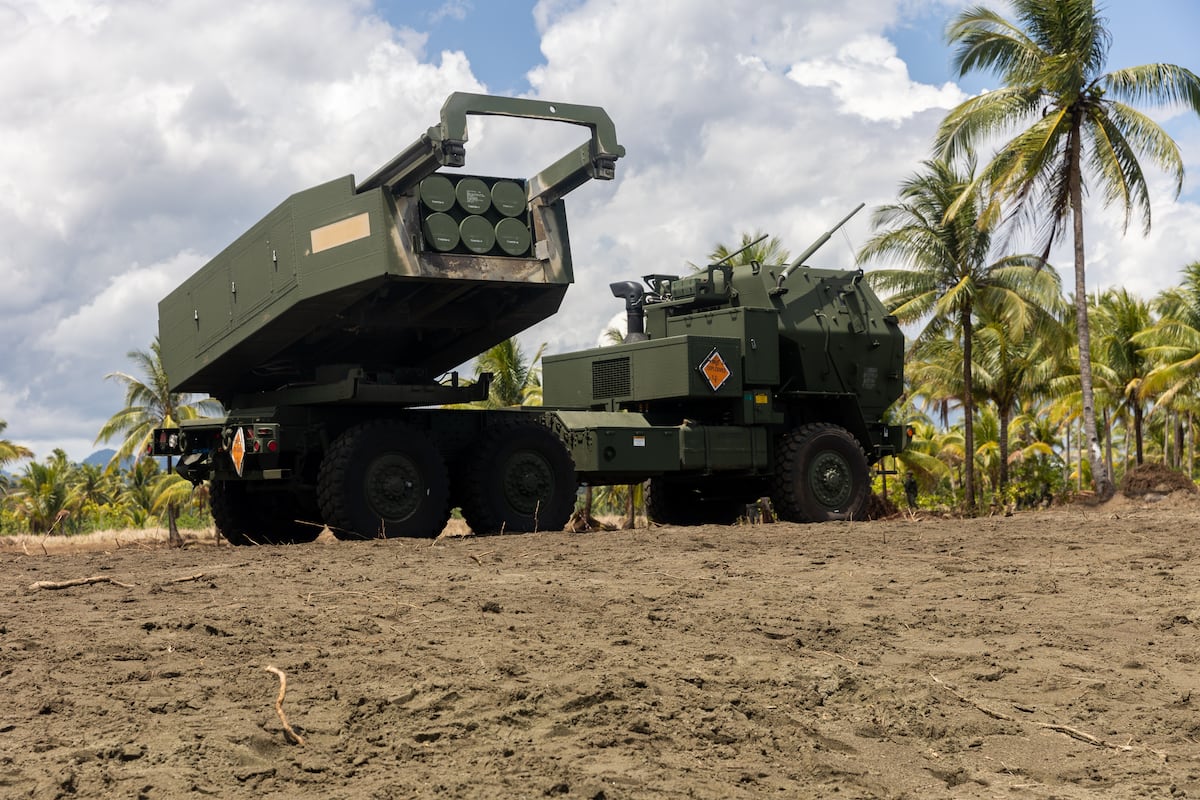
On the strike side of the house, the review also recommended acquiring more M142 High Mobility Artillery Rocket Systems, or HIMARS, and including local weapons manufacturing to ensure stock levels.
Adding the HIMARS and the Precision Strike Missile, or PrSM, will give the Australian military greater land and maritime target reach, according to a Journal of Advanced Military Studies article published last fall. The Australian Army will acquire 42 HIMARS, the article notes.
Japan, meanwhile, has built a new amphibious unit and launched its first such ship for the unit in November, U.S. Naval Institute reported.
The maritime asset is key for the island nation to resupply its long island chain. The first ship, the JS Nihonbare, has similar capabilities to the U.S. Army’s Runnymede-class large landing craft, according to USNI.
Ultimately, the unit will contain 10 such vessels, four of which will be in the Nihonbare class, two 3,500-ton transport vessels and four maneuver support vessels.
Elsewhere, the Philippine Army is actively training with U.S. Marines and Army assets, adopting an antiship strike capability of its own and facilitating U.S. strike platforms in their region through recent exercises such as Balikatan and Valiant Shield, officials said.
The Maritime Key Terrain Security Operation recently concluded following an experiment with stand-in force concepts that deployed “low-signature, light-weight formations to various islands in the Batanes and Babuyan Island chains to rehearse Expeditionary Advanced Base Operations, test sensing capabilities, and simulate securing and defending key maritime terrain,” according to a Marine release .
The event included the simulated use of the Marines’ newest weapon, the Navy-Marine Expeditionary Ship Interdiction System, or NMESIS, which deployed onto Batan Island.
“Walking off the C-130 with NMESIS onto that island was one small step for a Marine, and one giant leap for U .S.-Philippine-delivered sea denial capabilities,” said Col. John G. Lehane, commanding officer of the 3rd Marine Littoral Regiment.
Todd South has written about crime, courts, government and the military for multiple publications since 2004 and was named a 2014 Pulitzer finalist for a co-written project on witness intimidation. Todd is a Marine veteran of the Iraq War.
太平洋地区的高级将领们正试图通过结合陆军和海上力量来创造“位置优势”,以对抗中国在该地区的军事侵略。
一些部队,例如日本自卫队,部署在中国第一岛链内。而另一些部队,例如澳大利亚国防军和菲律宾武装部队,则部署在更远的地方,但他们计划利用地形优势监视中国的军事演习。
周三,在夏威夷檀香山举行的美国陆军协会年度太平洋陆军会议上,这三个国家的领导人与美国太平洋陆军司令罗纳德·克拉克将军讨论了各自的角色。
菲律宾陆军司令罗伊·加利多中将表示,作战环境的变化,部分原因是现代技术,已经“从根本上改变了关键地形的定义”。
部分原因是更多船只被纳入传统陆军的控制之下,而其他影响因素包括射程更远的火炮可以阻挡中国船只。
不过,克拉克表示,最终,要有效遏制中国在该地区的军事行动,需要这些国家和其他国家共同努力。
克拉克说:“这不仅仅关乎美国陆军,不仅仅关乎我们的联合部队,还关乎我们的盟友和伙伴。”
日本陆上自卫队参谋长森下泰典将军表示,他认为日本的地理位置是中国扩张的关键障碍。
对于澳大利亚陆军总司令西蒙·斯图尔特中将来说,持续不断的日常宣传活动是赢得任何潜在冲突竞争阶段的关键,领导人希望这最终能够阻止冲突的全面爆发。
斯图尔特指出,他的国家最近批准采购舰艇和轻型车辆,是为了“实现海上封锁,从陆地摧毁舰艇,控制沿海地区(即靠近陆地的海域)的关键和重要地形”。
据《防务新闻》此前报道,在澳大利亚 2023 年国防评估之后,该国开始寻求采购更轻便、更小的车辆,以便在沿海地带地形特征中移动。
与此同时,澳大利亚军队将为其陆军采购 28 艘新舰艇,以便利这一行动,这是自二战结束以来澳大利亚军队拥有的舰艇数量最多的一次。
其他审查建议包括增强多领域作战的远程打击能力。据《防务新闻》报道,规划人员还希望部署一套功能齐全、一体化的两栖联合兵种陆地作战系统以及一套机动式联合远征战区后勤系统。
在打击方面,该评估还建议采购更多 M142 高机动性火箭炮系统(HIMARS),并纳入本地武器制造,以确保库存水平。
根据去年秋季发表在《高级军事研究杂志》上的一篇文章,澳大利亚军队采购HIMARS自行反坦克导弹系统和精确打击导弹(PrSM)将使其陆地和海上打击能力得到显著提升。文章指出,澳大利亚陆军将采购42套HIMARS系统。
据美国海军学会报道,日本同时建造了一支新的两栖部队,并于 11 月下水了该部队的第一艘舰艇。
这艘海上舰艇对于这个岛国来说至关重要,它能为其漫长的岛链提供补给。据美国海军学会(USNI)称,首艘舰艇“日本晴”号(JS Nihonbare)的性能与美国陆军的“兰尼米德”级大型登陆艇类似。
最终,该部队将包含 10 艘此类舰艇,其中 4 艘为日本晴级舰艇,2 艘 3500 吨级运输舰和 4 艘机动支援舰。
官员们表示,菲律宾陆军正在积极与美国海军陆战队和陆军部队进行训练,发展自身的反舰打击能力,并通过最近的“肩并肩”和“勇敢之盾”演习等活动,为美国在其地区的打击平台提供便利。
据海军陆战队发布的消息,最近结束的海上关键地形安全行动,是一次对替代部队概念的试验,该试验“将低特征、轻型编队部署到巴坦群岛和巴布延群岛链的各个岛屿,以演练远征前进基地行动,测试传感能力,并模拟确保和防御关键海上地形”。
此次活动包括模拟使用海军陆战队最新武器——海军陆战队远征舰拦截系统(NMESIS),该系统已部署到巴丹岛。
“对于一名海军陆战队员来说,乘坐 C-130 运输机带着 NMESIS 登陆该岛只是一小步,但对于美菲联合提供的海上拒止能力来说,却是一大步,”第三海军陆战队近海团指挥官约翰·G·莱恩上校说道。
自2004年以来,托德·索斯为多家出版物撰写有关犯罪、法院、政府和军事方面的文章,并因与人合著的关于恐吓证人的文章入围2014年普利策奖决赛。托德是参加过伊拉克战争的海军陆战队老兵。