A Central American missile crisis?中美洲导弹危机?
El Salvador has the potential to be the Soviet Union’s Cuba.
Late Saturday evening, Oct. 16, China’s successful August test of a nuclear-capable hypersonic missile was publicly reported for the first time by the “Financial Times,” a ”capability that caught US intelligence by surprise,” according to “Financial Times” sources .
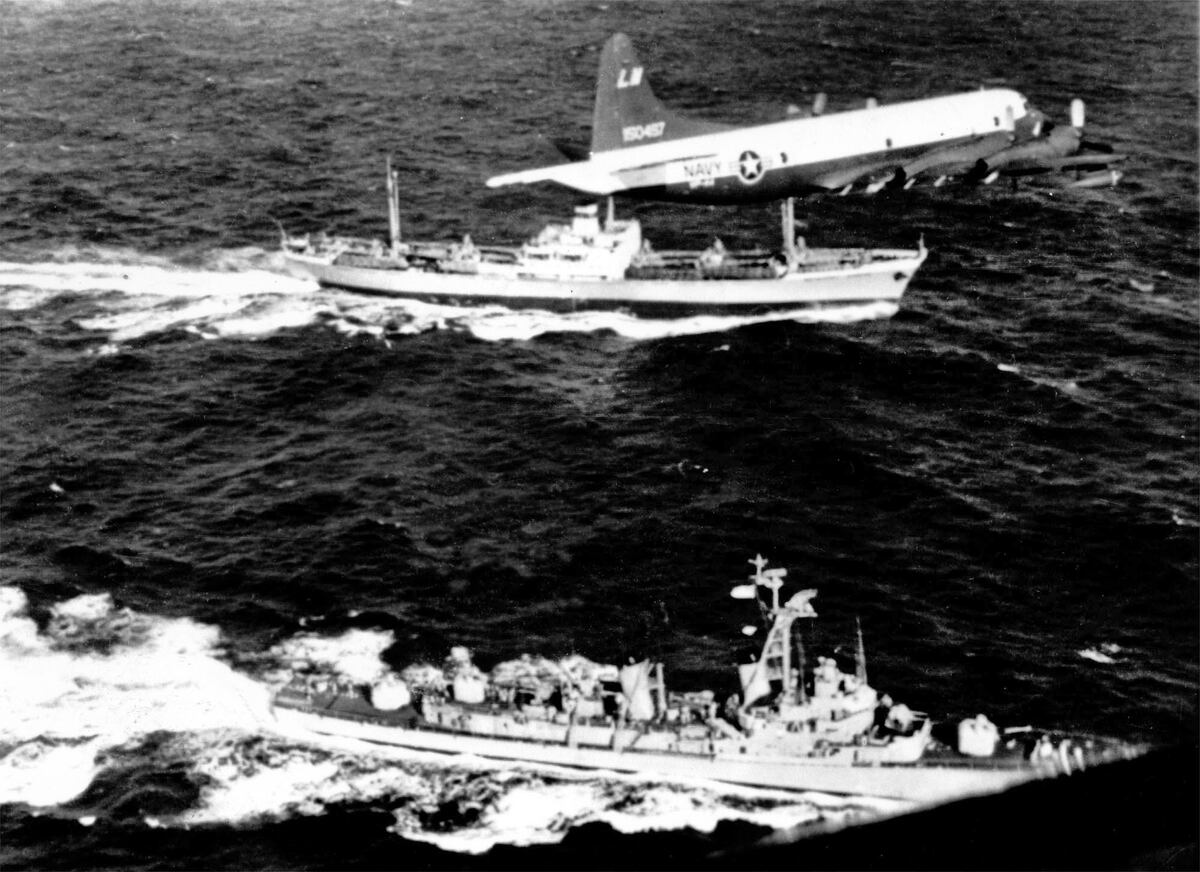
Fifty-nine years earlier, on Oct. 16, 1962, the Soviet Union’s forward deployment of nuclear capable ballistic missiles in Cuba also caught the United States by surprise.
A 1960s-era Soviet ballistic missile could have traversed the 943 nautical miles between Havana and Washington, D.C. quickly enough to ensure impact if not engaged, and virtually no target in the continental United States was out of range. Thus began the Cuban Missile Crisis, a 13-day period when the United States confronted its most existential threat since World War II.
Cuba represented for the Soviet Union the most attractive available forward strategic operating base from which it could threaten the United States and attempt to tilt the global balance of power in the Soviets’ favor.
What nation represents the same for China — a global power with significantly greater sophistication than the Soviet Union ever had in its drive to achieve strategic dominance over the United States?
Consider El Salvador.
San Salvador, El Salvador’s capital, provides a similar geographic reference point of departure to American targets as Havana did. From San Salvador, the distances in nautical miles to southeastern high-value targets in the United States are as follows:
889 nautical miles to SOUTHCOM in Doral, Florida.
943 nautical miles to MacDill Air Force Base in Tampa, Florida where SOCOM and CENTCOM are headquartered.
1,049 nautical miles to Houston, Texas, a Gulf Coast regional zone containing the largest oil refining center in the United States including four locations of the United States’ strategic petroleum reserves.
Not unlike Cuba, El Salvador is a poorly governed poor nation whose most recent unscrupulous rulers essentially put its allegiance up for sale. China was a willing buyer.
Two years ago, Chinese President Xi Jinping and Salvadoran President Nayib Bukele announced that China would build a soccer stadium, a large library, and a water treatment plant along with other infrastructure projects for El Salvador.
Why? Not because El Salvador has rare raw materials that China seeks to exploit. Not because El Salvador has a robust domestic economy to consume large quantities of Chinese exports. Not because El Salvador is a major international actor able to influence others. Not because El Salvador has a highly capable military that could enhance China’s People’s Liberation Army in armed conflict.
The stated answer lies in the unmistakably direct joint statement China and El Salvador issued at the time Xi and Bukele finalized their deal in China: El Salvador “adheres to the principle of one China, categorically rejects any act that goes against this principle and any form of ‘independence of Taiwan .’”
The unstated answer is El Salvador has the potential to be the Soviet Union’s Cuba.
The only strategic interest China has in an impoverished, crime-ridden nation the size of New Jersey whose citizens in significant numbers routinely seek to leave for a better life elsewhere and whose small military is primarily concerned with internal security matters is proximity to the United States. El Salvador’s 190 miles of coastline allow for ease of maritime access and El Salvador’s rulers — willing to trade Taiwan’s independence for a new soccer stadium and untold other favors — allow for ease of country access. The result is a permissive forward operating environment for China as close to key southeastern military targets as Havana was to Washington, D.C.
El Salvador is not alone among central American nations that have made the same trade.
When the United States Men’s National Soccer Team travels to Costa Rica for a World Cup qualifying match in March, the game will be played in Estadio Nacional, a $110 million soccer stadium China began building for Costa Rica in 2009 and completed in 2011 . What preceded the stadium groundbreaking? In 2007, Costa Rica cut diplomatic ties with Taiwan in exchange for China’s economic engagement .
In 2017 Panama did the same, issuing a joint statement with China asserting Panama’s new stance that there is only “one China” and that the People’s Republic of China “is the only legitimate government representing all China, and Taiwan is an inalienable part of the Chinese territory.”
Considering United States’ obligations to defend Taiwan in the event of a Chinese invasion and China’s preparations for an invasion, such pronouncements by nearby central American nations are not mere geopolitical rhetoric.
Two interrelated themes course through modern history of how the United States has handled hostile nation-states and hostile organized stateless actors: underestimating capability and intent and failing to imagine that worst case scenarios happen.
China’s capability is dangerously well-developed, as the hypersonic missile test demonstrates, yet many in the public and private sectors have been slow to recognize that capability. China’s intent to achieve global domination is not a secret, yet many similarly have been slow to appreciate the implications of China’s intent. All the while, despite capability and intent, realistic worst-case scenarios remain unimagined or minimized.
For example, under the guise of importing building materials into El Salvador for a new soccer stadium (or any of a number of other infrastructure projects), could China import and prepare to covertly deploy hypersonic missile capability that would present a similar existential threat to the United States that Soviet missiles in Cuba presented?
Imagine awakening one day to news that offensive hypersonic missile capability has been deployed by China in what amounts to a client state near our southern border no further away from high value U.S. targets than Washington, D.C. was to Havana in October 1962.
Avoiding worst-case scenarios begins with scenario identification.
The coinciding of the 59th anniversary of the Cuban Missile Crisis with news of China’s successful test of a nuclear-capable hypersonic missile should cause the United States to carefully re-evaluate the threat China’s encroachment on our southern border presents.
Christopher J. Hunter served as a federal prosecutor with the U.S. Department of Justice and the U.S. Attorney’s Office for the Southern District of Florida and as an agent with the FBI.
Editor’s note: This is an Op-Ed and as such, the opinions expressed are those of the author. If you would like to respond, or have an editorial of your own you would like to submit, please contact Military Times managing editor Howard Altman, haltman@militarytimes.com .
10 月 16 日星期六晚间,《金融时报》首次公开报道了中国 8 月份成功试射可携带核弹头的超音速导弹的消息。《金融时报》的消息来源称,这一能力“令美国情报部门措手不及”。
59年前的1962年10月16日,苏联在古巴前沿部署可携带核弹头的弹道导弹也让美国措手不及。
一枚20世纪60年代的苏联弹道导弹,如果未被拦截,就能以极快的速度飞越哈瓦那和华盛顿特区之间943海里的距离,确保命中目标,而且美国本土几乎没有目标超出其射程。古巴导弹危机由此爆发,这场持续13天的危机,使美国面临二战以来最严峻的生存威胁。
对于苏联而言,古巴是最具吸引力的前沿战略作战基地,苏联可以从中威胁美国,并试图将全球力量平衡向苏联倾斜。
对于中国而言,哪个国家与之类似——中国作为一个全球强国,在追求对美国的战略主导地位的过程中,其手段和手段都远比苏联高明得多?
以萨尔瓦多为例。
萨尔瓦多首都圣萨尔瓦多与哈瓦那一样,是前往美国目标的地理参考点。从圣萨尔瓦多出发,到美国东南部高价值目标的距离(以海里为单位)如下:
距离佛罗里达州多拉尔的南方司令部889海里。
距离佛罗里达州坦帕市的麦克迪尔空军基地 943 海里,美国特种作战司令部和中央司令部均设在那里。
距离德克萨斯州休斯顿 1,049 海里,该地位于墨西哥湾沿岸地区,拥有美国最大的炼油中心,其中包括美国四个战略石油储备地。
与古巴颇为相似,萨尔瓦多是一个治理不善的贫穷国家,其最近几任肆无忌惮的统治者实际上将国家的忠诚度摆上了货架。中国欣然接受了这一交易。
两年前,中国国家主席习近平和萨尔瓦多总统纳伊布·布克莱宣布,中国将为萨尔瓦多建设一座足球场、一座大型图书馆和一座水处理厂以及其他基础设施项目。
为什么?并非因为萨尔瓦多拥有中国觊觎的稀有原材料;并非因为萨尔瓦多拥有强大的国内经济,能够消化大量中国出口产品;并非因为萨尔瓦多是能够影响他国的重要国际力量;也并非因为萨尔瓦多拥有一支实力雄厚的军队,能够在武装冲突中增强中国人民解放军的实力。
答案就在于习近平和布克莱在中国敲定协议时,中国和萨尔瓦多发表的明确联合声明:萨尔瓦多“坚持一个中国原则,断然拒绝任何违背这一原则的行为和任何形式的‘台湾独立’”。
言外之意是,萨尔瓦多有可能成为苏联的古巴。
中国对萨尔瓦多这个面积仅相当于新泽西州、贫困且犯罪猖獗的国家,唯一的战略利益在于其与美国的地理位置接近。萨尔瓦多的公民人数众多,经常为了追求更好的生活而选择离开,其规模较小的军队也主要关注内部安全。萨尔瓦多190英里的海岸线使其海上通道畅通无阻,而萨尔瓦多的统治者——为了换取一座新的足球场和其他无数好处,甚至愿意以台湾的独立为代价——也允许中国轻松进入该国。其结果是,萨尔瓦多为中国提供了一个便利的前沿作战环境,其距离美国东南部的关键军事目标之近,正如哈瓦那之于华盛顿特区一样。
萨尔瓦多并非唯一进行此类贸易的中美洲国家。
今年三月,美国男足国家队将前往哥斯达黎加参加世界杯预选赛,比赛将在国家体育场举行。这座耗资1.1亿美元的足球场由中国于2009年开始为哥斯达黎加建造,并于2011年竣工。那么,在体育场破土动工之前发生了什么呢?2007年,哥斯达黎加为了换取中国的经济合作,与台湾断绝了外交关系。
2017 年,巴拿马也采取了同样的做法,与中国发表联合声明,重申巴拿马的新立场,即“只有一个中国”,中华人民共和国“是代表全中国的唯一合法政府,台湾是中国领土不可分割的一部分”。
考虑到美国有义务在中国入侵台湾时保卫台湾,以及中国为入侵台湾所做的准备,邻近的中美洲国家的此类声明并非仅仅是地缘政治言论。
在现代美国处理敌对民族国家和敌对的无国家行为体的过程中,贯穿着两个相互关联的主题:低估了对方的能力和意图,以及未能想象到最坏的情况会发生。
中国的能力发展已相当成熟,高超音速导弹试验便是最好的证明,然而,公共和私营部门的许多人却迟迟未能意识到这一点。中国意图称霸全球已是公开的秘密,但同样,许多人也未能充分认识到这一意图的后果。与此同时,尽管中国拥有这样的能力和意图,但现实中最糟糕的情况却往往被忽视或轻描淡写。
例如,中国能否以向萨尔瓦多进口建筑材料用于新建足球场(或其他基础设施项目)为幌子,秘密进口并准备部署高超音速导弹,从而对美国构成与苏联在古巴部署导弹类似的生存威胁?
想象一下,有一天你醒来得知,中国已在我们南部边境附近的一个附庸国部署了进攻性高超音速导弹能力,而这个国家距离美国高价值目标的距离,并不比 1962 年 10 月华盛顿特区到哈瓦那的距离更远。
避免最坏情况的第一步是识别可能出现的情况。
古巴导弹危机59周年之际,中国成功试射可携带核弹头的超音速导弹,这应该促使美国认真重新评估中国对我们南部边境的侵略所构成的威胁。
克里斯托弗·J·亨特曾担任美国司法部和佛罗里达州南区联邦检察官办公室的联邦检察官,以及联邦调查局的特工。
编者按:这是一篇评论文章,因此文中表达的观点仅代表作者个人观点。如果您想对此作出回应,或有自己的评论文章想要投稿,请联系《军事时报》执行主编霍华德·奥特曼,邮箱地址为 haltman@militarytimes.com。