Congress clashes on loans vs. grants for Taiwan military aid国会就台湾军事援助的贷款与赠款方式发生冲突。
A behind-the-scenes debate over Taiwan security aid in the omnibus spending bill pits Taipei against congressional appropriators.
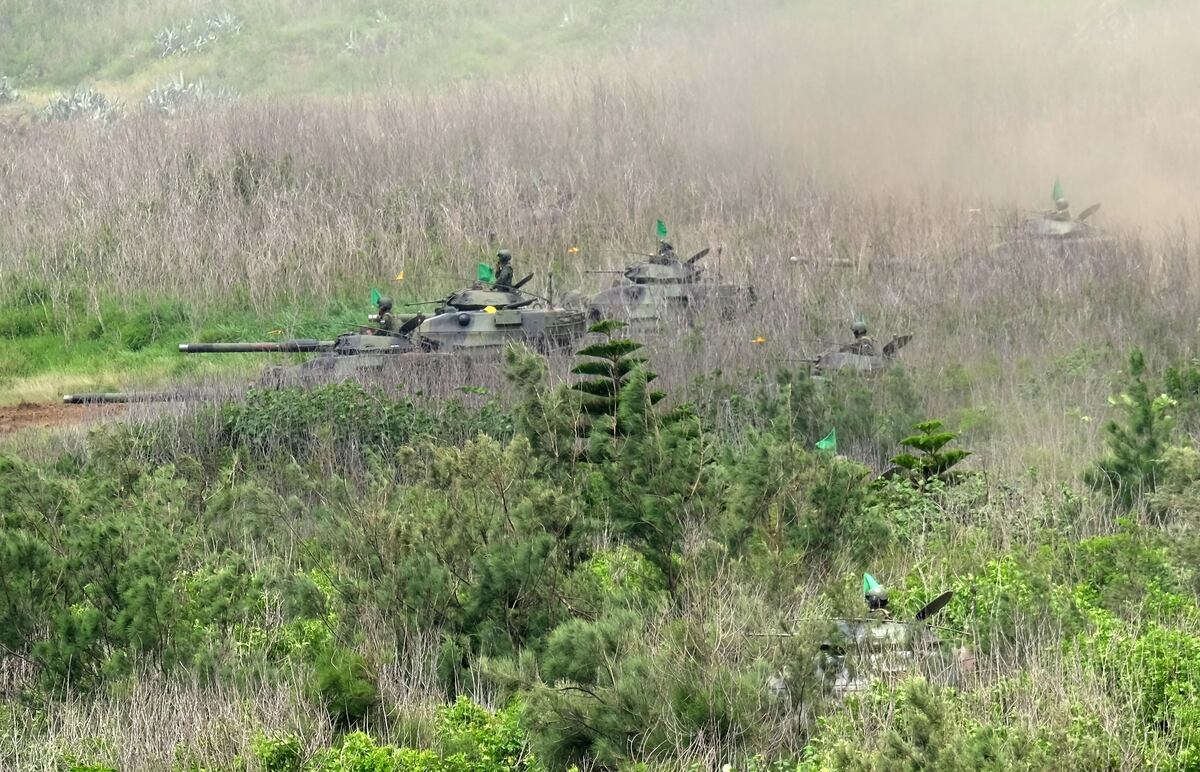
WASHINGTON ― Several top appropriators are pushing to offer loans to Taiwan to finance as much as $10 billion in military aid authorized in the annual defense bill as a way to alleviate budget pressure on the State Department, which oversees the Foreign Military Financing program.
The position is part of a behind-the-scenes clash over how the emerging spending bill for 2023 will approach military aid for Taiwan as Washington and Taipei seek to deter a possible invasion or blockade by China in the coming years. Lead appropriators want to offer loans, while lawmakers on the foreign relations committees want to give the money to Taiwan outright through grants.
Taiwan itself is pushing for Foreign Military Financing grants, not loans.
“We thank the U.S. Congress for its bipartisan support for Taiwan’s security,” Andrew Huang, a spokesman for Taiwan’s diplomatic office in Washington, told Defense News. “We urgently need the help and hope that assistance will be allocated as grants. We will maintain close communication and coordination with Congress and the executive branch to ensure that Taiwan’s defense needs are immediately met.”
The fiscal 2023 National Defense Authorization Act, which the House passed 350-80 last week , includes $2 billion in Foreign Military Financing per year for Taiwan over five years , and another $1 billion annually in equipment from U.S. military stockpiles. The Senate is expected to vote on the bill as soon as today.
Foreign Military Financing allows other countries to purchase U.S. military equipment using grants or loans, and the Taiwan authorization in the NDAA allows the U.S. to use either mechanism to provide the equipment to Taipei. The bill stipulates Taiwan must pay back any loans within 12 years.
Congressional appropriators are still drafting the FY23 government spending bill, which would fund the Taiwan military aid authorization in the NDAA. They expect to vote on a final omnibus funding bill next week.
Sen. Lindsey Graham of South Carolina, the top Republican on the State Department funding panel, told Defense News that using loans for Taiwan FMF would “go further” than grants.
“You’ve got all kinds of needs. You’ve got a famine all over the world. You’ve got food shortages. I want to be helpful to Taiwan, but probably the better approach is loans,” he said.
Graham co-sponsored the Taiwan Policy Act, the initial legislation that contained the Taiwan security aid provisions, alongside the top Democrat and Republican on the Senate Foreign Relations Committee: Bob Menendez of New Jersey and James Risch of Idaho.
Graham and his fellow appropriators are proposing loans of up to $2 billion, a match with the amount in the defense policy bill, for which they would appropriate $80 million in the emerging FY23 omnibus to administer those loans.
This pits him against fellow Taiwan Policy Act co-sponsors Menendez and Risch, who are pushing appropriators to allocate as much as $500 million in grants for Taiwan FMF.
As Congress negotiated a final spending bill, Menendez and Risch took their case directly to House Speaker Nancy Pelosi of California, House Minority Leader Kevin McCarthy of California, Senate Majority Leader Chuck Schumer of New York and Senate Minority Leader Mitch McConnell of Kentucky in a Dec. 15 letter obtained by Defense News. The letter asks the four leaders to appropriate the Taiwan FMF as grants instead of loans in the final spending bill.
The letter was also signed by the House Foreign Affairs Committee’s top Democrat and Republican — Gregory Meeks of New York and Mike McCaul of Texas. It also requests “$1 billion in emergency appropriations to replenish capabilities provided to Taiwan” under presidential drawdown authority, which allows the White House to transfer weapons to other countries from U.S. stockpiles.
The letter seeks another $500 million in FMF for Ukraine to ward off Russia’s invasion and another $250 million to support countries that have also aided Kyiv.
Appropriators for their part argue the administration has the legal authority to provide grants, but without specific appropriations to increase the State Department budget, it would have to reprogram funding from other accounts. Their concern is that the State Department’s budget cannot absorb a large amount for Taiwan grants without competing with, or potentially compromising, other budget priorities, such as Ukraine-related humanitarian relief.
“There is a lot of pressure on my subcommittee, commitments having been made across many countries that exceed what we can carry,” Sen. Chris Coons, D-Del., the chairman of the State Department appropriations subcommittee, told Defense News. “And so, a reasonable observation would be that these things will have to be reconciled at some point.”
The State Department budget for fiscal 2022 totaled $56 billion, with roughly $6 billion for Foreign Military Financing. Of the 25-plus countries that receive FMF annually, the major recipients are Israel ($3.3 billion), Egypt ($1.3 billion) and Jordan ($425 million).
Taiwan’s $850 billion per year GDP is significantly higher than all three of those countries, and Taiwanese lawmakers have approved an $18.3 billion defense budget for FY23 — a 13.9% increase over FY22.
“We should use every security assistance tool at our disposal, and that should include FMF grants,” Risch told Defense News. “The Taiwan NDAA package puts conditions on our FMF — that Taiwan has to increase its own defense spending to be eligible. Taiwan has done that and more over the last several years to provide for its own defense. Taiwan understands that U.S. support is a supplement, and not a replacement, for what they are doing.”
He noted the aid “recognizes the enormity of China’s military, the urgency of the threats Taiwan faces, and the severe impact on U.S. interests if Taiwan comes under China’s control.”
Meanwhile, lawmakers are still waiting for the Biden administration to submit a plan as to how it intends to use the Taiwan military aid authorized in the NDAA.
Risch said the Senate Foreign Relations and Armed Services committees asked the Biden administration for such a plan in September.
“Three months later, we are still waiting,” said Risch. “This information is critical for Congress’s work in putting together a substantial but realistic appropriations package for Taiwan. We are concerned that the administration is not backing up its rhetorical support for the Taiwan package with actual substance and cooperation with Congress.”
Bryant Harris is the Congress reporter for Defense News. He has covered U.S. foreign policy, national security, international affairs and politics in Washington since 2014. He has also written for Foreign Policy, Al-Monitor, Al Jazeera English and IPS News.
Joe Gould was the senior Pentagon reporter for Defense News, covering the intersection of national security policy, politics and the defense industry. He had previously served as Congress reporter.
华盛顿——几位高级拨款官员正在推动向台湾提供贷款,以资助年度国防法案中授权的高达 100 亿美元的军事援助,以此缓解国务院的预算压力,国务院负责监督对外军事融资计划。
这一立场源于一场幕后冲突,这场冲突围绕着2023财年即将出台的支出法案如何处理对台军事援助展开。华盛顿和台北都希望以此来阻止中国在未来几年可能对台湾发动的入侵或封锁。主要拨款委员会成员希望提供贷款,而外交关系委员会的议员则希望通过拨款的方式直接向台湾提供资金。
台湾方面正在争取对外军事融资赠款,而不是贷款。
台湾驻华盛顿外交机构发言人黄永昌告诉《防务新闻》:“我们感谢美国国会两党对台湾安全的支持。我们急需援助,希望援助能以拨款的形式拨付。我们将与国会和行政部门保持密切沟通协调,确保台湾的防务需求得到及时满足。”
众议院上周以350票赞成、80票反对通过了2023财年国防授权法案,其中包括未来五年每年向台湾提供20亿美元的对外军事援助,以及每年从美国军火库中提供价值10亿美元的装备。预计参议院最早将于今日对该法案进行投票表决。
对外军事融资允许其他国家通过赠款或贷款购买美国军事装备,而《国防授权法案》中的台湾授权条款允许美国使用这两种机制之一向台北提供装备。该法案规定台湾必须在12年内偿还所有贷款。
国会拨款委员会仍在起草2023财年政府支出法案,该法案将为《国防授权法案》中授权的对台军事援助提供资金。他们预计下周将对最终的综合拨款法案进行投票。
南卡罗来纳州参议员林赛·格雷厄姆是国务院拨款委员会的首席共和党成员,他告诉《防务新闻》,使用贷款为台湾FMF提供资金比使用拨款“更有意义”。
“你们有各种各样的需求。世界各地都有饥荒。粮食短缺。我想帮助台湾,但或许更好的办法是提供贷款,”他说。
格雷厄姆与参议院外交关系委员会的民主党领袖鲍勃·梅嫩德斯(新泽西州)和共和党领袖詹姆斯·里施(爱达荷州)共同发起了《台湾政策法案》,这是包含台湾安全援助条款的最初立法。
格雷厄姆和他的拨款委员会同僚提议提供高达 20 亿美元的贷款,与国防政策法案中的金额相匹配,他们将在即将出台的 2023 财年综合拨款法案中拨款 8000 万美元来管理这些贷款。
这使他与《台湾政策法案》的共同提案人梅嫩德斯和里施针锋相对,他们正在敦促拨款机构为台湾外国媒体基金会拨款高达 5 亿美元。
在国会就最终支出法案进行谈判期间,梅嫩德斯和里施于12月15日致信众议院议长、加利福尼亚州众议员南希·佩洛西、众议院少数党领袖、纽约州参议员凯文·麦卡锡、参议院多数党领袖、纽约州参议员查克·舒默以及参议院少数党领袖、肯塔基州参议员米奇·麦康奈尔,直接向他们表达了诉求。这封信由《防务新闻》获得。信中要求这四位领导人在最终支出法案中将台湾外国军事基金的拨款改为赠款而非贷款。
这封信还由众议院外交事务委员会的民主党首席议员格雷戈里·米克斯(纽约州)和共和党首席议员迈克·麦考尔(德克萨斯州)共同签署。信中还要求根据总统撤军授权,紧急拨款10亿美元,用于“补充向台湾提供的军事能力”。总统撤军授权允许白宫将美国库存中的武器转移给其他国家。
该信函寻求向乌克兰提供 5 亿美元的外国军事基金,以抵御俄罗斯的入侵,并寻求向援助基辅的国家提供 2.5 亿美元的援助。
拨款委员会则辩称,政府有权提供拨款,但如果没有专门拨款增加国务院预算,就必须从其他账户挪用资金。他们担心,国务院预算无法承受大笔用于台湾的拨款,否则将与其他预算优先事项(例如与乌克兰相关的人道主义援助)产生冲突,甚至可能损害这些优先事项。
“我的小组委员会面临着很大的压力,许多国家做出的承诺已经超过了我们的能力范围,”国务院拨款小组委员会主席、特拉华州民主党参议员克里斯·库恩斯告诉《防务新闻》。“因此,一个合理的看法是,这些承诺迟早需要得到协调。”
美国国务院2022财年预算总额为560亿美元,其中约60亿美元用于对外军事融资。每年接受对外军事融资的25多个国家中,主要接受国是以色列(33亿美元)、埃及(13亿美元)和约旦(4.25亿美元)。
台湾每年 8500 亿美元的 GDP 远高于这三个国家,台湾立法者已批准 2023 财年 183 亿美元的国防预算,比 2022 财年增长 13.9%。
“我们应该动用一切可用的安全援助手段,这其中就包括对外军费援助,”里施告诉《防务新闻》。“台湾国防授权法案对我们的对外军费援助附加了条件——台湾必须增加自身国防开支才能获得资格。过去几年,台湾不仅增加了国防开支,而且还增加了更多,以保障自身安全。台湾明白,美国的支持是对其自身防务工作的补充,而不是替代。”
他指出,这项援助“承认了中国军事力量的强大、台湾面临的威胁的紧迫性,以及如果台湾落入中国控制下将对美国利益造成的严重影响。”
与此同时,国会议员们仍在等待拜登政府提交一份计划,说明其打算如何使用《国防授权法案》中授权的对台军事援助。
里施表示,参议院外交关系委员会和军事委员会在9月份要求拜登政府制定此类计划。
“三个月过去了,我们仍在等待,”里施说。“这些信息对于国会制定一项实质性且切合实际的台湾拨款方案至关重要。我们担心,政府在口头上支持台湾拨款方案,但实际上并没有采取实质性措施,也没有与国会合作。”
布莱恩特·哈里斯是《防务新闻》的国会记者。自2014年以来,他一直在华盛顿报道美国外交政策、国家安全、国际事务和政治。他还曾为《外交政策》、《Al-Monitor》、《半岛电视台英语频道》和IPS新闻撰稿。
乔·古尔德是《防务新闻》的资深五角大楼记者,负责报道国家安全政策、政治和国防工业的交汇点。他此前曾担任国会记者。