House leaders urge White House to share more tech with Australia, UK众议院领导人敦促白宫与澳大利亚和英国分享更多技术。
Two top Republican lawmakers in the House say the U.S. restrictions on arms exports could hinder competition with China.
The chairs of the House Armed Services and Foreign Affairs Committees are pushing the Biden administration to share more defense equipment with Australia and the United Kingdom — America’s two partners in the AUKUS agreement.
In a letter sent to the White House on Tuesday, first reported by Defense News, the two Republican lawmakers argued that the “excluded technologies list” governing what the U.S. can export to either country is still too long. The restrictions, they said, will hinder America’s ability to develop key capabilities to compete with its main rival, China.
“We urge you and your senior leaders to continue to review items included on the ETL and remove as many as possible that do not warrant inclusion in order to unleash AUKUS’ full potential,” wrote Armed Services Chairman Rep. Mike Rogers, R-Ala., and Foreign Affairs Chairman Rep. Mike McCaul, R-Texas.
Under AUKUS, the United States is helping Australia build nuclear-powered submarines , a system so sensitive America had previously only shared it with the U.K. Under the second part of the deal, the three countries are also developing advanced technology, from hypersonic missiles to quantum computing.
One of the main barriers to this effort is the International Traffic in Arms Regulations, or ITAR, a strict set of rules on what weaponry the U.S. exports. The administration loosened these rules for the U.K. and Australia in August, freeing up either country to access 80% of American defense exports without first applying for a license.
What the two lawmakers are now concerned about is the remaining 20%, given how long it can take to get one of those licenses. The U.S. State Department can take more than a month to vet requests, and the application often requires longer prep work beforehand.
“We should move to allow as much sharing of technology as possible,” Deputy Secretary of State Kurt Campbell said in testimony before Congress in September. “We have more work to be done on this.”
The U.S. State Department’s updated rule is still under review, allowing public comment until mid-November. Before the hearing, Campbell gave McCaul a “personal commitment” to shepherd this process through its deadline, said a member of the House Foreign Affairs Committee Republican staff.
The staffer said that the size of the excluded technologies list also depends on how it’s measured: It may be 20% by dollar amount, but it’s 30% by the number of total U.S. licenses.
This list includes weapons and technology restricted by law — such as biological weapons or cluster bombs. But it also includes others only restricted by U.S. policy, such as precision missiles. British and Australian officials often chafe at these delays, since the State Department almost always approves their requests in the end.
Even more, the staff member argued, some of the technology that would be most important to AUKUS is still on that list — adding delays when the U.S. and its allies should be moving faster.
“The Australians have done a full-court press to the Hill, but they’ve also been very vocal to the administration” about loosening the rules, the aide said. Of particular concern to Canberra, the aide continued, are precision weapons, undersea drones and maritime acoustic technology.
The Australian embassy wouldn’t confirm whether those capabilities are of special interest. In a statement, a spokesperson for the embassy said that the government “welcome[ed] continued bipartisan congressional interest in removing barriers to create a seamless trilateral defense industrial base.”
The U.S. State Department could not immediately provide comment.
“We need to make sure we achieve the full potential of the exemption and reap the opportunities it provides for faster, more efficient collaboration between AUKUS partners. Ensuring the scope of the Excluded Technologies list is minimized, where appropriate, and that the regulation itself fully supports our collaboration, will be key to achieving this,” a British official wrote in a statement.
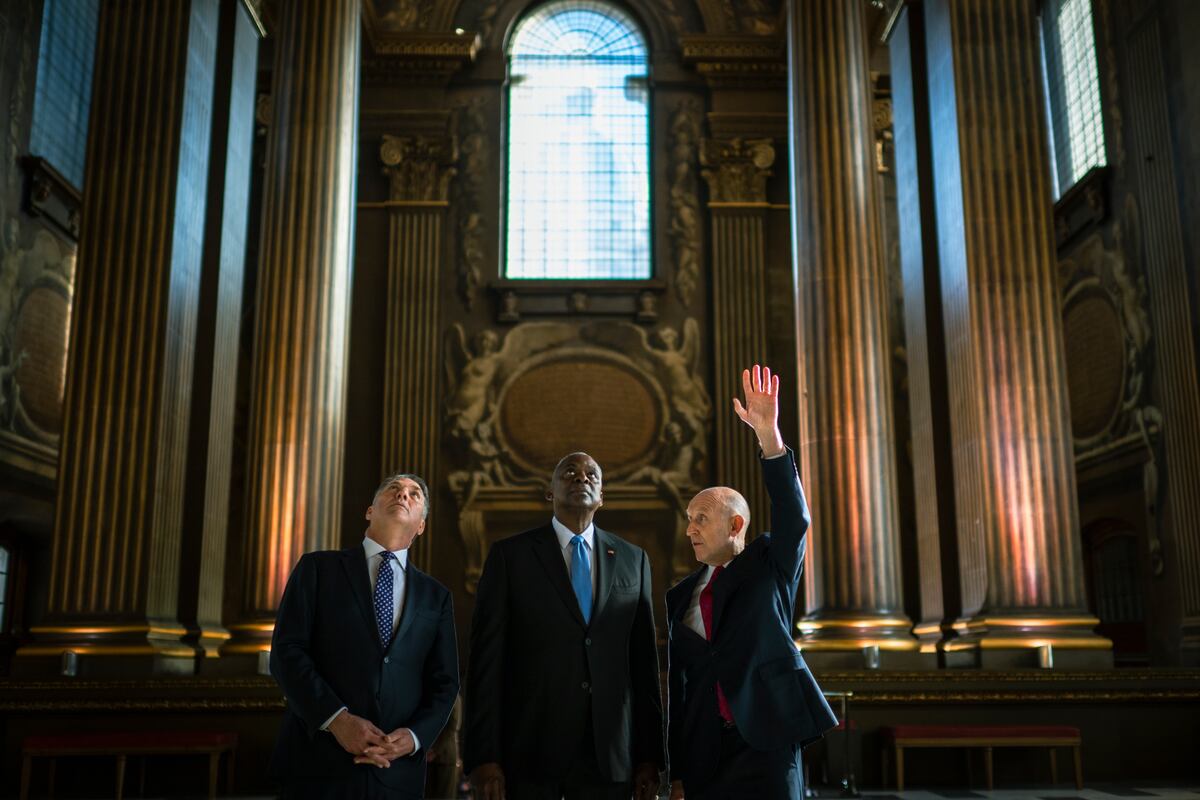
The top U.S., U.K. and Australian defense officials met in London last week to mark AUKUS’ third anniversary and announced the winners of a challenge meant to jumpstart the agreement’s work on advanced technology.
“When the final AUKUS rule is announced in November, we expect to see significant changes,” the lawmakers wrote in their letter.
Noah Robertson is the Pentagon reporter at Defense News. He previously covered national security for the Christian Science Monitor. He holds a bachelor’s degree in English and government from the College of William & Mary in his hometown of Williamsburg, Virginia.
众议院军事委员会和外交事务委员会的主席正在敦促拜登政府与澳大利亚和英国(美国在澳美协议中的两个伙伴)分享更多国防装备。
据《防务新闻》报道,两位共和党议员周二致信白宫,指出美国对华出口技术清单仍然过长。他们表示,这些限制将阻碍美国发展与主要竞争对手中国竞争的关键能力。
“我们敦促您和您的高级领导继续审查 ETL 中包含的项目,并尽可能删除那些不值得纳入的项目,以充分发挥 AUKUS 的潜力,”武装部队委员会主席、阿拉巴马州共和党众议员迈克·罗杰斯和外交事务委员会主席、德克萨斯州共和党众议员迈克·麦考尔写道。
根据 AUKUS 协议,美国正在帮助澳大利亚建造核动力潜艇,该系统非常敏感,美国此前只与英国分享过。根据协议的第二部分,这三个国家还在开发先进技术,从高超音速导弹到量子计算。
这项努力面临的主要障碍之一是《国际武器贸易条例》(ITAR),这是一套对美国武器出口有着严格规定的法规。今年8月,美国政府放宽了对英国和澳大利亚的ITAR限制,允许两国无需事先申请许可证即可获得80%的美国国防出口产品。
这两位议员现在担心的是剩下的20%的名额,因为获得这些许可证可能需要很长时间。美国国务院审核申请可能需要一个月以上的时间,而且申请前通常需要更长时间的准备工作。
“我们应该尽可能地促进技术共享,”美国副国务卿库尔特·坎贝尔9月份在国会作证时表示。“我们在这方面还有更多工作要做。”
美国国务院更新后的规定仍在审查中,公众意见征询期至11月中旬。众议院外交事务委员会一位共和党工作人员表示,在听证会之前,坎贝尔向麦考尔做出了“个人承诺”,将确保这一进程按时完成。
该工作人员表示,被排除技术清单的规模还取决于其衡量方式:按美元金额计算可能是 20%,但按美国许可证总数计算可能是 30%。
这份清单包括受法律限制的武器和技术,例如生物武器或集束炸弹。但它也包括一些仅受美国政策限制的武器和技术,例如精确制导导弹。英国和澳大利亚官员经常对这些延误感到不满,因为美国国务院最终几乎总是批准他们的请求。
这位工作人员还指出,一些对 AUKUS 来说最重要的技术仍然在清单上——这导致美国及其盟友本应加快步伐,却反而造成了延误。
这位助手说:“澳大利亚方面对国会山施加了全面压力,同时也向政府强烈呼吁放宽限制。” 他还表示,堪培拉尤其关注精确制导武器、水下无人机和海上声学技术。
澳大利亚大使馆拒绝证实这些能力是否具有特殊意义。大使馆发言人在一份声明中表示,澳大利亚政府“欢迎国会两党继续致力于消除障碍,以建立一个无缝衔接的三边国防工业基地”。
美国国务院暂未对此事作出回应。
一位英国官员在一份声明中写道:“我们需要确保充分发挥豁免的潜力,并抓住它为AUKUS合作伙伴之间更快、更高效合作带来的机遇。在适当情况下,确保将排除技术清单的范围降至最低,并确保法规本身能够充分支持我们的合作,将是实现这一目标的关键。”
上周,美国、英国和澳大利亚的高级国防官员在伦敦会面,庆祝 AUKUS 协议签署三周年,并宣布了旨在启动该协议在先进技术领域工作的挑战赛的获胜者。
“我们预计,当11月份公布最终的AUKUS规则时,将会出现重大变化,”议员们在信中写道。
诺亚·罗伯逊是《防务新闻》的五角大楼记者。他此前曾为《基督教科学箴言报》报道国家安全新闻。他拥有弗吉尼亚州威廉斯堡威廉与玛丽学院的英语和政治学学士学位。