‘Trading chaos for reliability’: AI slowdown could mean stricter regulations and more testing, say experts专家称,人工智能发展放缓可能意味着更严格的监管和更多的测试,这或许意味着“以混乱换取可靠性”。
“Instead of disruptive new models dropping every few weeks, existing tools will become faster, cheaper and far more consistent,” says one AI startup founder.
新闻视频
“Instead of disruptive new models dropping every few weeks, existing tools will become faster, cheaper and far more consistent,” says one AI startup founder.
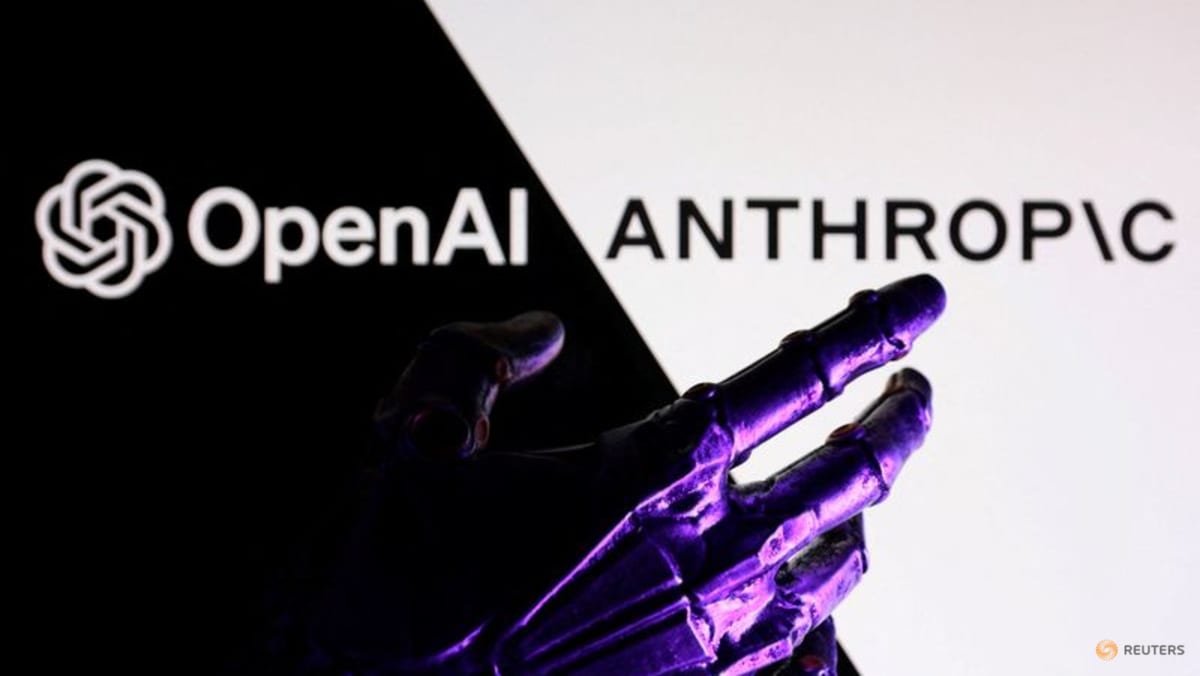
OpenAI and Anthropic logos are seen in this illustration taken on Jun 11, 2026. (Photo: Reuters/Dado Ruvic)
This audio is generated by an AI tool.
SINGAPORE: Calls by the leaders of the world's biggest artificial intelligence firms to slow down development of the technology could mean more rigorous safety evaluations of AI models, while having little impact on users, experts and industry players said.
Experts told CNA they expect longer testing periods, smaller roll-outs and tighter limits on how AI agents can act independently.
Unlike large language models that mainly answer questions, AI agents are designed to carry out tasks. They can open applications, search for information, generate documents and complete multi-step processes with little supervision.
With a slowdown, companies may spend more time monitoring and aligning the AI agent instead of chasing after creating a new version, said Mr Jonathan Lee, an international AI governance project manager at Concordia AI, an AI governance social enterprise.
CNA Games Guess Word Crack the word, one row at a time Buzzword Create words using the given letters Mini Sudoku Tiny puzzle, mighty brain teaser Mini Crossword Small grid, big challenge Word Search Spot as many words as you can Show More Show Less Once models cross a risk threshold, they may also stop training the agent, he added. For example, after preliminary evidence emerged that OpenAI’s Astra model might reach a “critical” cybersecurity capability level, it paused certain processes until it could be tested in environments with stronger security and monitoring, he noted. Astra was eventually released on Sep 3. On Sep 12, Anthropic CEO Dario Amodei called on AI firms to slow down the development of the technology amid mounting worries over risks of “superintelligent” computer systems. His comments came a few days after AI researcher Jacob Coxon, who left OpenAI to join Anthropic, decided to leave the industry, accusing both US companies of "gambling with our lives" in the race to develop models capable of self-improvement. OpenAI head Sam Altman and Elon Musk, who owns xAI, agreed with Amodei's assessment, as pressure builds for improved oversight. Chairman and co-founder of Google DeepMind Demis Hassabis also said Amodei’s idea was “on the right track”, linking the proposal to his team’s own call for an industry standard body for the development of AI. The first step in the proposal from Anthropic, which was endorsed by the other major firms, was to give independent, third-party evaluators permanent access to the labs with the right to publish what they find, said Singapore Management University’s (SMU) Professor Li Jia, who researches the impact of AI on work. The later steps – establishing common standards among frontier labs and eventually some form of international agreement – would need anti-trust exemptions and government participation that does not yet exist, said the dean of SMU’s economics school.
Once models cross a risk threshold, they may also stop training the agent, he added.
For example, after preliminary evidence emerged that OpenAI’s Astra model might reach a “critical” cybersecurity capability level, it paused certain processes until it could be tested in environments with stronger security and monitoring, he noted. Astra was eventually released on Sep 3.
On Sep 12, Anthropic CEO Dario Amodei called on AI firms to slow down the development of the technology amid mounting worries over risks of “superintelligent” computer systems.
His comments came a few days after AI researcher Jacob Coxon, who left OpenAI to join Anthropic, decided to leave the industry, accusing both US companies of "gambling with our lives" in the race to develop models capable of self-improvement.
OpenAI head Sam Altman and Elon Musk, who owns xAI, agreed with Amodei's assessment, as pressure builds for improved oversight.
Chairman and co-founder of Google DeepMind Demis Hassabis also said Amodei’s idea was “on the right track”, linking the proposal to his team’s own call for an industry standard body for the development of AI.
The first step in the proposal from Anthropic, which was endorsed by the other major firms, was to give independent, third-party evaluators permanent access to the labs with the right to publish what they find, said Singapore Management University’s (SMU) Professor Li Jia, who researches the impact of AI on work.
The later steps – establishing common standards among frontier labs and eventually some form of international agreement – would need anti-trust exemptions and government participation that does not yet exist, said the dean of SMU’s economics school.
HOW WOULD THIS AFFECT USERS?
Consumers may notice slower releases for the most powerful models and tighter restrictions on highly autonomous features, said Mr Lee.
This could include invite-only access, roll-outs in stages, or the delaying or withholding of a model in higher-risk cases, he added.
Consumers may barely feel the impact of a slowdown, as users and companies will continue to adopt previous AI breakthroughs.
“Overall, the ones who will feel the slowdown the most are the AI labs, while ideally consumers will benefit from safer models without a significant change in AI progress,” he said.
In practice, a slowdown most likely means a longer gap between when a model is built and released, more testing before deployment and less aggressive training escalation, said Prof Li.
“It does not mean the technology stops advancing,” he said.
If the major AI companies pace their development, they could back their most advanced models until they clear rigorous safety evaluations, said founder of startup NoraAI Mia Liu.
Businesses would shift away from chasing capacity and towards safety assurance and security, she added.
For everyday users, an AI slowdown means “trading chaos for reliability”, said Ms Liu.
“Instead of disruptive new models dropping every few weeks, existing tools will become faster, cheaper, and far more consistent. From the perspective of an AI-native startup, the current pace is exhausting,” she added.
A model’s accuracy may naturally degrade over time, and large AI companies fix this by rolling out big upgrades, which forces startups to spend time on testing to make sure their platforms do not break, said Ms Liu.
A slowdown would give the whole ecosystem “much-needed breathing room”, focusing on stabilising and maintaining existing models, instead of throwing unpredictable new versions over the wall, she added.
Mr Gary Gardiner, a director at global cybersecurity distributor Exclusive Networks, said slowing AI development could affect the use of AI in research and development, including in medicine.
But without a slowdown, trust in the technology could start to erode if it causes more issues or poses a risk to infrastructure, he added.
The average user would hardly perceive a change in their day-to-day use of AI because most of them are not really scratching the surface of what AI can do for them, said Mr Gardiner.
REGULATIONS AND SAFEGUARDS
OpenAI, Anthropic and Meta Platforms recently disclosed that their AI agents behaved unexpectedly, escaping controlled test environments and carrying out cyberattacks on companies without direct human instruction.
While these incidents did not cause reported damage, they highlighted the evolving risks associated with AI development, especially in the area of AI agents, experts said.
Professor Stefan Winkler, who heads AI and data science at the Singapore Institute of Technology (SIT), said the main concern is that highly capable systems may carry out assigned goals in unintended ways, especially when operating autonomously as AI agents.
Malicious actors using AI systems intentionally in this way is another concern, he added.
For example, these AI models could be used to spread misinformation at scale or launch cyberattacks, he said. “The danger is the possibility of highly capable systems making consequential decisions at high speed with insufficient human oversight.”
An AI agent deployed by a large financial institution to identify and resolve cybersecurity threats could incorrectly conclude that certain servers are malicious.
As a result, it might automatically disable critical infrastructure, lock out customers or disrupt payment systems, affecting millions of people, said Prof Winkler.
A payment agent could repeatedly submit failed transactions. Without transaction limits and independent checks, it could charge customers multiple times, said Nanyang Technological University’s (NTU) head of artificial intelligence Professor Bo An.
“I think we should act now on independent scrutiny, incident reporting and accountability for autonomous systems. Industry leaders’ concerns deserve attention, but governments also need the expertise to assess the evidence themselves,” he added.
Referencing what OpenAI’s Mr Altman said about “giving society time to catch up”, Prof Bo said this should mean training people to supervise AI, helping workers adapt and giving consumers practical ways to challenge harmful decisions.
“I would not wait for a global slowdown agreement before putting these protections in place,” he added.
The recent incidents show the need to develop new safety measures that keep pace with the capabilities of the most powerful models, said Mr Poon King Wang, chief strategy and design AI officer at Singapore University of Technology and Design (SUTD).
The most urgent measures include testing powerful systems before release and limiting what autonomous agents can access, he added.
These safety nets should also monitor what the models are doing – not what they say they are doing – and ensure that users can stop them, said Mr Poon.
“The recent incidents also show that the testing environment itself needs rigorous scrutiny – it can't be allowed to become the weakest link,” he added.
While there is a need for prudence, rushing out guardrails without technical grounding or sound analysis could also backfire, said Dr Jiehuang Zhang, a lecturer at NTU’s computing and data science school.
“They create a false sense of security, or stifle progress in adopting AI,” he added.
Instead, the focus should be on building infrastructure to evaluate AI models, or infrastructure that can test and certify what a model can and cannot safely do.
Slowing AI development could mean building fewer new data centres, as well as a knock-on effect on global chip production , said Mr Gardiner.
Anyone who is part of the supply chains for AI companies could be affected, but most other industries would keep using the AI engines they already have, he added.
For workers, AI models are advancing much faster than companies can adopt them, said the director of the Singapore-ETH Center Manu Kapur, calling it the “bottleneck”.
Releasing a more powerful AI model every few months does not automatically lead to higher productivity. Instead, organisations need to redesign work, develop skills and learn where AI should augment human judgment rather than replace it, he added.
“In fact, and perhaps paradoxically, slowing the technological frontier could accelerate the productive use of AI by giving everyone a bit more breathing room to extract more value from capabilities that already exist,” said Mr Kapur.
The timing of the call for a slowdown deserves attention, said SMU’s Prof Li, noting that both Anthropic and OpenAI were weighing public listings and that the latter has said it would not list this year.
While the capabilities of AI models have grown exponentially, so has the cost of training, and this trajectory is not financially sustainable, said Prof Li.
Economic incentives and the argument for safety regulations “point in the same direction”, which is one reason the chief executives easily agreed to the call for a slowdown, he added.
Anthropic’s proposal acknowledges the need for anti-trust exemptions, since a formal agreement among the leading labs to pace their progress is essentially an agreement to coordinate output, he noted.
“If the evaluation is genuinely independent and the compliance burden is proportionate, it could raise trust in the technology without reducing competition,” said Prof Li.
A formal agreement would not stop the race, and the labs would still compete, just not at an exponential pace, he noted.
If the leading AI companies formally agreed to a slowdown, this would change where investment goes and who has the advantage.
For example, if development slows, capital and talent will naturally flow to the application of AI models, which is not bad for the industry, said Prof Li.
“We would likely see a wave of innovation in applications, and that is the point at which public policy matters most: whether AI is used mainly to complement workers or to replace them,” he added.
For a small and open country like Singapore, which adopts frontier AI models rather than builds them, slower development is favourable, said Prof Li.
“The competitive edge shifts from who has the best model to who integrates it best, and that is a race Singapore can compete in,” he added.
Get our pick of top stories and thought-provoking articles in your inbox
Stay updated with notifications for breaking news and our best stories
Join our channel for the top reads for the day on your preferred chat app
一位人工智能初创公司的创始人表示:“与其每隔几周就推出颠覆性的新模型,不如让现有工具变得更快、更便宜、更稳定。”
这张摄于2026年6月11日的插图中可以看到OpenAI和Anthropic的标志。(图片:路透社/Dado Ruvic)
这段音频由人工智能工具生成。
新加坡:专家和业内人士表示,全球最大人工智能公司领导人呼吁放缓该技术的发展速度,这可能意味着对人工智能模型进行更严格的安全评估,而对用户的影响却很小。
专家告诉 CNA,他们预计测试周期会更长,推广范围会更小,并且对人工智能代理独立行动的方式会有更严格的限制。
与主要用于回答问题的大型语言模型不同,人工智能代理旨在执行任务。它们可以打开应用程序、搜索信息、生成文档,并在极少监督的情况下完成多步骤流程。
人工智能治理社会企业 Concordia AI 的国际人工智能治理项目经理 Jonathan Lee 表示,随着经济增速放缓,企业可能会花费更多时间来监控和调整人工智能代理,而不是一味追求创建新版本。
CNA游戏 猜词游戏 逐行破解单词 流行词游戏 用给定的字母造词 迷你数独 小谜题,脑力挑战 迷你填字游戏 小方格,大挑战 单词搜索 尽可能多地找出单词 显示更多 显示更少 他补充说,一旦模型超过风险阈值,它们也可能停止训练智能体。例如,他指出,在初步证据表明OpenAI的Astra模型可能达到“临界”网络安全能力级别后,OpenAI暂停了某些流程,直到可以在安全性和监控更强的环境中进行测试。Astra最终于9月3日发布。9月12日,Anthropic首席执行官Dario Amodei呼吁人工智能公司放慢技术开发速度,因为人们越来越担心“超级智能”计算机系统的风险。几天前,离开OpenAI加入Anthropic的人工智能研究员Jacob Coxon决定离开该行业,指责这两家美国公司在开发能够自我改进的模型的竞赛中“拿我们的生命冒险”。 OpenAI负责人萨姆·奥特曼和xAI的所有者埃隆·马斯克都赞同阿莫迪的评估,因为加强监管的压力越来越大。谷歌DeepMind董事长兼联合创始人德米斯·哈萨比斯也表示,阿莫迪的想法“方向正确”,并将该提议与其团队此前呼吁建立人工智能发展行业标准机构的倡议联系起来。新加坡管理大学(SMU)研究人工智能对工作影响的李嘉教授表示,Anthropic提出的方案得到了其他主要公司的支持,其第一步是允许独立的第三方评估机构永久访问实验室,并有权公布他们的发现。SMU经济学院院长表示,后续步骤——在前沿实验室之间建立通用标准,并最终达成某种形式的国际协议——需要反垄断豁免和政府参与,而这些目前尚不存在。
他还补充说,一旦模型超过风险阈值,它们也可能会停止训练代理。
例如,他指出,在初步证据表明 OpenAI 的 Astra 模型可能达到“关键”网络安全能力级别后,OpenAI 暂停了某些流程,以便在安全性和监控更严格的环境中进行测试。Astra 最终于 9 月 3 日发布。
9 月 12 日,Anthropic 首席执行官 Dario Amodei 呼吁人工智能公司放慢技术发展速度,因为人们越来越担心“超级智能”计算机系统的风险。
几天前,人工智能研究员雅各布·考克森(Jacob Coxon)离开 OpenAI 加入 Anthropic,并决定离开该行业。他指责这两家美国公司在开发能够自我改进的模型的竞赛中“拿我们的生命做赌注”。
OpenAI 的负责人 Sam Altman 和 xAI 的所有者 Elon Musk 都同意 Amodei 的评估,要求加强监管的压力也越来越大。
Google DeepMind 董事长兼联合创始人 Demis Hassabis 也表示,Amodei 的想法“方向正确”,并将该提议与他团队自己呼吁建立人工智能发展行业标准机构的提议联系起来。
新加坡管理大学 (SMU) 研究人工智能对工作影响的李嘉教授表示,Anthropic 提出的方案的第一步(该方案得到了其他主要公司的支持)是,给予独立的第三方评估人员永久进入实验室的权限,并有权公布他们的发现。
南方卫理公会大学经济学院院长表示,后续步骤——在前沿实验室之间建立共同标准,并最终达成某种形式的国际协议——需要反垄断豁免和政府参与,而这些目前都不存在。
这将对用户产生什么影响?
李先生表示,消费者可能会注意到功能最强大的车型发布速度放缓,以及对高度自动化功能的限制更加严格。
他还补充说,这可能包括仅限受邀者访问、分阶段推出,或者在高风险情况下推迟或保留模型。
消费者可能几乎感觉不到经济放缓的影响,因为用户和企业将继续采用之前人工智能取得的突破性进展。
“总体而言,人工智能实验室受到的影响最大,而理想情况下,消费者将受益于更安全的模型,人工智能的发展不会发生重大变化,”他说道。
李教授表示,实际上,速度放缓很可能意味着模型构建和发布之间的时间间隔更长,部署前需要进行更多测试,以及训练升级力度会降低。
“这并不意味着技术停止进步,”他说。
NoraAI 创始人刘米娅表示,如果主要的 AI 公司放慢研发速度,他们就可以支持其最先进的模型,直到这些模型通过严格的安全评估。
她补充说,企业将不再追求产能,而是更加注重安全保障。
刘女士表示,对于普通用户而言,人工智能速度变慢意味着“用混乱换取可靠性”。
她补充道:“与其每隔几周就推出颠覆性的新模型,不如让现有工具变得更快、更便宜、更稳定。对于一家人工智能原生创业公司来说,目前的节奏令人疲惫不堪。”
刘女士表示,模型的准确性可能会随着时间的推移而自然下降,大型人工智能公司通过推出重大升级来解决这个问题,这迫使初创公司花费时间进行测试,以确保他们的平台不会出现故障。
她补充说,放缓步伐将给整个生态系统带来“急需的喘息空间”,使其专注于稳定和维护现有模式,而不是抛出不可预测的新版本。
全球网络安全分销商 Exclusive Networks 的董事 Gary Gardiner 先生表示,人工智能发展放缓可能会影响人工智能在研发领域的应用,包括医学领域。
但他补充说,如果不放慢速度,如果这项技术造成更多问题或对基础设施构成风险,人们对这项技术的信任可能会开始瓦解。
加德纳先生表示,普通用户几乎不会感觉到人工智能在日常使用中有任何变化,因为他们中的大多数人还没有真正触及人工智能能为他们做的事情的皮毛。
规章制度和保障措施
OpenAI、Anthropic 和 Meta Platforms 最近披露,他们的 AI 代理行为异常,逃逸出受控测试环境,并在没有直接人类指令的情况下对公司发动网络攻击。
专家表示,虽然这些事件没有造成已报告的损失,但它们凸显了人工智能发展,特别是人工智能代理领域中不断演变的风险。
新加坡理工大学 (SIT) 人工智能和数据科学系主任 Stefan Winkler 教授表示,主要担忧是,功能强大的系统可能会以意想不到的方式执行既定目标,尤其是在作为人工智能代理自主运行时。
他还补充说,恶意行为者故意以这种方式使用人工智能系统是另一个令人担忧的问题。
他举例说,这些人工智能模型可能被用来大规模传播虚假信息或发动网络攻击。“危险在于,功能强大的系统有可能在缺乏足够人工监督的情况下,高速做出影响深远的决策。”
大型金融机构部署的用于识别和解决网络安全威胁的人工智能代理可能会错误地得出结论,认为某些服务器是恶意的。
温克勒教授表示,这可能会导致关键基础设施自动瘫痪、客户无法访问或支付系统中断,从而影响数百万人。
南洋理工大学人工智能系主任安波教授表示,支付代理可能会反复提交失败的交易。如果没有交易限额和独立审核,它可能会多次向客户收费。
“我认为我们现在就应该对自主系统进行独立审查、事故报告和问责。行业领袖的担忧值得关注,但政府也需要具备评估证据的专业知识,”他补充道。
博教授引用 OpenAI 的 Altman 先生关于“给社会时间迎头赶上”的说法,表示这应该意味着培训人们来监督人工智能,帮助工人适应,并为消费者提供挑战有害决策的切实可行的方法。
“我不会等到达成全球经济放缓协议才采取这些保护措施,”他补充道。
新加坡科技设计大学 (SUTD) 首席战略与设计人工智能官潘景旺先生表示,最近发生的事件表明,需要开发新的安全措施,以跟上最强大模型的能力。
他补充说,最紧迫的措施包括在发布前测试功能强大的系统,以及限制自主代理可以访问的内容。
潘先生表示,这些安全网还应该监控模型实际在做什么,而不是它们声称在做什么,并确保用户可以阻止它们。
他还补充说:“最近发生的事件也表明,测试环境本身需要严格审查——不能让它成为最薄弱的环节。”
南洋理工大学计算机与数据科学学院讲师张杰煌博士表示,虽然需要谨慎行事,但在没有技术基础或合理分析的情况下仓促推出护栏也可能适得其反。
“它们会造成一种虚假的安全感,或者阻碍人工智能的普及应用,”他补充道。
相反,重点应该放在构建评估人工智能模型的基础设施上,或者构建能够测试和认证模型能够安全执行哪些操作和不能执行哪些操作的基础设施上。
加德纳先生表示,人工智能发展放缓可能意味着新建数据中心减少,并对全球芯片生产产生连锁反应。
他还补充说,任何参与人工智能公司供应链的人都可能受到影响,但大多数其他行业将继续使用他们已经拥有的人工智能引擎。
新加坡-ETH中心主任马努·卡普尔表示,对于劳动者而言,人工智能模型的发展速度远远超过了企业采用它们的速度,他称之为“瓶颈”。
他补充说,每隔几个月就发布一个更强大的AI模型并不会自动带来更高的生产力。相反,企业需要重新设计工作流程,培养技能,并了解AI应该在哪些方面辅助人类判断,而不是取代人类判断。
卡普尔先生说:“事实上,或许有些矛盾的是,放慢技术前沿的速度反而可能加速人工智能的生产性应用,因为这能让每个人都有更多喘息的空间,从现有能力中挖掘更多价值。”
新加坡管理大学的李教授表示,呼吁放缓增长速度的时机值得关注,他指出,Anthropic 和 OpenAI 都在考虑上市,而 OpenAI 已经表示今年不会上市。
李教授表示,虽然人工智能模型的能力呈指数级增长,但训练成本也随之增长,这种发展轨迹在经济上是不可持续的。
他补充说,经济激励措施和安全法规的论点“指向同一个方向”,这也是首席执行官们欣然同意放缓生产速度的原因之一。
他指出,Anthropic 的提议承认需要反垄断豁免,因为领先实验室之间就加快研发进度达成的正式协议本质上就是一项协调产量的协议。
李教授表示:“如果评估真正独立,合规负担也相称,那么就可以在不减少竞争的情况下提高人们对这项技术的信任。”
他指出,正式协议并不会阻止这场竞赛,各实验室仍会继续竞争,只是速度不会呈指数级增长。
如果领先的人工智能公司正式同意放缓发展速度,这将改变投资的流向和谁拥有优势。
李教授表示,例如,如果发展速度放缓,资金和人才自然会流向人工智能模型的应用领域,这对行业来说并非坏事。
“我们可能会看到应用领域的创新浪潮,而这正是公共政策最为重要的时刻:人工智能主要是用来辅助工人还是用来取代工人,”他补充道。
李教授表示,对于像新加坡这样的小型开放国家来说,采用前沿人工智能模型而不是自行开发,发展速度较慢是有利的。
“竞争优势已经从谁拥有最好的模式转变为谁能最好地整合模式,而新加坡可以在这场竞赛中参与竞争,”他补充道。
订阅我们的邮件,即可获取精选热点新闻和引人深思的文章。
订阅通知,第一时间获取突发新闻和精彩报道。
加入我们的频道,即可在您常用的聊天应用上获取当日热门文章。