Researchers on mission to improve heat illness data at A&Es in Singapore新加坡研究人员致力于改进急诊科的热病数据
Several hospitals and residential homes have also been taking more measures to protect patients during hotter weather. Read more at straitstimes.com.
新闻视频
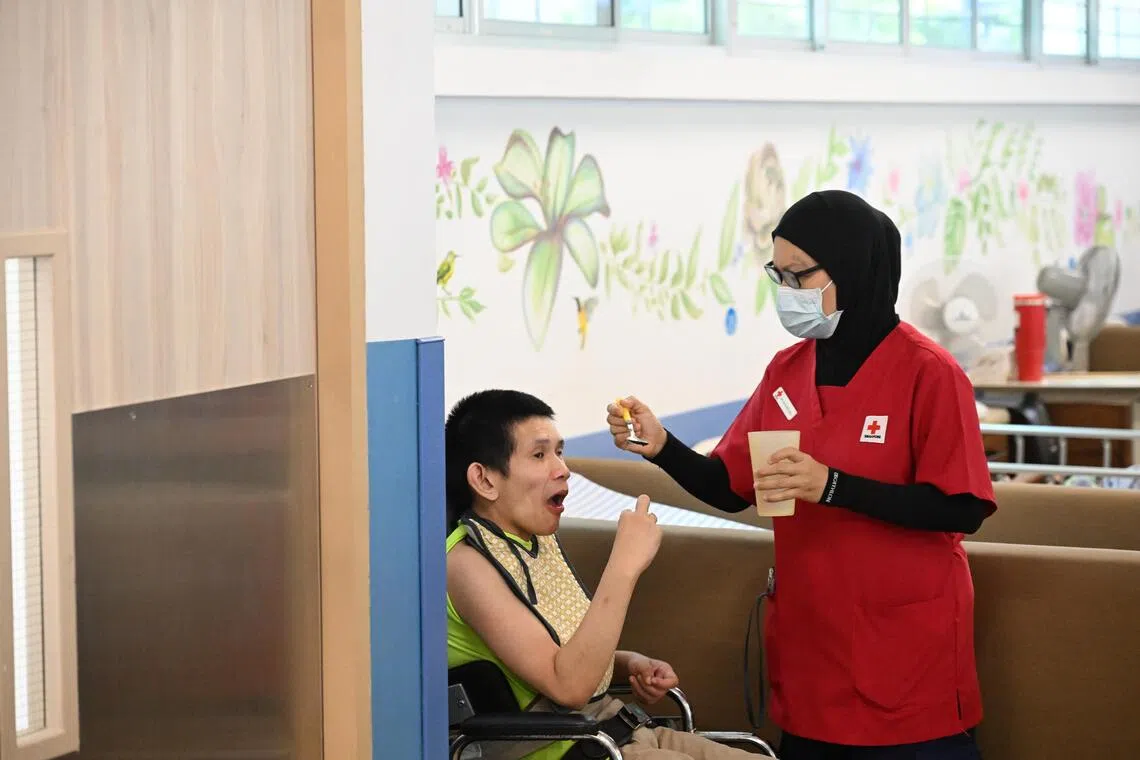
At hospitals and nursing homes, heat affects various patients differently, so staff have to take different precautions.
ST PHOTO: AZMI ATHNI
Published Sep 15, 2026, 05:00 AM
Updated Sep 15, 2026, 05:00 AM
Singapore's HEAT-MAP project collects detailed data on heat-related illnesses in emergency departments to better understand and report heat illness prevalence and drivers amid rising temperatures.
Heat-related illnesses are often underdiagnosed due to varied symptoms resembling other conditions; researchers aim to improve recognition and identify high-risk groups using comprehensive clinical data.
Hospitals and nursing homes are enhancing cooling measures and monitoring vulnerable patients closely to prevent heat-related complications, reflecting proactive efforts to protect health during hotter periods.
SINGAPORE - The island-state’s blazing heat is inescapable, but symptoms of heat-related illnesses can be similar to other diseases, and may often be misdiagnosed at the emergency room .
For example, a patient with fever, low blood pressure or confusion may initially be suspected of having an infection or sepsis, or blood poisoning, rather than a heat-related illness.
This could result in an underreporting of heat illnesses and give an inaccurate picture of the prevalence of heat-related illnesses in a population, and how it drives other diseases.
As Singapore prepares for hotter weather, a senior consultant from Singapore General Hospital’s Department of Emergency Medicine is working with 10 public hospitals’ emergency departments to better understand whether rising temperatures have resulted in more cases of serious heat illnesses here.
“The purpose is to establish a more systematic and consistent way of recognising, characterising and reporting heat-related illness across Singapore,” said SGH senior consultant Marcus Ong, who is also director of the Pre-hospital and Emergency Research Centre at the Duke-NUS Medical School.
Under the HEAT-MAP study, which ends in 2028, medical staff at the emergency rooms first identify patients with suspected heat-related illness. Symptoms include fainting, cramps, seizures and headaches .
They then collect relevant clinical data such as the patient’s core temperature, and record information about whether they were working strenuously in hot environments.
Clinical data can also include underlying medical conditions that make the patient more vulnerable to heat such as heart disease.
Medical staff may also order lab tests to understand the severity of organ injury associated with heat stress.
“By routinely asking about heat exposure and collecting information on symptoms and circumstances, we can better identify cases that might otherwise be overlooked,” said Ong.
Data from the study will serve as a starting point for future projections of Singapore’s risk of heat threats amid global warming.
The Ministry of Health (MOH) told The Straits Times that the number of heat-related illness cases at the emergency departments of all public hospitals here increased from 280 in 2024 to 398 in 2025. The years 2024 and 2025 were among the top 10 warmest years in Singapore.
The number of admissions rose from 69 cases in 2024 to 81 cases in 2025. Between 2021 and 2024, one heat-related death was recorded.
MOH did not reveal the types of heat illnesses , which can include heatstroke, heat exhaustion and severe muscle cramps.
HEAT-MAP also wants to look into how heat could have aggravated other conditions like heart disease and lung ailments.
A heat illness could also occur alongside an infection. And the sickest patients may be confused or unconscious and unable to tell medical staff that they spent time in a hot environment.
This issue is not isolated to Singapore. A multi-country study on heatstroke reporting practices – published in scientific journal Temperature in July – stated that heatstroke is often underdiagnosed because a patient may die with competing diagnoses such as a heart attack , stroke, infection or kidney failure.
Records are less likely to capture the larger number of deaths in which heat acts as a contributing factor rather than the direct cause, said the paper.
As part of Ong’s study, researchers from the NUS Yong Loo Lin School of Medicine will use the two-year dataset to identify high-risk groups that have been overlooked. They will also be using the information to forecast how the population could be affected by heat illnesses in the future.
Stepped-up cooling at hospitals, nursing homes
Meanwhile , several hospitals and residential homes have been taking more measures in recent years to protect patients during hotter, humid periods.
For example, hospitals under the National University Health System (NUHS), the National Healthcare Group and the KK Women’s and Children’s Hospital have installed additional portable fans and portable air-conditioning in subsidised wards.
Since 2014, NUHS has been progressively implementing pre-cool mechanical ventilation systems in subsidised wards. This involves cooling outdoor air before it enters non-air-conditioned wards, complementing ceiling fans .
NUHS did not reveal which hospitals this has been rolled out in, but said: “During periods of hot weather, cooling measures may be stepped up, including extending the operating hours of spot-cooling systems to help maintain a comfortable environment for patients, visitors and staff.”
Spot cooling refers to fan coil units used to provide additional cooling in specific areas where needed.
At Ang Mo Kio – Thye Hua Kwan Hospital, the air coolers in the wards include a misting function if temperatures rise.
For bed-bound patients at Ang Mo Kio – Thye Hua Kwan Hospital, heat and moisture can increase the risk of skin irritation and problems around existing wounds. Regular repositioning, skin checks and changing of bedding and clothing are important. PHOTO: ANG MO KIO - THYE HUA KWAN HOSPITAL
For bed-bound patients at Ang Mo Kio – Thye Hua Kwan Hospital, heat and moisture can increase the risk of skin irritation and problems around existing wounds. Regular repositioning, skin checks and changing of bedding and clothing are important.
PHOTO: ANG MO KIO - THYE HUA KWAN HOSPITAL
Like in some HDB blocks, the hospitals’ external walls are being coated with cool paint that reflects more sunlight and reduces heat absorbed by the building.
At hospitals and nursing homes, heat affects various patients differently, so medical staff have to take different precautions.
For example, bed-bound patients need to be checked more closely for heat rashes and bed sores, which can worsen with sweat. Patients with dementia may showcase their discomfort by being more agitated or withdrawn.
At the Thye Hua Kwan nursing homes, residents with chronic conditions such as lung or heart disease may have lower oxygen saturation levels, and shortness of breath when it gets hotter.
Wards at the Red Cross Home for the Disabled are equipped with industrial standing fans, alongside ceiling fans and air-conditioning. ST PHOTO: AZMI ATHNI
Wards at the Red Cross Home for the Disabled are equipped with industrial standing fans, alongside ceiling fans and air-conditioning.
At the Red Cross Home for the Disabled, “many have complex care needs, limited mobility and varying abilities to communicate discomfort or recognise that they are becoming overheated”, said the Singapore Red Cross’ assistant secretary-general of operations Charis Chan.
“Our approach is proactive rather than waiting for residents to show significant symptoms. Staff monitor residents’ hydration, skin condition, behaviour, general condition and comfort, and escalate any concerns for further assessment,” she added.
Shabana Begum is a correspondent, with a focus on environment and science, at The Straits Times.
SGH/Singapore General Hospital
在医院和疗养院,高温对不同患者的影响各不相同,因此工作人员必须采取不同的预防措施。
ST 摄影:AZMI ATHNI
发布于 2026 年 9 月 15 日上午 5:00
更新于2026年9月15日上午5:00
新加坡的 HEAT-MAP 项目收集急诊科中与高温相关的疾病的详细数据,以便更好地了解和报告气温上升背景下中暑的流行情况和驱动因素。
由于症状多样,与其他疾病相似,与高温相关的疾病常常被漏诊;研究人员旨在利用全面的临床数据来提高识别率并确定高危人群。
医院和疗养院正在加强降温措施,并密切监测易感患者,以防止中暑等相关并发症,这体现了在炎热时期保护健康的积极努力。
新加坡——这个岛国酷热难耐,但与高温相关的疾病症状可能与其他疾病相似,因此在急诊室常常会被误诊。
例如,发烧、低血压或意识混乱的患者最初可能会被怀疑患有感染、败血症或血液中毒,而不是中暑。
这可能会导致中暑病例被低估,从而无法准确反映人群中与高温相关的疾病的流行情况,以及高温如何引发其他疾病。
随着新加坡准备迎接更炎热的天气,新加坡中央医院急诊医学部的一位高级顾问正在与 10 家公立医院的急诊科合作,以更好地了解气温上升是否导致新加坡出现更多严重的中暑病例。
“其目的是为了在新加坡建立一种更加系统和一致的方式来识别、描述和报告与高温相关的疾病,”新加坡中央医院高级顾问 Marcus Ong 说,他同时也是杜克-新加坡国立大学医学院院前和紧急研究中心主任。
在将于2028年结束的HEAT-MAP研究中,急诊室医务人员首先识别出疑似中暑的患者。症状包括昏厥、抽筋、癫痫发作和头痛。
然后,他们会收集相关的临床数据,例如患者的核心体温,并记录他们是否在炎热环境中进行过剧烈运动的信息。
临床数据还可以包括使患者更容易受到高温影响的潜在疾病,例如心脏病。
医务人员也可能要求进行实验室检查,以了解与热应激相关的器官损伤的严重程度。
Ong表示:“通过定期询问中暑情况并收集症状和情况信息,我们可以更好地识别可能被忽视的病例。”
该研究的数据将作为未来预测新加坡在全球变暖背景下面临的高温威胁风险的起点。
卫生部告诉《海峡时报》,新加坡所有公立医院急诊科接诊的与高温相关的疾病病例数量从2024年的280例增加到2025年的398例。2024年和2025年是新加坡有记录以来最热的10年之一。
2024 年至 2025 年,入院人数从 69 例增加到 81 例。2021 年至 2024 年间,记录到 1 例与高温相关的死亡病例。
卫生部没有透露热疾病的类型,这些疾病可能包括中暑、热衰竭和严重的肌肉痉挛。
HEAT-MAP 还希望调查高温如何加剧其他疾病,例如心脏病和肺部疾病。
中暑也可能伴随感染发生。病情最严重的患者可能意识不清或失去意识,无法告知医护人员自己曾在高温环境中待过。
这个问题并非新加坡独有。发表在《七月气温》(Temperature in July)科学期刊上的一项关于中暑报告做法的多国研究指出,中暑常常被漏诊,因为患者可能死于其他疾病,例如心脏病发作、中风、感染或肾衰竭。
该报称,记录不太可能反映出大量因高温而死亡的案例,高温只是促成因素,而不是直接死因。
作为翁教授研究的一部分,新加坡国立大学杨潞琳医学院的研究人员将利用这两年的数据集来识别此前被忽视的高危人群。他们还将利用这些信息来预测未来人群可能受到的热疾病影响程度。
医院和养老院加强降温措施
与此同时,近年来,多家医院和养老院采取了更多措施,以在炎热潮湿的时期保护患者。
例如,新加坡国立大学医疗系统 (NUHS)、国家医疗集团和竹脚妇幼医院等机构已在补贴病房内安装了额外的便携式风扇和便携式空调。
自 2014 年以来,新加坡国立大学医院 (NUHS) 一直在逐步在其资助病房中实施预冷机械通风系统。该系统在室外空气进入没有空调的病房之前对其进行冷却,以配合吊扇的使用。
新加坡国立大学医院系统(NUHS)没有透露这项措施已在哪些医院推行,但表示:“在炎热天气期间,可能会加强降温措施,包括延长局部降温系统的运行时间,以帮助为患者、访客和工作人员保持舒适的环境。”
局部冷却是指利用风机盘管机组为特定需要冷却的区域提供额外的冷却。
在宏茂桥-泰华馆医院,病房内的空调配备了喷雾功能,以应对气温升高的情况。
对于宏茂桥-泰华馆医院的卧床病人来说,高温潮湿的环境会增加皮肤刺激和现有伤口周围问题的风险。因此,定期翻身、检查皮肤状况以及更换床单和衣物至关重要。图片:宏茂桥-泰华馆医院
对于宏茂桥-泰华馆医院的卧床病人来说,高温潮湿的环境会增加皮肤刺激和现有伤口周围问题的风险。因此,定期翻身、检查皮肤状况以及更换床单和衣物至关重要。
照片:宏茂桥 - 泰华关医院
与一些组屋一样,医院的外墙涂上了凉爽的涂料,这种涂料可以反射更多的阳光,减少建筑物吸收的热量。
在医院和疗养院,高温对不同患者的影响各不相同,因此医务人员必须采取不同的预防措施。
例如,卧床不起的病人需要更密切地检查是否有痱子和褥疮,因为出汗会加重这些症状。患有痴呆症的病人可能会通过更加烦躁或孤僻来表达他们的不适。
在泰华关疗养院,患有肺病或心脏病等慢性疾病的居民,在天气变热时可能会出现氧饱和度降低和呼吸急促的情况。
红十字会残疾人疗养院的病房配备了工业落地扇,以及吊扇和空调。ST PHOTO:AZMI ATHNI
红十字会残疾人之家的病房配备了工业落地扇,以及吊扇和空调。
新加坡红十字会行动助理秘书长陈嘉莉表示,在红十字会残疾人之家,“许多残疾人有复杂的护理需求,行动不便,并且表达不适或意识到自己过热的能力也各不相同”。
她补充说:“我们采取的是积极主动的方式,而不是等到居民出现明显症状才采取行动。工作人员会监测居民的水分摄入量、皮肤状况、行为、整体状况和舒适度,并将任何问题上报以进行进一步评估。”
沙巴娜·贝古姆是《海峡时报》的记者,主要关注环境和科学领域。
新加坡中央医院