The disarming of Hezbollah tests fragile government in Lebanon解除真主党武装将考验黎巴嫩脆弱的政府。
In essence, according to one analyst, the situation amounts to a catch-22 that could escalate at any time.
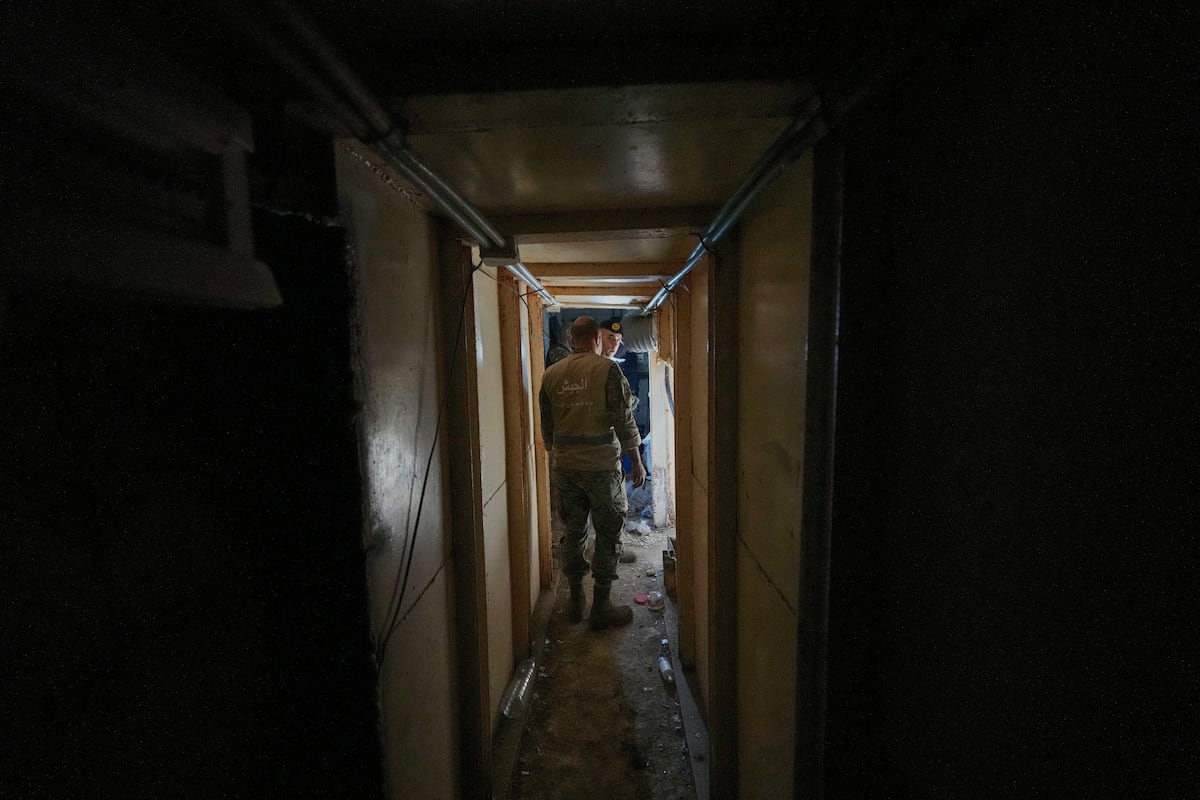
BEIRUT — One year after Lebanon and Israel signed a ceasefire agreement to end hostilities that had spilled over from Gaza, the Lebanese government is walking a tightrope between disarming Hezbollah and containing local resentment over continued Israeli strikes aimed at increasing pressure on the group, according to officials and analysts.
“The agreement is vague and open to interpretation,” said Ali Rikz, Beirut-based security and political analyst, referring to the Nov. 27, 2024, ceasefire deal. “Each side is reading it in its own favor.”
According to the pact, Lebanese state authorities would be the only actors authorized to carry weapons, requiring the disarmament of non-state factions in line with UN Security Council Resolution 1701, starting from south of the Litani River, with government security forces deploying to positions across the area.
In return, Israel agreed to halt any offensive military operations against Lebanese targets, including civilian, military or other state targets, by land, air or sea. The deal also called for a phased withdrawal of Israeli forces, within two months, behind the so-called Blue Line, vacating areas currently occupied inside Lebanese territory.
At the same time, under President Joseph Aoun, the new Lebanese government of Prime Minister Nawaf Salam publicly committed for the first time to bringing the monopoly of arms under state control.
Progress has been slow, as the process of disarming the Iran-backed group and political party Hezbollah presents a complex challenge, according to Dina Arakji, UAE-based analyst at Control Risks and non-resident fellow at Middle East Institute.
“In the south of the Litani, Hezbollah has been fully cooperative,” said Mounir Shehade, a retired brigadier general of the Lebanese Armed Forces (LAF) and the government’s designated coordinator for the United Nations interim force for south Lebanon, UNIFIL, established in 1978.
“The Lebanese Army has destroyed the arsenal and weapons including Katyusha rockets, Kornet missiles, drones, artillery, Burkan rockets and individual weapons,” he added.
All told, the disarmament south of the river, in UNIFIL’s operation area, is considered completed, sources told Defense News.
“We helped the LAF to redeploy to nearly 130 permanent positions and discovered more than 360 illegal weapons caches and other infrastructure,” said UNIFIL spokesperson Kandice Ardiel.
Over the past year, Israel has continued its attacks on Lebanon, conducting near-daily strikes in areas both south and north of the Litani River, including the southern suburbs of Beirut. Israel says that it is adhering to the ceasefire terms and targeting Hezbollah infrastructure and fighters to prevent the group from rebuilding or rearming.
That assessment appears to be at odds what UN troops are seeing, as least as it pertains to the south.
“We have not observed any new illegal infrastructure or rebuilding of capabilities within our area of operations in south Lebanon,” Ardiel said
South of Litani River, UNIFIL peacekeepers operate under challenging conditions. “The presence of Israeli soldiers in Lebanese territory prevents our full freedom of movement, and the full re-deployment of the Lebanese army,”, Ardiel said.
On the first anniversary of the cease-fire agreement, UNIFIL reported in a statement that more than 10,000 air and ground violations had occurred over the past twelve months. “We have also continued to monitor and report impartially on what is happening in the south, despite challenges,” Ardiel noted.
However, the disarmament of south Lebanon has had no bearing on full disarmament of the group.
“Hezbollah still retains weapons, including drones and missiles, in the north of the Litani, the Beqaa Valley and in other regions,” said retired Lebanese Maj. Gen. Hicham Jaber.
Rikz argued that, in Hezbollah’s view, weapons north of Litani River are not part of the ceasefire agreement, making the disarmament process there a matter of Lebanon’s internal politicking.
Moreover, other factors add to the complexity of the issue, including the Iran-Hezbollah special relationship and the broad support from the long-marginalized Shia community to the group.
According to a source within Hezbollah, any discussion on the future of the group’s weapons remains contingent on Israel’s full withdrawal from Lebanese territory, an end of the purported ceasefire violations, and guarantees on national security.
“Any future transition must take place within a framework that strengthens the state’s role, rather than leaving it exposed to threats,” the source said, speaking on condition of anonymity due to the affiliation with the group.
In essence, according to Arakji, the situation amounts to a catch-22 that could escalate at any time: Israel interprets the agreement as allowing it to conduct strikes against Hezbollah-linked sites and other militant infrastructure deemed a threat while demanding Hezbollah’s complete disarmament. At the same time, the ongoing Israeli military actions in Lebanon are used by Hezbollah to justify the goal of retaining weapons, while the LAF lacks capacities and remains heavily reliant on foreign security assistance, particularly from the United States.
“In this situation, the Lebanese state emerges as the weaker actor,” noted Rikz.
Some analysts here hope that the U.S. government can help mediate.
“The only available solution is for the U.S. to pressure Israel to withdraw from occupied territories and stop its escalation. If Lebanon remains unable to resolve the issue of the resistance weapons, there is a real possibility that the war could return,” former LAF general Shehade said.
Agnese Stracquadanio is a Middle East correspondent for Defense News. She has a background in writing and photojournalism, holds a master's degree in international relations, and previously worked for Reuters.
贝鲁特——据官员和分析人士称,在黎巴嫩和以色列签署停火协议结束从加沙蔓延至黎巴嫩的敌对行动一年后,黎巴嫩政府正小心翼翼地在解除真主党武装和遏制当地民众对以色列持续打击真主党的不满之间寻求平衡,以色列持续打击真主党旨在加大对该组织的压力。
“这份协议含糊不清,可以有多种解读,”常驻贝鲁特的安全和政治分析家阿里·里克斯在谈到2024年11月27日的停火协议时说。“双方都在从自身利益出发解读协议。”
根据该协议,黎巴嫩国家当局将是唯一被授权携带武器的行动者,非国家武装团体必须按照联合国安理会第 1701 号决议解除武装,解除武装工作将从利塔尼河以南开始,政府安全部队将部署到该地区的各个位置。
作为交换,以色列同意停止对黎巴嫩目标(包括平民、军事目标和其他国家目标)采取任何陆地、空中或海上进攻性军事行动。该协议还要求以色列军队在两个月内分阶段撤出所谓的“蓝线”以南地区,撤出目前占领的黎巴嫩境内区域。
与此同时,在约瑟夫·奥恩总统的领导下,纳瓦夫·萨拉姆总理领导的新黎巴嫩政府首次公开承诺将武器垄断置于国家控制之下。
据阿联酋 Control Risks 分析师、中东研究所非常驻研究员迪娜·阿拉克吉 (Dina Arakji) 称,解除伊朗支持的真主党武装的进程十分缓慢,因为这是一个复杂的挑战。
“在利塔尼河以南,真主党一直给予充分合作,”黎巴嫩武装部队(LAF)退役准将、政府指定的联合国驻黎巴嫩南部临时部队(联黎部队,成立于 1978 年)协调员穆尼尔·谢哈德说道。
“黎巴嫩军队摧毁了包括喀秋莎火箭弹、短号导弹、无人机、火炮、布尔坎火箭弹和单兵武器在内的军火库和武器,”他补充道。
据《防务新闻》报道,消息人士称,河以南、联合国驻黎巴嫩临时部队(联黎部队)行动区域内的解除武装工作总体上已经完成。
“我们帮助黎巴嫩武装部队重新部署到近 130 个永久阵地,并发现了 360 多个非法武器库和其他基础设施,”联合国驻黎巴嫩临时部队发言人坎迪斯·阿尔迪尔说。
过去一年来,以色列持续对黎巴嫩发动袭击,几乎每天都在利塔尼河南北两岸地区,包括贝鲁特南部郊区,进行空袭。以色列声称,其遵守停火协议条款,并以真主党的基础设施和武装人员为目标,阻止该组织重建或重新武装。
至少就南部地区而言,这一评估似乎与联合国部队的所见所闻相悖。
“我们没有在黎巴嫩南部行动区域内发现任何新的非法基础设施或能力重建,”阿尔迪尔说。
在利塔尼河以南,联合国驻黎巴嫩临时部队(联黎部队)维和人员在充满挑战的条件下开展行动。“以色列军队在黎巴嫩领土上的存在阻碍了我们完全的行动自由,也阻碍了黎巴嫩军队的全面重新部署,”阿尔迪尔说。
在停火协议签署一周年之际,联合国驻黎巴嫩临时部队(联黎部队)发表声明称,过去十二个月中发生了超过一万起空中和地面违反停火协议事件。阿尔迪尔指出:“尽管面临挑战,我们仍然持续监测并公正地报告南部地区的情况。”
然而,黎巴嫩南部解除武装与该组织的全面解除武装没有任何关系。
“真主党在利塔尼北部、贝卡谷地和其他地区仍然拥有包括无人机和导弹在内的武器,”黎巴嫩退役少将希沙姆·贾贝尔说。
里克斯认为,在真主党看来,利塔尼河以北的武器不属于停火协议的范围,因此那里的裁军进程是黎巴嫩内部政治斗争的问题。
此外,伊朗与真主党之间的特殊关系以及长期被边缘化的什叶派社群对该组织的广泛支持,也使这个问题变得更加复杂。
据真主党内部消息人士透露,任何关于该组织武器未来的讨论都取决于以色列从黎巴嫩领土完全撤军、停止所谓的停火违反行为以及国家安全保障。
“任何未来的过渡都必须在一个能够加强国家作用的框架内进行,而不是让国家暴露在威胁之下,”消息人士说。由于与该组织有关联,该消息人士要求匿名。
阿拉克吉认为,本质上,目前的局势是一个随时可能升级的两难困境:以色列一方面将该协议解读为允许其对与真主党有关联的目标和其他被视为威胁的武装分子基础设施进行打击,另一方面又要求真主党彻底解除武装。与此同时,真主党利用以色列在黎巴嫩持续不断的军事行动,为其保留武器的目标辩护,而黎巴嫩武装部队自身能力不足,仍然严重依赖外国安全援助,特别是来自美国的援助。
“在这种情况下,黎巴嫩国家就成了较弱的一方,”里克斯指出。
这里的一些分析人士希望美国政府能够出手调解。
“唯一的解决办法是美国向以色列施压,迫使其从占领区撤军并停止局势升级。如果黎巴嫩继续无法解决抵抗组织武器问题,战争很有可能重燃,”黎巴嫩武装部队前将军谢哈德说道。
阿格尼斯·斯特拉夸达尼奥是《防务新闻》的中东记者。她拥有写作和摄影新闻背景,持有国际关系硕士学位,此前曾在路透社工作。