Finland seeks to secure Arctic footprint in new defense strategy芬兰寻求在新国防战略中确保其在北极地区的影响力。
The document highlights the role that the new NATO Forward Land Force unit, inaugurated in October in northern Finland, will play for the alliance.
MILAN — Finland has released a new Arctic security strategy that seeks to define the country’s growing role in a region facing overlapping claims by friends and foes alike.
The document, published Nov. 25 as an update to a previous version from 2021 when Finland was still outside of NATO, dances around managing relationships with the United States under President Donald Trump as a fellow Arctic nation, in particular.
“The U.S. is increasingly viewing the Arctic through the lens of global competition, shaped by the ‘America First’ policy— it prioritizes national security, economic cooperation, and critical minerals and has shifted away from climate change mitigation and sustainable development,” the document reads.
It mentions that statements made by U.S. officials, who have argued that Washington should exercise greater control over Greenland, have raised questions for Finland.
Nearly one-third of Finland’s land mass lies above the Arctic Circle, in the region of Lapland.
There are eight countries with territory within or north of the Arctic Circle that are members of the Arctic Council: Canada, Denmark, Finland, Iceland, Norway, Russia, Sweden and the United States.
This week, the Danish news outlet Politiken reported that the Trump administration has on several occasions tried to set up high-level meetings with Greenlandic authorities without Denmark present.
Meanwhile, Finland, Canada and the United States are involved in the Icebreaker Collaboration Effort, or ICE Pact, dedicated to the joint development of icebreakers.
Since signing a memorandum of understanding in 2024, the three countries have announced a series of new contracts under this partnership: the U.S. launched its fleet renewal initiative last month, with a total plan of up to 11 icebreakers that will involve both Canadian and Finnish shipyards and companies.
On Nov. 18, the ICE Pact partners signed a joint statement of intent in Washington intended to strengthen trilateral cooperation on Arctic icebreaker construction and capabilities into 2026.
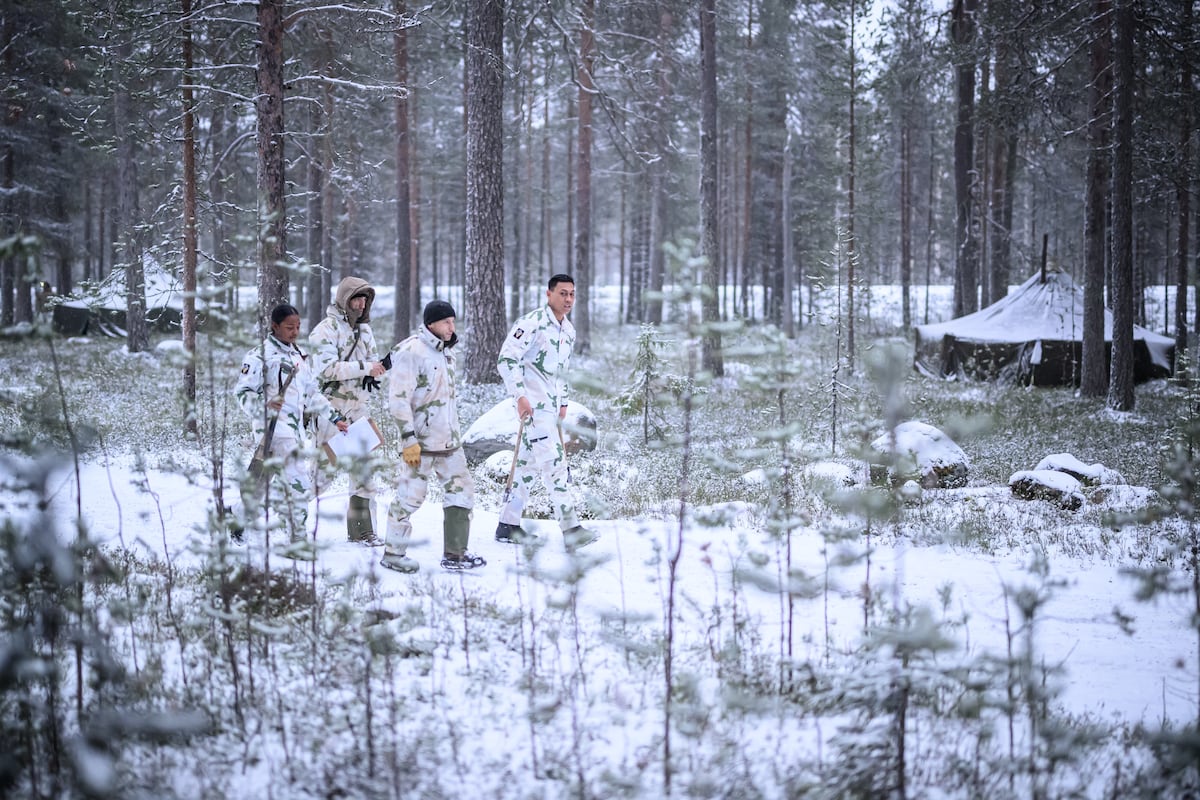
Finland’s latest Arctic security policy also highlights the growing role that the new NATO Forward Land Force unit, inaugurated in October in Northern Finland, will play in the alliance’s deterrence in the High North. In a state of emergency, the FLF will oversee the planning, command and control of land operations and defense across the wider Arctic region.
A significant portion of the strategy document is devoted to the activities of the Arctic Council, which remains the sole intergovernmental cooperation framework for all Arctic states. Although the forum is not in charge of security policy issues, the Russian invasion of Ukraine in 2022 deeply changed the nature of its collaboration.
“Russia remains a member, but no political level meetings or meetings of senior Arctic officials are held among Arctic States – expert and research cooperation continues within working groups,” the policy document said. The Finnish government stated that Arctic cooperation should continue within the framework of the Arctic governance body.
Several non-Arctic countries have applied or are considering applying for observer status in the Arctic Council, which would allow them to attend meetings, access documents, and contribute to working groups.
Elisabeth Gosselin-Malo was a Europe correspondent for Defense News. She covers a wide range of topics related to military procurement and international security, and specializes in reporting on the aviation sector. She is based in Milan, Italy.
米兰——芬兰发布了一项新的北极安全战略,旨在明确该国在北极地区日益增长的作用。该地区面临着来自朋友和敌人的重叠主张。
该文件于 11 月 25 日发布,是对 2021 年芬兰尚未加入北约时发布的版本的更新。该文件尤其回避了如何作为北极国家与美国总统唐纳德·特朗普建立关系的问题。
“美国越来越从全球竞争的角度看待北极,这受到‘美国优先’政策的影响——它优先考虑国家安全、经济合作和关键矿产,而不再关注气候变化减缓和可持续发展,”该文件写道。
报告提到,美国官员曾发表言论,认为华盛顿应该对格陵兰岛行使更大的控制权,这引起了芬兰的质疑。
芬兰近三分之一的国土位于北极圈以北的拉普兰地区。
北极理事会成员国中有八个国家,其领土位于北极圈内或以北:加拿大、丹麦、芬兰、冰岛、挪威、俄罗斯、瑞典和美国。
本周,丹麦新闻媒体《政治报》(Politiken)报道称,特朗普政府曾多次试图在没有丹麦出席的情况下与格陵兰当局举行高级别会议。
与此同时,芬兰、加拿大和美国参与了破冰船合作计划(ICE Pact),致力于共同开发破冰船。
自 2024 年签署谅解备忘录以来,这三个国家已根据该伙伴关系宣布了一系列新合同:美国上个月启动了舰队更新计划,总共计划建造多达 11 艘破冰船,加拿大和芬兰的造船厂和公司都将参与其中。
11 月 18 日,ICE 条约伙伴在华盛顿签署了一份联合意向声明,旨在加强三方在北极破冰船建设和能力方面的合作,直至 2026 年。
芬兰最新的北极安全政策还强调了北约前沿陆军部队(FLF)日益重要的作用。该部队于10月在芬兰北部成立,将在北约在北极地区的威慑中发挥重要作用。在紧急状态下,FLF将负责整个北极地区陆地行动和防御的规划、指挥和控制。
该战略文件相当一部分篇幅用于阐述北极理事会的活动,北极理事会仍然是所有北极国家唯一的政府间合作框架。尽管该论坛不负责安全政策问题,但2022年俄罗斯入侵乌克兰深刻改变了其合作性质。
政策文件指出,“俄罗斯仍是成员国,但北极国家之间不再举行政治层面的会议或北极高级官员会议——专家和研究合作仍在工作组内部继续进行。”芬兰政府表示,北极合作应在北极治理机构的框架内继续开展。
一些非北极国家已经申请或正在考虑申请北极理事会的观察员地位,这将使它们能够参加会议、查阅文件并为工作组做出贡献。
伊丽莎白·戈斯林-马洛曾任《防务新闻》欧洲通讯员。她的报道涵盖军事采购和国际安全等广泛领域,尤其擅长航空领域的报道。她常驻意大利米兰。