Gates Foundation to spend $1.27 billion to expand AI access to poor, remote communities盖茨基金会将斥资12.7亿美元,帮助贫困偏远社区扩大人工智能的普及范围
The Gates Foundation will spend $1.27 billion to expand AI access in education, health, and agriculture for underserved communities globally. Read more at straitstimes.com.
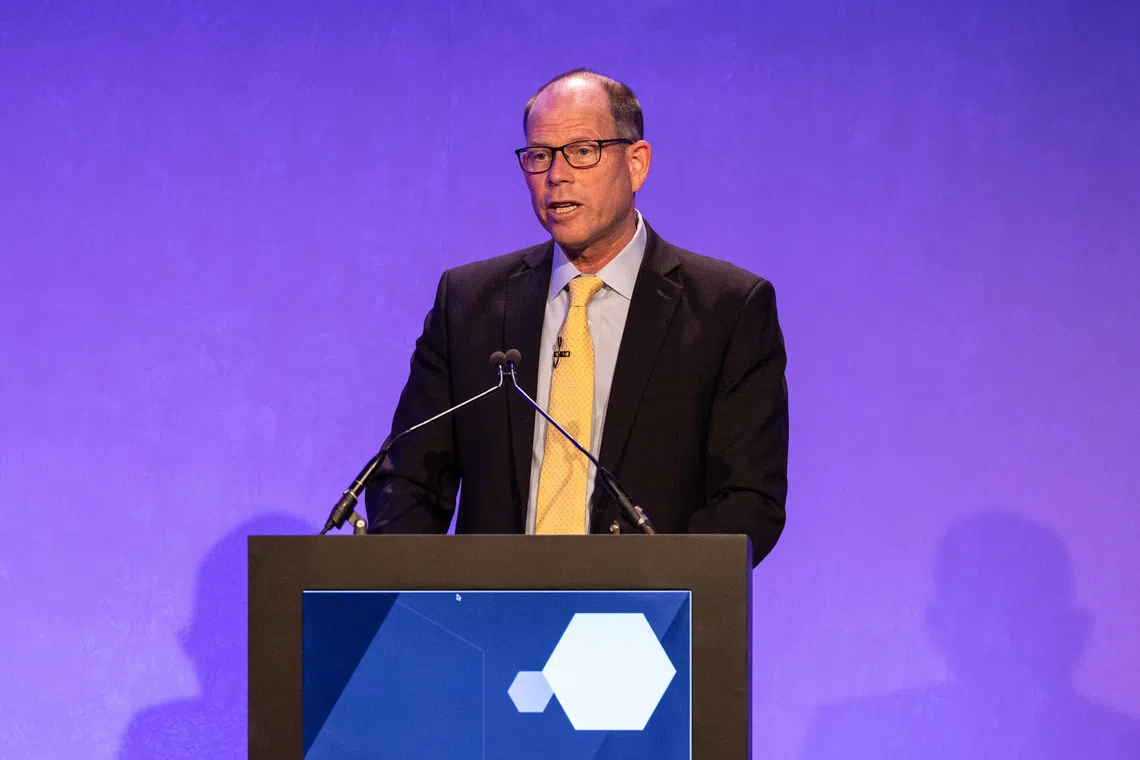
Gates Foundation chief executive Mark Suzman said the foundation will look at how AI can be applied in education and agriculture to narrow inequalities.
Published Sep 15, 2026, 12:15 PM
Updated Sep 15, 2026, 12:15 PM
SINGAPORE – The Gates Foundation, a philanthropic organisation backed by US billionaire Bill Gates, pledged on Sept 15 to spend at least US$1 billion (S$1.27 billion) globally over the next two years on expanding access to artificial intelligence.
With the foundation planning to open its Singapore office formally in October , chief executive Mark Suzman told The Straits Times that it is looking into how more people in the region, especially those from lower-income and rural areas, could benefit from using AI in areas such as education, agriculture and health.
He cited the Asia Pathogen Genomics Initiative – established at the Duke-NUS Centre for Outbreak Preparedness in late 2021 with the goal of eliminating infectious diseases – as an example of past work in the health-AI nexus that the foundation had supported.
Now operating in 15 countries across the region , the initiative has an AI-enabled bioinformatics program called PathGen, Suzman said. The program helps detect emerging disease threats earlier, assess risks faster, and coordinate responses within and across borders.
Such projects offer a glimpse of what the foundation could support, Suzman said, adding that “the commitment is across education, agriculture, and health.”
He was speaking to The Straits Times in a video interview on Sept 11, ahead of the launch of the foundation’s latest Goalkeepers report on Sept 15. The annual report takes stock of the world’s progress on issues such as ending poverty and reducing inequalities.
The latest edition highlights the need to ensure that AI is used to narrow gaps between the richest and poorest, not widen them.
“The Gates Foundation was created in part to address a basic market failure: The people with the greatest needs often have the least power to shape where innovation and investment go,” Bill Gates, chairman of the foundation, noted in the report.
“AI presents the same challenge, only at much greater speed. Left to the market alone, the most capable tools will be built first for the people and institutions most able to pay for them – not necessarily for those who could benefit most.”
Of the US$1 billion sum, 40 per cent will go to education, such as AI tutoring initiatives, said the Gates Foundation in a statement.
Another 40 per cent will go towards healthcare, which could include the development of tools that can help in the discovery of new drugs and vaccines. A further 10 per cent will be for agriculture, supporting efforts to give smallholder farmers AI-generated advice customised to their soil, weather and crop conditions, for instance.
The remaining 10 per cent will fund initiatives to help build the digital foundation needed for equitable AI access. This could include ensuring that datasets in languages not yet understood by AI tools are incorporated.
The report cited MahaVISTAA R , a free AI advisory service for farmers rolled out by the Indian state of Maharashtra, as an example of an AI tool that can benefit smallholder farmers.
Through an app, voice calls and chat, farmers can ask questions about their crops, the weather, and pest management in their own language and get verified, localised answers, the report noted. The service costs the government less than 18 US cents per farmer.
Suzman said: “ We need to make sure that AI is able to work in every spoken language, with a particular focus on languages in Asia and Africa, and so we are working with a range of partners to see how we can help facilitate that.”
This could include working with the private sector and governments, he said.
“There are significant philanthropic resources in Singapore, Malaysia generally, which we would be able to capitalise on,” he added.
On the importance of training AI models in other languages, the report pointed to an example from Malawi.
“A woman in labour might say her ‘water has broken’ in Chichewa. Translated directly to English, it would sound like she has simply ‘thrown away water’. That mistranslation could be the difference between timely, urgent medical advice and tragedy,” noted the 72-page report.
AI tools also need to be grounded in local data, the report said. For instance, a community health worker in Rwanda examining a baby with a fever faces different questions from a clinician in a well-resourced hospital.
“The AI supporting her needs to reflect that,” the report said.
It also highlighted the importance of ensuring that communities themselves are trained to use AI, and have the right access to these tools.
This would require a mix of approaches, the foundation noted in the report. These include price reductions, commitments from AI companies to make their models and computing resources available, and government and philanthropic funding.
The foundation said its committed funding will support partners already working to close the gaps in access to AI and ensure that AI tools reflect the knowledge and priorities of the people who need them most.
“We can harness AI for good. But it won’t happen by accident,” Gates said in the report.
“It requires a deliberate, specific commitment from government leaders and the companies developing the technology: to measure success not only by what AI can do for the most profitable users but by what it can do for the people who stand the most to gain.”
AI/artificial intelligence
盖茨基金会首席执行官马克·苏兹曼表示,该基金会将研究如何将人工智能应用于教育和农业领域,以缩小不平等现象。
发布于 2026 年 9 月 15 日下午 12:15
更新于2026年9月15日下午12:15
新加坡——由美国亿万富翁比尔·盖茨支持的慈善组织盖茨基金会于9月15日承诺,未来两年将在全球范围内至少投入10亿美元(12.7亿新元)用于扩大人工智能的普及应用。
该基金会计划于 10 月份正式开设新加坡办事处。首席执行官马克·苏兹曼告诉《海峡时报》,他们正在研究如何让该地区更多的人,特别是低收入和农村地区的人们,能够从人工智能在教育、农业和健康等领域的应用中受益。
他以亚洲病原体基因组学计划为例,该计划于 2021 年底在杜克-新加坡国立大学疫情防范中心成立,旨在消除传染病,作为该基金会过去在健康与人工智能交叉领域所支持的工作的一个例子。
苏兹曼表示,该项目目前已在亚太地区的15个国家开展,并拥有一个名为PathGen的AI生物信息学项目。该项目有助于更早地发现新出现的疾病威胁,更快地评估风险,并协调跨境及国内的应对措施。
苏兹曼表示,这些项目让我们得以一窥该基金会能够支持的方向,并补充说,“我们的承诺涵盖教育、农业和卫生等领域。”
9月11日,他在接受《海峡时报》视频采访时发表了讲话,此前该基金会于9月15日发布了最新的《守门员》报告。这份年度报告评估了世界在消除贫困和减少不平等问题上取得的进展。
最新版强调,必须确保人工智能用于缩小贫富差距,而不是扩大差距。
“盖茨基金会的成立部分原因是为了解决一个基本的市场失灵问题:最需要帮助的人往往最没有权力去决定创新和投资的流向,”基金会主席比尔·盖茨在报告中指出。
“人工智能带来的挑战与此相同,只是速度更快。如果完全由市场决定,功能最强大的工具将首先被那些最有能力支付费用的人和机构所使用,而不是那些最能从中受益的人。”
盖茨基金会在一份声明中表示,在这10亿美元中,40%将用于教育,例如人工智能辅导计划。
另有40%将用于医疗保健,包括开发有助于发现新药和疫苗的工具。还有10%将用于农业,例如支持为小农户提供根据其土壤、天气和作物状况量身定制的人工智能建议。
剩余的10%将用于资助旨在构建公平获取人工智能所需数字基础的各项举措。这可能包括确保将人工智能工具尚无法理解的语言数据集纳入其中。
该报告以印度马哈拉施特拉邦推出的面向农民的免费人工智能咨询服务 MahaVISTAA R 为例,说明人工智能工具如何能够惠及小农户。
报告指出,农民可以通过应用程序、语音通话和聊天功能,用自己的语言咨询有关作物、天气和病虫害防治的问题,并获得经过验证的本地化答案。这项服务对政府而言,每位农民的成本不到18美分。
苏兹曼说:“我们需要确保人工智能能够处理每一种口语,尤其要关注亚洲和非洲的语言,因此我们正在与一系列合作伙伴共同努力,看看如何才能促进这一点。”
他表示,这可能包括与私营部门和政府合作。
他补充说:“新加坡和马来西亚等地拥有大量的慈善资源,我们可以充分利用这些资源。”
关于用其他语言训练人工智能模型的重要性,该报告以马拉维为例进行了说明。
这份长达72页的报告指出:“一名临产妇女可能会用齐切瓦语说她的羊水破了。如果直接翻译成英语,听起来就像她只是‘把水倒掉了’。这种误译可能导致及时紧急的医疗建议与悲剧之间的差别。”
报告指出,人工智能工具也需要基于本地数据。例如,卢旺达的社区卫生工作者在检查发烧婴儿时,会遇到与资源充足的医院里的临床医生不同的问题。
报告称:“支持她的人工智能需要体现这一点。”
报告还强调了确保社区自身接受人工智能使用培训并拥有使用这些工具的适当途径的重要性。
该基金会在报告中指出,这需要多种方法相结合。这些方法包括降低价格、人工智能公司承诺开放其模型和计算资源,以及政府和慈善机构的资助。
该基金会表示,其承诺的资金将支持那些已经在努力弥合人工智能获取差距的合作伙伴,并确保人工智能工具能够反映最需要它们的人们的知识和优先事项。
“我们可以利用人工智能造福人类。但这不会是偶然发生的,”盖茨在报告中说道。
“这需要政府领导人和开发该技术的公司做出深思熟虑、具体的承诺:衡量成功的标准不仅是人工智能能为最赚钱的用户做什么,还要看它能为最有可能受益的人们做什么。”
人工智能