Ukraine’s push for F-16s risks a battlefield advantage: simplicity乌克兰急于采购F-16战机可能会带来战场优势:简单易用
Opinion: Ukraine’s battlefield success rests on continuing to deny air superiority to Russia, not achieving air superiority outright, two U.S. issue experts argue.
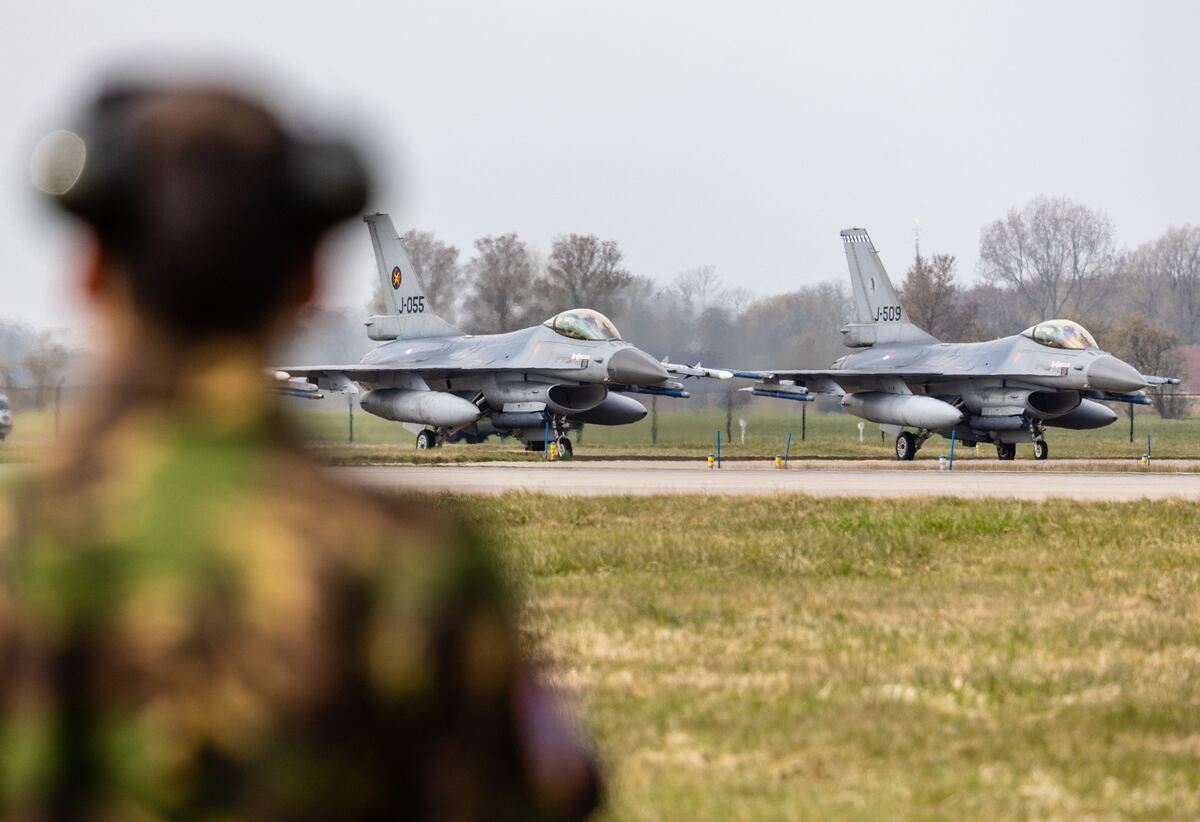
Valery Zaluzhny, the commander-in-chief of Ukraine’s armed forces, recently made another impassioned plea for F-16s, arguing that Western countries would not themselves launch a counteroffensive without air superiority. Yet, Kyiv is trying to do just that while awaiting the delivery of F-16 fighter jets, he complained.
“A very limited number would be enough,” Zaluzhny said , linking their arrival to the success of Ukraine’s ongoing counteroffensive.
That claim is as bold as it is doubtful.
Though an advanced multirole fighter, small numbers of F-16s can neither deliver air superiority to Ukraine nor can they provide a means of breaking through Russia’s heavily fortified defensive lines. And making Ukraine’s operations more complex is a bad strategy. Simplicity is a principle of war , and pivoting to a Western way of air war would be an inherently complex endeavor and raise the odds of failure. Instead of trying to overcome the multi-layered dilemmas posed by Russia’s air- and ground-to-air threats and gain air superiority, Kyiv ought to stay the course with its simple but effective air-denial strategy .
Russia’s air force on offense has failed to impress in this war, but nobody should kid themselves about Russia’s air defenses. To succeed, Ukraine would need to suppress or destroy Russian surface-to-air missiles (SAMs), especially the S-400 threat. Relying on F-16s, equipped with High-Speed Anti-Radiation Missiles (HARM), Ukrainian pilots would have to fly well into the S-400′s envelope to bait Russian operators into emitting. The S-400 has an engagement range of nearly 250 miles, that is, four times the range of an AGM-88 HARM . This makes it an inherently dangerous mission . Even if the F-16s survived to fire their missiles, Russian SAM crews could stop emitting and move — making it difficult for Ukrainian pilots to effectively close the kill chain. Ukraine’s losses would be high, and such a strategy would quickly become unsustainable.
But none of this should come as a surprise. Moscow would be taking a page from Kyiv’s own air-denial playbook, leveraging the inherent advantage of mobile, ground-based air defenses over expensive, fixed-wing aircraft to make the achievement of air superiority prohibitively costly. Put simply, a symmetric contest between a limited number of Ukrainian F-16s and Moscow’s large inventory of SAMs is a losing proposition for Kyiv.
Some airpower enthusiasts will nevertheless be quick to suggest that even if Ukraine’s air-denial strategy was successful against Russian troops on the offensive, air superiority is required now that the tables have turned, and Ukraine’s armed forces have taken the counteroffensive. But Ukraine’s battlefield success rests on it continuing to deny air superiority to Russia, not achieving air superiority outright. Considering the Ukrainian counteroffensive, U.S. Air Force Chief of Staff General Charles Q. Brown stressed the important role of air denial. “It keeps Russian airpower off the back of the Ukrainians and allows them to execute a bit better, being able to use their air defense to their advantage,” Brown explained .
The biggest aerial threat to the counteroffensive comes from Russia’s exploitation of a critical deficit in Ukraine’s air-denial capabilities — insufficient numbers of mobile short-range air defense systems (SHORAD).These systems are particularly important for protecting Ukrainian forces as they advance in the open across mostly flat fields, particularly from Russian attack helicopters. Moscow is increasingly using the KA-52 “Alligator” armed with laser-guided 9K121 “Vikhr” missiles capable of striking moving targets at about five or six miles. By operating their helicopters at the edge of this weapons range, and just beyond the reach of Ukraine’s Western-provided shoulder-fired, man-portable air defense systems, Russian helicopters can remain at relatively safe distance while striking the leading elements of Ukraine’s advancing armor units .
These challenges should not cause Ukraine to abandon its successful air-denial strategy. On the contrary, they point to an urgent need for Ukraine to close a critical gap in its air-denial capabilities. Specifically, Ukraine needs mobile and self-contained SHORAD systems like the U.S.-made AN/TWQ-1 Avenger and German-made Gepard capable of advancing alongside and protecting Ukraine’s attacking forces. The United States has sent only 20 Avengers to Ukraine, but given that the U.S. Army is in the process of replacing them with a new and more modern system, it may be possible for Washington to send more Avengers to Ukraine now and backfill stocks with the new system.
The West may be tempted to speed up delivery of F-16s to Ukraine — complex enough, given the logistical challenges — and hope Ukraine can achieve the complicated and ephemeral state of air superiority, but it should ask itself first some hard questions about strategy. Too often, these debates have become fixated on individual weapon platforms and capabilities, and not the soundness of the strategy for employing these assets. The Ukrainian David ought to stay with his simple-but-effective air-defense sling to keep slaying the Russian Goliath in the skies.
U.S. Air Force Col. Maximilian Bremer leads the Special Programs Division at Air Mobility Command.
Kelly Grieco is a senior fellow with the Reimagining U.S. Grand Strategy Program at the Stimson Center, an adjunct associate professor of security studies at Georgetown University, and a nonresident fellow at the Brute Krulak Center of the Marine Corps University.
This commentary does not necessarily reflect the views of the U.S. Defense Department, the U.S. Air Force, the U.S. Marine Corps, or Marine Corps University.
乌克兰武装部队总司令瓦列里·扎卢日尼近日再次慷慨激昂地呼吁乌克兰引进F-16战斗机,他认为西方国家如果没有空中优势就不会发动反攻。然而,他抱怨说,基辅却在等待F-16战斗机交付的同时,试图发动反攻。
扎卢日尼说:“人数非常有限就足够了”,并将他们的到来与乌克兰正在进行的反攻的成功联系起来。
这种说法既大胆又令人怀疑。
尽管F-16是一款先进的多用途战斗机,但数量较少的F-16既无法为乌克兰夺取制空权,也无法突破俄罗斯重兵把守的防线。让乌克兰的作战行动变得更加复杂并非明智之举。战争的原则之一就是化繁为简,而转向西方的空战模式本身就极其复杂,而且会增加失败的风险。基辅与其试图克服俄罗斯空对空和地对空威胁带来的多重困境并夺取制空权,不如坚持其简单而有效的空中拒止战略。
俄罗斯空军的进攻能力在这场战争中表现平平,但任何人都不应低估俄罗斯的防空能力。乌克兰要想取得胜利,就必须压制或摧毁俄罗斯的地对空导弹系统(SAM),尤其是S-400的威胁。乌克兰飞行员依靠装备高速反辐射导弹(HARM)的F-16战机,必须深入S-400的射程范围,诱使俄罗斯操作人员发射导弹。S-400的射程接近250英里,是AGM-88 HARM导弹射程的四倍。这使得摧毁S-400成为一项极其危险的任务。即使F-16战机能够成功发射导弹,俄罗斯地对空导弹操作人员也可以停止发射导弹并转移阵地,这将使乌克兰飞行员难以有效地完成杀伤链。乌克兰的损失将十分惨重,这样的策略很快就会难以为继。
但这不足为奇。莫斯科此举意在效仿基辅的空中封锁策略,利用机动性强、地面防空系统相对于昂贵的固定翼飞机的固有优势,使夺取制空权的成本高得令人望而却步。简而言之,数量有限的乌克兰F-16战机与莫斯科庞大的地空导弹库存之间的对称对抗,对基辅而言注定失败。
尽管如此,一些空军力量爱好者仍会迅速指出,即便乌克兰的空中封锁战略在俄军进攻中取得了成功,但如今局势逆转,乌克兰军队发起反攻,夺取制空权势势在必行。然而,乌克兰战场上的胜利取决于其能否继续阻止俄罗斯获得制空权,而非直接取得制空权。考虑到乌克兰的反攻,美国空军参谋长查尔斯·Q·布朗将军强调了空中封锁的重要作用。“它能阻止俄罗斯空军对乌克兰军队的空中威胁,使他们能够更好地执行作战任务,并能更好地利用其防空系统,”布朗解释道。
反攻面临的最大空中威胁来自俄罗斯对乌克兰防空能力关键缺陷的利用——乌克兰机动式近程防空系统(SHORAD)数量不足。这些系统对于保护在开阔地带(大多为平坦的田野)推进的乌克兰部队至关重要,尤其对于抵御俄罗斯攻击直升机的攻击。莫斯科越来越多地使用配备激光制导9K121“旋风”导弹的卡-52“短吻鳄”直升机,该导弹能够打击约五六英里外的移动目标。通过让直升机在这一武器射程的边缘,也就是乌克兰西方提供的肩扛式、便携式防空系统射程之外活动,俄罗斯直升机可以在相对安全的距离上打击乌克兰推进装甲部队的先头部队。
这些挑战不应导致乌克兰放弃其行之有效的空中拒止战略。相反,它们凸显了乌克兰迫切需要弥补其空中拒止能力的关键缺口。具体而言,乌克兰需要像美国制造的AN/TWQ-1“复仇者”和德国制造的“猎豹”这样的机动性强、独立运行的近程防空系统,以便与乌克兰的进攻部队协同推进并为其提供保护。美国目前仅向乌克兰提供了20套“复仇者”系统,但鉴于美军正在用一种新型的、更现代化的系统替换它们,华盛顿现在或许可以向乌克兰增派“复仇者”系统,并用新系统补充库存。
西方或许会急于加快向乌克兰交付F-16战机——考虑到后勤方面的挑战,这本身就十分复杂——并寄希望于乌克兰能够获得短暂而复杂的空中优势,但它首先应该认真思考一下自身的战略。太多时候,这些争论都过于关注单一武器平台及其性能,而忽略了运用这些武器的战略是否合理。乌克兰这头“大卫”应该继续使用其简单却有效的防空武器,在空中与俄罗斯的“歌利亚”展开较量。
美国空军上校马克西米利安·布雷默领导空中机动司令部特种项目处。
Kelly Grieco 是史汀生中心“重塑美国大战略计划”的高级研究员,乔治城大学安全研究系的兼职副教授,以及海军陆战队大学布鲁特·克鲁拉克中心的非常驻研究员。
本评论并不一定反映美国国防部、美国空军、美国海军陆战队或海军陆战队大学的观点。