Google ramps up hiring for its Singapore engineering centre as AI drives demand for tech talent随着人工智能推动对技术人才的需求,谷歌正在加大对其新加坡工程中心的招聘力度。
Google expands its Singapore Engineering Centre, hiring engineers to develop AI-driven solutions and meet growing demand for tech talent in Asia-Pacific. Read more at straitstimes.com.
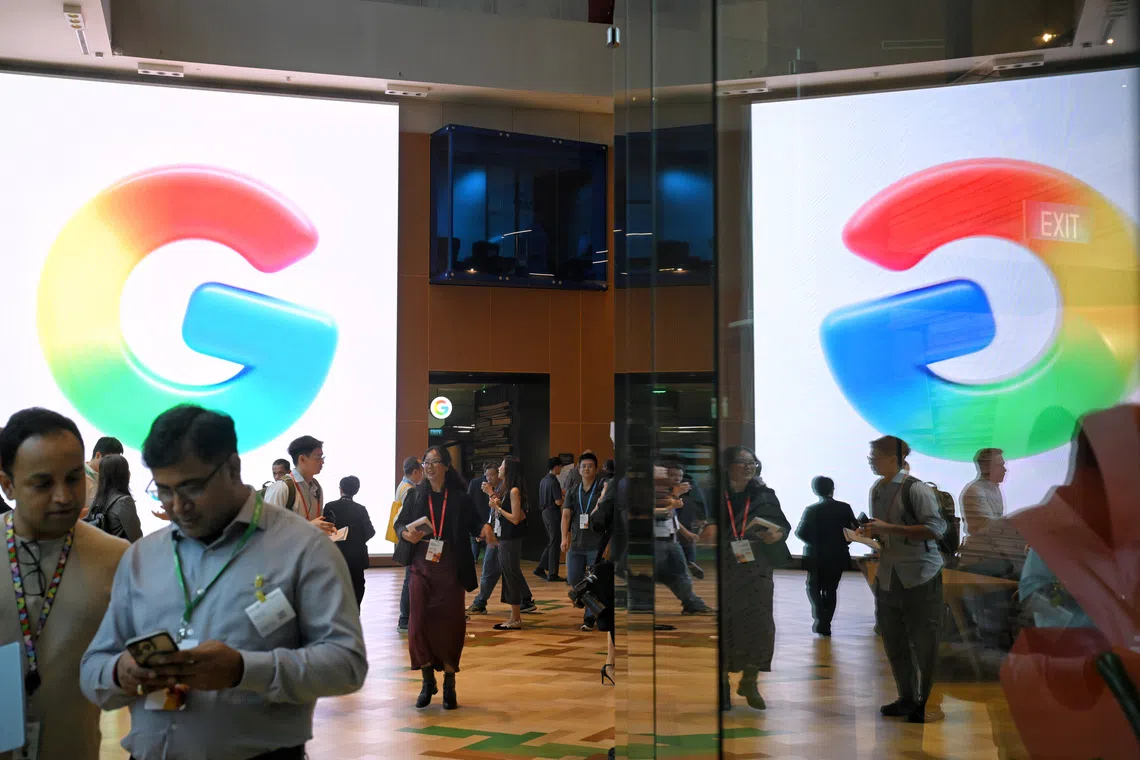
Google has hired more than 85 specialists in under six months for the first phase of its Singapore engineering centre.
ST PHOTO: MARK CHEONG
Published Sep 15, 2026, 03:50 PM
Updated Sep 15, 2026, 04:05 PM
Google is rapidly expanding its Singapore Engineering Centre, hiring over 85 specialists in six months to meet rising AI-driven demand for tech talent.
The centre integrates AI research and frontline engineering to develop local and global solutions, with projects like Grab's translation and weather prediction models.
Globally, Google's parent company Alphabet returned to net positive hiring with 198,933 employees by the end of June, up from 187,103 a year earlier.
SINGAPORE – Google is ramping up its hiring of engineers in Singapore, betting that artificial intelligence will increase demand for skilled tech workers even as it automates more of the work they used to do.
The tech giant has hired more than 85 specialists in under six months for the first phase of its Google Cloud Singapore Engineering Center (SEC), officially launched on Sept 15.
The centre is co-located with Google DeepMind’s Singapore AI research lab, which opened in November 2025 , bringing AI researchers, software engineers and customer-facing engineers together to develop solutions in Singapore for local and global use.
The hiring builds on an expansion that Google promised earlier in February 2026, when the company said it was looking to fill more than 150 positions here .
Moe Abdula, Google Cloud’s vice-president of technology and customer engineering for Asia-Pacific and Greater China, said the speed at which Google staffed the new engineering centre shows that Singapore has a strong pool of talent – from early-career workers to experienced professionals.
“Talent is abundant,” said Abdula, who relocated from the United States to Singapore three years ago for his role at Google.
“Getting into Google is not easy,” he told The Straits Times. “We’ve not compromised on the bar. We have a very rigid process that we go through, and we’ve been delighted by the availability of talent.”
Moe Abdula is vice-president for customer engineering at Google Cloud. PHOTO: GOOGLE
Moe Abdula is vice-president for customer engineering at Google Cloud.
The expansion comes after a few rough years for the global technology workforce. Like many of its peers, Google’s parent company Alphabet expanded rapidly during the Covid-19 pandemic before reversing course in 2023, slashing jobs across various functions as growth normalised.
But its overall workforce has since returned to a growth trajectory. According to its latest earnings release , Alphabet had 198,933 employees at the end of June 2026, up from 187,103 a year earlier.
In Singapore, Google has more than 3,000 employees. Google said its net hiring in Singapore has grown year on year, with the SEC accounting for a meaningful share of those additions.
The expansion comes as its Google Cloud business continues to grow rapidly, with revenue rising 82 per cent year on year in the second quarter.
Abdula said the demand for talent is not limited to those working directly on AI. Cybersecurity, data analytics and software engineering are also seeing increased demand as companies put AI to work.
Customer-facing engineers
Engineers who can do more than coding will “have an advantage, for sure”, said Abdula.
Google’s forward-deployed engineers (FDEs) , for example, work alongside corporate clients for weeks to build solutions from start to finish, rather than simply advising them.
They have to meet the same technical bar as Google’s software engineers, but also have strong consultative skills and the ability to tease out what creates value for businesses, he said.
He pointed to Google’s work with Grab as an example. Grab handles more than 10 million voice calls through its app each month, with language barriers between ride-hailing drivers and passengers across South-east Asia among the trickiest problems.
Google engineers worked with Grab to develop a translation system that accounts for dialects, accents, tone and sentiment, while keeping response times short enough to enable natural conversations and reduce miscommunication.
In another project, Google’s DeepMind researchers and engineers helped customise a weather model to help Grab manage food deliveries.
By improving predictions of rain, humidity and wind at much finer geographic and time scales, Grab can prompt delivery riders on when to start deliveries or take breaks, helping them avoid rain and traffic that could delay orders.
Such projects show why having engineers close to customers and understanding the local context matters, Abdula said.
Unlike some regional tech offices that function primarily as post-sales support outposts, he said the SEC combines research capabilities, core systems engineering and customer-facing front-line engineers under one roof to deliver better solutions.
Beng Kong Pee, executive vice-president of the Economic Development Board, which supported the SEC’s expansion, said: “We welcome Google’s continued investment in the Singapore workforce with new core engineering and FDE roles presenting exciting opportunities for Singaporeans to build expertise with frontier technologies.”
The Google Cloud SEC’s establishment has drawn some Singaporean Googlers back home.
Software engineer Chris Chen, 29, relocated back after more than three years at Google’s London office. He now works on the Cloud interconnect team at the centre, developing private network infrastructure for enterprise clients.
“As the leading tech hub in Asia, Singapore is brimming with career opportunities and is a perfect place for me to further my career for the long term,” said Chen.
Chris Chen is a software engineer working at Google's Singapore engineering centre. PHOTO: GOOGLE
Chris Chen is a software engineer working at Google's Singapore engineering centre.
Fellow software engineer Zhang Xinyi, 26, who started as an intern at Google Taiwan in 2022 before returning home, said the establishment of the SEC aligned with her career goals.
“Returning to Google Singapore was really a blend of great timing and the right opportunity,” Zhang said. “Given the importance of Cloud products and the opportunities across the region, Singapore’s time zone, location and talent pool perfectly taps this growth opportunity.”
Zhang Xinyi is a software engineer working at Google's Singapore engineering centre. PHOTO: GOOGLE
Zhang Xinyi is a software engineer working at Google's Singapore engineering centre.
While AI will automate some tasks, Abdula does not buy the narrative that it will wipe out software engineering jobs.
Even as the proportion of AI-generated code jumped to 70 per cent, Google is still hiring software engineers, he said.
To him, AI simply makes coders more productive, helping them work through massive backlogs much faster. AI also helps take over the tedious work that developers dread, like writing endless test cases.
By delegating these repetitive tasks to AI agents, engineers are freed up to design better user experiences and solutions, and he expects them to do so.
Beyond the current need for software engineers, as evident from Google’s hiring, he is also optimistic about the profession’s future.
“I certainly advised three of my nephews and nieces to go into software engineering.”
While top AI leaders, including Google DeepMind co-founder Demis Hassabis, recently backed calls to slow the pace of frontier model development over safety risks, Abdula said this will not affect the SEC’s mission.
“Regardless of how model training evolves, it will not change what we are building on the ground in Singapore, because a model alone is not an enterprise solution,” he told ST.
Real-world AI deployment demands a full spectrum of core technical capabilities, ranging from robust data governance and security to high-performance storage and networking, he said.
“That is the exact gap the Google Cloud SEC is built to close: engineering foundational technology into secure, mission-critical workflows for customers building in and from Singapore, for the world.”
Cheong Poh Kwan is assistant business editor at The Straits Times.
AI/artificial intelligence
谷歌在不到六个月的时间里,为其新加坡工程中心的第一阶段招聘了超过 85 名专家。
《海峡时报》照片:张马克
发布于2026年9月15日下午3:50
更新于2026年9月15日下午4:05
谷歌正在迅速扩建其新加坡工程中心,在六个月内招聘了 85 多名专家,以满足人工智能驱动的对技术人才日益增长的需求。
该中心整合了人工智能研究和前沿工程技术,以开发本地和全球解决方案,例如 Grab 的翻译和天气预测模型等项目。
在全球范围内,谷歌母公司 Alphabet 的员工人数恢复净正增长,截至 6 月底,员工人数为 198,933 人,高于一年前的 187,103 人。
新加坡——谷歌正在加大在新加坡的工程师招聘力度,押注人工智能即使会使更多技术工人的工作自动化,也会增加对技术工人的需求。
这家科技巨头在不到六个月的时间里,为其于 9 月 15 日正式启动的 Google Cloud 新加坡工程中心 (SEC) 第一阶段招聘了 85 多名专家。
该中心与谷歌DeepMind新加坡人工智能研究实验室位于同一地点,该实验室于2025年11月开业,汇集了人工智能研究人员、软件工程师和面向客户的工程师,在新加坡开发可供本地和全球使用的解决方案。
此次招聘是谷歌在 2026 年 2 月早些时候承诺的扩张计划的一部分,当时该公司表示,它希望在这里填补 150 多个职位空缺。
谷歌云亚太及大中华区技术与客户工程副总裁 Moe Abdula 表示,谷歌迅速组建新的工程中心表明,新加坡拥有强大的人才储备——从职业生涯初期的员工到经验丰富的专业人士。
“人才济济,”阿卜杜拉说道。三年前,他为了在谷歌工作而从美国搬到新加坡。
“进入谷歌并不容易,”他告诉《海峡时报》。“我们对人才的要求毫不妥协。我们有一套非常严格的流程,而且我们很高兴能找到这么多优秀的人才。”
Moe Abdula 是 Google Cloud 的客户工程副总裁。图片来源:Google
Moe Abdula 是 Google Cloud 的客户工程副总裁。
此次扩张是在全球科技行业从业人员经历了几年艰难时期之后进行的。与许多同行一样,谷歌的母公司Alphabet在新冠疫情期间迅速扩张,但在2023年随着增长恢复正常,该公司调整了发展策略,在各个职能部门大幅裁员。
但其员工总数此后已恢复增长。根据其最新财报,截至2026年6月底,Alphabet拥有198,933名员工,高于一年前的187,103名。
谷歌在新加坡拥有超过3000名员工。谷歌表示,其在新加坡的净招聘人数逐年增长,其中美国证券交易委员会(SEC)贡献了相当一部分新增员工。
此次扩张正值其谷歌云业务持续快速增长之际,该业务第二季度收入同比增长 82%。
阿卜杜拉表示,对人才的需求不仅限于直接从事人工智能工作的人员。随着企业将人工智能应用于实际工作中,网络安全、数据分析和软件工程等领域的人才需求也在不断增长。
面向客户的工程师
阿卜杜拉说,除了编程之外还能做其他事情的工程师“肯定会有优势”。
例如,谷歌的前线部署工程师 (FDE) 会与企业客户并肩工作数周,从头到尾构建解决方案,而不仅仅是为他们提供建议。
他说,他们不仅要达到与谷歌软件工程师相同的技术标准,还要具备强大的咨询能力,能够找出为企业创造价值的因素。
他以谷歌与Grab的合作为例。Grab每月通过其应用程序处理超过1000万次语音通话,而东南亚地区网约车司机和乘客之间的语言障碍是其中最棘手的问题之一。
谷歌工程师与 Grab 合作开发了一种翻译系统,该系统考虑了方言、口音、语气和情感,同时保持响应时间足够短,以实现自然对话并减少沟通误解。
在另一个项目中,谷歌DeepMind的研究人员和工程师帮助定制了一个天气模型,以帮助Grab管理食品配送。
通过提高对降雨、湿度和风力的预测精度,Grab 可以更精确地预测地理和时间尺度,从而提醒送餐员何时开始送餐或休息,帮助他们避开可能延误订单的雨天和交通状况。
阿卜杜拉表示,这些项目表明,为什么让工程师靠近客户并了解当地情况非常重要。
他表示,与一些主要作为售后支持站的区域技术办事处不同,SEC 将研究能力、核心系统工程和面向客户的一线工程师集中在一个屋檐下,以提供更好的解决方案。
支持谷歌公司扩张的经济发展局执行副总裁彭光培表示:“我们欢迎谷歌继续投资新加坡劳动力市场,新的核心工程和前端开发工程师职位为新加坡人提供了令人兴奋的机会,让他们能够掌握前沿技术方面的专业知识。”
Google Cloud SEC 的成立吸引了一些新加坡的 Google 员工回国。
29岁的软件工程师克里斯·陈在谷歌伦敦办公室工作三年多后搬了回来。他现在在中心的云互连团队工作,负责为企业客户开发私有网络基础设施。
陈表示:“作为亚洲领先的科技中心,新加坡充满了职业机会,对我来说,这里是长期发展事业的理想之地。”
克里斯·陈是谷歌新加坡工程中心的一名软件工程师。图片来源:谷歌
Chris Chen 是谷歌新加坡工程中心的一名软件工程师。
软件工程师张欣怡(音译)今年 26 岁,她于 2022 年在谷歌台湾担任实习生,之后返回台湾。她说,SEC 的成立与她的职业目标相符。
张表示:“重返谷歌新加坡真的是天时地利人和。考虑到云产品的重要性以及整个地区的发展机遇,新加坡的时区、地理位置和人才储备完美契合了这一增长机遇。”
张欣怡是谷歌新加坡工程中心的一名软件工程师。图片来源:谷歌
张欣怡是谷歌新加坡工程中心的一名软件工程师。
阿卜杜拉虽然认为人工智能会自动化一些任务,但他并不认同人工智能会取代软件工程师工作的说法。
他说,即使人工智能生成的代码比例已跃升至 70%,谷歌仍在招聘软件工程师。
在他看来,人工智能的作用在于提高程序员的效率,帮助他们更快地处理大量积压的工作。人工智能还能帮助他们承担那些令开发人员头疼的繁琐工作,例如编写没完没了的测试用例。
通过将这些重复性任务委托给 AI 代理,工程师们可以腾出时间来设计更好的用户体验和解决方案,他也希望他们能够做到这一点。
除了目前对软件工程师的需求(从谷歌的招聘情况可以看出)之外,他还对该行业的未来持乐观态度。
“我确实建议我的三个侄子侄女去学软件工程。”
尽管包括谷歌DeepMind联合创始人德米斯·哈萨比斯在内的顶级人工智能领导者最近支持放慢前沿模型开发速度以规避安全风险的呼吁,但阿卜杜拉表示,这不会影响美国证券交易委员会的使命。
“无论模型训练如何发展,都不会改变我们在新加坡实地构建的东西,因为仅仅依靠模型本身并不能构成企业解决方案,”他告诉《海峡时报》。
他表示,现实世界的人工智能部署需要全方位的核心技术能力,从强大的数据治理和安全到高性能存储和网络。
“这正是 Google Cloud SEC 旨在弥合的差距:将基础技术融入到安全、关键任务的工作流程中,服务于在新加坡及全球范围内开展业务的客户。”
张宝坤是《海峡时报》的商业版助理编辑。
人工智能