Creativity, confidence and a DSA edge: Why parents are investing in children’s art classes创造力、自信心和DSA优势:为什么家长们愿意投资孩子的艺术课程
Enrichment providers say families are increasingly looking to art to develop creativity, confidence and communication skills.
新闻视频
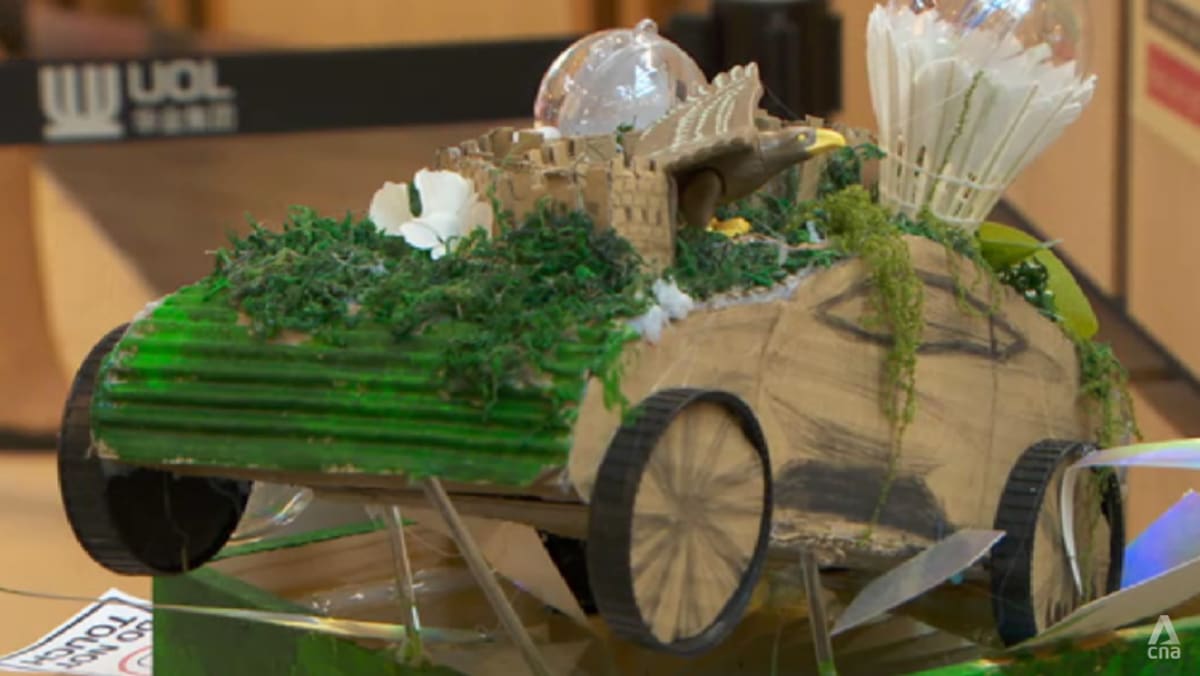
Enrichment providers say families are increasingly looking to art to develop creativity, confidence and communication skills.
An art piece at a public art competition by art enrichment provider Tree Art which incorporates 3D printing, while exploring the integration of art and techology. (Image: CNA)
This audio is generated by an AI tool.
SINGAPORE: For some parents, art classes are no longer simply about teaching children how to draw or paint.
At Tree Art, enrolment in its art enrichment classes has more than doubled since 2022.
"I believe there's a change in the parents' mindset nowadays,” said the school’s chief financial officer Teh Chun Sem.
CNA Games Guess Word Crack the word, one row at a time Buzzword Create words using the given letters Mini Sudoku Tiny puzzle, mighty brain teaser Mini Crossword Small grid, big challenge Word Search Spot as many words as you can Show More Show Less “They are not only focused on academics, they are more focused on things like creativity, confidence level, how you train yourself, how you explain your ideas,” he said. Art education should not be viewed only as training for children who want an artistic career, Mr Teh said. Such skills could be applied to other fields, he said. “For example, as an engineer … you have an imagination, you have creativity. In the future, you can create something different, and not just copy and paste." Still, Mr Teh notes that some parents continue to look at art as relevant only for those hoping to pursue an career in art. The firm is using roadshows and public art activities to raise awareness of how art can support a child’s wider development. These include outdoor sketching at zoos and museums, as well as art competitions, with plans to hold more activities across more locations.
“They are not only focused on academics, they are more focused on things like creativity, confidence level, how you train yourself, how you explain your ideas,” he said.
Art education should not be viewed only as training for children who want an artistic career, Mr Teh said.
Such skills could be applied to other fields, he said.
“For example, as an engineer … you have an imagination, you have creativity. In the future, you can create something different, and not just copy and paste."
Still, Mr Teh notes that some parents continue to look at art as relevant only for those hoping to pursue an career in art.
The firm is using roadshows and public art activities to raise awareness of how art can support a child’s wider development.
These include outdoor sketching at zoos and museums, as well as art competitions, with plans to hold more activities across more locations.
ART IN THE DIGITAL AGE
Technology is also making its way into art classes.
Tree Art incorporates skills such as 3D printing and robotics into its lessons, alongside process-based learning.
Arts education centre ARTARY has seen enrolment rise by about 30 per cent over three years.
The centre’s founder and director Vanessa Seng said some parents look at art as a way for their children to develop creative thinking beyond what they learn at school.
“They feel that art is an important tool to bring them to other aspects of creative building, such as animation, as well as visual literacy, not just art for art itself,” said Ms Seng.
“That's why they want to start them young,” she added, saying that some students are as young as two-and-a-half.
The centre has digital art offerings for older students and is also looking at introducing AI into its classes, but with some limits.
"We don't want to push our kids to directly use an AI tool, which is going against our values of art making,” she said.
It plans to use AI to help children catalogue their work, assemble portfolios and write artist statements , with kids ready to prepare and set up an exhibition for themselves.
But not all art firms are seeing enrolment increase.
The Art People has seen enrolment in its art classes fall by up to 30 per cent from 2025 levels.
The Art People plans to incorporate technology into its curriculum. (Image: CNA)
However, it noted growing demand from parents to incorporate technology into its curriculum.
"If you skip tech entirely and just focus on traditional, I believe that in the next few years we'll be left behind, the whole society, even the art sector, will be left behind,” said Mr Bulner Xavier, founder of The Art People.
“To stay relevant, we really have to get our kids involved in tech from a very early age, get them comfortable,” he said.
It plans to introduce illustration, animation and 3D modelling into its classes in October.
FROM CREATIVITY TO DSA
But creativity and confidence are not the only outcomes some parents are seeking from art classes.
Enrichment providers are also seeing growing demand for programmes preparing children for Direct School Admission (DSA), where students can seek admission to certain secondary schools based on talents, including in visual arts.
Preparation can begin from age nine – years before applications for DSA in Primary 6.
At ARTARY, interest in DSA classes has grown by nearly 50 per cent over the past three years. "Every parent would want their child to have an advantage.” said Mr Louie Ong, partner at ARTARY.
“DSA allows us to identify talent from a young age. This talent, when nurtured in the right direction, allows that individual or that child to excel,” said Mr Ong.
Students in the DSA classes are taught how to build a good portfolio, discuss and present their own work and prepare for interviews.
This comes in response to how schools are changing their DSA requirements and programmes, with some of them even requiring students to demonstrate artistic ability on the spot.
About nine in 10 of ARTARY’s DSA candidates have secured places, according to the centre.
Tree Art has similarly seen DSA enrolment rise by about 30 per cent in recent years.
But the art enrichment firm warns about the effects of parental pressure on children.
"Sometimes, parents are the ones that want them to enter just so they can enter the schools that they want, like their chosen secondary schools rather, and I think that puts a lot of pressure on the child,” said Tree Art’s regional supervisor Niesa Luib.
“Sometimes the kid loses their interest halfway, and the parents are still adamant,” she said.
For Mr Ong, he has seen that pressure affect kids even harder.
“Some kids burn out along the journey, and they don't want to touch another brush, and they break down, and that's because parents keep on pushing them… Kids go through a journey. there's a lot of emotions at school and all the stuff that they go through.”
The pressure can be harder to manage when a DSA application is unsuccessful.
While Tree Art says it sees a 90 per cent success rate for its students, it wants to make sure that students do not lose sight of the bigger picture.
Art enrichment firm Tree Art warns about the effects of parental pressure on children. (Image: CNA)
“What matters most is our children's confidence and protecting how they feel and ensuring that they don't lose that spark that they have for art," said Ms Luib.
She pointed out that an unsuccessful application does not mean the end of the journey.
Teachers can work with parents to look for alternatives such as the Art Elective Programme (AEP) in secondary schools and potentially another DSA application at the junior college level, she added.
Mr Ong said the value of DSA preparation can extend beyond securing a place in a school, with skills accompanying children as they grow up.
“We’re actually preparing them for life skills, the life journey. How they express themselves, how they use art in their everyday lives. All these are relevant skills.”
Get our pick of top stories and thought-provoking articles in your inbox
Stay updated with notifications for breaking news and our best stories
Join our channel for the top reads for the day on your preferred chat app
课外活动机构表示,越来越多的家庭希望通过艺术来培养孩子的创造力、自信心和沟通能力。
这是艺术教育机构Tree Art在公共艺术比赛中创作的一件作品,该作品运用了3D打印技术,探索了艺术与科技的融合。(图片:CNA)
这段音频由人工智能工具生成。
新加坡:对一些家长来说,艺术课不再仅仅是教孩子如何画画或涂色。
自 2022 年以来,Tree Art 艺术拓展课程的报名人数增加了一倍多。
“我认为现在家长们的观念发生了变化,”该校首席财务官郑俊森说道。
CNA游戏 猜词游戏 逐行破解单词 流行词游戏 用给定的字母组成单词 迷你数独 小小的谜题,强大的脑力挑战 迷你填字游戏 小方格,大挑战 单词搜索 尽可能多地找出单词 显示更多 显示更少 “他们不仅关注学术成绩,更关注创造力、自信心、自我训练方式以及表达想法的方式,”他说。郑先生表示,艺术教育不应仅仅被视为培养未来从事艺术事业的孩子。这些技能可以应用于其他领域。“例如,作为一名工程师……你拥有想象力和创造力。未来,你可以创造出与众不同的东西,而不仅仅是复制粘贴。” 不过,郑先生指出,一些家长仍然认为艺术只与那些希望从事艺术事业的人相关。该公司正在利用巡回展览和公共艺术活动来提高人们对艺术如何促进儿童全面发展的认识。这些活动包括在动物园和博物馆进行户外写生,以及艺术比赛,并计划在更多地点举办更多活动。
他说:“他们不仅关注学术成绩,更关注创造力、自信心、自我训练方式以及表达想法的方式等。”
郑先生表示,艺术教育不应仅仅被视为培养未来从事艺术事业的孩子的手段。
他表示,这些技能可以应用到其他领域。
“例如,作为一名工程师……你拥有想象力,你拥有创造力。未来,你可以创造出与众不同的东西,而不仅仅是复制粘贴。”
不过,郑先生指出,有些家长仍然认为艺术只与那些希望从事艺术事业的人有关。
该公司正通过巡回展览和公共艺术活动来提高人们对艺术如何支持儿童全面发展的认识。
这些活动包括在动物园和博物馆进行户外写生,以及艺术比赛,并计划在更多地点举办更多活动。
数字时代的艺术
科技也正在渗透到艺术课堂中。
Tree Art 将 3D 打印和机器人技术等技能融入到课程中,并结合过程式学习。
艺术教育中心 ARTARY 的入学人数在三年内增长了约 30%。
该中心创始人兼主任 Vanessa Seng 表示,一些家长将艺术视为让孩子在学校学习之外培养创造性思维的一种方式。
“他们认为艺术是一种重要的工具,可以引导他们进入创意建设的其他方面,例如动画,以及视觉素养,而不仅仅是艺术本身,”Seng女士说。
“这就是为什么他们想让孩子们从小就开始学习,”她补充道,并表示有些学生只有两岁半。
该中心为年龄较大的学生提供数字艺术课程,并且正在考虑将人工智能引入课堂,但有一些限制。
“我们不想强迫孩子们直接使用人工智能工具,这违背了我们艺术创作的价值观,”她说。
该项目计划利用人工智能帮助孩子们整理作品目录、制作作品集和撰写艺术家自述,让孩子们做好准备,为自己筹备和举办展览。
但并非所有艺术公司都出现了招生人数增加的情况。
The Art People 预计,到 2025 年,其艺术课程的报名人数将下降高达 30%。
艺术团体计划将科技融入课程。(图片:CNA)
然而,该机构注意到家长们越来越希望将科技融入课程中。
“如果你完全忽略科技,只专注于传统,我相信在未来几年里,我们会落后,整个社会,甚至艺术界,都会落后,”艺术人士创始人布尔纳·泽维尔先生说道。
他说:“为了保持与时俱进,我们真的需要让孩子们从小就接触科技,让他们感到舒适。”
该机构计划于 10 月份在其课程中引入插画、动画和 3D 建模。
从创意到DSA
但有些家长希望通过艺术课程获得的不仅仅是创造力和自信心。
课外辅导机构也发现,对帮助孩子准备直接入学(DSA)的课程的需求日益增长,学生可以根据自己的才能(包括视觉艺术才能)申请进入某些中学。
准备工作可以从九岁开始——比小学六年级申请直接入学津贴提前好几年。
过去三年,ARTARY 的 DSA 课程报名人数增长了近 50%。ARTARY 的合伙人 Louie Ong 先生表示:“每位家长都希望自己的孩子拥有优势。”
“DSA让我们能够从小发现有才能的人。如果能以正确的方式培养这些才能,就能让个人或孩子脱颖而出,”翁先生说。
DSA 课程的学生将学习如何建立一个好的作品集,讨论和展示自己的作品,并为面试做好准备。
这是对学校如何改变其DSA要求和课程的回应,其中一些学校甚至要求学生当场展示艺术能力。
据该中心称,ARTARY 的 DSA 候选人中约有十分之九获得了入学资格。
近年来,Tree Art 的 DSA 入学人数也出现了类似的增长,增幅约为 30%。
但这家艺术教育公司警告说,父母施加的压力会对孩子产生不良影响。
“有时候,父母希望孩子入学只是为了能进入他们想要的学校,比如他们选择的中学,我认为这会给孩子带来很大的压力,”Tree Art 的区域主管 Niesa Luib 说。
“有时候孩子学到一半就失去兴趣了,但父母仍然坚持己见,”她说。
王先生发现,这种压力对孩子的影响甚至更大。
“有些孩子在学习过程中筋疲力尽,再也不想碰画笔,他们崩溃了,那是因为父母一直逼迫他们……孩子们要经历一个成长的过程。他们在学校里会经历很多事情,也会有很多情绪波动。”
如果残疾学生补助申请不成功,压力可能会更难控制。
虽然 Tree Art 表示其学生的成功率高达 90%,但它希望确保学生不会忽略更广阔的视野。
艺术启蒙机构Tree Art警告家长压力对孩子的影响。(图片来源:CNA)
“最重要的是孩子们的自信心,保护他们的感受,确保他们不会失去对艺术的热情,”卢伊布女士说。
她指出,申请失败并不意味着旅程的结束。
她补充说,教师可以与家长合作,寻找其他选择,例如中学的艺术选修课程(AEP),以及初级学院阶段的另一项直接入学计划(DSA)。
王先生表示,DSA 准备的价值不仅限于确保入学名额,还能让孩子们在成长过程中掌握各种技能。
“我们实际上是在为他们的生活技能、人生旅程做准备。教他们如何表达自己,如何在日常生活中运用艺术。所有这些都是非常重要的技能。”
订阅我们的邮件,即可获取精选热点新闻和引人深思的文章。
订阅通知,第一时间获取突发新闻和精彩报道。
加入我们的频道,即可在您常用的聊天应用上获取当日热门文章。