Geissele Automatics reveals ‘production-ready’ assault rifle for SOCOM盖塞尔自动武器公司发布为美国特种作战司令部研制的“可量产”突击步枪
The Pennsylvania gun company introduced a model of its Hypervelocity Improved Capability Assault Rifle.
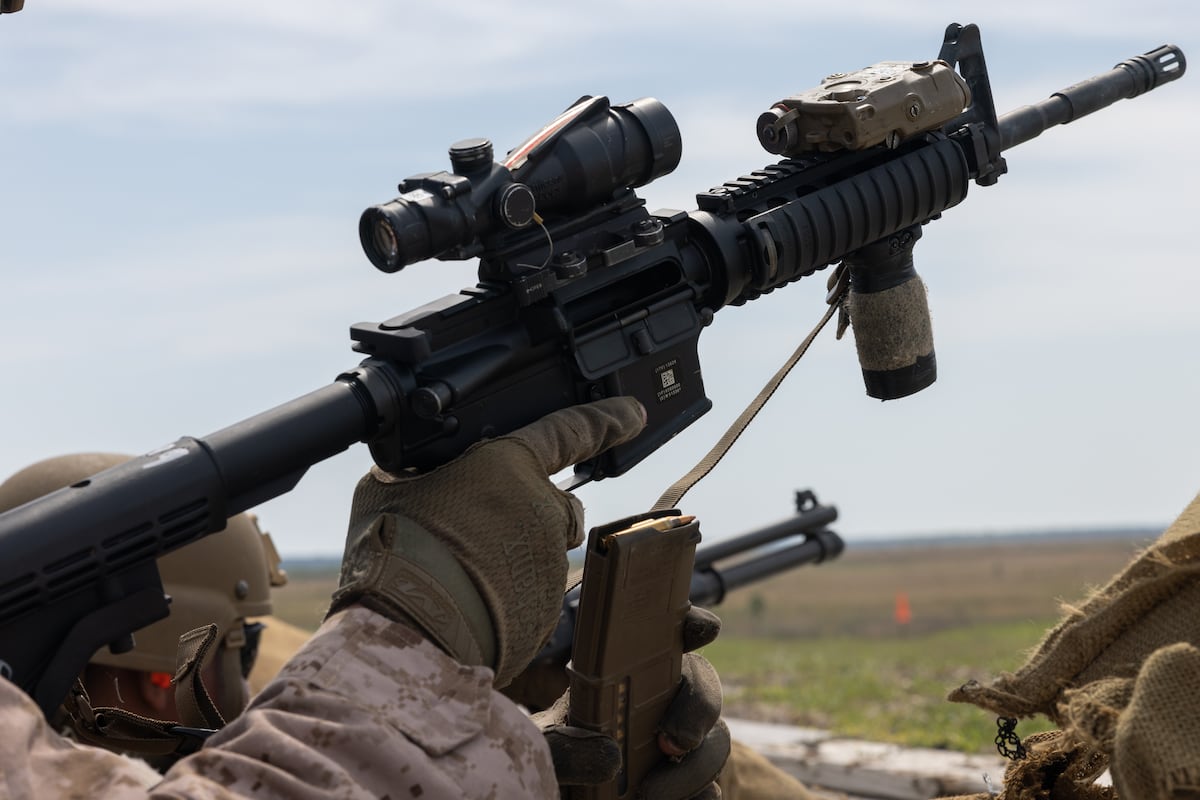
The Pennsylvania gun company Geissele Automatics introduced a production-ready model of its Hypervelocity Improved Capability Assault Rifle , or HICAR, as part of a Special Operations Command (SOCOM) program to extend the service life of the legacy M4 carbine with new capabilities.
The company started a series of promotional videos about building the HICAR since announcing the weapon early last month, saying it wants to highlight the design’s performance and show what “high-speed product development” looks like.
The Naval Surface Warfare Center, which issued the solicitation in May, had a 21-day response period that has ended. The solicitation asked for an M4-style platform capable of firing “future hypervelocity” 5.56mm ammo, which would increase the weapon’s effective range from 300 to 600 meters.
Bill Geissele, the founder and president of Geissele Automatics, explained in an interview with Military Times that they were able to respond to the solicitation so quickly because they were “already well familiar” with the technology.
He said they had been working on other government and commercial projects involving high-pressure ammunition for about three years before the solicitation. The company is currently contracted to make sniper rifles for SOCOM.
Details about the U.S. military’s hypervelocity 5.56mm, designated M855A1+, are non-existent. SOCOM referred Military Times to the U.S. Army Combat Capabilities Development Command, which described the cartridge in an email as a “conceptual approach for achieving increased range and performance within existing calibers.”
For internal testing and demonstrations, Geissele said they created their own hypervelocity cartridge using commercial products that replicates the military ammunition.
He explained that the major difference between legacy 5.56mm ammo and the hypervelocity round is that the hypervelocity case is loaded to 82,000 PSI, or about 20,000 PSI higher.
However, because of the project’s sensitive nature, Geissele said they won’t sell the civilian variant of the HICAR until the ammo becomes commercially available.
In the promotional videos , Geissele engineers equip the HICAR with a long-range scope to demonstrate the weapon’s range while also measuring the velocity with a chronograph. The company said the HICAR, equipped with an 11.5-inch barrel and shooting pressurized ammo with a 77-grain bullet, will consistently deliver a muzzle velocity of 2,700 feet per second and is accurate out ot 800 meters.
“When you put a high-performance engine into a vehicle that’s not designed for it, other things in the vehicle have to be beefed up in order to handle the horsepower,” he said. “And it’s the same thing with high-pressure ammunition.”
Geissele explained that one challenge with high-pressure ammunition is the stress it puts on the barrel. To address this concern, they used a higher-quality steel — the kind typically reserved for artillery barrels — for the HICAR.
Yet, some unknowns remain about the longevity of a firearm running high-pressure ammunition. “That’s why we’re making the ammunition and testing it,” he said. “We haven’t shot as many rounds through to find a limit of it. We are shooting our first iteration of the barrel now.”
He called the testing process “actually extremely difficult” because they have to fire thousands of rounds and closely monitor not just the performance, but the wear on the materials as well.
Because they haven’t completed testing, the Geissele HICAR has not yet reached its final iteration. Geissele explained that the company is close, but it just has not had an extremely high round count yet.
But that’s also why the company started releasing the videos. “I think it’s interesting to see it. I think it’s very interesting for people to see product development and how Geissele does it. You know, people want to understand what exactly is going on so it’s not a mystery.”
He called their HICAR design a “production-ready weapon” and beyond the prototype phase. “We could, you know, if we got an order for 5,000 guns tomorrow, we could turn the machines on and start making them,” he added.
Daniel Terrill is a contributor to Military Times. He’s been reporting on military issues, the gun industry, and the outdoors for nearly two decades. Although writing is his passion, he’s been a Marine, police officer, and, perhaps the most dangerous job of his career, a substitute teacher.
宾夕法尼亚州的枪支公司 Geissele Automatics 推出了其 Hypervelocity Improved Capability Assault Rifle(简称 HICAR)的量产型号,作为特种作战司令部 (SOCOM) 计划的一部分,旨在通过新功能延长传统 M4 卡宾枪的使用寿命。
自上个月初宣布推出 HICAR 武器以来,该公司开始制作一系列关于 HICAR 制造过程的宣传视频,称其旨在突出该武器的设计性能,并展示“高速产品开发”的成果。
海军水面作战中心于5月发布了招标公告,21天的答复期已结束。该招标公告要求采购一种M4式平台,能够发射“未来超高速”5.56毫米弹药,这将使武器的有效射程从300米增加到600米。
Geissele Automatics 的创始人兼总裁 Bill Geissele 在接受《军事时报》采访时解释说,他们之所以能够如此迅速地响应招标,是因为他们“已经非常熟悉”这项技术。
他表示,在此次招标之前,他们已经参与其他涉及高压弹药的政府和商业项目约三年。该公司目前与美国特种作战司令部签订合同,为其生产狙击步枪。
关于美军超高速5.56毫米弹药(代号M855A1+)的详细信息尚无定论。特种作战司令部建议《军事时报》联系美国陆军作战能力发展司令部,后者在一封电子邮件中将这种弹药描述为“在现有口径范围内提高射程和性能的概念性方法”。
Geissele表示,为了进行内部测试和演示,他们使用商业产品制造了自己的超高速弹药筒,该弹药筒可以复制军用弹药。
他解释说,传统 5.56 毫米弹药和超高速弹药的主要区别在于,超高速弹药的装药量为 82,000 PSI,比传统弹药高出约 20,000 PSI。
然而,由于该项目的敏感性,盖塞尔表示,在弹药实现商业化供应之前,他们不会出售 HICAR 的民用版本。
在宣传视频中,盖赛尔(Geissele)的工程师为HICAR配备了远程瞄准镜,以展示该武器的射程,同时还用测速仪测量了弹速。该公司表示,HICAR配备11.5英寸枪管,发射77格令弹头的加压弹药,可稳定达到每秒2700英尺的枪口初速,并在800米范围内保持精准射击。
他说:“当你把一台高性能发动机装到一辆并非为此设计的车辆上时,车辆的其他部件也必须进行强化才能承受住这股强大的动力。高压弹药也是如此。”
盖塞尔解释说,高压弹药面临的一大挑战是会对枪管造成很大的压力。为了解决这个问题,他们为HICAR步枪使用了更高质量的钢材——这种钢材通常用于制造火炮枪管。
然而,对于使用高压弹药的枪支的寿命,仍然存在一些未知数。“这就是我们制造和测试弹药的原因,”他说。“我们还没有发射足够多的弹药来确定其极限。我们现在正在测试第一代枪管。”
他称测试过程“实际上极其困难”,因为他们必须发射数千发子弹,并密切监控的不仅是性能,还有材料的磨损情况。
由于尚未完成测试,Geissele HICAR 尚未达到最终版本。Geissele 解释说,公司已经接近完成,只是目前还没有达到极高的测试次数。
但这也是该公司开始发布这些视频的原因。“我觉得观看这些视频很有意思。我认为让人们了解产品开发过程以及盖赛尔是如何进行的,会非常有趣。你知道,人们想弄清楚到底发生了什么,这样就不会再感到神秘了。”
他称他们的HICAR设计是一款“可量产的武器”,已经超越了原型阶段。“你知道,如果我们明天接到5000支枪的订单,我们就可以启动机器开始生产,”他补充道。
丹尼尔·特里尔是《军事时报》的撰稿人。近二十年来,他一直报道军事问题、枪支行业和户外运动。虽然写作是他的挚爱,但他曾是一名海军陆战队员、一名警察,还做过一份或许是他职业生涯中最危险的工作——代课老师。