‘Hundreds’ of buildings, ‘dozens’ of aircraft destroyed or damaged during Iran ops: DoD IG美国国防部监察长办公室称,在伊朗行动中,数百栋建筑物和数十架飞机被摧毁或损坏。
President Donald Trump and Defense Secretary Pete Hegseth, have denied there are munition stockpile concerns. The IG found otherwise.
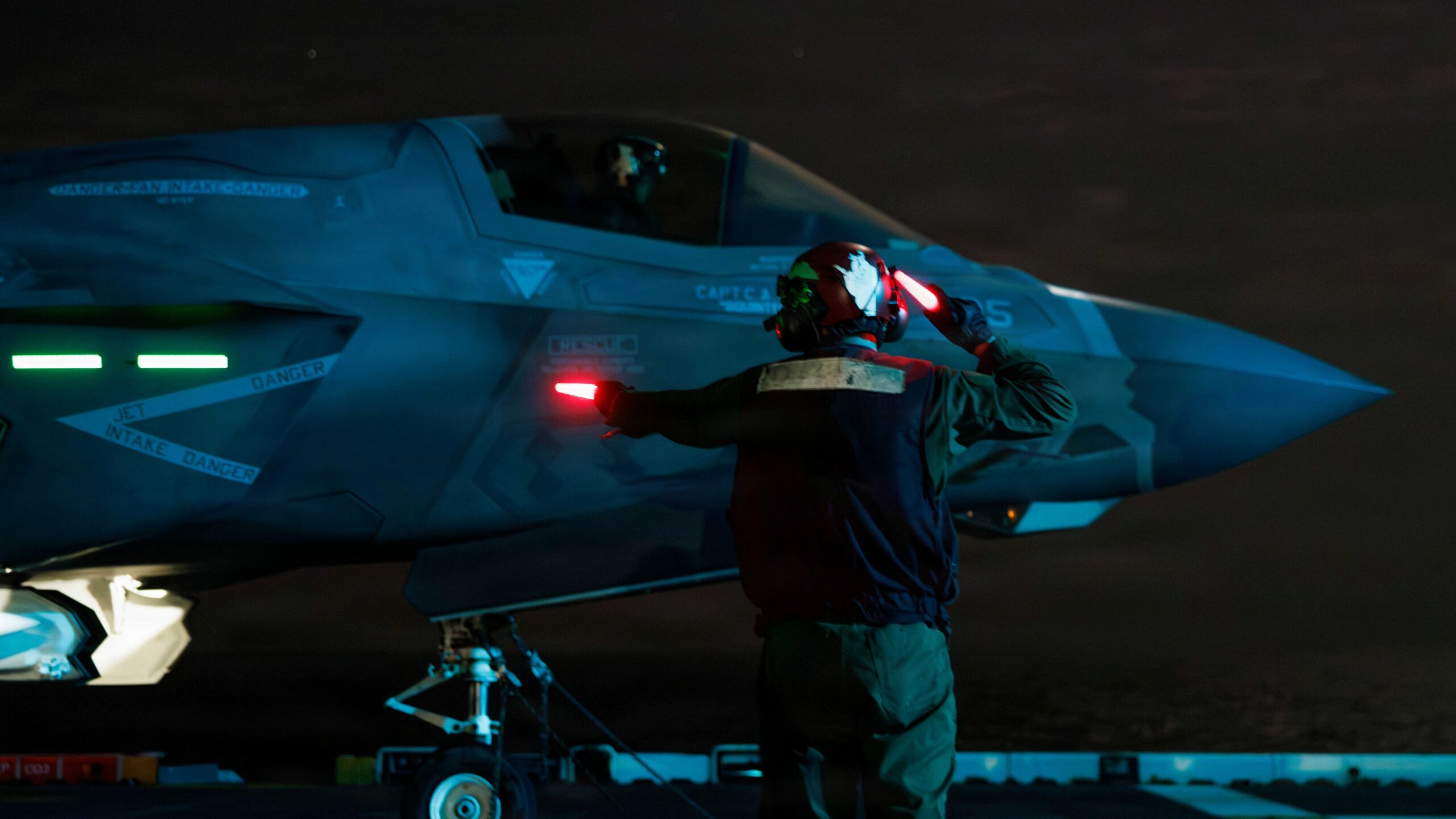
A U.S. Marine Corps F-35B Lightning II lands aboard USS Tripoli (LHA 7), April 6, 2026. (U.S. Marine Corps photo)
WASHINGTON — A new report by the Pentagon’s Inspector General has outlined the costs of Operation Epic Fury. Among them: “hundreds” of buildings and “dozens” of aircraft left damaged or destroyed, over 400 servicemembers wounded and the expenditure of $22 billion in munitions that has left “strategic inventory shortfalls” for the US military.
The report, released today, provides the clearest accounting of the materiel damage that has occurred to US military assets since the start of the conflict with Iran. The report only covers from the launch of military activities on Feb. 28 to June 30, meaning that damage totals will increase the next time the IG issues a similar report.
The IG cited the most recent cost estimate as $33.4 billion as of June 29. That number includes $7.4 billion in “cumulative obligations” for the operation, $22.3 billion in used munitions, and $3.7 billion in equipment losses.
That total does not include the costs of infrastructure damage, which are likely to be significant: “Iranian strikes damaged and destroyed hundreds of buildings and structures at U.S. bases in Kuwait, Bahrain, Qatar, UAE, Saudi Arabia, Iraq, Oman, and Jordan during the conflict,” per the IG report.
Last week, the Navy’s acting secretary Hung Cao said Iran “blew the hell out of” a key naval base in Bahrain — and officials have said they may not repair everything damaged from Iranian strikes.
Key operational costs include “airlift operations ($929.6 million), the Flying Hour Program ($691.1 million), mission and other ship operations ($647.7 million), base support ($405.0 million), and maneuver units ($385.3 million).”
On the personnel front, 417 service members were wounded and seven were killed during the operation.
One of the key questions surrounding Epic Fury has been the heavy use of American munitions and what impact that could have on the US stockpile. Officials, including both President Donald Trump and Defense Secretary Pete Hegseth , have pushed back on the idea that the operation is causing concerns about the stockpile depth.
The IG report appears to be the first official, public notice that DoD officials are, in fact, worried: “The Office of the Under Secretary for Acquisition and Sustainment (OUSW[A&S]) said that the munitions expenditure in OEF has resulted in strategic inventory shortfalls and revealed industrial base bottlenecks for munitions resupply.”
Those bottlenecks largely are around the slow speed of production, an industry-wide issue. A&S officials specifically called out to IG investigators “the production of solid rocket motors, the availability of high-grade explosives and propellants, and the recruitment of skilled manufacturing labor” as key issues.
Notably, the IG says that “The full OEF mission statement is classified,” at a time when White House and Pentagon leadership have taken criticism for shifting goals and rationales of the operation.
2026年4月6日,一架美国海军陆战队的F-35B“闪电II”战斗机降落在“的黎波里”号两栖攻击舰(LHA 7)上。(美国海军陆战队照片)
华盛顿——五角大楼监察长发布的一份新报告详细列出了“史诗狂怒行动”的代价。其中包括:数百栋建筑物和数十架飞机受损或被毁,400多名军人受伤,以及耗资220亿美元的弹药,导致美军出现“战略库存短缺”。
今天发布的这份报告,对自伊朗冲突爆发以来美国军事资产遭受的物质损失进行了迄今为止最清晰的统计。该报告仅涵盖2月28日军事行动开始至6月30日期间的情况,这意味着监察长下次发布类似报告时,损失总额将会增加。
监察长办公室援引截至 6 月 29 日的最新成本估算为 334 亿美元。该数字包括行动的 74 亿美元“累计义务”、223 亿美元的旧弹药和 37 亿美元的设备损失。
该总额还不包括基础设施损坏的成本,而这些成本可能相当巨大:“根据监察长报告,在冲突期间,伊朗的袭击破坏并摧毁了美国在科威特、巴林、卡塔尔、阿联酋、沙特阿拉伯、伊拉克、阿曼和约旦的基地内的数百栋建筑物和构筑物。”
上周,海军代理部长洪曹表示,伊朗“彻底摧毁”了巴林的一个重要海军基地——官员们表示,他们可能不会修复所有被伊朗袭击损坏的设施。
主要运营成本包括“空运作业(9.296亿美元)、飞行小时计划(6.911亿美元)、任务和其他舰船作业(6.477亿美元)、基地支持(4.05亿美元)和机动部队(3.853亿美元)。”
人员方面,行动中有 417 名军人受伤,7 人阵亡。
围绕“史诗狂怒”行动的关键问题之一是美军大量使用弹药及其对美国军火储备的影响。包括唐纳德·特朗普总统和国防部长皮特·赫格塞斯在内的官员都否认此次行动会引发人们对军火储备深度的担忧。
监察长办公室的报告似乎是国防部官员首次公开表示担忧:“负责采购和保障的副部长办公室(OUSW[A&S])表示,持久自由行动中的弹药支出导致战略库存短缺,并暴露出弹药补给的工业基础瓶颈。”
这些瓶颈主要集中在生产速度缓慢上,这是一个行业普遍存在的问题。A&S公司官员特别向监察长调查人员指出,“固体火箭发动机的生产、高等级炸药和推进剂的供应以及熟练制造业工人的招聘”是关键问题。
值得注意的是,监察长表示“完整的持久自由行动任务声明属于机密”,而此时白宫和五角大楼领导层却因改变行动目标和理由而受到批评。