YFQ-44A Fury Has Been Fit Checked With Air-To-Ground MunitionsYFQ-44A“狂怒”导弹已完成空对地弹药适配性检查
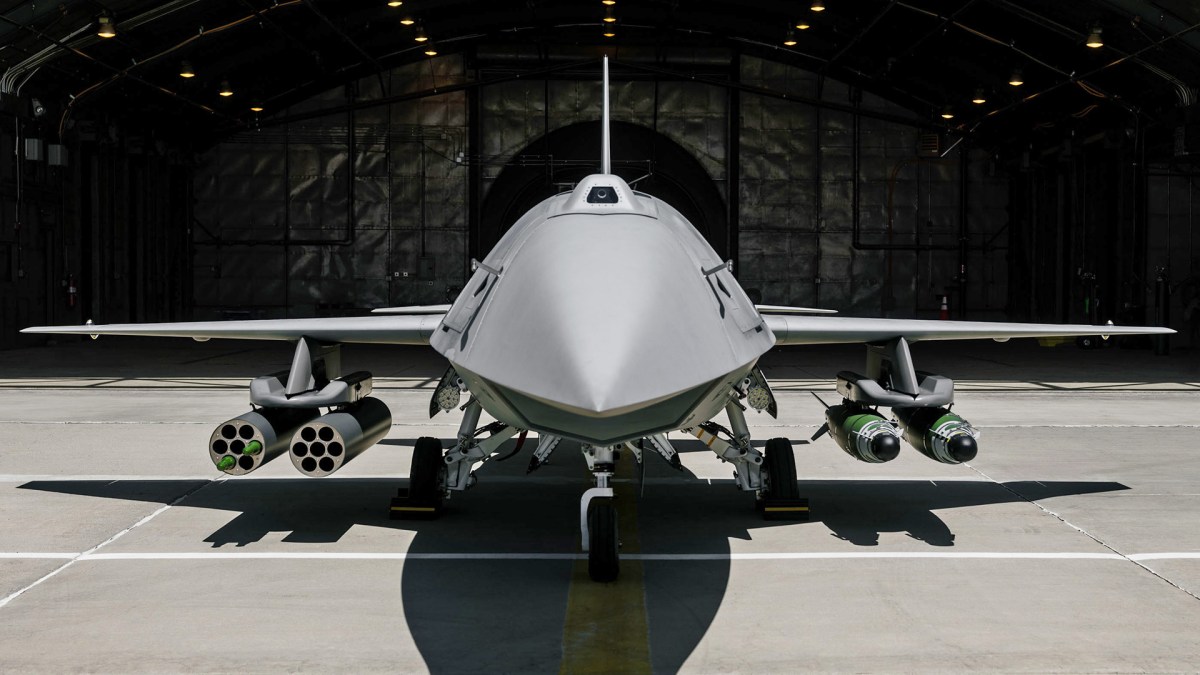
New imagery highlights potential air-to-ground weapons integration on Fury, pointing to the possibility of a broader strike capability for production FQ-44s. New imagery highlights air-to-ground weapons being integrated on the YFQ-44A, pointing to a much broader strike capability for the production FQ-44.
新闻视频
Published Sep 15, 2026 12:33 PM EDT
New imagery shared with TWZ by Anduril shows its YFQ-44A Fury Collaborative Combat Aircraft (CCA) configured with air-to-ground weapons, underscoring the fact that the CCA could take on an air-to-ground role in the future in addition to its current air-to-air focus. Yesterday, Anduril executives yesterday revealed that the company had begun integration and fit checks for a range of air-to-ground weapons, although they confirmed to us that those weapons had not yet been flight-tested aboard Fury.
The YFQ-44A is one of two aircraft selected by the Air Force for its CCA Increment 1 program, alongside General Atomics’ YFQ-42A Vengeance . The service’s stated priority for the initial aircraft is air dominance, and Anduril says the production FQ-44 will have four external hardpoints capable of carrying four AIM-120 AMRAAM air-to-air missiles. The YFQ-44A, which currently has two underwing pylons for two AMRAAMs, has already conducted a live AIM-120 firing as part of testing with the Air Force’s Experimental Operations Unit.
A YFQ-44A fires an AIM-120 weapon in secluded airspace over the Mojave Desert. U.S. Air Force photo by Jennifer Healy Tech. Sgt. Jennifer Healy
The new imagery, however, points toward a substantially broader weapons envelope, with the aircraft shown carrying different air-to-ground stores on its two external stations. The weapons are shown fitted to the aircraft during a ground-based fit check, an important step in the integration process before captive-carry and, ultimately, live-release testing, if Anduril and the USAF choose to go down that route.
During a recent roundtable with reporters yesterday at the Air & Space Forces Air, Space and Cyber Symposium that TWZ is attending, Anduril’s Jason Levin, senior vice president for Air Dominance and Strike, and Erin Simpson, vice president for Strategy for Air Dominance and Strike, said the company had already begun integration and fit checks of 500-pound Joint Direct Attack Munitions (JDAM), 250-pound Small Diameter Bombs (SDB), and low-cost cruise missiles. Pods for 2.75-inch guided or unguided rockets are also seen fitted to the aircraft. In each case, the stores are mounted on a twin adaptor rack.
A twin rack loaded with two GBU-39/B Small Diameter Bombs (SDB) under the wing of the YFQ-44A. Anduril
Furthermore, Anduril’s plans extend to testing the Fury with other air-to-air weapons and targeting pods.
Importantly, the diversity of weapons will give Fury a range of potential missions beyond high-end air-to-air combat, including counter-UAS, counter-cruise-missile, and air-to-ground or air-to-surface strike missions.
“We’ve begun integration and fit checks of a lot of other munitions,” an Anduril executive said. “We’ve done 500-pound guided bombs. We’ve done Small Diameter Bombs.”
The company said it had also begun engineering work to integrate its Barracuda 500 offering for the Air Force’s emerging low-cost cruise-missile effort .
It should be noted that giving the YFQ-44— or YFQ-42A — the ability to deliver a JDAM or SDB against a predetermined fixed target is not particularly complex. This type of austere air-to-ground capability should be relatively straightforward to add, providing a useful secondary strike function without requiring the aircraft to take on the far more demanding requirements associated with dynamic targeting or more sophisticated air-to-ground missions. This could also allow for these increment one CCAs to be used independently as air-to-ground ‘weapons trucks’ if their air-to-air assistance isn’t needed.
When the production FQ-44 arrives, it will have four hardpoints, compared with the two currently fitted to the YFQ-44A. Anduril says loading all four stations with AIM-120s for the Air Force’s air-dominance mission would reduce the range of the aircraft but would not require a larger engine or otherwise push the aircraft outside its basic takeoff, landing, climb, and flight-envelope requirements.
While the Air Force’s initial CCA requirement is heavily focused on air dominance, the same aircraft could potentially be configured for different missions by changing its external stores and sensors. Anduril is already positioning Fury as something more than a single-purpose “missile truck.”
That flexibility could become increasingly important as the Air Force considers how CCAs will be employed alongside crewed fighters. During a July Experimental Operations Unit (EOU) exercise at Creech Air Force Base, Fury flew in the same airspace as crewed fighters and other CCAs while Air Force personnel operated its Mission Autonomy system. Anduril says the aircraft has also flown in formation alongside F-35s , although the fighters were not yet controlling Fury.
The company is now working toward what it calls “quarterback integration,” in which a crewed aircraft will direct autonomous aircraft as part of a larger combat formation. Anduril says that work has already progressed through hardware- and software-in-the-loop environments and onto the aircraft itself, with live testing expected in the near term.
Another view of the twin rack loaded with two GBU-39/B Small Diameter Bombs (SDB) under the wing of the YFQ-44A. Anduril
A Fury operating under the direction of an F-35 could potentially carry air-to-air missiles for counter-air missions, while other aircraft in the formation could be configured for strike or other effects. Alternatively, the same autonomous aircraft could be reconfigured for a different mission before being dispersed to another operating location. Having four pylons would also give the production Fury greater scope to undertake “swing-role” missions, flexing between prosecuting air and surface targets as required.
The July EOU exercise also demonstrated a rapid “hot reload” capability, with two Air Force personnel replacing an AIM-120 on a running Fury and reducing the turnaround between sorties to single-digit minutes. The demonstration was intended to show how CCAs could be rearmed and returned to the fight without the large maintenance and ground-support footprint associated with traditional combat aircraft. This will be vital as the Air Force integrates CCAs into its Agile Combat Employment concept, in which the drones can be dispersed across multiple operating locations rather than relying on a single large ground footprint.
Carrying inert AMRAAMs, a YFQ-44A flies together with an F-35A from an Air Force test unit. via Anduril
Also speaking yesterday at the Air & Space Forces Air, Space and Cyber Symposium was Air Force Chief of Staff Kenneth Wilsbach, who confirmed that the service hasn’t necessarily made any decisions on Increment 2 of the CCA program yet, but it could include air-to-ground capabilities.
“We’re going through some thought processes about what Increment 2 should be able to do. Increment 1 is air-to-air, so do we want air-to-ground? Maybe, maybe not. Do we want it to have more sensors? Do we want it to be a lot cheaper? Do we want it to be more attritable or expendable, or do we want it to be more exquisite? Do we want shorter range or longer range? Do we want something that can be dropped from another platform, or does it take off and land by itself?”
“These are all considerations,” Wilsbach continued. “It’s still a bit early to make any definitive decisions on that, especially before we really get our hands on the current Increment 1 aircraft and learn from them.”
It’s also important to note that export customers for Fury may demand an air-to-ground capability set, especially if they will only be buying a limited number of CCA types. Having this option ready to go is relevant to prospects beyond the U.S., which are certainly growing.
Fury’s air-to-ground weapons work is part of a broader effort to make the aircraft a flexible combat system rather than simply an uncrewed air-defense adjunct for crewed fighters. The Air Force’s immediate priority may be air dominance, but the weapons integration underway suggests that the same four hardpoints could eventually support a much wider range of missions. This weapons flexibility could ultimately be central to the broader CCA concept, especially as the Air Force works out what it wants Increment 2 to deliver.
Contact the author: thomas@thewarzone.com
Comments couldn’t be loaded. Please refresh the page.
发布于美国东部时间2026年9月15日下午12:33
安杜里尔公司向TWZ分享的最新图片显示,其YFQ-44A“狂怒”协同作战飞机(CCA)已配置了空对地武器,这表明CCA除了目前专注于空对空作战外,未来也可能承担空对地作战任务。昨天,安杜里尔公司的高管透露,该公司已开始对一系列空对地武器进行集成和适配性检查,但他们也向我们证实,这些武器尚未在“狂怒”飞机上进行飞行测试。
YFQ-44A是美国空军CCA第一阶段计划选定的两款战机之一,另一款是通用原子公司的YFQ-42A“复仇”战机。空军明确表示,首批战机的首要目标是制空权,安杜里尔公司称,量产型FQ-44将配备四个外挂点,可挂载四枚AIM-120 AMRAAM空空导弹。目前,YFQ-44A已配备两个翼下挂架,可挂载两枚AMRAAM导弹,并已在空军实验作战部队的测试中进行了AIM-120实弹射击。
一架YFQ-44A飞机在莫哈韦沙漠上空的偏僻空域发射了一枚AIM-120导弹。美国空军照片,摄影:詹妮弗·希利(Jennifer Healy),技术军士长:詹妮弗·希利
然而,新曝光的图像显示,该机武器装备范围显著扩大,其两个外挂点上挂载了不同的空对地武器。图像还显示,这些武器正在地面进行适配性检查,这是武器集成过程中的重要步骤,之后才能进行实弹携带测试,最终进行实弹投放测试(如果安杜里尔公司和美国空军选择这条路线的话)。
在TWZ出席的空军与航天部队空中、太空和网络研讨会上,安杜里尔公司负责空中优势和打击的高级副总裁杰森·莱文和负责空中优势和打击战略的副总裁艾琳·辛普森昨天与记者举行了圆桌会议。会上,他们表示,公司已经开始对500磅联合直接攻击弹药(JDAM)、250磅小直径炸弹(SDB)和低成本巡航导弹进行集成和适配性检查。此外,飞机上还安装了用于发射2.75英寸制导或非制导火箭的吊舱。所有这些弹药都安装在双适配器挂架上。
YFQ-44A 的机翼下挂架装有两枚 GBU-39/B 小直径炸弹 (SDB)。安杜里尔
此外,安杜里尔的计划还包括测试“狂怒”与其他空对空武器和瞄准吊舱的兼容性。
重要的是,武器的多样性将使“狂怒”导弹除了高端空对空作战外,还能执行一系列潜在任务,包括反无人机系统、反巡航导弹以及空对地或空对地打击任务。
“我们已经开始对许多其他弹药进行集成和适配性检查,”安杜里尔公司的一位高管说。“我们已经完成了500磅制导炸弹的测试,也完成了小直径炸弹的测试。”
该公司表示,它还开始进行工程工作,以将其 Barracuda 500 产品整合到空军正在兴起的低成本巡航导弹项目中。
值得注意的是,赋予YFQ-44(或YFQ-42A)对预定固定目标投放JDAM或SDB的能力并非特别复杂。这种简易的空对地攻击能力应该比较容易添加,它能提供有效的辅助打击功能,而无需飞机承担动态目标定位或更复杂的空对地任务所需的高要求。此外,如果不需要空对空支援,这些一级改进型CCA还可以独立用作空对地“武器运输车”。
量产型FQ-44交付后将配备四个外挂点,而目前的YFQ-44A只有两个。安杜里尔表示,如果所有四个外挂点都挂载AIM-120导弹以执行空军的空中优势任务,将会缩短飞机的航程,但无需更换更大功率的发动机,也不会使飞机超出其基本的起飞、着陆、爬升和飞行包线要求。
虽然空军最初的CCA需求主要侧重于空中优势,但通过更换外部挂载点和传感器,同一架飞机可以配置执行不同的任务。安杜里尔公司已经将“狂怒”定位为不仅仅是一款单一用途的“导弹运输机”。
随着空军考虑如何将CCA(协同作战飞机)与有人驾驶战斗机协同使用,这种灵活性可能变得越来越重要。在7月份克里奇空军基地举行的实验作战部队(EOU)演习中,“狂怒”无人机与有人驾驶战斗机和其他CCA在同一空域飞行,空军人员操作了其任务自主系统。安杜里尔表示,该飞机还曾与F-35战斗机编队飞行,尽管当时战斗机尚未控制“狂怒”无人机。
该公司目前正致力于实现其所谓的“四分卫式整合”,即由一架有人驾驶飞机指挥无人驾驶飞机,作为大型作战编队的一部分。安杜里尔表示,这项工作已在硬件和软件在环环境下取得进展,并已应用于飞机本身,预计近期将进行实战测试。
YFQ-44A战斗机机翼下挂架装载两枚GBU-39/B小直径炸弹(SDB)的另一视角。安杜里尔
在F-35战斗机的指挥下,一架“狂怒”无人机可以携带空空导弹执行反空作战任务,而编队中的其他飞机则可以配置用于对地攻击或其他作战行动。此外,同一架自主飞行的无人机也可以重新配置以执行不同的任务,然后再分散到其他作战地点。四个挂架的设计也将使量产型“狂怒”无人机拥有更大的“多角色”作战能力,可以根据需要灵活地在打击空中和地面目标之间切换。
7 月份的 EOU 演习还展示了快速“热装弹”能力,两名空军人员在一架正在运行的“狂怒”无人机上更换了一枚 AIM-120 导弹,将出击间隔缩短至个位数分钟。此次演示旨在展示如何使 CCA 无人机在无需传统作战飞机那样庞大的维护和地面保障的情况下重新装弹并投入战斗。随着空军将 CCA 无人机整合到其“敏捷作战部署”概念中,这一点至关重要。在该概念中,无人机可以分散部署在多个作战地点,而不是依赖于单一的大型地面设施。
一架携带惰性AMRAAM导弹的YFQ-44A与一架来自空军测试部队的F-35A战斗机进行联合飞行。(图片来自Anduril)
昨天在空军和太空部队空中、太空和网络研讨会上,空军参谋长肯尼斯·威尔斯巴赫也发表了讲话,他证实空军尚未就 CCA 计划的第二阶段做出任何决定,但该阶段可能包括空对地能力。
“我们正在思考第二阶段应该具备哪些功能。第一阶段是空对空作战,那么我们是否需要空对地作战能力呢?也许需要,也许不需要。我们是否希望它配备更多传感器?我们是否希望它更便宜?我们是否希望它更易损耗或消耗,还是希望它更精密?我们是否希望它的射程更短或更长?我们是否希望它能从其他平台投放,还是能够自主起降?”
“这些都是需要考虑的因素,”威尔斯巴赫继续说道。“现在就此做出任何最终决定还为时过早,尤其是在我们真正拿到目前的第一阶段飞机并从中学习之前。”
值得注意的是,Fury的出口客户可能会要求具备空对地攻击能力,尤其是在他们只采购有限数量的CCA机型的情况下。对于美国以外的潜在客户而言,拥有这种随时可用的选项至关重要,而这些潜在客户群体正在不断增长。
“狂怒”战机的空对地武器研发工作是更广泛努力的一部分,旨在将该战机打造成为一个灵活的作战系统,而不仅仅是有人驾驶战斗机的无人防空辅助设备。空军的当务之急可能是夺取制空权,但正在进行的武器集成工作表明,同样的四个外挂点最终可以支持更广泛的任务。这种武器灵活性最终可能成为更广泛的协同作战能力(CCA)概念的核心,尤其是在空军正在制定第二阶段升级计划的具体目标之际。
联系作者:thomas@thewarzone.com
评论加载失败,请刷新页面。