US Marine Stand-In Forces in the Pacific concern China, report details报道称,美国海军陆战队在太平洋的特遣部队令中国担忧。
The Marine Corps' plan to reorganize for small-unit expeditionary warfare has sparked concern among some Chinese naval officers, a recent report details.
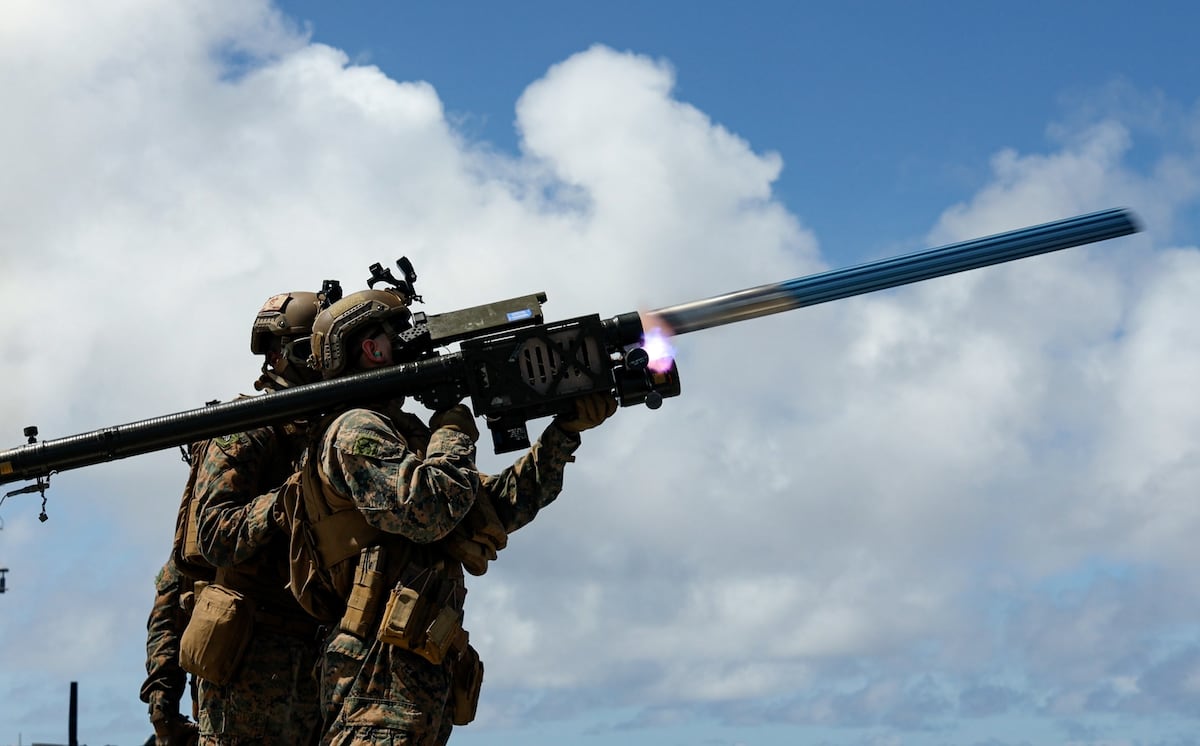
Plans by the U.S. Marine Corps in recent years to reorganize itself for small-unit expeditionary warfare have drawn fire from traditionalists who worry the service’s capabilities will be gutted in the process.
For some Chinese naval officers, however, the prospect of facing missile-equipped Marine Stand-In Forces, or SIF, on Pacific islands is concerning.
“The USMC’s continuous refinement of the SIF concept and optimization of deployment and operational employment will erode our land-enabled advantages in sea denial, make it more difficult for us to breach island chain blockades, induce rapid depletion of our combat resources, and complicate our operating environment,” according to a recent U.S. Navy translation of a 2023 Chinese military journal article.
“This escalates the real-world threats facing us and we must maintain strategic resolve and respond proactively and effectively,” wrote Senior Captains Yue Zhiqiang, Wang Li and Li Jinqia in the journal Military Art , which was translated by the China Maritime Studies Institute at the U.S. Naval War College.
Stand-In Forces were the centerpiece of the Marine Corps’ much-debated Force Design 2030 plan, which was first released in 2020. A far cry from the large, mechanized Marine operations of World War II, Korea and Vietnam, Force Design 2030 envisions a light infantry force with small, stealthy teams of Marines operating from Pacific islands.
Equipped with sensors and missiles, these personnel would interdict Chinese naval movements while providing surveillance and targeting data for U.S. naval and air operations.
American critics have denounced the plan as leaving Marine detachments unsupplied, unsupported and vulnerable to an overwhelming force. But Chinese experts see SIF units as “key assets for deterrence and containment along China’s frontiers,” which maintain “a persistent forward presence in China’s near seas.”
In particular, the Chinese report expressed concern that Marine littoral forces will unleash missiles as well as unmanned underwater vehicles.
“During crises and armed conflict, SIFs can deploy large UUVs or have submarines launch small UUVs to loiter near our shipping lanes,” they said. “They can covertly ambush or conduct suicide attacks against our undersea forces and large vessels.”
The article suggests the People’s Liberation Army Navy should target Marine SIF units with intensity in the event of a regional fight.
“To effectively counter the USMC SIF, we should adopt a proactive offensive posture, aggressively expand our operational reach, project forces forward, and apply countermeasures at the source,” they argue.
This, the report states, would mean forward-deploying Chinese forces, including extending “undersea combat capabilities as far forward as feasible.” China should also develop “undersea prepositioned weapons systems,” the authors argue.
The report adds that China should expand surveillance by radar, satellites, underwater sensors and patrol aircraft, while better integrating military, paramilitary and civilian ships to mitigate “fragmented, redundant, and inefficient coastal surveillance efforts.”
A massive fleet of Chinese commercial vessels could also pose a threat to Marine forces, the paper notes.
“We can conduct maritime deception to overwhelm U.S. SIFs with massive information overload to paralyze and neutralize their capabilities, effectively supplementing our own reconnaissance and surveillance assets,” the article states.
To counter the use of unmanned U.S. platforms, the authors recommend developing cheap Chinese drones, as well anti-drone lasers and microwave weapons.
“We absolutely must avoid engaging small capabilities with large capabilities, or resource-intensive assets against lightweight assets,” the report states.
The authors go on to suggest that the command networks coordinating SIFs should also be targeted.
“We must leverage our late-mover advantage in cyber and electromagnetic domain technologies to develop offensive capabilities which can effectively paralyze U.S. maritime command and control networks,” the report states.
The Military Art article reflects longstanding Chinese concerns that U.S. deployments in the Pacific threaten China’s home waters, Lyle Goldstein, director of the China Initiative at Brown University’s Watson School, told Defense News.
“The article is suffused with major concerns about how U.S. strategy might use drones especially, but also small combat units to try to unhinge China’s military,” said Goldstein. “For example, by causing it to divert resources or by enabling long-range targeting of key Chinese assets, including submarines.”
The article also highlights China’s focus on undersea warfare and its sensitivity toward the safety of its own submarines.
“A major theme of the article is the undersea contest and how the USMC strategy could impact China’s egress of submarines,” said Goldstein, who is also director of the Asia Program at the think-tank Defense Priorities.
“It is also interesting that the article seems to place a very high premium on China’s ability to wield UUVs, along with the related undersea acoustic detection arrays off of Chinese ports and key waterways.”
Michael Peck is a correspondent for Defense News and a columnist for the Center for European Policy Analysis. He holds an M.A. in political science from Rutgers University. Find him at theuncommondefense.com. His email is mikedefense1@gmail.com.
近年来,美国海军陆战队计划重组自身,以进行小规模远征作战,这一计划遭到了传统主义者的抨击,他们担心海军陆战队的能力会在此过程中被削弱。
然而,对于一些中国海军军官来说,在太平洋岛屿上面对装备导弹的海军陆战队常备部队(SIF)的前景令人担忧。
根据美国海军最近翻译的一篇2023年中国军事期刊文章,“美国海军陆战队不断完善海上防御体系概念,并优化部署和作战运用,这将削弱我们在海上拒止方面拥有的陆基优势,使我们更难突破岛链封锁,导致我们的作战资源迅速消耗,并使我们的作战环境更加复杂。”
“这加剧了我们面临的现实世界威胁,我们必须保持战略决心,积极有效地应对,”岳志强、王力、李金甲三位高级上校在《军事艺术》杂志上写道,该文章由美国海军战争学院中国海事研究所翻译。
常备部队是海军陆战队备受争议的“2030 年部队设计”计划的核心,该计划于 2020 年首次发布。与二战、朝鲜战争和越南战争时期大规模机械化的海军陆战队作战行动截然不同,“2030 年部队设计”设想组建一支轻步兵部队,由小型、隐蔽的海军陆战队小队组成,从太平洋岛屿上开展作战行动。
这些人员配备传感器和导弹,将拦截中国海军的行动,同时为美国海军和空军的行动提供监视和目标定位数据。
美国批评人士谴责该计划使海军陆战队分遣队缺乏补给和支援,容易受到压倒性兵力的攻击。但中国专家认为,特种部队是“中国边境威慑和遏制的关键资产”,它们“在中国近海保持着持续的前沿存在”。
特别是,中国方面报告表达了对海军陆战队近岸部队将投放导弹和无人水下航行器的担忧。
他们说:“在危机和武装冲突期间,海上安全部队可以部署大型无人水下航行器,或者让潜艇发射小型无人水下航行器在我们的航道附近徘徊。他们可以秘密伏击或对我们的水下部队和大型舰艇发动自杀式袭击。”
文章建议,如果发生区域性冲突,中国人民解放军海军应该重点打击海军陆战队特种部队。
他们认为:“为了有效应对美国海军陆战队的战略情报部队,我们应该采取积极主动的进攻姿态,大力扩大我们的作战范围,向前投送兵力,并在源头采取反制措施。”
报告指出,这意味着中国将前沿部署兵力,包括“尽可能向前扩展水下作战能力”。报告作者还认为,中国应该发展“水下预置武器系统”。
报告还指出,中国应扩大雷达、卫星、水下传感器和巡逻机的监视范围,同时更好地整合军用、准军事和民用船只,以缓解“分散、冗余和低效的沿海监视工作”。
该报告指出,庞大的中国商船队也可能对海军陆战队构成威胁。
文章指出:“我们可以进行海上欺骗,用大量的信息过载压垮美国安全情报部队,使其瘫痪并丧失能力,从而有效地补充我们自己的侦察和监视资产。”
为了对抗美国无人平台的使用,作者建议开发廉价的中国无人机,以及反无人机激光器和微波武器。
报告指出:“我们绝对不能让小规模力量对抗大规模力量,也不能让资源密集型资产对抗轻型资产。”
作者们进一步建议,协调安全信息设施的指挥网络也应该成为打击目标。
报告指出:“我们必须利用我们在网络和电磁领域技术的后发优势,发展能够有效瘫痪美国海上指挥控制网络的进攻能力。”
布朗大学沃森公共政策学院中国倡议主任莱尔·戈德斯坦告诉《防务新闻》,《军事艺术》杂志的这篇文章反映了中国长期以来对美国在太平洋的部署威胁中国本土水域的担忧。
戈德斯坦说:“这篇文章充满了对美国战略可能如何利用无人机,尤其是小型作战部队,来扰乱中国军事力量的担忧。例如,通过迫使中国转移资源,或者通过远程打击包括潜艇在内的中国关键目标。”
文章还重点介绍了中国对水下作战的重视以及对自身潜艇安全的关注。
“这篇文章的一个主要主题是水下竞争以及美国海军陆战队的战略可能会如何影响中国潜艇的出击,”戈尔茨坦说,他同时也是智库“国防优先事项”亚洲项目的负责人。
“同样有趣的是,这篇文章似乎非常重视中国使用无人水下航行器(UUV)的能力,以及在中国港口和重要水道附近部署的相关水下声学探测阵列。”
迈克尔·佩克是《防务新闻》的通讯员,也是欧洲政策分析中心的专栏作家。他拥有罗格斯大学政治学硕士学位。您可以在theuncommondefense.com找到他。他的邮箱是mikedefense1@gmail.com。